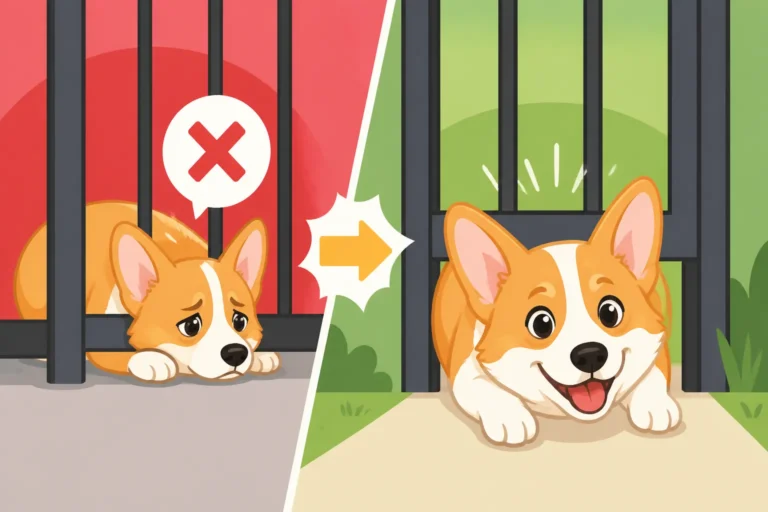
Whether Agility Is Safe for a Corgi’s Spine
It's a common dilemma for Corgi owners: you see those amazing videos of Corgis zipping through agility courses, looking like furry rockets, and your heart swells with pride and aspiration. But then a pang of worry hits – with their famously long backs and short legs, is all that jumping, weaving, and twisting actually safe for their delicate spines? This guide will dive deep into the unique challenges and potential benefits of agility for your Corgi, helping you understand how to approach this exciting sport responsibly and keep your beloved companion safe and healthy.
Understanding the Corgi Spine and Its Vulnerabilities
Our delightful Corgis are built like little tanks, low to the ground, sturdy, and surprisingly fast. This unique physique, while perfect for herding cattle by nipping at their heels and avoiding kicks, also comes with inherent structural considerations. It's not a design flaw, but rather a characteristic that requires thoughtful management, especially when considering activities like agility.
The Unique Corgi Build
The Corgi’s distinctive long back and short legs are a direct result of chondrodystrophy, a genetic trait that causes abnormal cartilage development. While it gives them their adorable, low-slung appearance, it also means their spinal discs are predisposed to early degeneration. Think of it like this: your Corgi's spine is like a long bridge supported by many pillars (the vertebrae and discs), but those discs, instead of being robust shock absorbers throughout their life, are already a bit compromised from day one. This makes them more susceptible to wear and tear than dogs with more proportionate builds. We often discuss Why a Corgi's Back Is Built the Way It Is to truly appreciate this unique anatomy.
Common Spinal Issues in Corgis
Because of this chondrodystrophic build, Corgis are unfortunately at a higher risk for certain spinal conditions. Intervertebral Disc Disease (IVDD) is perhaps the most well-known, where the cushioning discs between the vertebrae either bulge or rupture, pressing on the spinal cord. This can lead to pain, nerve damage, and in severe cases, paralysis. It’s a terrifying prospect for any Corgi owner and a major reason for concern when contemplating high-impact activities. Beyond IVDD, there's also Degenerative Myelopathy (DM), a progressive neurological condition that affects the spinal cord, though it's important to remember that DM is a different beast entirely, attacking nerve fibers rather than disc structure. For more on IVDD, you might want to read up on Disc Disease in a Long-Backed Corgi.
Understanding these predispositions isn't meant to scare you away from activity, but rather to empower you with the knowledge to make informed decisions and take preventative measures. It helps us appreciate why we need to be extra mindful of how our Corgis move, jump, and twist, especially when participating in sports that involve repetitive stress on their back.
The Risks of Traditional Agility for Corgis
While agility is undeniably fun and can be a fantastic way to bond with your Corgi, traditional agility courses, designed with more agile and proportionately built dogs in mind, can pose significant risks to a Corgi's vulnerable spine. It's not just about their enthusiasm; it's about the biomechanics of their body interacting with the demands of the sport.
Jumping and Landing Impact
One of the most obvious concerns in agility is jumping. A standard agility course involves numerous jumps, where dogs launch themselves over obstacles and land on the other side. For a Corgi, whose spine is already under structural strain, the repetitive impact of launching and landing puts immense pressure on those already delicate intervertebral discs. Imagine repeatedly jumping off a small wall yourself – the shock travels through your body, and it's no different for our furry friends. Even modest jump heights, when done repeatedly and without proper form, can contribute to disc degeneration or even trigger an acute disc rupture. We talk about The Jump That Ruptures a Corgi Disc for a reason – it's a very real concern.
Beyond the sheer height, the way a Corgi lands also matters. A clumsy landing, or landing at an awkward angle, can exacerbate the impact. This isn't just a hypothetical scenario; it's a common cause of acute back injuries in dogs with a similar build. Their low center of gravity might make them stable on the ground, but in the air, that long body can be difficult to control perfectly every single time.
Twisting and Turning
Agility courses are not straight lines; they involve tight turns, weaving poles, and navigating tunnels. These maneuvers require dogs to twist their bodies rapidly and often at high speeds. For a Corgi, this twisting motion can be particularly hazardous. Their long backs act like a lever, and sudden rotational forces can place undue stress on the spinal column. The discs are designed to absorb vertical compression, but twisting motions apply shear forces that they are less equipped to handle, especially if they are already compromised.
Picture your Corgi rocketing into a set of weave poles, contorting its body in a serpentine motion, or making a sharp 180-degree turn after exiting a tunnel. Each of these actions, while impressive, demands significant spinal flexibility and resilience. If a Corgi's core muscles aren't incredibly strong and well-conditioned, or if their discs are already showing signs of weakening, these twisting and turning movements can be a recipe for disaster. It’s important to remember that even if they seem to handle it fine in the moment, cumulative stress can lead to problems down the line.
Speed and Repetitive Strain
Corgis are surprisingly fast, and their enthusiasm for the course can push them to full-throttle. While this is exciting to watch, the combination of high speed and repetitive movements common in agility adds another layer of risk. Think of it like a marathon runner who suddenly decides to sprint short distances repeatedly – the body mechanics are different, and the strain compounds. The constant acceleration, deceleration, and sharp changes in direction that make up an agility run mean that the spine is constantly being loaded, unloaded, and twisted.
Even if a single jump or turn doesn't cause immediate injury, the cumulative effect of repeated high-intensity training sessions and competitions over time can contribute to chronic inflammation and accelerated disc degeneration. This is why many experienced Corgi owners and veterinary professionals advocate for a modified approach. It’s not about preventing them from having fun, but about ensuring that the fun doesn’t come at the cost of their long-term health and comfort.
Making Agility Safe and Beneficial for Your Corgi
The good news is that "agility" doesn't have to mean "traditional agility with full-height jumps and tight turns." With careful modifications, appropriate training, and a focus on core strength, your Corgi can still enjoy many aspects of the sport and reap its physical and mental benefits without putting undue strain on their spine.
Modified Agility for Corgis
The key to safe agility for Corgis is modification. This means rethinking obstacle heights and course design to suit their unique build. Jump bars, for example, should be set at the absolute lowest possible height, or even replaced with ground-level "wings" that they simply run over, or perhaps very low tunnels that encourage movement without impact. A-frames and dog walks should have their ramps set at a lower incline to reduce strain on both the ascent and descent. Teeters should be adjusted so they don't slam down, or even replaced with stable planks for practice.
When it comes to weave poles, aim for wider spacing between poles to allow for a less extreme twist of the spine, or introduce them slowly with guiding channels. The goal is to keep the mental stimulation and the joy of navigating a course, while dramatically reducing the physical impact and rotational stress. Think "fun movement puzzle" rather than "olympic gymnastics." You can find excellent, Corgi-friendly agility equipment, like adjustable jump sets and flexible tunnels, on platforms like Amazon, making it easier to set up a safe practice space at home.
Conditioning and Preparation
Before even thinking about an agility course, proper physical conditioning is paramount for any Corgi. Building strong core muscles acts like a natural corset, providing crucial support for the spine. This isn't about bulk, but about lean, functional strength and good body awareness. Activities like swimming (where the body is supported by water) and walking on uneven surfaces (like gentle trails or sand) can help build hind-end and core strength without high impact. Hydrotherapy for a Corgi Recovering From Surgery is an excellent example of how water-based exercise can be incredibly therapeutic and strengthening.
Daily walks are important, but purposeful exercises designed to engage core muscles are even better. Talk to your vet about specific exercises, or consider consulting a certified canine rehabilitation therapist. They can guide you through exercises like controlled walks over cavaletti poles (low poles on the ground), gentle stretches, and specific core-strengthening activities. Keeping your Corgi at a healthy weight is also non-negotiable, as excess weight places additional strain on the spine. Knowing The Body Condition Score a Corgi Should Hold is essential here, as it guides your feeding and exercise regimen.
Smart Training Practices
Training should always be positive, short, and frequent, rather than long and grueling. Corgis are intelligent and eager to please, but their attention spans aren't endless. Break down complex maneuvers into tiny, achievable steps, rewarding generously for success. Never force your Corgi to do something that causes discomfort or hesitation. A good trainer, ideally one experienced with Corgis or chondrodystrophic breeds, will understand these limitations and tailor their approach accordingly.
If you're looking for structured guidance, online platforms like BAXTER & Bella offer comprehensive training programs that can help you build a strong foundation of obedience and body awareness, which are crucial precursors to safe agility. They often emphasize positive reinforcement and break down exercises in a way that’s accessible for both dog and owner. Remember, a Corgi that learns to use a ramp instead of jumping off furniture, as discussed in Teaching a Corgi to Use a Ramp, is already showing good body awareness that translates to safer movement in agility. Regular veterinary check-ups, especially those focused on spinal health, are also critical. Your vet can help you monitor your Corgi's back health and advise on any necessary adjustments to their activity level or diet.
Beyond Traditional Agility: Spine-Friendly Alternatives
If the thought of even modified agility still feels like too much of a risk for your Corgi, or if your vet advises against it due to a pre-existing condition, there are plenty of other wonderful dog sports and activities that provide mental stimulation and physical exercise without the high impact on their spine.
Scent Work and Nose Games
Corgis have excellent noses, a remnant of their working heritage where they needed to track and locate livestock. Scent work, or "nose games," is a fantastic activity that taps into this natural ability. It's low-impact, mentally exhausting (in a good way!), and can be done anywhere – indoors, outdoors, in a small apartment, or a large field. Whether it's finding hidden treats, locating specific odors, or participating in formal scent detection trials, your Corgi will love using their brain and nose, all without any jumps or twists. Scentwork as a Sport That Spares a Corgi's Back is gaining popularity for good reason, offering a rewarding experience for both dog and owner.
You can start simple at home by hiding treats around the room and encouraging your Corgi to find them. As they get better, you can introduce more complex scenarios or join a local scent work class. This activity builds confidence, focuses their energy, and provides a tremendous sense of accomplishment, proving that mental exercise can be just as tiring and fulfilling as physical exertion.
Obedience and Rally
Formal obedience training and rally obedience are excellent ways to bond with your Corgi, teach them valuable skills, and engage their minds and bodies in a controlled, spine-safe manner. These sports focus on precision, responsiveness, and teamwork. While there might be some minor jumps or retrieves in advanced obedience, they are usually minimal and can be adapted. Rally, in particular, involves navigating a course with various stations where handler and dog perform specific commands (sit, stay, come, pivot, etc.). It’s a dynamic activity that requires focus and communication.
These activities emphasize body awareness and control, which are beneficial for Corgis. Learning to perform commands gracefully, like a precise heel or a controlled drop, strengthens their muscles and coordination without the explosive movements that can strain their backs. Plus, having a well-trained Corgi makes everyday life so much more enjoyable!
Hydrotherapy and Swimming
As mentioned earlier for conditioning, hydrotherapy and swimming are fantastic options for Corgis who need to build muscle, maintain fitness, or recover from an injury without putting any weight or impact on their joints or spine. The buoyancy of the water reduces gravity's effects, allowing them to move freely and strengthen muscles without stress. Many specialized canine hydrotherapy centers exist, offering controlled environments with heated pools and trained therapists.
Even recreational swimming in a safe, clean pool or a calm lake can be incredibly beneficial. Always ensure your Corgi wears a life vest, especially if they are new to swimming or if the water is deep, and supervise them closely. It's not just great for their physical health; many Corgis absolutely adore splashing around and playing in the water, making it a joyful and therapeutic activity. It’s also often recommended as part of recovery protocols, as explored in Physiotherapy for a Corgi Losing Its Legs and Hydrotherapy for a Corgi Recovering From Surgery.
Ultimately, ensuring your Corgi’s spine stays healthy is a lifelong commitment. While modified agility can be a great outlet, always listen to your dog, consult with your veterinarian and a knowledgeable professional trainer, and remember that there are many ways to keep your Corgi active, engaged, and happy. Using aids like Ramps and Steps That Save a Corgi's Back around the house can also reduce daily stress on their spine, complementing any sport or activity you choose.
| Feature | Traditional Agility (High Risk for Corgis) | Modified Agility (Safer for Corgis) | Spine-Friendly Alternatives (Very Low Risk) |
|---|---|---|---|
| Jump Heights | Standard heights, often requiring significant vertical leap | Lowest possible heights, ground-level obstacles, no jumping | N/A (no jumping involved) |
| Course Design | Tight turns, sharp angles, fast changes in direction | Wider turns, gentle curves, slower transitions, longer weave pole spacing | Linear or stationary tasks, no sharp turns |
| Impact/Strain | High impact on landing, high torsional (twisting) strain | Low impact, minimal torsional strain | No impact, no torsional strain |
| Equipment Use | Full-height A-frames, dog walks, fast teeters | Lowered A-frames/dog walks (gentler incline), stable planks, slow teeters | Standard equipment or no specialized equipment needed |
| Core Benefit | Speed, athleticism, competitive challenge | Mental stimulation, controlled movement, bond building | Mental engagement, muscle strengthening, low-impact exercise |
| Examples | AKC/CKC Agility trials, extreme backyard courses | Backyard fun with adapted equipment, Corgi-specific club events | Scent work, Rally Obedience, Swimming, Structured walks |
Disclaimer
This article is for general informational purposes only and does not constitute professional advice. Laws, prices and regulations vary by location and change over time. Consult a qualified professional for guidance on your specific situation.