What Chondrodystrophy Means for a Corgi
If you're a Corgi owner, or dreaming of becoming one, you've likely heard whispers about their backs. It's a common worry, and for good reason. Our beloved long-bodied, short-legged companions are predisposed to certain spinal issues, largely due to a genetic condition called chondrodystrophy. This guide will walk you through exactly what chondrodystrophy means for your Corgi, demystifying the science and offering practical, empathetic advice for managing its implications.
Understanding Chondrodystrophy (CDDY) in Corgis
The very thing that gives Corgis their distinctive, adorable low-rider profile—those famously short legs and long body—is also the root of a significant health consideration: chondrodystrophy. It's a term that can sound intimidating, but truly understanding it is the first step in ensuring your Corgi lives their healthiest, happiest life.
What Exactly Is Chondrodystrophy?
At its core, chondrodystrophy (CDDY) isn't just a quirky genetic trait; it's a developmental abnormality of cartilage that affects bone growth. While it's what gives breeds like Corgis, Dachshunds, and Basset Hounds their characteristic "dwarfism" with disproportionately short limbs, its impact extends far beyond just aesthetics. The term specifically refers to the premature calcification of the cartilage plates within the growth plates of long bones, leading to their shortened appearance. But even more critically for Corgi owners, it also causes significant changes in the development of the intervertebral discs that cushion the spine.
Think of it this way: instead of soft, gelatinous shock absorbers, the discs in a Corgi with CDDY tend to harden and degenerate much earlier in life. This isn't just a gradual wear-and-tear issue; it's a built-in predisposition. These prematurely aging discs become less pliable and more brittle, losing their ability to absorb impact and support the spine properly. This makes them incredibly vulnerable to injury, even from everyday activities. This genetic quirk is why Corgis are so charmingly unique, but it's also why we need to be extra vigilant about their spinal health.
The Genetic Component: Why Corgis Are Predisposed
The reason Corgis universally share this trait lies deep within their genetics. Research has identified a specific genetic mutation – an extra copy of the FGF4 retrogene insertion – that is responsible for chondrodystrophy. This isn't something that's popped up recently; it's been an inherent part of the breed's development, likely selected for over generations because it contributed to the short-legged stature desired for herding cattle. Imagine a Corgi nipping at the heels of a cow without getting kicked – that low profile was a huge advantage!
Virtually all Corgis, both Pembroke Welsh Corgis and Cardigan Welsh Corgis, carry at least one copy of this mutation. In fact, most Corgis are homozygous, meaning they have two copies of the gene (CDDY/CDDY), which is what gives them their classic short-legged appearance. While a Corgi carrying only one copy (N/CDDY) will still have the characteristic short legs, two copies are strongly linked to the severe premature degeneration of those crucial intervertebral discs. This widespread presence means it’s not a defect to be "bred out" easily without changing the fundamental physical characteristics of the breed. It’s simply a part of being a Corgi, and understanding this genetic reality helps us appreciate the health challenges that come with it. It’s why topics like The DNA Tests a Corgi Breeder Should Run are so vital for responsible breeders.
The Spinal Impact of Chondrodystrophy: Intervertebral Disc Disease (IVDD)
The biggest and most heartbreaking implication of chondrodystrophy for Corgi owners is its direct link to Intervertebral Disc Disease, or IVDD. This isn't just a minor backache; it can lead to severe pain, mobility loss, and even paralysis. It’s the specter that looms for many Corgi families, and understanding its mechanics is crucial for prevention and early intervention.
How CDDY Affects the Discs
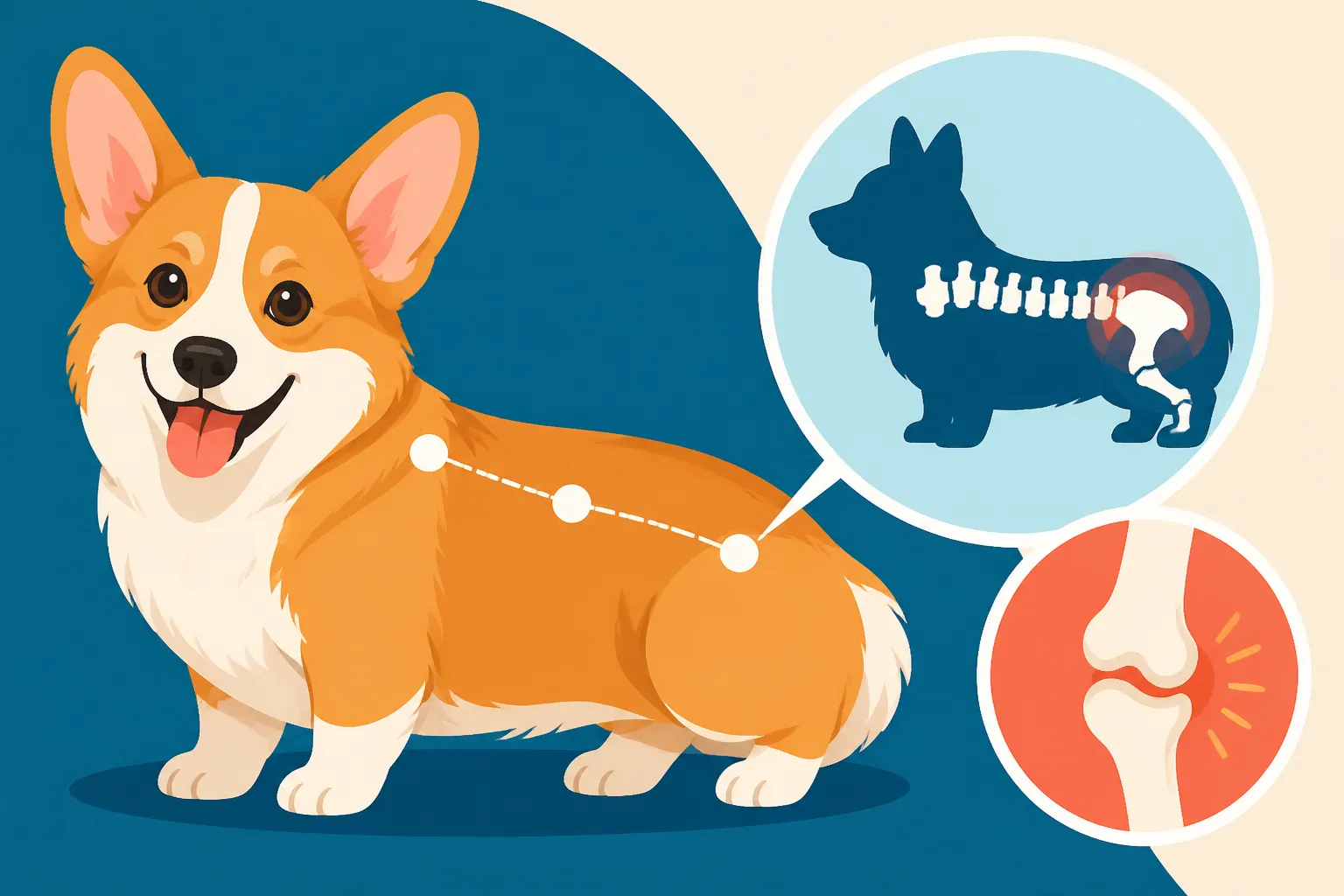
The healthy spine is a marvel of engineering, with soft, jelly-like discs nestled between each vertebra, acting as shock absorbers. For a Corgi with CDDY, this system is compromised from a young age. Instead of remaining supple and resilient, their discs undergo a process called chondroid metaplasia. This means the normal, soft, gel-like center of the disc (the nucleus pulposus) starts to dry out and harden prematurely, often calcifying by just a few months of age.
Imagine a fresh, plump jelly donut compared to a stale, hardened bagel. That's essentially the difference between a healthy disc and a CDDY-affected disc. These hardened discs can't absorb impact effectively, making them highly susceptible to injury. Even a seemingly innocuous jump off the sofa, a missed step, or a sudden twist can cause one of these brittle discs to bulge (protrusion) or rupture entirely (extrusion), pressing on the delicate spinal cord. This is what we refer to as Type I IVDD, and it's the primary reason Corgis face such a heightened risk compared to other breeds. It’s a stark reminder of why issues like Disc Disease in a Long-Backed Corgi are unfortunately so common.
Recognizing the Signs of Disc Problems
One of the most distressing aspects of IVDD is how suddenly and severely symptoms can appear. As Corgi parents, we're attuned to our furry friends' every wiggle, but even then, the signs can be subtle at first, or shockingly immediate. A Corgi might go from happily trotting to crying out in agony and being unable to move within hours.
Here are some critical signs to watch for, and if you see them, it's absolutely an emergency situation deserving immediate veterinary attention:
- Pain: This is often the first and most obvious sign. Your Corgi might yelp when touched, lifted, or when trying to move. They might appear hunched or tense in their back or neck. Some will refuse to eat or even engage in play.
- Reluctance to Move: They might be hesitant to jump on or off furniture, climb stairs, or even walk normally. You might notice them avoiding sudden movements or seeming stiff.
- Changes in Gait: This can manifest as wobbliness in the hind legs, dragging one or both paws (often leading to worn-down nails on one side), or a drunken-like stumble. Their back legs might even cross over when they walk, which is a classic sign.
- Weakness or Paralysis: In severe cases, they might completely lose the ability to use their back legs, leading to dragging themselves or complete immobility. This is terrifying to witness and requires immediate intervention.
- Incontinence: Loss of bladder or bowel control is a very serious sign, indicating significant spinal cord compression.
Never wait to see if these symptoms improve. The sooner a disc injury is diagnosed and treated, the better the prognosis. This is where having a robust pet insurance plan, like one from Healthy Paws, can be a real lifesaver, allowing you to focus on your Corgi's care without immediate financial strain. Don't underestimate the importance of recognizing Emergency Signs of a Corgi Disc Injury.
Managing the Risk: Proactive Steps for Corgi Owners
While we can't change our Corgi's genetics, we can absolutely take proactive steps to minimize the risk of a disc injury and promote overall spinal health. Prevention is truly key when it comes to living with a breed so predisposed to IVDD.
Firstly, weight management is paramount. Every extra pound your Corgi carries puts additional strain on their already vulnerable spine. Working towards and maintaining an ideal body condition score is one of the best things you can do. Discuss this with your vet to create a tailored feeding plan. For more on this, check out Why Corgi Weight Is a Spinal Problem.
Secondly, modifying their environment is critical. Those adorable short legs were meant for herding, not scaling furniture. Prevent jumping off sofas, beds, and out of cars. Invest in ramps or steps for all elevated surfaces your Corgi might access. You can find durable, non-slip ramps at pet stores like Petco or online retailers such as Chewy. Teach them to use these aids from a young age. Similarly, consider baby gates to block access to stairs, or carry them if stairs are unavoidable. Always use a harness instead of a collar to avoid neck strain, opting for options that distribute pressure across the chest and shoulders, rather than the back.
Finally, careful handling and lifting techniques are essential. When picking up your Corgi, always support their front and back ends to keep their spine straight and avoid twisting. Never lift them by their front legs or under their armpits alone. Gentle, consistent exercise, avoiding high-impact activities, can help strengthen core muscles that support the spine. A physical therapist for animals can even teach you specific exercises. Investing in these preventative measures can make a world of difference in your Corgi’s quality of life. Ramps and steps, as discussed in Ramps and Steps That Save a Corgi's Back, are not just conveniences, but necessities.
Living with a Corgi with CDDY and Potential IVDD
Discovering your Corgi has a disc issue is terrifying, but it's not a death sentence. With prompt diagnosis, appropriate treatment, and dedicated care, many Corgis can recover and live full, happy lives. It's a journey, and having a plan in place can ease some of the stress.
Diagnosis and Treatment Options
If you suspect your Corgi has a disc issue, getting to a vet immediately is non-negotiable. The diagnostic process usually starts with a thorough neurological examination to assess their reflexes, pain response, and motor function. X-rays can sometimes show calcified discs or rule out other spinal problems, but they often don't provide a definitive diagnosis of a ruptured disc.
For a precise diagnosis, especially when surgery is being considered, advanced imaging like an MRI (Magnetic Resonance Imaging) or a CT (Computed Tomography) scan is typically required. An MRI offers the most detailed view of the spinal cord and discs, pinpointing the exact location and severity of the compression. This is where the costs can really begin to add up, with MRIs often running into thousands of dollars. Having pet insurance like Healthy Paws can significantly alleviate this financial burden, allowing you to make the best decisions for your Corgi without hesitation. For an idea of the costs, you might want to look into What a Corgi Spinal MRI Costs.
Treatment options generally fall into two categories:
- Conservative Management: This is often the first line of defense for milder cases. It involves strict crate rest for several weeks (typically 4-6 weeks), anti-inflammatory medications, pain relievers, and muscle relaxants. The goal is to reduce inflammation and allow the disc to heal, preventing further compression. This requires immense dedication from owners to keep their active Corgi confined, but it's crucial for success. You can learn more about this in Crate Rest for a Corgi With a Bad Back.
- Surgical Intervention: For more severe cases, especially those involving paralysis or worsening neurological function despite conservative care, surgery may be recommended. A veterinary neurologist performs the surgery to remove the herniated disc material that is pressing on the spinal cord, relieving the pressure. This is a delicate and expensive procedure, but it can be life-changing for many Corgis. Recovery involves extensive post-operative care, including physical therapy. It's important to understand the details of Spinal Surgery on a Corgi.
Long-Term Care and Quality of Life
After an IVDD episode, whether treated conservatively or surgically, long-term care is essential for preventing recurrence and maximizing your Corgi's quality of life. This isn't a "fix it and forget it" situation; it's a commitment to ongoing vigilance and support.
Physical Rehabilitation is often a cornerstone of recovery. This can include physiotherapy, hydrotherapy (underwater treadmill), therapeutic exercises, and even acupuncture or laser therapy. These modalities help strengthen core muscles, improve balance, regain lost motor function, and enhance overall mobility without putting excessive strain on the healing spine. Finding a certified canine rehabilitation specialist is key. Many pet insurance providers, including Healthy Paws, cover a portion of these rehabilitation costs, which can be substantial over time. Information on Physiotherapy for a Corgi Losing Its Legs can be very helpful here.
Lifestyle Adjustments become the new normal. Continuing with careful weight management, consistent use of ramps and steps, avoiding high-impact activities, and using a supportive harness indefinitely are non-negotiable. You might need to make permanent modifications to your home, such as adding non-slip rugs on slick floors. Regular check-ups with your vet or a veterinary neurologist are crucial to monitor their spinal health and catch any new issues early.
Emotionally, it's a challenging journey for owners. Seeing your vibrant Corgi in pain or struggling with mobility can be heartbreaking. Remember to provide them with plenty of mental stimulation through puzzle toys and gentle training, and shower them with affection. With proper management, many Corgis with a history of IVDD can still enjoy a wonderful life, perhaps just at a slightly slower pace.
Breeding Considerations and Genetic Testing
For responsible breeders and future Corgi owners, understanding the genetic implications of chondrodystrophy is paramount. While CDDY is inherent to the breed, ethical breeding practices can help minimize the risk of severe IVDD in puppies.
The Importance of Genetic Screening
Genetic testing offers a powerful tool for breeders to make informed decisions. Tests are available that can identify if a Corgi carries the specific FGF4 retrogene insertion associated with CDDY. These tests are typically offered by specialized canine genetic testing laboratories such as the Orthopedic Foundation for Animals (OFA) or commercial companies like Embark and Wisdom Panel.
The results usually come back with designations like:
- N/N (Clear): The dog does not have the CDDY mutation. These Corgis will still have short legs due to another genetic factor (Chondrodysplasia, CDPA, often confused with CDDY), but their discs are not predisposed to the same severe early degeneration as those with CDDY. They have a significantly lower risk of Type I IVDD.
- N/CDDY (Carrier): The dog carries one copy of the CDDY mutation. These dogs will have short legs and are still at a significantly increased risk for Type I IVDD.
- CDDY/CDDY (At-Risk/Homozygous): The dog carries two copies of the CDDY mutation. These dogs are at the highest risk for Type I IVDD, as their discs are severely predisposed to early degeneration.
While it's important to note that carrying the CDDY gene doesn't guarantee a disc rupture, it drastically increases the likelihood. Responsible breeders use this information to carefully select breeding pairs, aiming to reduce the number of puppies born with two copies of the CDDY gene, or ideally, to produce N/N Corgis where possible, ensuring they retain their short-legged appearance while minimizing IVDD risk. This is why screening is so important, as highlighted in "The DNA Tests a Corgi Breeder Should Run" The DNA Tests a Corgi Breeder Should Run.
Ethical Breeding Practices
Given that the CDDY gene is so prevalent within the Corgi population and contributes to their defining short-legged conformation, completely eliminating it without fundamentally changing the breed standard is a complex challenge. However, ethical breeders strive to breed away from the highest risk combinations.
Reputable breeders will screen their breeding stock for CDDY and CDPA. They will typically avoid breeding two CDDY/CDDY dogs together, as this guarantees all puppies will be CDDY/CDDY. Instead, they might pair a CDDY/CDDY dog with an N/N dog to produce N/CDDY offspring, or pair two N/CDDY dogs to potentially produce a mix of N/N, N/CDDY, and CDDY/CDDY puppies, allowing them to select away from the higher-risk individuals for future breeding.
The goal isn't necessarily to eradicate short legs, which is tied to the CDPA gene (present in all Corgis), but to reduce the instance of the specific CDDY gene that causes the problematic disc degeneration. A responsible breeder will be transparent about the genetic testing results of their parent dogs and will be able to explain their breeding strategy related to these genes. While it takes time and careful planning, these practices are vital for improving the long-term health and well-being of the Corgi breed, ensuring these charming dogs can continue to bring joy without excessive spinal fragility.
CDDY and IVDD: A Quick Reference
Here's a quick summary of the key aspects of Chondrodystrophy (CDDY) and its link to Intervertebral Disc Disease (IVDD) in Corgis:
| Feature | Description | Implications for Corgis | Management & Prevention |
|---|---|---|---|
| What is CDDY? | A genetic condition affecting cartilage and bone growth, causing disproportionate dwarfism (short legs). | It's why Corgis have their characteristic low-rider physique. | Not preventable, as it's genetic and desired for the breed standard. |
| Genetic Basis | Caused by an extra copy of the FGF4 retrogene insertion. Most Corgis have two copies (CDDY/CDDY). | Nearly all Corgis carry this gene, predisposing them to disc issues. | Genetic testing of breeding stock can help reduce the prevalence of CDDY/CDDY pairings. |
| Impact on Discs (IVDD) | Causes intervertebral discs to prematurely calcify and harden, losing their shock-absorbing function. | Discs become brittle and prone to bulging or rupturing (Type I IVDD) even from minor movements. | Strict weight management, preventing jumping, using ramps/steps, supportive harnesses. |
| Signs of IVDD | Pain (yelping, hunched posture), reluctance to move, wobbly gait, dragging feet, weakness/paralysis, incontinence. | Can appear suddenly and severely, requiring immediate veterinary attention. | Prompt vet visit, neurological exam, advanced imaging (MRI/CT). Consider pet insurance (e.g., Healthy Paws). |
| Treatment | Conservative (strict crate rest, meds) or Surgical (removing herniated disc material). | Success depends on severity and promptness of treatment. Long-term rehabilitation is often necessary. | Adherence to vet's plan, physical therapy, hydrotherapy, ongoing pain management. |
| Long-Term Care | Continued lifestyle modifications, regular vet check-ups, physical therapy as needed. | Prevention of recurrence is crucial. Focus on quality of life and comfort. | Home modifications (ramps, non-slip flooring), appropriate exercise, loving support. |
Disclaimer
The information provided in this article is for general informational purposes only and is not a substitute for professional veterinary advice, diagnosis, or treatment. Always seek the advice of your veterinarian or other qualified health provider with any questions you may have regarding a medical condition. Never disregard professional veterinary advice or delay in seeking it because of something you have read in this article.