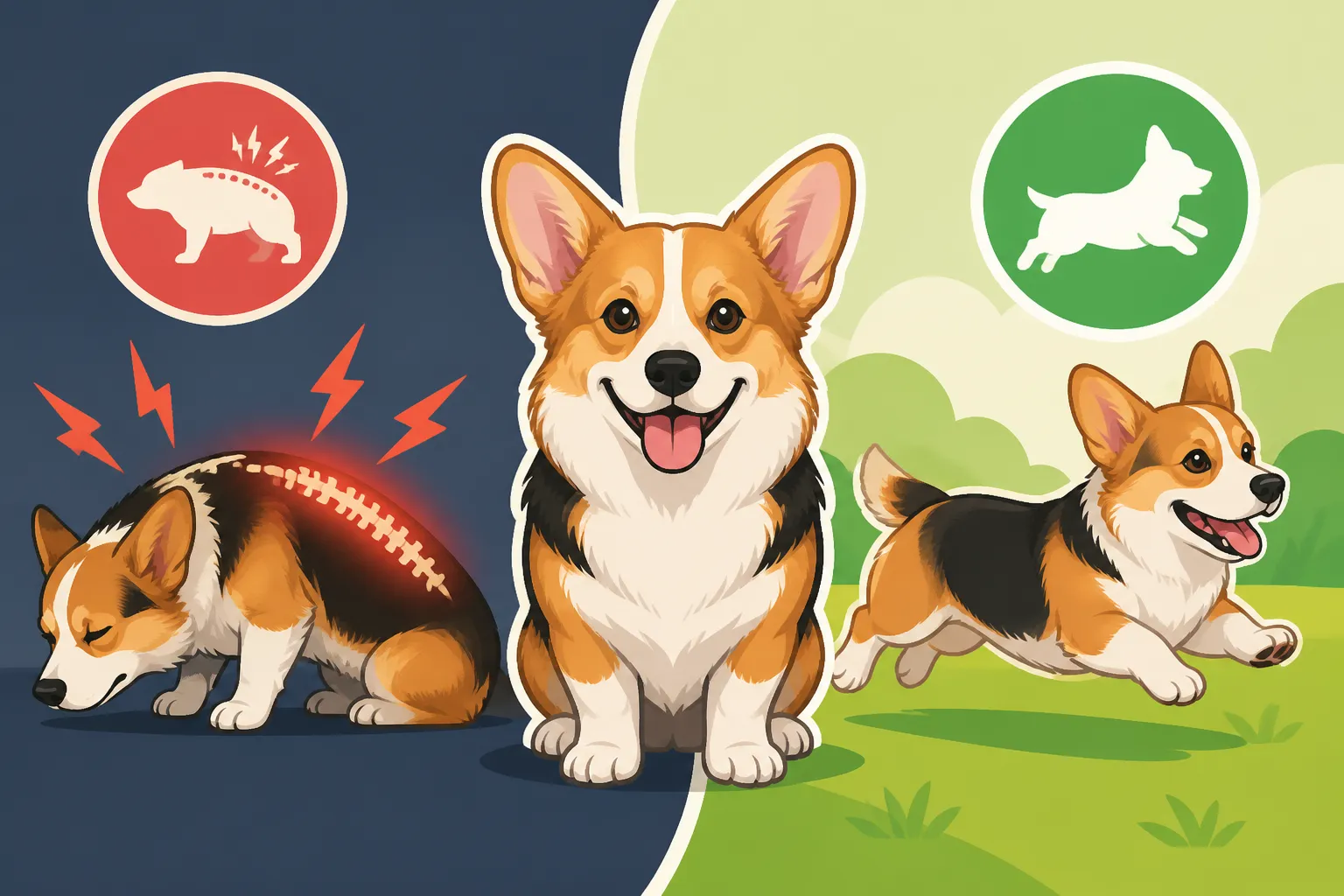
Whether a Corgi Mix Escapes the Back Problems
One of the most heartbreaking concerns for any Corgi owner, or someone dreaming of bringing a Corgi into their life, is the widely known predisposition to serious back problems. It’s natural to wonder if there’s a way to enjoy that undeniable Corgi charm without the accompanying worry of a ruptured disc or the progression of Degenerative Myelopathy. Many folks look to Corgi mixes, hoping that blending with another breed might dilute these inherent risks, offering a "best of both worlds" scenario. This guide dives into whether a Corgi mix truly escapes the back problems that can plague their purebred counterparts, and what you, as a loving owner, need to understand.
Understanding the Corgi's Unique Spinal Vulnerabilities
Before we talk about mixes, it’s crucial to understand why purebred Corgis are so prone to back issues. It's not just bad luck; it's a fundamental aspect of their very unique build, stemming from their long history as herding dogs.
The Impact of Chondrodystrophy on Corgi Spines
At the heart of many Corgi back problems is a genetic trait called chondrodystrophy. This isn't just a fancy word; it's the specific genetic mutation responsible for those adorably short legs and the elongated body. While it gives them their distinctive low-rider appearance, it also means their spinal discs develop abnormally. These discs, which act as cushions between the vertebrae, are prone to premature degeneration and calcification.
Imagine a stack of soft, flexible cushions in a normal dog's spine. Now imagine those cushions are starting to harden and crack much earlier than they should in a Corgi. This makes them far more susceptible to Disc Disease in a Long-Backed Corgi, where the discs can bulge, herniate, or even rupture with surprisingly little provocation. A simple jump off the sofa or a misstep could trigger immense pain and even paralysis. It’s a silent, ticking clock for many Corgis, and understanding What Chondrodystrophy Means for a Corgi is key to appreciating their spinal fragility. This isn't something that can be "trained out" or prevented entirely through exercise; it's built into their genetic blueprint.
Common Spinal Conditions in Corgis: IVDD and DM
When we talk about Corgi back problems, two major conditions often come to mind: Intervertebral Disc Disease (IVDD) and Degenerative Myelopathy (DM).
IVDD, as mentioned, is directly linked to chondrodystrophy. It’s when those compromised discs either protrude (bulge) or extrude (rupture) into the spinal canal, pressing on the sensitive spinal cord. This pressure can cause anything from mild pain and reluctance to move, to complete paralysis in the hindquarters. The onset can be sudden and dramatic, leaving owners terrified and scrambling for emergency veterinary care. The long back and short legs mean more strain is placed on the spine when they move, jump, or even just twist their bodies. It’s a physical design flaw, if you will, for a dog that loves to run and play with gusto.
Then there's Degenerative Myelopathy and the Corgi, a neurological disease that is also genetically inherited. Unlike IVDD, which is a structural issue with the discs, DM is a progressive disease of the spinal cord itself, specifically the white matter that transmits nerve signals. It typically affects older Corgis, usually starting with weakness and poor coordination in the hind legs. Owners might notice their Corgi scuffing their back nails or dragging their feet slightly. Over time, it progresses to paralysis. While not directly linked to chondrodystrophy, many Corgis carry the genetic mutation (SOD1) that puts them at risk. This is why The DNA Tests a Corgi Breeder Should Run are so important for purebred Corgis, helping responsible breeders make informed decisions to reduce the incidence of DM. The frustrating part about DM is that it’s often painless, but relentlessly progressive, leading to a profound loss of mobility.
The Genetics of "Corgi Back" in Mixes
Now, for the million-dollar question: if you mix a Corgi with another breed, does that "dilute" these genetic predispositions? It’s a hopeful thought, but the reality is more nuanced than a simple dilution.
Inheriting the "Chondrodystrophic" Look and Spine
When you breed a Corgi with a non-chondrodystrophic breed (a dog with "normal" length legs), the outcome regarding physical structure can be quite variable. Genetics aren't always a neat 50/50 split. A Corgi mix puppy might inherit the short legs and long body of the Corgi, making it just as susceptible to IVDD as a purebred Corgi. Alternatively, it might end up with longer legs and a more proportionate body, taking after the other parent, which could reduce the mechanical stress on the spine.
However, even if the mix looks less like a Corgi, the genes for chondrodystrophy are still there. The internal structure of the discs might still be compromised, even if the external appearance suggests less risk. It's a bit like buying a car that looks like a sports car but has the engine components of a less robust model. You might not see the problem, but the underlying vulnerability could still exist. There’s no guarantee that simply having longer legs or a different body shape will eliminate the predisposed weakness in the spinal discs themselves. The "long back, short legs" trait is a strong one, and it often expresses itself even in mixed breeds.
Degenerative Myelopathy (DM) Inheritance in Corgi Mixes
The story for Degenerative Myelopathy is a little more straightforward, but still not a guaranteed "escape." DM is caused by a specific genetic mutation (SOD1). For a dog to be at risk of developing DM, it typically needs to inherit two copies of the mutated gene – one from each parent. A dog that inherits only one copy is considered a "carrier" and generally won't develop the disease itself, but can pass the gene on.
If a purebred Corgi (who is "at risk" with two copies of the gene, or a "carrier" with one copy) is bred with another breed:
- If the other breed is DM-clear: The puppies will inherit at most one copy of the mutated gene from the Corgi parent, making them carriers, but not at risk of developing the disease themselves. This is a significant reduction in risk!
- If the other breed is also a DM carrier or at risk: This is where things get tricky. Some other breeds, like German Shepherds, Boxers, and Bernese Mountain Dogs, also have a predisposition to DM and can carry the SOD1 mutation. If a Corgi is bred with one of these breeds, and both parents are carriers, then some puppies in the litter could inherit two copies of the mutated gene and be at risk for developing DM.
So, while breeding with a clear dog can prevent DM in the offspring, you still need to know the genetic status of both parents. Just being a "mix" isn't enough; informed breeding decisions are paramount.
Common Corgi Mixes and Their Spinal Health Outlook
Let's talk about some popular Corgi mixes and what their blended genetics might mean for their spines. It's a bit of a genetic lottery, but we can make some educated guesses.
The Corgidor (Corgi-Labrador Retriever)
The Corgidor is a popular mix, blending the Corgi's unique charm with the Labrador's friendly disposition. Labs are generally healthy dogs, and importantly, they don't carry the chondrodystrophy gene. This means a Corgidor puppy has a better chance of inheriting a more proportionate body structure and longer legs, which could reduce the mechanical strain on the spine compared to a purebred Corgi.
However, it's not a foolproof solution. You might get a Corgidor that's low to the ground with a somewhat elongated body, taking strongly after the Corgi parent. Even a Lab-sized body on Corgi-length legs would put immense strain on the spine. Furthermore, Labradors are energetic dogs, and if a Corgidor inherits that high energy, combined with any residual Corgi spinal vulnerability, they could still be at risk for disc injuries from enthusiastic play and jumping. While the overall risk of IVDD might be reduced, it's certainly not eliminated. As for DM, Labs are not typically prone to it, so if the Corgi parent is a carrier or affected, testing the Lab parent would still be wise to understand the risk to the puppies.
The Corgi-Shepherd (Corgi-German Shepherd Dog)
This mix often creates a dog with the Corgi's sturdy build and the Shepherd's intelligence and loyalty. German Shepherds are not chondrodystrophic, so again, there's a chance for a more "normal" spinal structure. However, German Shepherds are known for their own set of orthopedic challenges, including hip and elbow dysplasia, and they are a breed known to carry the SOD1 gene mutation for Degenerative Myelopathy.
This makes the Corgi-Shepherd mix a complex case for back health. While the IVDD risk might be mitigated by a more proportionate body, the DM risk could potentially remain, or even be increased if both parent breeds carry the gene. A responsible breeder would perform The DNA Tests a Corgi Breeder Should Run on both parents to ensure they aren't inadvertently combining "at risk" genetics for DM. If you're considering this mix, asking for detailed health clearances on both parents is absolutely essential.
The Corgipoo (Corgi-Poodle)
Poodles, especially Mini or Toy Poodles, are often bred with Corgis for their non-shedding coats and intelligence. Poodles are not chondrodystrophic and typically have more proportionate bodies. This could theoretically offer a better chance for a Corgipoo to have a healthier spinal structure than a purebred Corgi, as the Poodle genes might counteract the extreme length-to-height ratio.
However, smaller Poodles are not entirely immune to disc problems, and while not as prevalent as in Corgis, disc issues can arise in any breed. The key here would be assessing the individual Corgipoo's body structure. If it ends up with very short legs and a long back, it will still face similar risks. Poodles are not typically associated with DM, so the risk for that specific condition would primarily depend on the Corgi parent's genetic status. Still, if you're looking for dog supplies for any of these mixes, whether it's special food or joint supplements, sites like Chewy offer a wide selection.
Here's a quick overview of generalized expectations, but remember, every mix is an individual!
| Feature | Purebred Corgi (General) | Corgi Mix (General Expectation) |
|---|---|---|
| Body Shape | Long body, short legs (chondrodystrophic) | Variable; can be more proportionate or still long/low |
| IVDD Risk | High due to genetic predisposition | Potentially reduced if other breed's genes dominate; still possible |
| DM Risk | High if "at risk" genetically (SOD1) | Reduced if other parent is DM-clear; still possible if other parent is carrier/at-risk breed |
| Orthopedic Issues | Primarily spinal (IVDD, DM), some hip dysplasia | Can inherit issues from either parent (e.g., hip/elbow from Lab/Shepherd) |
| Predictability | High for characteristic Corgi traits | Low; highly variable appearance and health traits |
Proactive Care for a Corgi Mix's Spine (Regardless of Genetics)
Here's the truth: even if your Corgi mix inherits a more "favorable" body structure, no dog is immune to spinal problems, and the Corgi lineage means you should always err on the side of caution. Think of it as a potential reduced risk, not an eliminated one. Implementing proactive care is paramount for any Corgi mix.
Weight Management is Non-Negotiable
This is probably the single most critical factor you can control. Excess weight puts immense strain on a dog's spine, joints, and overall health, exacerbating any underlying predisposition to disc disease. For a dog with a Corgi's build, even a few extra pounds can be devastating. Regularly assess your dog's The Body Condition Score a Corgi Should Hold – you should be able to easily feel their ribs without seeing them protruding, and they should have a visible waist.
Feeding a precisely measured diet is key. Don't free-feed your Corgi mix. Work with your vet to determine the right caloric intake for their activity level and ideal weight. Remember, treats add calories too! You can find a vast array of healthy treats and even weight management food options at places like Chewy. Keeping your Corgi mix lean is one of the kindest things you can do for their long-term spinal health, minimizing the chances of problems later in life. This really ties into Why Corgi Weight Is a Spinal Problem even for purebreds.
Modifying the Environment to Protect the Back
A Corgi's short legs mean they're often jumping on and off furniture, in and out of cars, and tackling stairs. These everyday movements create jarring impacts and twisting motions that are incredibly risky for a vulnerable spine.
- Ramps and Steps: Invest in Ramps and Steps That Save a Corgi's Back for sofas, beds, and vehicles. Train your Corgi mix to use them from a young age. It takes patience, but it's worth every effort. You might even want to consider steps to make getting into bed easier without risking a jump.
- Avoid Stairs (if possible): While some Corgis navigate stairs fine, frequent use, especially going down, can be hard on their backs. If you have stairs, consider baby gates to restrict access, or carry your dog up and down if they're small enough. Always remember Picking a Corgi Up Without Hurting It – support their chest and hindquarters evenly to avoid spinal torsion.
- Non-Slip Flooring: Hardwood floors and tile can be slick, causing dogs to splay out, which strains their back and hips. Runners, rugs, or non-slip mats can provide traction and reduce the risk of injury.
- Orthopedic Beds: A supportive bed is not just a luxury; it's a necessity for joint and spinal health. Orthopedic Beds for a Corgi distribute weight evenly, reducing pressure points and providing better support during rest, which is especially important as they age.
Mindful Exercise and Play
While a Corgi mix might have more "normal" energy levels, it's vital to ensure their exercise is appropriate for their body. High-impact activities, such as repetitive frisbee jumps or intense agility that involves a lot of quick twists and turns, could still pose a risk, especially if they have inherited any Corgi-like body structure.
Focus on controlled exercise like leash walks, swimming (excellent for low-impact muscle building), and mentally stimulating games. Avoid situations where your Corgi mix might Whether a Corgi Should Ever Jump Off a Sofa or other high surfaces without proper ramps or assistance. During play with other dogs, supervise closely to prevent roughhousing that involves excessive twisting or forceful collisions. The goal is to keep them fit and strong without putting undue stress on their spine.
Regular Veterinary Check-ups
Don't skip those annual vet visits. Your veterinarian can monitor your Corgi mix's weight, gait, and overall mobility. They can also help you spot subtle signs of discomfort or changes that might indicate an emerging back issue. Early detection is key, whether it's for IVDD or the subtle progression of DM. If you ever notice stiffness, reluctance to jump, lameness, or changes in coordination, seek veterinary attention promptly. Discussing these concerns with your vet can help differentiate between Telling Disc Pain From DM in a Corgi, which requires different approaches. They might suggest supplements or other preventative measures based on your dog's individual characteristics. Should a back problem arise, your vet will guide you through options like Whether a Corgi Needs Surgery or Rest, and what the recovery process might entail.
In conclusion, while a Corgi mix might offer a slightly reduced risk of spinal problems compared to a purebred Corgi, it is by no means a guarantee. The genetic lottery of mixing breeds means you could still end up with a dog that inherits the very traits you hoped to avoid. The most responsible approach is to assume your Corgi mix carries some degree of spinal vulnerability and to implement proactive care throughout their life. This includes rigorous weight management, environmental modifications like ramps, mindful exercise, and regular vet care. These steps, coupled with understanding both parent breeds' health histories, will give your beloved Corgi mix the best possible chance for a long, happy, and pain-free life.
Disclaimer
This article is for general informational purposes only and does not constitute professional advice. Laws, prices and regulations vary by location and change over time. Consult a qualified professional for guidance on your specific situation.