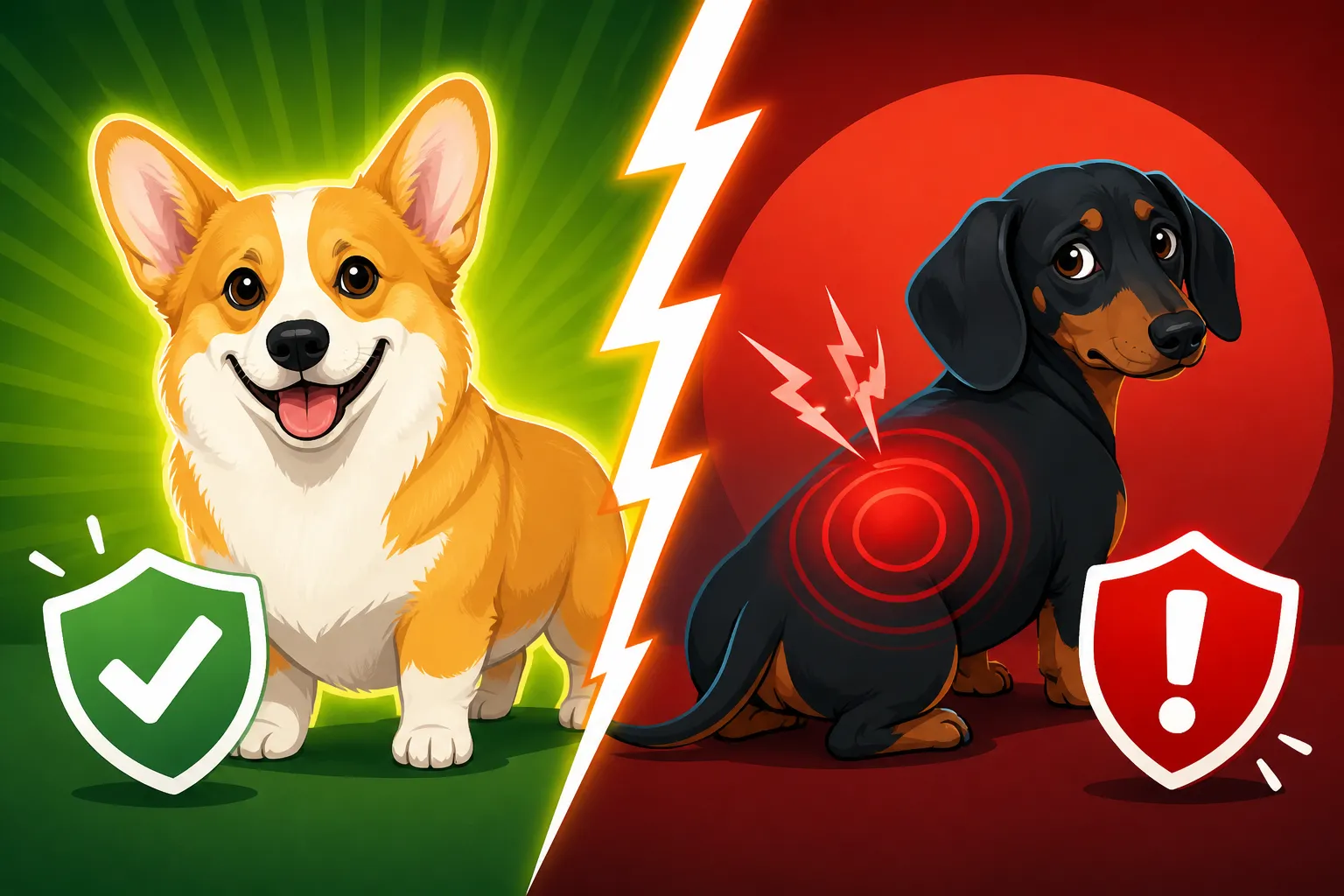
Corgi Against the Dachshund on Back Risk
If you're a proud parent to a Corgi or a Dachshund, or perhaps you're considering welcoming one of these adorable, low-slung companions into your home, one of the biggest worries often revolves around their backs. It's a truth universally acknowledged in the world of long-bodied breeds that their unique build, while utterly charming, comes with a predisposition to spinal troubles. This guide aims to thoroughly explore the specific back risks faced by Corgis and Dachshunds, giving you the detailed, realistic picture you need to protect your furry family member.
The Corgi's Unique Spinal Challenges
Our beloved Corgis, with their sturdy build and short legs, are prone to a couple of distinct spinal issues that can cause significant distress. It's not just one thing we need to worry about; it's a combination of their unique physiology and genetics that puts them in a vulnerable position. Understanding these specific risks is the first step in providing them with the best care.
Intervertebral Disc Disease (IVDD) in Corgis
Just like their long-bodied cousins, Corgis are highly susceptible to Intervertebral Disc Disease, or IVDD. This condition is essentially a herniated, bulging, or ruptured disc in the spine, and it can be incredibly painful and debilitating. Imagine the shock and fear when your normally active Corgi suddenly yelps when picked up, or refuses to jump onto their favorite spot on the couch. This is often the first, terrifying sign that something serious is happening with their back.
Corgis, like Dachshunds, are considered a chondrodystrophic breed, which means they have abnormally short limbs due to a genetic mutation affecting cartilage development. Unfortunately, this same genetic trait also impacts the development of their intervertebral discs. These discs, which normally act as cushions between the vertebrae, can degenerate prematurely, making them more prone to rupture or bulge under everyday stresses. We often see two types: extrusion, where the disc material bursts out, and protrusion, where it bulges. Both put pressure on the spinal cord, leading to pain, weakness, and potentially paralysis. Preventing The Jump That Ruptures a Corgi Disc is critical.
The frustrating part about IVDD in Corgis is that it can strike at any age, though it typically becomes more common as they get older, often between 4 and 8 years old. A seemingly innocuous movement—a sudden twist, a jump off the furniture, or even an awkward landing—can trigger an episode. When it happens, the symptoms can range from mild discomfort and a reluctance to move, to severe pain, hind limb weakness, loss of coordination (ataxia), and in the worst cases, complete paralysis and loss of bladder/bowel control. It’s an urgent situation, and knowing Emergency Signs of a Corgi Disc Injury is vital for any Corgi owner.
Degenerative Myelopathy (DM) and the Corgi
While IVDD is a structural issue, Corgis also face a genetic ticking time bomb in the form of Degenerative Myelopathy (DM). This is a progressive neurological disease that affects the spinal cord, leading to weakness and paralysis in the hind limbs. Unlike IVDD, which can be acute, DM is typically slow and insidious in its onset, often beginning around the age of 8 or older. It's heartbreaking to witness, as it often mimics the symptoms of arthritis or hip issues in its early stages.
DM is caused by a mutation in the SOD1 gene, and it's particularly prevalent in Pembroke Welsh Corgis. It’s important to understand that while a Corgi might carry the gene, it doesn't automatically mean they will develop the disease. However, those who are "at-risk" (carrying two copies of the mutated gene) have a significantly higher chance. This is why responsible breeders emphasize The DNA Tests a Corgi Breeder Should Run for their breeding stock.
The progression of DM is relentless and, currently, there is no cure. The disease slowly causes the protective myelin sheath around the nerves in the spinal cord to break down, impairing the signals between the brain and the hind limbs. Owners might first notice a slight scuffing of the back paws, an uneven gait, or a wobbliness in the hindquarters. Over months or years, this progresses to severe weakness, difficulty standing, walking, and eventually, full paralysis. It can be incredibly difficult to watch, and distinguishing it from other back issues is paramount; Telling a Corgi's Slipped Disc From Myelopathy requires careful veterinary assessment.
The Dachshund's Predisposition to Back Trouble
Dachshunds, with their famously long bodies and even shorter legs, are almost synonymous with back problems. Their entire breed standard, in a way, is a testament to the extreme version of the chondrodystrophy that makes them so unique – and so susceptible. When we talk about Dachshund back risk, we are almost exclusively talking about IVDD.
Extreme Chondrodystrophy and IVDD in Dachshunds
Dachshunds are perhaps the poster children for chondrodystrophy, and it's this very trait that makes them overwhelmingly prone to IVDD. Their spinal discs calcify and harden at an early age, often beginning in puppyhood, long before symptoms even appear. This makes their discs more like brittle bones than flexible cushions, and consequently, far more likely to rupture or herniate. It's a genetic lottery that unfortunately, a large percentage of the breed loses.
The sheer prevalence of IVDD in Dachshunds is staggering. Studies suggest that a significant number of Dachshunds will experience at least one episode of IVDD in their lifetime, with some estimates putting the risk as high as 1 in 4 or even more. This isn't just an "old dog" problem; Dachshunds can suffer their first IVDD episode as young as two or three years old. Imagine the devastation of having a vibrant, playful young dog suddenly unable to walk. This early onset and high incidence rate make IVDD a primary concern for every Dachshund owner.
When a Dachshund's disc ruptures, the impact on their spinal cord can be severe and immediate. Symptoms often mirror those in Corgis but can sometimes be even more dramatic due to the extreme nature of their disc degeneration. You might see yelping, reluctance to move, hunched posture, hind leg weakness, difficulty with stairs, or even a sudden paralysis where they drag their back legs. Early veterinary intervention is absolutely crucial. Many Dachshunds can recover with strict Crate Rest for a Corgi With a Bad Back (which applies to Dachshunds too!) or Spinal Surgery on a Corgi (again, applicable to Dachshunds), but the path to recovery is often long and demanding.
Corgi vs. Dachshund: Comparing the Back Risks
So, how do these two beloved long-backed breeds stack up when it comes to back risk? While both are prone to IVDD, there are nuances in their predisposition and the severity of the conditions they face. It's not about saying one is "worse" than the other, but understanding the specific battle each breed is fighting.
The Nuances of IVDD Risk
Both Corgis and Dachshunds are chondrodystrophic breeds, making them highly susceptible to IVDD. However, Dachshunds are generally considered to have a higher overall lifetime risk of experiencing an IVDD episode, and often at an earlier age. This is largely due to the more pronounced and widespread disc degeneration observed in their breed. Their disc calcification tends to be more severe and occurs in a greater number of discs along the spine compared to Corgis.
While Corgis certainly get IVDD, the prevalence is typically lower than in Dachshunds. A Corgi with IVDD might be an unlucky draw, but a Dachshund without IVDD by a certain age can almost feel like beating the odds. The symptoms and treatment approaches for IVDD are largely similar across both breeds, focusing on pain management, anti-inflammatory medications, strict crate rest, or surgical intervention in severe cases. Regardless of breed, managing your dog's weight is paramount, as Why Corgi Weight Is a Spinal Problem significantly exacerbates disc issues for both.
The DM Factor: A Corgi-Specific Concern
Here's where the comparison diverges significantly. While IVDD is a shared concern, Degenerative Myelopathy (DM) is predominantly a Corgi-specific back risk. While other breeds can carry the SOD1 gene mutation, it's the Pembroke Welsh Corgi that is one of the breeds most affected by clinical DM. Dachshunds can theoretically carry the gene, but DM is not recognized as a characteristic, prevalent disease within their breed in the same way it is for Corgis.
This means that while a Dachshund owner's primary focus for back health will be IVDD prevention and management, a Corgi owner must contend with both the risk of IVDD and the potential for DM. This dual threat can make managing a Corgi's long-term health more complex, as differentiating between the early signs of IVDD and DM can be challenging, even for veterinarians. Genetic testing for the SOD1 gene is a routine part of responsible Corgi breeding, something not typically emphasized for Dachshunds in relation to spinal health. Reading a Corgi SOD1 Test Result is an important step for any prospective Corgi owner.
Preventative Measures and Support
The good news is that many preventative measures benefit both breeds. Controlling your dog's weight is perhaps the single most impactful thing you can do. A lean body condition reduces the stress on their spine and discs, drastically lowering the risk of IVDD episodes. Regular, moderate exercise that builds core strength without high-impact movements is also beneficial. Think steady walks, not frantic ball chasing with sudden stops and turns.
Here's a quick comparison of the primary back risks:
| Feature | Corgi | Dachshund |
|---|---|---|
| Primary IVDD Risk | High | Very High |
| DM Risk | Significant (especially Pembrokes) | Very Low/Not a characteristic breed disease |
| Onset Age (IVDD) | Often 4-8 years, can be younger | Often 2-3 years, can be older |
| Disc Degeneration | Chondrodystrophic, prone to early hardening | Extreme chondrodystrophy, severe calcification |
| Genetic Testing | Recommended for DM (SOD1) | Not typically for DM (spinal concerns) |
| Key Preventative | Weight, Ramps, Avoid Jumping, DM Testing | Weight, Ramps, Avoid Jumping |
Using ramps or pet stairs for furniture and vehicles is another non-negotiable for both breeds. Every jump off a sofa, no matter how small, puts immense stress on their delicate spines. You can find excellent options for Ramps and Steps That Save a Corgi's Back on sites like Chewy, making it easier for them to access their favorite spots safely. Orthopedic beds, also available from retailers like Chewy, provide crucial support for their backs while they rest.
Furthermore, teaching both Corgis and Dachshunds to use a ramp instead of jumping, and making sure to lift them correctly (supporting both their chest and hindquarters) can significantly reduce the risk of injury. For dogs dealing with chronic back pain or recovering from an episode, therapies like Acupuncture for a Corgi With Back Pain or Hydrotherapy for a Corgi Recovering From Surgery can be incredibly beneficial, often found through specialized vet clinics. Investing in high-quality, measured food portions can also help maintain a healthy weight; many owners find great options on Chewy for their specific needs.
Ultimately, being a responsible owner of either a Corgi or a Dachshund means being hyper-aware of their spinal vulnerabilities. It means making lifestyle adjustments, being vigilant for any subtle changes in their gait or behavior, and working closely with your veterinarian. Knowing the specific risks and how to mitigate them will allow you to share many happy, healthy years with your low-rider companion.
Disclaimer
This article is for general informational purposes only and does not constitute professional advice. Laws, prices and regulations vary by location and change over time. Consult a qualified professional for guidance on your specific situation.