Whether a Corgi’s Legs Should Bow
One of the most charming and distinct features of a Corgi is their low-slung, sturdy build, but sometimes new owners or those unfamiliar with the breed might look at those little legs and wonder if they're quite right. The concern often comes from a visual impression that a Corgi's front legs might appear bowed or turned out. This guide will clarify what a healthy Corgi leg structure looks like according to breed standards and help you distinguish between normal, characteristic Corgi conformation and actual orthopedic issues that might need veterinary attention.
Understanding the Corgi Breed Standard for Leg Structure
It's easy to look at a Corgi and assume their short stature means their legs are inherently "different" or even flawed. However, the breed standard for both the Pembroke and Cardigan Welsh Corgi is very specific about leg structure, emphasizing strength, substance, and a particular type of straightness. They are built for agility and endurance, despite their length.
The Ideal Corgi Front Assembly
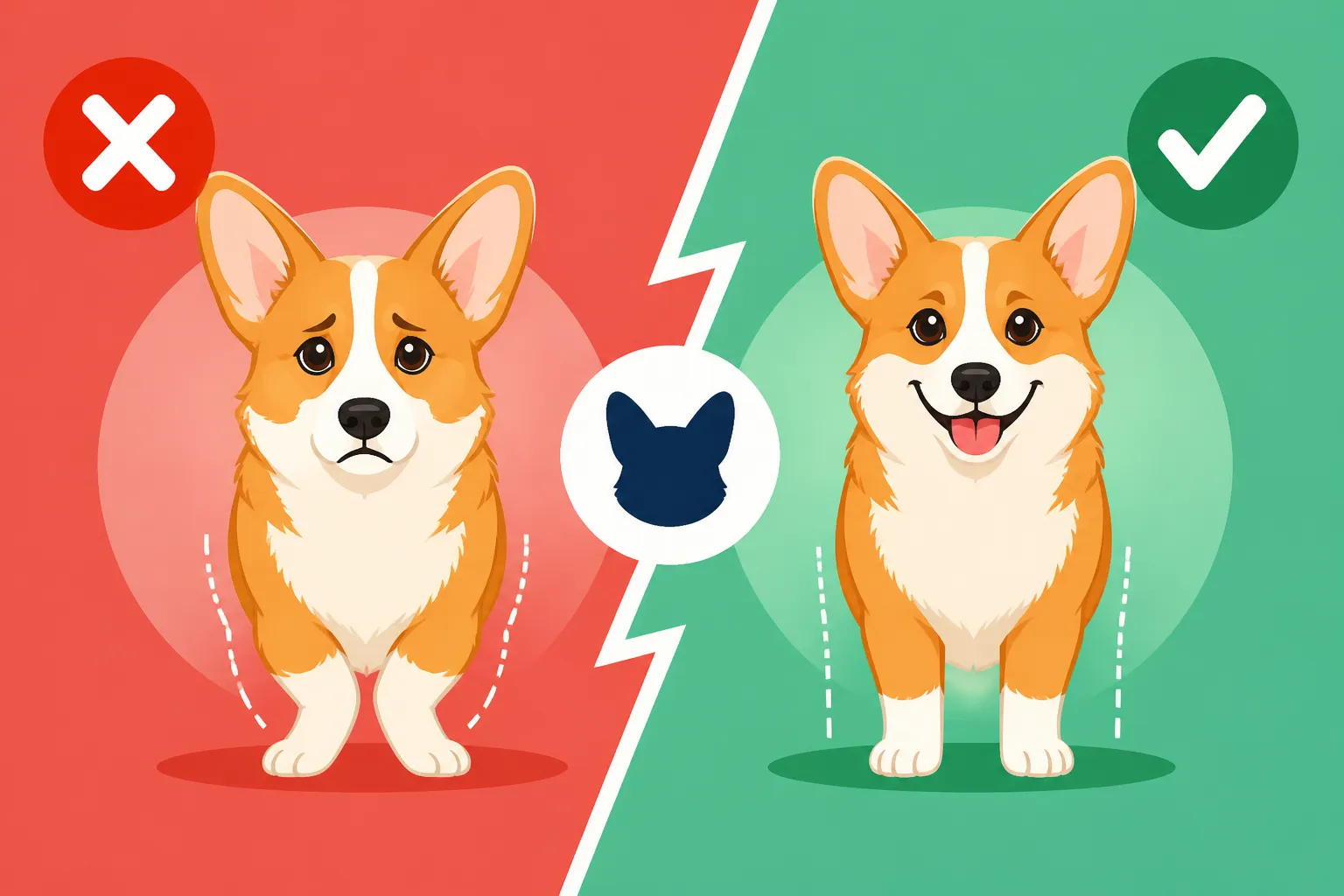
When you delve into the official breed standard, you'll find that Corgi legs are described as heavy-boned, but they should absolutely not be bowed or crooked in an unhealthy way. The front legs should appear straight and substantial when viewed from the front, with the forelegs descending parallel to each other. The pasterns—the area just above the paws—should be strong, flexible, and nearly straight, not bowed in or out. Their chest is broad and deep, which can sometimes create the illusion of bowed legs because of how it connects to the shoulders, but the bones themselves should be straight. Think of it as a strong, wide platform supporting a sturdy body. This robust front end is crucial for their original purpose, allowing them to pivot quickly while herding cattle. You can read more about The AKC Pembroke Welsh Corgi Standard to get a full picture.
Why "Straight" Doesn't Mean Tall
It's important to differentiate between "straight" and "tall." A Corgi's legs are naturally short due to a genetic trait called chondrodystrophy. This inherited condition affects the development of cartilage and bone, resulting in short limbs and an elongated body. While this condition is what gives Corgis their iconic low rider look, it doesn't mean their bones should be malformed or bowed. It simply means they are proportionally shorter than what you'd see in a typical dog. The bones themselves are dense and strong, built for the impact of their herding duties, which often involved dodging kicks from cattle. A reputable breeder will focus on selecting dogs that have this characteristic dwarfism without any associated deformities in the leg structure. Understanding What Chondrodystrophy Means for a Corgi helps clarify this distinction.
Why Some Corgi Legs Appear Bowed
It's not uncommon for a Corgi's legs to look a little bowed, especially from certain angles or during different stages of their life. This appearance often leads to concern, but it's crucial to understand the difference between a visual trick and an actual structural problem.
The Illusion of Bowing from a Broad Chest
Corgis have a notoriously broad and deep chest. This width, combined with their short legs, can create a visual effect where their front legs seem to curve outward or "bow" to accommodate the chest. When you look directly at your Corgi from the front, their legs might not appear perfectly vertical like a greyhound's, but rather set a bit wider to support their body. This isn't a flaw; it's part of their unique conformation, specifically adapted for their herding role where a low center of gravity and quick turns were essential. As long as the feet point straight forward and the movement is fluid, this broad-chested appearance is entirely normal.
Developmental Phases in Puppies
Just like human children, Corgi puppies go through awkward growth stages. Their bones and joints are developing rapidly, and sometimes, a puppy's legs might look a little "off" during certain phases. For instance, some Corgi puppies might temporarily exhibit what looks like Bowed Front Legs in a Corgi Puppy as they grow. Their bone structure is still maturing, and their muscles are developing to support their growing body. Generally, if a puppy is receiving proper nutrition, getting appropriate exercise, and isn't showing signs of pain or lameness, these minor developmental variations often correct themselves as they grow into their adult body. However, persistent or worsening bowing should always be discussed with a vet.
Genetic Predisposition to Certain Leg Conditions
While the breed standard calls for straight, strong legs, some Corgis, unfortunately, can be prone to certain genetic conditions that genuinely affect leg straightness or joint health. Conditions like elbow dysplasia or osteochondritis dissecans (OCD) can lead to abnormalities in joint development, which might manifest as a bowed appearance, lameness, or an abnormal gait. This is why it's so incredibly important to seek out a responsible breeder who performs comprehensive health testing on their breeding dogs. They screen for conditions like hip and elbow dysplasia, which can greatly impact a Corgi's quality of life and lead to significant veterinary bills down the line. A good breeder will be transparent about their testing results and genetic clearances. Learning about The DNA Tests a Corgi Breeder Should Run can give you a better idea of what to ask about.
Identifying Healthy vs. Problematic Leg Structure
Knowing what to look for can make all the difference in understanding your Corgi's unique build versus recognizing a genuine health concern. It’s about observation, touch, and knowing when to consult a professional.
What to Look for in Healthy Corgi Legs
When assessing your Corgi's legs, consider these points:
- From the Front: The forelegs should appear strong and well-boned. While they might be set wide due to the broad chest, the individual bones from the shoulder down to the paw should be relatively straight and parallel to each other. The feet should point straight forward, not splay out or turn in.
- From the Side: The legs should have good angulation, meaning the bones meet at appropriate angles at the shoulder, elbow, and knee (stifle) to allow for smooth, efficient movement. The pasterns should be strong and slightly sloped, acting as shock absorbers.
- Movement: A healthy Corgi should move with a smooth, free gait. Their legs should swing forward and back in a straight line, and they should appear balanced. Watch for any limping, stiffness, or an unusual way of carrying weight on one leg. Even if their legs seem straight when standing, a problem can often become apparent when they are moving.
- Comfort: Your Corgi should show no signs of pain when their legs are gently handled or when they are walking, running, or jumping (from safe heights, of course!).
Signs That Your Corgi's Legs Might Be Problematic
If you observe any of the following, it’s definitely time to schedule a visit with your veterinarian, especially if the changes are sudden or accompanied by pain:
- Pronounced Bowing or Crookedness: If the bones themselves look significantly curved, particularly from the elbow down, it could indicate a developmental issue or an injury. This is different from the optical illusion caused by their broad chest.
- Splayed Feet or Knuckling: If the paws splay excessively outward or inward, or if your Corgi is "knuckling over" (walking on the tops of their feet), it's a red flag. This can suggest ligament issues, nerve damage, or other structural problems.
- Lameness or Limping: Any persistent limp, favoring of a leg, or unwillingness to bear weight is a clear sign of pain or injury. This could be anything from a minor sprain to Early Arthritis in a Corgi or a more serious orthopedic condition.
- Difficulty Rising or Jumping: If your Corgi struggles to stand up, especially after resting, or shows reluctance to jump onto a sofa (even if you've provided ramps, which is always a good idea!), it might point to joint pain.
- Swelling or Heat: Any noticeable swelling, warmth, or tenderness around a joint could indicate inflammation or infection.
- Asymmetrical Legs: If one leg looks significantly different from the others in terms of straightness or muscle development, it warrants investigation.
When to Consult a Vet
Never hesitate to consult your veterinarian if you have concerns about your Corgi's leg structure or mobility. They can perform a thorough physical examination, observe your dog's gait, and if necessary, recommend diagnostic imaging like X-rays to get a clearer picture of bone and joint health. Early diagnosis and intervention can often prevent more severe problems down the line and significantly improve your Corgi's comfort and quality of life. For instance, if you suspect something like elbow or hip dysplasia, early detection can open up more treatment options.
Factors Influencing Corgi Leg Development and Health
A Corgi's leg health isn't just about genetics; it's a complex interplay of inherited traits, proper nutrition, and how they are managed throughout their lives. As a responsible Corgi owner, you have a significant role to play in supporting their skeletal well-being.
The Role of Genetics and Reputable Breeders
Genetics forms the absolute foundation of your Corgi's health, including their leg structure. While chondrodystrophy gives them their short legs, responsible breeders work tirelessly to ensure that this trait doesn't come with associated structural deformities. They carefully select breeding pairs that have sound conformation and have been screened for common orthopedic issues. Look for breeders who openly share hip and elbow scores from organizations like the Orthopedic Foundation for Animals (OFA) or PennHIP. These certifications help minimize the risk of inheriting conditions like hip and elbow dysplasia, which can severely impact leg function and straightness. If you're looking for a Corgi, a puppy from parents who haven't undergone The Untested Corgi That Costs You at Eight years old can be a real heartache.
The Impact of Nutrition on Bone Development
Proper nutrition is paramount, especially during the crucial puppy growth phase. A balanced diet designed for large-breed puppies (even though Corgis are small, their rapid growth and bone development sometimes benefit from these slower-growth formulas) can help ensure their bones and joints develop correctly. Overfeeding, particularly with diets too high in calcium, can lead to excessively rapid growth and developmental orthopedic diseases. It's really vital to Feeding a Corgi Puppy Without Letting It Round Out and maintain a lean body condition. Consult your vet or a canine nutritionist to choose the right food for your Corgi's specific age, activity level, and health needs. Brands like Chewy offer a wide variety of high-quality puppy and adult dog foods, making it easier to find appropriate options.
Importance of Appropriate Exercise and Weight Management
Regular, appropriate exercise is key to building strong muscles that support the skeletal system. For puppies, this means gentle play and short walks, gradually increasing as they mature. Avoid excessive jumping or strenuous activity that puts undue stress on their developing joints. For adult Corgis, maintaining a healthy weight is perhaps one of the most critical factors for leg and spinal health. A Corgi's long back and short legs are already under significant strain, and even a few extra pounds can greatly exacerbate this pressure, leading to issues like What Extra Weight Does to a Corgi Spine and accelerating the onset of arthritis.
You can often find high-quality, measured food options on Chewy that help with weight management. Regular weigh-ins and consistent monitoring of your Corgi's The Body Condition Score a Corgi Should Hold are essential. If your Corgi is overweight, work with your vet to implement a gradual weight loss plan that includes controlled portions and suitable exercise. Remember, even little Corgis need exercise, but it should be structured to protect their unique physique. Avoid repetitive, high-impact activities like constantly jumping off furniture—consider installing Ramps and Steps That Save a Corgi's Back instead.
Environmental Considerations
Beyond genetics, diet, and exercise, a Corgi's living environment also plays a role. Slippery floors, for example, can be detrimental to their joints, causing them to splay their legs or slip, potentially leading to injuries. Providing rugs or runners on hard surfaces can give them better traction. Similarly, access to stairs should be managed, especially for young puppies or older Corgis. While some Corgis handle stairs fine, others struggle, and repeated impact can contribute to spinal or leg issues. Providing safe alternatives like ramps (again, Chewy has many options!) or simply carrying them when necessary can make a big difference over their lifetime. Even though a Corgi might want to jump off the sofa, it's really best to discourage it to protect their delicate back and legs. Always remember that Whether a Corgi Should Ever Jump Off a Sofa is a major question for owners.
In summary, while a Corgi's short, sturdy legs are a hallmark of the breed, they should still be straight and functional. Understanding the breed standard, recognizing normal variations versus problematic signs, and providing excellent care through nutrition, exercise, and a safe environment are your best tools for ensuring your Corgi enjoys a long, healthy, and happy life on their adorable, low-to-the-ground limbs.
| Feature | Healthy Corgi Leg Structure | Potentially Problematic Corgi Leg Structure |
|---|---|---|
| Appearance (Front) | Legs appear straight and parallel, well-boned. Feet point straight forward. | Bones appear visibly curved or bowed, not just widely set. Feet splay out or turn in. |
| Appearance (Side) | Good angulation at joints (shoulder, elbow, stifle). Pasterns strong and slightly sloped. | Joints look stiff or overly straight. Pasterns are weak or severely angled. |
| Gait/Movement | Smooth, fluid, balanced movement. Legs swing straight forward and back. No limping. | Stiff, stilted, or uneven gait. Persistent limping or favoring a leg. Knuckling over. |
| Comfort | No signs of pain when moving or when legs are handled. Eager to play and explore. | Whimpering, reluctance to move, sensitivity to touch, yelping when lifted or jumping. |
| Growth (Puppies) | Minor variations during growth that often resolve. Active and pain-free. | Persistent or worsening bowing, lameness, or pain as they grow. |
| Weight | Lean body condition, visible waist, easily felt ribs. | Overweight or obese, putting undue stress on joints. |
Disclaimer
This article is for general informational purposes only and does not constitute professional advice. Laws, prices and regulations vary by location and change over time. Consult a qualified professional for guidance on your specific situation.