The AKC Pembroke Welsh Corgi Standard
Bringing a Pembroke Welsh Corgi into your life is an absolute joy, but it can also come with a lot of questions about what makes this breed truly unique. Many prospective and current Corgi parents often wonder what the "ideal" Corgi is supposed to look like, act like, and even how it's built, especially when trying to understand their own dog's quirks or seeking a well-bred puppy. This comprehensive guide will walk you through the official AKC Pembroke Welsh Corgi Standard, demystifying the characteristics that define this beloved low-rider and helping you appreciate the thoughtful blueprint behind your furry family member.
Why the AKC Standard Matters to Corgi Owners
You might think that breed standards are just for show dog enthusiasts, those dedicated folks who spend their weekends in a ring, polishing their Corgi to perfection. But that's really not the whole picture, not by a long shot! The AKC Pembroke Welsh Corgi Standard is so much more than a beauty contest rulebook; it's a foundational document that helps maintain the health, temperament, and functional integrity of the breed we all adore. For regular pet owners like us, understanding it gives us invaluable insight into our Corgis.
Guiding Responsible Breeding Practices
For breeders, especially those who truly care about the future of Corgis, the AKC standard is their North Star. It provides a detailed roadmap for what constitutes a sound, healthy, and typical Pembroke Welsh Corgi. Without this agreed-upon standard, breeders might make choices that inadvertently introduce undesirable traits or health issues, moving further and further away from the robust, lively dogs we know and love. When a breeder strives to meet the standard, they're not just aiming for a ribbon; they're aiming to produce puppies that will live long, happy, and healthy lives with families just like yours. It guides their decisions on which dogs to breed, focusing on characteristics like proper angulation and correct coat type that contribute to a Corgi's well-being and longevity. The DNA Tests a Corgi Breeder Should Run often complement these considerations, ensuring health is paramount.
Understanding Your Corgi's Inherited Traits
Ever wonder why your Corgi has such strong herding instincts, trying to 'gather' the kids or the remote control? Or why they're so vocal, always ready with an opinion? A lot of these behaviors and physical traits are directly linked to the breed's historical purpose and are outlined in the standard. By understanding the standard, you start to see the bigger picture of your dog's heritage. It helps you recognize that those short legs aren't just cute; they were bred for a purpose on the farm. That keen intelligence and alert expression? That's the working dog coming through. It's like looking at a family tree for your dog's personality and physical makeup, giving you a deeper appreciation for who they are.
The Standard as a Health Blueprint
While it doesn't list specific medical conditions, the standard describes an ideal physical form that directly supports a Corgi's health and functionality. For example, it calls for a level topline and well-sprung ribs, which are crucial for spinal health in a long-backed breed like the Corgi. Deviations from these structural ideals can predispose a dog to certain orthopedic issues down the line. A cobby, overly heavy body, for instance, puts undue stress on those short legs and long back, even if it looks "cute." Responsible breeders pay close attention to these structural descriptions to help minimize the risk of common Corgi ailments, ensuring their puppies are built for a lifetime of activity, not just a few good years. Understanding this can help you better care for your Corgi, knowing Why Corgi Weight Is a Spinal Problem and what to look for in good physical condition.
General Appearance: The Corgi's Silhouette
When you first lay eyes on a Pembroke Welsh Corgi, there's no mistaking that signature silhouette. The standard paints a picture of a dog that is, above all, functional and sturdy, despite its diminutive stature. It's not just about being "cute" – every aspect of its general appearance contributes to its original purpose as a herding dog. This section delves into the overall impression the AKC standard aims for, capturing the essence of the breed.
The Low-Slung, Long-Bodied Profile
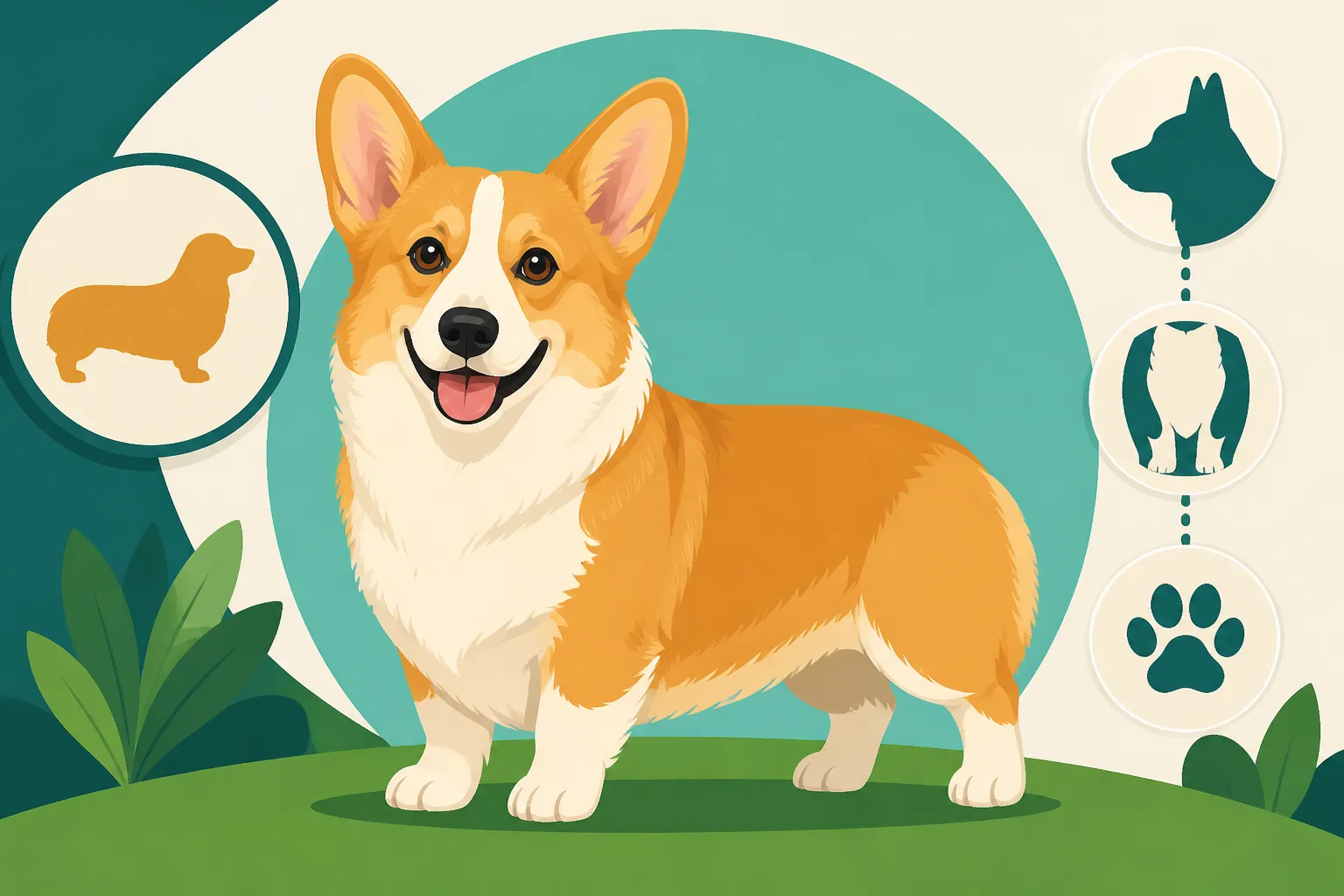
The Pembroke Welsh Corgi is described as a "long, low, powerful dog." This isn't just a casual observation; it's fundamental to its identity and history. Imagine trying to nip at the heels of cattle without getting kicked – being low to the ground was a distinct advantage. The standard emphasizes this elongated, yet substantial, frame. They're not delicate, nor are they overly bulky; they possess a solid, big-boned build. This body type, combined with their short, powerful legs, gives them their unique agility and speed for herding. It's what allows them to weave and dart around livestock, and later, around your living room.
Active and Agile, Not Clumsy
Despite their low-rider status, a well-bred Corgi should exude an aura of activity and agility. The standard specifically looks for a dog that is "active, alert, and intelligent." They aren't meant to waddle or lumber; rather, their movement should be free, graceful, and efficient. This means strong, coordinated strides that allow them to change direction quickly and cover ground effortlessly. A Corgi that appears clumsy or restricted in movement would be considered a fault, as it would hinder their ability to perform their traditional duties. This agility is a hallmark of the breed, allowing them to engage in various activities, from playing fetch to navigating a busy household.
Size and Proportion: Finding the Balance
The AKC standard outlines specific measurements that contribute to the Corgi's balanced appearance. For males, the ideal weight is around 28 pounds, and for females, it's 25 pounds, with a height ranging from 10 to 12 inches at the shoulder. These numbers aren't arbitrary; they ensure the dog maintains the correct proportions that make it both sturdy and agile. A Corgi that is too heavy or too tall might lose its characteristic low center of gravity, which is essential for its movement and health. The standard emphasizes that substance is important, but without coarseness. It's a fine line to walk, balancing robust build with moderate size, ensuring the dog is "big dog in a small package" without being overdone. The Ten to Twelve Inch Corgi gives you a better sense of these specific measurements.
Head and Expression: The Fox-Like Face
One of the most endearing features of the Pembroke Welsh Corgi is its distinctive head, often likened to that of a fox. This isn't just a charming comparison; it's a key part of the AKC standard, contributing to the breed's alert, intelligent, and friendly expression. A Corgi's head tells you a lot about its breed type, from the shape of its skull to the set of its ears and the sparkle in its eyes.
The Characteristic Fox-Like Head
The standard describes the Corgi's head as being "foxy in shape and appearance." This means a relatively broad, flat skull between the ears, tapering to a well-defined but not exaggerated stop (the area where the muzzle meets the forehead). The muzzle itself should be of medium length, neither too long and pointed like a collie, nor too short and blunt like a bulldog. This balanced proportion is essential for the dog's breathing and its ability to pick up scents while working. The overall impression is one of intelligence and alertness, without being sharp or overly refined.
Expressive Eyes and Alert Ears
A Corgi's eyes are one of its most captivating features. The standard calls for eyes that are oval in shape, medium in size, and set rather widely apart. They should be dark in color, typically brown or hazel, harmonizing with the coat. Their expression is often described as "keen, intelligent, and friendly," reflecting their active and bright nature. Piercing or prominent eyes are considered a fault. Then there are those iconic ears! They should be erect, firm, and of medium size, tapering slightly to a rounded point. They are set fairly wide apart, in proportion to the head, and angled slightly to the side. These alert ears contribute greatly to the fox-like appearance and are always ready to swivel and catch the slightest sound, a trait from their herding days.
Bite and Teeth: More Than Just a Smile
While you might not think much about your Corgi's teeth, the standard certainly does. It requires a "scissors bite," where the outer side of the lower incisors touches the inner side of the upper incisors. This is the most efficient and strong bite pattern for a working dog, allowing for a firm grip. Any deviation from this, such as an overshot or undershot bite, can be considered a fault as it impacts function. All teeth should be present and strong, indicating good dental health, which is vital for any dog's overall well-being. Even if your Corgi is a pampered pet, those teeth are still important, and understanding the standard helps identify potential issues early. Regular checks of your dog's mouth, perhaps with dental hygiene products found on Chewy, are always a good idea.
Body and Topline: The Signature Length
The body of the Pembroke Welsh Corgi is a testament to its design for working stock. It’s built for power, flexibility, and endurance, all contained within that distinctive low-to-the-ground frame. The AKC standard details every curve and line, from the neck to the tail set, ensuring that each component contributes to a dog capable of its traditional duties. This section focuses on the trunk of the Corgi, emphasizing the importance of its structure for both function and health.
Sturdy Neck and Level Back
The standard calls for a "fairly long neck, fitting well into the shoulders, and merging with a firm, level topline." The neck needs to be robust enough to support that foxy head and allow for full range of motion when herding. A short, thick neck can restrict movement, while an overly thin one might suggest a lack of substance. Crucially, the topline – the line running from the highest point of the shoulders to the base of the tail – must be level. This is paramount for a Corgi's spinal health. A dipped back (swayback) or a roached back (arched over the loin) can indicate structural weaknesses that could lead to problems, especially given their chondrodystrophic nature. This level topline is a key indicator of correct construction and something responsible breeders strive for. Why a Corgi's Back Is Built the Way It Is delves deeper into this architectural marvel.
Deep Chest and Well-Sprung Ribs
Beneath that level topline lies a powerful chest and rib cage, essential for the Corgi's stamina and lung capacity. The standard specifies a "deep chest, with well-sprung ribs, extending well back." A deep chest provides ample room for the heart and lungs, allowing the dog to sustain activity without quickly tiring. The ribs should be well-sprung, meaning they curve out from the spine, providing good breadth to the body without being barrel-shaped. This gives the dog a sturdy, substantial feel. If the ribs are flat, the chest may appear shallow, impacting lung function. The loin, the area between the ribs and hips, should be short and strong, further reinforcing the Corgi's powerful build. This combination ensures the dog can move efficiently and has the endurance required for a day's work.
The Pembroke's Unique Tail Status
Ah, the Corgi tail – or sometimes, the lack thereof! This is a unique characteristic for Pembrokes, and the AKC standard specifically addresses it. Historically, Pembroke Welsh Corgis were often docked (tail removed) for practical reasons, primarily to prevent injury while working livestock. However, the standard also recognizes "natural bobtails," Corgis born with naturally short tails due to a specific gene. The standard states that the tail "should be docked as short as possible without being indented. Ideally, the tail is carried level with the topline." For undocked tails (where docking is illegal or undesirable), the standard prefers them "set on and carried at a moderate extension, blending with the topline," not curling over the back. This section of the standard is particularly dynamic, as attitudes and regulations regarding tail docking have evolved over time. The Corgi Tail Question explores this aspect in much greater detail, and it’s always fascinating to see how each Corgi expresses this trait.
Forequarters and Hindquarters: Power in Those Short Legs
It’s easy to focus on a Corgi’s long body and adorable face, but don’t underestimate the power packed into those short legs! The forequarters and hindquarters are the engines that drive this sturdy little herder, enabling its distinctive movement and agility. The AKC standard meticulously describes the ideal structure for these limbs, ensuring they are built for strength, stability, and endurance, allowing the Corgi to work tirelessly without sacrificing its sound conformation.
Strong Front Assembly for Herding Work
The Corgi's front assembly is critical for stability and shock absorption, especially for a dog bred to dart and pivot. The standard calls for "shoulders well laid back, and forelegs short, powerful, straight, and substantial." This means the shoulder blades should angle back efficiently, allowing for good reach in movement. The short, straight legs are vital; bowed legs or a weak pastern (the area just above the paw) would be considered faults, as they compromise the dog's stability and could lead to orthopedic issues. Strong bone is emphasized, giving the Corgi that sturdy, "big dog in a small package" feel. The feet should be oval, with strong, well-arched toes and thick pads, providing excellent traction on varied terrain. This entire front assembly needs to work together to give the Corgi its characteristic strong, driving gait. Corgi Hips and Front-End Structure is a good read if you want to understand these nuances more deeply.
Powerful Hindquarters for Drive
Equally important are the Corgi's hindquarters, which provide the propulsion and drive for its agile movements. The standard describes them as "strong and flexible, with well-angulated stifles (knees) and hocks (ankles)." The hind legs should be well-muscled and parallel when viewed from the rear, indicating correct structure. Proper angulation in the stifles and hocks is crucial; too straight or too over-angulated can hinder efficient movement and put stress on joints. These powerful hindquarters are what allow a Corgi to spring into action, turning on a dime when necessary, whether it’s to move a stubborn cow or chase a favorite toy across the yard. The overall balance between the forequarters and hindquarters is key to the Corgi's sound structure and enduring health.
Movement: The Unmistakable Corgi Gait
When all these structural elements come together correctly, they produce the Corgi's signature gait. The standard describes this as "free and active, with a smooth, flowing action." The dog should move with good reach in the front and strong drive from the rear, maintaining that level topline. When viewed from the front, the legs should move parallel, and from the rear, the hocks should track close together. The Corgi shouldn't roll or waddle; rather, its movement should be surprisingly graceful and efficient for such a low-set dog. This is what allows them to work all day, covering ground without expending unnecessary energy. Any sign of clumsiness, crabbing (moving sideways), or paddling (flipping the front paws out) would be considered a fault, as it detracts from the Corgi's functional purpose. It’s a joy to watch a well-constructed Corgi move, a true testament to its heritage.
Coat and Color: More Than Just Red and White
One of the most visually striking aspects of the Pembroke Welsh Corgi is its coat. Not just its vibrant colors and markings, but also its texture and function. The AKC standard goes into detail about what is considered correct, guiding breeders and owners alike on the nuances of this double-coated breed. It's not merely about aesthetics; the coat serves a vital purpose in protecting the dog, a legacy of its life in the Welsh climate.
The Double Coat's Purpose and Texture
The Pembroke Welsh Corgi is equipped with a dense, weather-resistant double coat, perfectly suited for the often-damp and chilly climate of Wales where it originated. The standard describes it as "medium length, with a dense undercoat and a coarser outer coat." The undercoat provides insulation, keeping the dog warm in winter and helping to regulate body temperature in summer. The outer coat, often referred to as guard hairs, is slightly harsher to the touch and offers protection against rain, dirt, and minor scrapes. This double layer makes for a dog that can spend time outdoors without getting easily chilled or soaked. It's a coat that requires regular grooming, especially during seasonal sheds, but it should never be soft, silky, or woolly, as these textures do not offer the proper protection. You’ll definitely want to invest in good grooming tools, perhaps from Chewy, to manage that impressive double coat! The Two Weeks a Corgi Coat Comes Out in Handfuls is an understatement for those who live with this breed.
Permitted Colors and Markings
When it comes to color, the Pembroke Welsh Corgi offers a lovely palette, and the AKC standard specifies what's acceptable. The most common colors include red, sable, fawn, and black and tan. These colors can vary in intensity, from a rich mahogany red to a pale fawn. White markings are permitted on the legs, chest, neck, and muzzle, and they often create the distinct "Corgi smile" or collar. However, the standard also defines limits: "White on the body is acceptable only if it is confined to the neck (as a partial or full collar), chest, legs, and muzzle. Any white on the back or sides, or white beyond a full collar, is severely faulted." This ensures that the overall color impression remains true to the breed's heritage.
Here's a quick overview of acceptable colors and common markings:
| Main Color | Description | Common Markings |
|---|---|---|
| Red | Various shades, from light golden to deep mahogany | White on chest, legs, neck (partial/full collar), muzzle, blaze |
| Sable | Red with black tipping on the hairs, giving a shaded effect | White as above; often darker points on ears/tail |
| Fawn | A lighter, paler shade of red | White as above; typically softer contrast |
| Black and Tan | Black body with tan points on face, chest, legs | White as above; tan points clearly defined |
Understanding "Fluffies" and Other Deviations
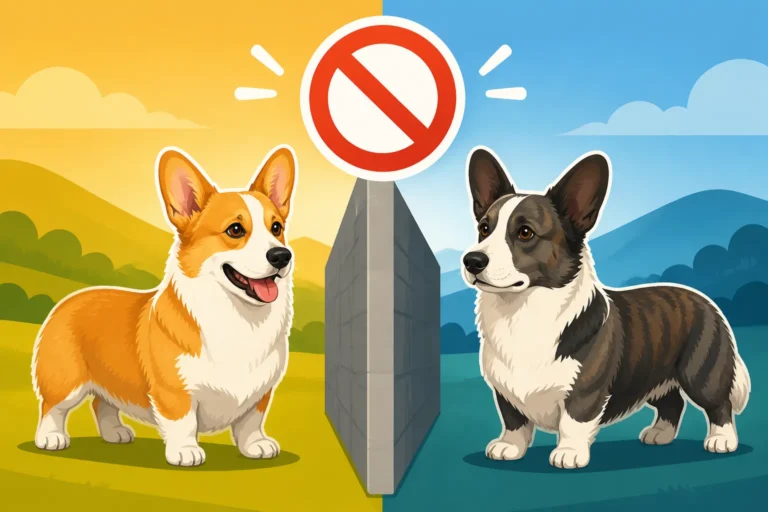
While the standard allows for a range of beautiful colors, it also clearly defines what is considered a deviation. The "fluffy" Corgi, for instance, has a coat that is longer, softer, and often has feathering on the ears, legs, and belly, giving it a more luxurious appearance. While undeniably charming and popular as pets, this coat type is considered a serious fault under the AKC standard because it lacks the protective qualities of the correct double coat. Other serious faults include overly large white markings on the body (known as "whitelies") or colors like blue merle, which is not genetically possible in purebred Pembrokes and indicates a cross with another breed (like a Cardigan Welsh Corgi or an Australian Shepherd). These deviations are important for breeders to be aware of, even if they produce perfectly healthy and beloved pets for families. Why the Fluffy Corgi Gene Persists is a topic many Corgi owners find fascinating, especially when they encounter these beautiful, long-coated pups.
Temperament: The Corgi Spirit
Beyond their distinctive looks, the Pembroke Welsh Corgi is equally defined by its vibrant and engaging personality. The AKC standard gives significant attention to temperament, recognizing that a dog’s character is just as important as its conformation. This section explores the inherent traits that make a Corgi a Corgi, from its bold intelligence to its loyal companionship.
Bold, Outgoing, and Intelligent
The standard describes the Pembroke Welsh Corgi's temperament as "outgoing and friendly, never shy or vicious." This is a dog with a big personality packed into a small body! They are typically bold, confident, and very much aware of their surroundings. Their intelligence is a hallmark, a leftover from their days of needing to think independently while herding livestock. This means they are quick learners, but also possess a mischievous streak and a tendency to make their own decisions. While this independent thinking can make them a joy to train with positive reinforcement, it can also lead to hilarious, albeit sometimes challenging, moments of Corgi "sass." Training a Corgi That Makes Its Own Decisions is a testament to this inherent trait.
Alert Watchdog with a Big Bark
Don't let their short stature fool you; Corgis are excellent watchdogs. Their alert nature, combined with their history of needing to protect the flock (and later, the household), means they are quick to notice anything out of the ordinary. The standard doesn't explicitly mention barking, but it's an inherent trait of the breed derived from their vigilance. They have a surprisingly deep and resonant bark for their size, and they're not afraid to use it to announce visitors, passing squirrels, or even the mail carrier. While this can be a blessing for security, it's also something Corgi owners often need to manage with consistent training and socialization to ensure it doesn't become excessive. They are keen observers, missing nothing, and always ready to inform you of the world outside your window.
Training and Socialization Considerations
While the standard defines an ideal temperament, it also subtly implies the need for proper socialization and training from an early age. A Corgi's natural boldness and intelligence, if not channeled correctly, can lead to stubbornness or bossiness. Their herding instinct, for example, can manifest as nipping at heels, particularly of children, if not redirected. The Cattle-Driving Nip a Corgi Still Has is a classic example of a breed trait that needs thoughtful management. Early exposure to different people, places, sounds, and other animals is crucial to developing a well-adjusted Corgi. Their friendly nature makes them generally eager to please, but their independent spirit means consistency and positive reinforcement are key to successful training. They thrive on having a job to do, even if that "job" is just learning new tricks or engaging in scent work, which helps keep their intelligent minds stimulated.
Faults and Disqualifications: What to Watch Out For
While the AKC standard paints a picture of the ideal Pembroke Welsh Corgi, it also clearly outlines characteristics that are considered faults or even disqualifications. These aren't just arbitrary rules; they highlight deviations that could impact the dog's health, structural integrity, or ability to perform its original function. For potential owners, understanding these points can be incredibly helpful when looking for a puppy or recognizing areas where their own Corgi might benefit from extra care.
Structural Faults Impacting Function
Many faults listed in the standard relate directly to structure, because a Corgi's build is so crucial to its well-being. For example, a "soft, weak, or unsound topline" is a serious fault, as it can predispose the dog to spinal problems. Poor angulation in the front or rear, splayed feet, or bowed legs would also be considered structural faults, as they hinder efficient movement and can lead to joint issues. A Corgi that is too heavy for its frame, or conversely, too light-boned, deviates from the ideal substance. These structural flaws aren't just aesthetic; they can literally impact a Corgi's quality of life and potentially lead to significant vet bills down the line. Responsible breeders work hard to minimize such faults through careful breeding choices and health testing.
Color and Coat Disqualifications
Beyond the structural elements, the standard is quite specific about acceptable colors and coat types. As mentioned, the "fluffy" coat, while popular, is a serious fault because it doesn't offer the correct protection. Any color not listed as acceptable, or excessive white markings, particularly those extending onto the back or sides (often called "Irish marked" or "whitelies"), are also faults. A disqualification means the dog cannot be shown in conformation events. For Pembrokes, this includes colors like blue merle, which is a coat pattern associated with the Cardigan Welsh Corgi and not naturally occurring in Pembrokes. If you encounter a "blue merle Pembroke," it’s a strong indicator of cross-breeding. While such dogs can still be wonderful pets, understanding these distinctions is important for breed purity and health considerations.
Temperament Deviations to Avoid
The standard explicitly addresses temperament, stating that "shyness or viciousness" are serious faults. A Corgi should be bold, confident, and outgoing, not timid or aggressive. While some Corgis might be reserved with strangers, true shyness, where a dog cowers or shows extreme fear, is undesirable. Likewise, any aggression towards humans or other animals that isn't provoked (e.g., resource guarding which can often be trained) is a serious concern. A well-bred Corgi should possess a stable temperament, capable of being a loving family companion. Deviations in temperament can pose significant challenges for owners and can be a safety concern, highlighting the importance of choosing a puppy from a reputable breeder who prioritizes good temperaments in their breeding stock.
Disclaimer
This article is for general informational purposes only and does not constitute professional advice. Laws, prices and regulations vary by location and change over time. Consult a qualified professional for guidance on your specific situation.