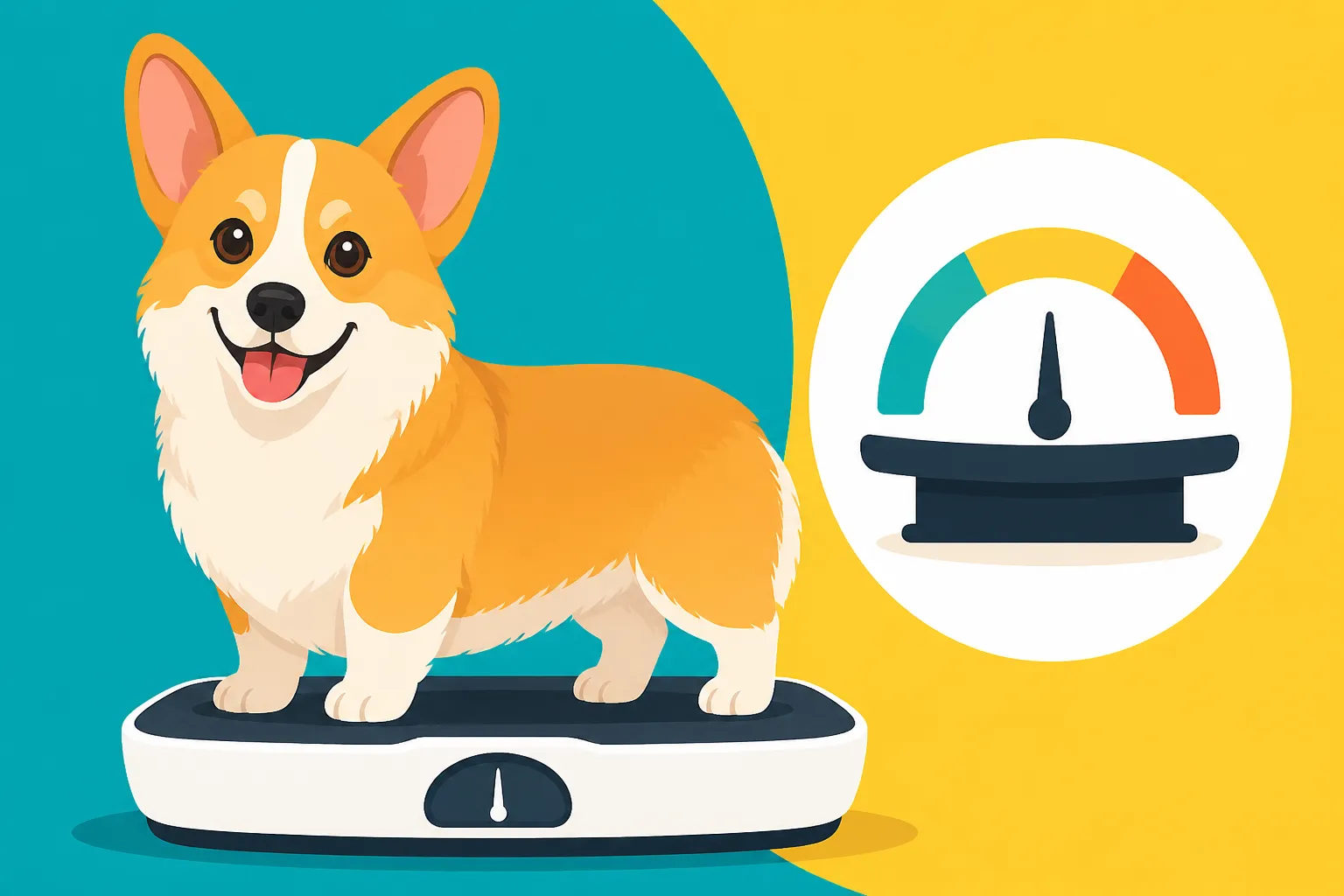
What a Pembroke Should Weigh
It’s a common misconception, isn’t it? That a Corgi is naturally just… a little round, a bit of a "loaf" with legs. While their adorable, low-slung bodies do give them a unique silhouette, it’s far too easy for those fluffy coats and short legs to hide extra pounds, often leading to serious health issues down the line. This guide is here to help you understand what a healthy Pembroke Welsh Corgi really looks like, how to accurately assess your furry friend's condition, and why maintaining that ideal weight is paramount for their long-term well-being.
Understanding the Pembroke Welsh Corgi Standard for Weight
When we talk about an "ideal weight" for a Pembroke Welsh Corgi, we're not just pulling numbers out of thin air. There's a widely accepted breed standard that outlines what a Corgi should look and feel like, which directly correlates to their health and function. It's not about being show-ring ready for every Corgi, but understanding these guidelines helps us recognize when our beloved companions are drifting into unhealthy territory.
Why Breed Standards Matter for Health
The breed standard for the Pembroke Welsh Corgi describes a dog that is sturdy, active, and capable of working cattle. This means they need to be agile, quick, and powerful, despite their short stature. An overweight Corgi simply cannot meet these physical requirements. Their long backs, a defining characteristic of the breed, are especially vulnerable to the added stress of excess weight. Think of it like carrying a heavy backpack all day, every day – eventually, your own back would protest! This vulnerability is precisely why discussions around Why Corgi Weight Is a Spinal Problem are so critical.
The standard emphasizes a strong, level back and well-sprung ribs, without being barrel-chested or appearing heavy. For males, the weight typically falls in a certain range, and for females, a slightly lighter range is generally expected. These aren't rigid numbers that every Corgi must hit, but rather a guideline for overall proportion and condition. My own Corgis have always been on the leaner side of their respective ranges, and it’s always paid off in their energy levels and longevity.
The Numbers: What a Pembroke Should Weigh
While I can't give you exact numbers as if they were universal truths for every single dog, because individual genetics and build play a role, the generally accepted range for an adult male Pembroke Welsh Corgi typically falls around 27-30 pounds. For an adult female Pembroke Welsh Corgi, you're usually looking at something closer to 25-28 pounds.
Now, these are often quoted as "official" ranges, but in real life, a healthy, fit Corgi might be slightly outside these, particularly if they are taller or stockier than average. The key is condition more than a precise number on the scale. A Corgi that weighs 32 pounds but is lean and muscular might be healthier than one at 28 pounds that's carrying too much fat. It's all about how that weight is distributed and what it feels like under their fluffy coat. This is a conversation you absolutely need to have with your veterinarian, as they can assess your specific dog's frame and musculature.
How to Assess Your Pembroke's Body Condition
The scale is just one tool in our arsenal. Because Corgis have such dense coats and unique builds, it can be deceptively easy to miss those creeping pounds until they become a significant problem. That's why understanding how to perform a simple body condition assessment at home is so vital. It’s about more than just looking at them; it’s about feeling their shape.
The Visual Check: From Above and the Side
First, let's talk about what you see. When you look at your Corgi from directly above, you should see a discernible waist. Not a dramatic hourglass, but a gentle inward curve between their ribs and their hips. If your Corgi looks more like a furry sausage or a solid rectangle from above, that's often the first red flag. There should be a distinct tuck-up from the side, too. As they stand, their belly should ascend slightly from their rib cage to their hind legs, not hang low or appear parallel to the ground. A Corgi that's looking like a low-rider blimp definitely needs a diet intervention. You might even want to take a "before" picture for your records, as sometimes seeing it objectively helps you realize Photographs That Show a Corgi Has Gained.
Their short legs and deep chests can make judging their weight tricky. Many owners unknowingly allow their Corgis to carry extra weight, mistaking their roundness for "cuteness" or breed-typical build. This is where the physical examination becomes critical.
The Hands-On Approach: Feeling for Ribs and Waist
This is where the real assessment happens. Run your hands along your Corgi's sides, over their rib cage. You should be able to easily feel their ribs, almost like feeling the knuckles on your hand, without having to press hard. If you have to dig your fingers in to locate the ribs, your Corgi is likely carrying too much fat. Conversely, if the ribs are prominently visible and feel sharp to the touch, they might be too thin – though this is less common with Pembrokes.
Next, feel along their spine. You should be able to feel the individual vertebrae, again, without pressing hard. Then, move your hands to their waist area, just behind the rib cage. You should feel that gentle tuck, that narrowing of the body. If it feels soft, fleshy, or lacks definition, it's time to reassess their diet and exercise. This hands-on check is far more accurate than just looking at their adorable floof! It’s a trick I learned early on and one I always share because Feeling for Ribs Through a Corgi's Undercoat is key to accurate assessment.
The Body Condition Score (BCS)
Veterinarians often use a system called the Body Condition Score (BCS), typically on a 5-point or 9-point scale. This is a more objective way to assess your dog's weight. On a 5-point scale, a score of 3 is considered ideal. On a 9-point scale, a 4 or 5 is ideal. It correlates directly with the visual and hands-on checks we just discussed.
Here’s a simplified look at the BCS categories:
| BCS (5-Point Scale) | Description | What it Means for Your Corgi |
|---|---|---|
| 1 (Emaciated) | Ribs, lumbar vertebrae, pelvic bones, and bony prominences easily visible from a distance. No discernible body fat. Obvious loss of muscle mass. | Extremely underweight. Ribs, spine, and hip bones stick out prominently. Muscle loss is visible. This is very rare for a Corgi unless there's a serious underlying health issue or neglect. |
| 2 (Underweight) | Ribs easily palpable and visible. Lumbar vertebrae and pelvic bones becoming obvious. Minimal abdominal fat. | Thin. Ribs easily felt, might be somewhat visible. Waist tuck is very pronounced. Less common, but can happen if diet is too restricted or due to illness. |
| 3 (Ideal) | Ribs easily palpable without excess fat covering. Waist observed behind ribs when viewed from above. Abdominal tuck present. | Just right! Ribs are easily felt, but not seen. There’s a clear waist when viewed from above and a nice tuck-up from the side. This is The Body Condition Score a Corgi Owner Aims For. |
| 4 (Overweight) | Ribs palpable with difficulty. Noticeable fat deposits over lumbar area and base of tail. Waist absent or barely visible. Obvious abdominal distention. | A bit chunky. You have to press to feel the ribs. The waist is less obvious or non-existent. There might be some fat over the tail base. This is where many Corgis start to slide without owners noticing. |
| 5 (Obese) | Massive fat deposits over chest, spine, and tail base. Waist absent. Abdominal distention obvious. Broad, flat back. | Severely overweight. Ribs are very hard to feel. No waist, sagging belly. Extensive fat deposits. This significantly impacts their health and mobility. |
The Dangers of an Overweight Pembroke Corgi
It might seem harmless for your Corgi to carry a few extra pounds, after all, they look so cuddly! But for a breed with such a specific body type, those extra pounds are far from harmless. They place immense strain on their unique anatomy and can lead to a cascade of serious health problems, significantly shortening their lifespan and quality of life.
Strain on the Spine and Joints
This is perhaps the biggest concern for Corgi owners. Corgis are chondrodystrophic breeds, meaning they have disproportionately short legs and a long back. This genetic trait makes them predisposed to Intervertebral Disc Disease (IVDD), where the discs in their spine degenerate and can rupture, causing immense pain, nerve damage, and even paralysis. Every extra pound your Corgi carries amplifies this risk. Imagine a bridge designed for a certain load; adding more and more weight dramatically increases the chance of collapse. That's essentially what happens to a Corgi's spine when they're overweight. Articles like Disc Disease in a Long-Backed Corgi explore this in depth.
Beyond IVDD, excess weight puts enormous pressure on all their joints – hips, elbows, and knees. This accelerates the development of arthritis, making movement painful and reducing their willingness to exercise, which only compounds the weight problem. An overweight Corgi might struggle to get up, hesitate before jumping (even small jumps!), and generally move with less enthusiasm.
Increased Risk of Other Health Issues
The ramifications of obesity extend far beyond just bones and joints. Just like in humans, overweight dogs are at a much higher risk for a variety of serious conditions:
- Diabetes: Their bodies become less efficient at using insulin, leading to high blood sugar. This is a serious, lifelong condition requiring daily management.
- Heart Disease: The heart has to work harder to pump blood through a larger body mass, stressing the cardiovascular system.
- Respiratory Problems: Excess fat around the chest cavity can make breathing more difficult, especially in warmer weather. This is particularly problematic for Corgis who already have a dense double coat and can be prone to Heat Sensitivity Under a Corgi's Double Coat.
- Certain Cancers: Some studies suggest a link between obesity and an increased risk of certain types of cancer in dogs.
- Reduced Quality of Life: Simply put, an overweight Corgi can't enjoy life to the fullest. They're less energetic, less playful, and often more uncomfortable. They can't run, jump, or engage in activities that make a Corgi a Corgi.
It's a tough truth, but How Obesity Shortens a Corgi Life is a topic every Corgi owner needs to confront head-on. The good news is, you have the power to prevent many of these issues by maintaining a healthy weight.
Practical Steps to Maintain a Healthy Weight for Your Corgi
Okay, so we know why a healthy weight is so important. Now, let's talk about how to achieve and maintain it. This isn't about fad diets or extreme measures, but consistent, thoughtful management of their diet and activity.
Precision in Feeding: Measure Everything!
This is probably the single most impactful change you can make. Corgis are notoriously food-motivated, and they'll often convince you they're starving even when they're not. Free-feeding, where food is left out all day, is a recipe for disaster for most Corgis. Instead, measure every single meal. Use an actual measuring cup, or better yet, a digital kitchen scale for absolute accuracy, as Why a Corgi's Food Is Weighed, Not Scooped is a concept many new owners miss. You can find reliable digital scales and measuring cups on platforms like Amazon or Chewy.
Divide their daily ration into two or even three smaller meals to help manage hunger and metabolism. Don't just follow the bag's recommendations blindly; those are averages. Your Corgi's exact calorie needs will depend on their age, activity level, and individual metabolism. Your vet can help you determine the appropriate calorie target, especially if your Corgi needs to lose weight. For example, The Calorie Target for a Twenty-Eight Pound Corgi will be very different from a 25-pound one.
For those looking for perfectly portioned, fresh meals, services like Ollie offer pre-portioned options that can help take the guesswork out of feeding, making it easier to stick to a calorie goal.
Smart Snacking and Treat Management
Treats are often the silent culprits behind weight gain. While we all love to spoil our Corgis, those extra calories add up fast. Opt for low-calorie treats, like small pieces of carrot, green beans, or blueberries. If you're using commercial treats, break them into tiny pieces. Your Corgi doesn't care about the size, just the fact that they're getting a treat.
Crucially, treats should be factored into their daily calorie allowance, not given on top of it. If you're doing a training session, use a portion of their kibble as rewards instead of additional treats. This helps keep their total intake balanced while still allowing for positive reinforcement. And please, resist those pleading Corgi eyes at the dinner table. Human food, even small scraps, can be incredibly high in calories and fat for a Corgi's small body.
Regular, Appropriate Exercise
While diet is 80% of the battle, exercise is still vital for a Corgi's physical and mental health. Daily walks are a must. Aim for two good walks a day, lasting at least 20-30 minutes each, keeping in mind that The Forty-Five Minutes a Corgi Needs Daily is a good baseline for total activity. This provides physical activity and mental stimulation.
However, be mindful of their back. Avoid high-impact activities like excessive jumping, especially if they are already overweight. Instead, focus on brisk walks, gentle trotting, and playtime with toys in a safe, flat area. Puzzle toys and scent work are fantastic ways to engage their minds and burn some calories without putting undue stress on their bodies. These mentally stimulating activities can also help satisfy their herding instinct in a safe way, as outlined in The Job a Corgi Needs Instead of Herding You. For an overweight Corgi, starting slow and gradually increasing duration and intensity is key.
Regular Vet Check-ups and Monitoring
Your veterinarian is your best partner in maintaining your Corgi's healthy weight. During annual check-ups, they'll perform a Body Condition Score assessment and weigh your dog. Be honest with them about your Corgi's diet and activity levels. If your Corgi is overweight, your vet can help you develop a safe and effective weight loss plan, including recommending specific dietary foods or even supplements if necessary.
Don't wait until there's a problem. Proactive monitoring and regular discussions with your vet can prevent small weight gains from becoming significant health crises. After all, a healthy weight is one of the greatest gifts you can give your Corgi, setting them up for a long, happy, and active life by your side.
Disclaimer
This article is for general informational purposes only and does not constitute professional advice. Laws, prices and regulations vary by location and change over time. Consult a qualified professional for guidance on your specific situation.