Why Clipping a Corgi Ruins the Coat
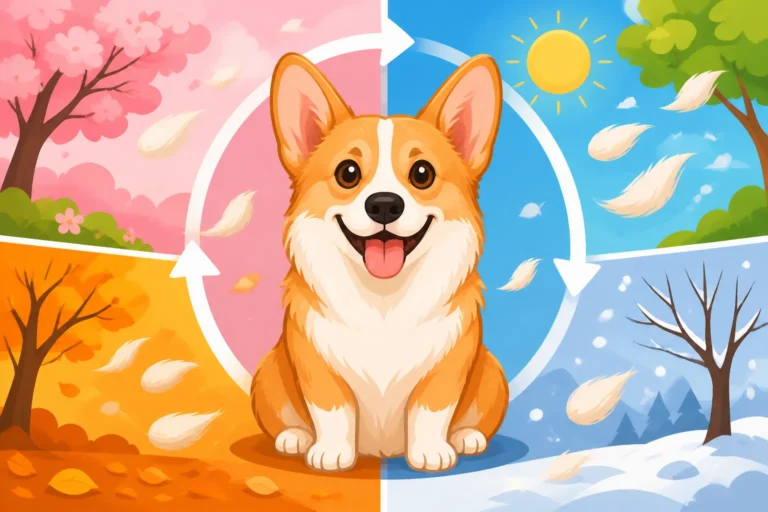
Oh, the Corgi shed. It’s a relentless, year-round blizzard of fluff that finds its way into every corner of your home, onto every piece of clothing, and sometimes, mysteriously, into your coffee. It's a common frustration that can make even the most devoted Corgi parent consider drastic measures, like reaching for the clippers. Many folks imagine that by shaving off that abundant fur, they’ll finally get a break from the shedding and perhaps even help their little low-rider stay cooler in the summer heat. But trust me, that clipper shave, while tempting, is almost always a decision you'll come to regret. It doesn't just alter their appearance; it can profoundly damage their natural coat, disrupt their body's ability to regulate temperature, and often leads to more problems than it solves. This guide will walk you through exactly why clipping a Corgi's coat is a serious no-no and what you should do instead to manage that beautiful, albeit prolific, fur.
The Corgi's Double Coat: Nature's Masterpiece of Protection
Before we dive into why clipping is detrimental, it’s crucial to understand the magnificent engineering of a Corgi's natural coat. It’s not just hair; it’s a sophisticated, multi-layered system designed by nature to keep them comfortable and safe in a variety of conditions.
What Exactly is a Double Coat?
A Corgi's coat is a classic example of a "double coat," a common feature among many northern breeds and those developed for outdoor work. Think of it like a highly specialized, all-weather jacket with two distinct layers, each serving a vital purpose.
The outer layer consists of what we call "guard hairs." These are typically coarser, longer, and somewhat stiffer than the undercoat. They're designed to be waterproof and dirt-repellent, forming a protective shield against rain, snow, and general grime. These guard hairs also provide a physical barrier against sunlight, thorns, and insect bites. They have a natural sheen and maintain the overall shape and color of your Corgi's coat. Beneath this protective outer shell lies the second, crucial layer: the undercoat. This layer is soft, dense, and fluffy, often resembling cotton wool. Its primary job is insulation. In cold weather, it traps a layer of warm air close to the dog's body, keeping them toasty. In hot weather, it works in reverse, acting as a barrier to the external heat, allowing air to circulate and cool the skin. When your Corgi "blows" its coat, it's typically this dense undercoat that comes out in prodigious amounts.
Why Corgis Have This Specific Coat Type
Corgis, whether Pembrokes or Cardigans, originated as herding dogs in the rugged climate of Wales. Their job was to drive cattle, often working long hours outdoors in varying weather conditions, from damp, chilly mornings to warm, sunny afternoons, and navigating through brush and brambles. Their short stature meant they were constantly brushing against undergrowth.
Their double coat was, and still is, perfectly adapted for this demanding lifestyle. The dense undercoat provided essential warmth and protection against the cold, damp Welsh climate, allowing them to remain out in the fields without succumbing to the elements. Simultaneously, the tough outer guard hairs shielded their skin from rain, mud, and any physical abrasions they might encounter while darting between cattle or pushing through dense brush. Even when the sun beat down, that double coat, contrary to what many people might think, actually helped keep them cool. It prevented direct sunlight from reaching their skin, reducing the risk of sunburn, and allowed for airflow, creating a natural ventilation system. It was truly their personal, built-in air conditioning and heating system, all rolled into one. Without it, their skin would be exposed, and their bodies would struggle to maintain a stable temperature. How a Corgi Handles Hot Weather delves into how important their coat is for regulating temperature.
The Damage Clipping Inflicts
When you take clippers to a Corgi's double coat, you're not just giving them a haircut; you're fundamentally altering a sophisticated biological system that has evolved over centuries to protect and regulate their body. The consequences are far more significant than a simple aesthetic change.
Disrupting the Natural Growth Cycle
One of the most immediate and visible effects of clipping a Corgi's coat is the disruption of its natural growth cycle. A double coat isn't meant to be cut short. When you clip it, you're cutting both the guard hairs and the undercoat down to the same length. The problem is, these two types of hair grow back at different rates.
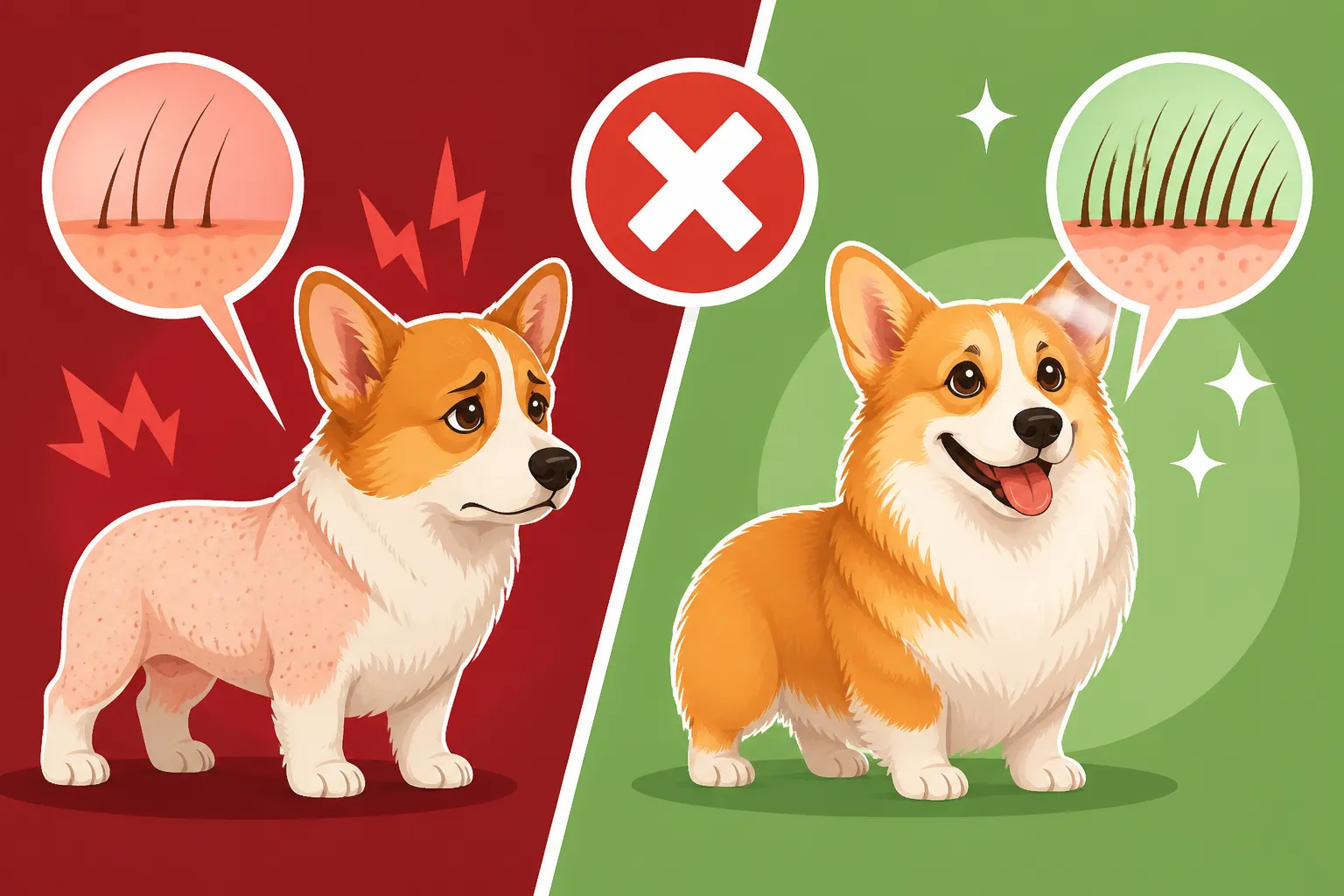
Typically, the soft, fluffy undercoat grows back much faster and thicker than the coarser guard hairs. This means that after a clip, the fast-growing undercoat can overwhelm and essentially "choke out" the slower-growing guard hairs. The result is a coat that grows back unevenly, with the soft, cottony undercoat dominating. This leads to a visibly altered texture, often described as "fuzzy" or "cottony," which feels markedly different from the sleek, weather-resistant coat your Corgi once had. In some cases, the guard hairs may never fully grow back to their original length or texture, leaving your Corgi with a permanently damaged coat that lacks its natural luster and protective qualities. The appearance can be patchy, with some areas regrowing fuzzily while others remain sparse. It's a real frustration for owners hoping for a quick fix, only to find they’ve created a long-term grooming challenge. You can learn more about this by reading The Patchy Regrowth on a Clipped Corgi.
Impairing Temperature Regulation
This is perhaps the most critical and misunderstood consequence of clipping a Corgi. Many owners believe that shaving their Corgi will help them stay cooler in the summer, especially with that thick undercoat. Unfortunately, the opposite is often true.
The double coat acts as a fantastic insulator against both cold and heat. In warm weather, the guard hairs prevent direct sunlight from reaching the skin, reducing heat absorption. The undercoat, when healthy and properly maintained, allows air to circulate, creating a natural cooling barrier. It's like having a well-ventilated, reflective roof over their skin. When you clip this coat, you remove this natural protection. The Corgi's delicate skin is suddenly exposed to direct sunlight, making them more susceptible to overheating and painful sunburn. Without the air trapped in the undercoat to act as an insulating buffer, their body temperature can actually rise faster, as their skin absorbs more heat. In cooler weather, the lack of a dense undercoat means they lose their primary source of warmth, leaving them vulnerable to the cold. The protective barrier is gone, making them colder in the winter and surprisingly, hotter in the summer. It's a classic example of human logic not applying to canine biology. Why a Clipped Corgi Loses Its Weather Protection explains this phenomenon in more detail.
Loss of Skin Protection and Increased Health Risks
Beyond temperature regulation, a Corgi's double coat provides crucial physical protection to their skin. The guard hairs are a first line of defense against the elements and environmental hazards.
When these guard hairs are clipped away, the skin underneath is left vulnerable. This means a much higher risk of sunburn, especially for Corgis with lighter coats or pinker skin. Just like humans, dogs can get painful, damaging sunburns that increase their risk of skin cancer. The exposed skin is also more susceptible to insect bites and stings, which can cause discomfort, allergic reactions, and even transmit diseases. Furthermore, without the protective barrier of the guard hairs, minor irritants like pollen, dust, and certain plants can more easily come into direct contact with the skin, leading to rashes, itching, and potential skin infections or hot spots. The natural oils and protective layers of the skin are also less guarded, potentially leading to dryness or other dermatological issues.
The Myth of Reduced Shedding
The number one reason most Corgi owners contemplate clipping is the shedding. It’s truly epic. You sweep, you vacuum, you lint-roll, and still, the fur persists. So, the idea that a quick shave will solve this furry problem is incredibly appealing. However, it's a common misconception that often leads to disappointment.
Why Clipping Doesn't Actually Stop Shedding
Here's the frustrating truth: clipping your Corgi doesn't stop shedding; it merely changes the nature of the shed. The undercoat will still grow and shed according to its natural cycle, regardless of whether the guard hairs are present. When you clip the coat, you're essentially cutting all the hairs down to a short length.
As the undercoat regrows, it will continue to shed. The difference is that now, instead of long, easily visible hairs that might clump together, you'll have a constant shower of short, pokey, bristly hairs. These shorter hairs tend to embed themselves more deeply into carpets, upholstery, and clothing, making them even harder to remove than the longer strands you were trying to escape. Imagine tiny, stiff needles constantly working their way into every fabric surface in your home. Many owners find that while the volume of shed hair might seem less at first glance, the nuisance of it actually increases because the short hairs are so difficult to get rid of. It’s a classic case of out of the frying pan, into the fire. Whether a Corgi Really Sheds Every Day and Corgi Hair Woven Into Carpet perfectly describe this ongoing battle.
The "Cooling" Fallacy
We touched on this earlier, but it bears repeating because it's such a pervasive and understandable belief. It makes logical sense to us as humans: if we’re hot, we wear less clothing. So, why wouldn't the same apply to our Corgis?
The fallacy lies in not understanding how a double coat functions as a natural thermal regulator. Picture a well-insulated thermos. It keeps hot liquids hot and cold liquids cold by creating a barrier that prevents heat exchange. A Corgi's double coat works similarly. The dense undercoat traps air, and this trapped air acts as an insulating layer. In winter, this layer holds warm air in, close to the body. In summer, it prevents external heat from penetrating, while the natural airflow through the coat allows the Corgi's body to radiate heat away slowly, much like a swamp cooler. When you shave the coat, you remove this insulating layer. You also expose the skin directly to the sun's rays. The Corgi's body then has to work harder to cool itself because it's losing its natural defenses against heat. They become more prone to heatstroke and discomfort, especially on very hot days. Instead of feeling a cool breeze on their skin, they're feeling direct sun, which heats them up rapidly.
Long-Term Consequences and Irreversible Changes
The effects of clipping a Corgi's double coat aren't just temporary; they can be long-lasting and, in some unfortunate cases, irreversible. The coat you once knew may never fully return to its original glory.
Permanent Coat Damage and Texture Changes
One of the most disheartening long-term consequences is what groomers affectionately (or perhaps despairingly) refer to as "coat funk" or "clipper alopecia." After being clipped, some Corgis develop a coat that never truly recovers its original texture, density, or protective qualities.
The new growth can be perpetually dull, coarse, or feel like cotton, losing the distinct sleekness and weather resistance of the guard hairs. This isn't just an aesthetic issue; it means the coat no longer functions optimally as a barrier against the elements. The texture can become prone to matting more easily, even with regular brushing, because the guard hairs are no longer guiding and protecting the softer undercoat. It’s like trying to comb through tangled cotton rather than smooth silk. For many owners, this permanent change is a profound regret, realizing too late that a momentary decision has altered their beloved Corgi's iconic coat indefinitely. While some coats may eventually show some improvement over a period of many months or even years, a complete return to the pre-clipped state is not guaranteed and often doesn't happen, especially after multiple shaves.
Increased Grooming Needs
It might seem counterintuitive, but a clipped Corgi can actually demand more intensive grooming efforts, not less. While the initial impulse to clip is often to reduce maintenance, the reality can be quite different.
With the guard hairs compromised and the undercoat growing back faster and denser, the coat can become incredibly prone to matting. The uneven lengths and different textures can tangle easily, especially in high-friction areas like behind the ears, under the legs, or around the 'skirt' or 'trousers' of their hindquarters. These mats can be painful for your Corgi, pulling on their skin and potentially leading to hot spots or skin infections if left untended. You might find yourself needing to brush them even more frequently than before the clip, just to prevent painful matts from forming. This could also mean more frequent professional grooming appointments, focused on de-matting and careful deshedding, which can add up in cost. Ultimately, the very problem you were trying to solve – the hassle of coat maintenance – might become a different, perhaps even more challenging, beast.
Healthy Alternatives to Clipping
So, if clipping is out of the question, what can a Corgi owner do to manage that majestic, shedding coat and keep their furry friend comfortable? Thankfully, there are many effective and healthy alternatives that work with their natural coat, not against it.
Effective Deshedding Techniques
The key to managing a Corgi's coat and minimizing shedding indoors is consistent, effective deshedding. This involves regular brushing with the right tools, aimed at removing the loose undercoat before it has a chance to fall out all over your house.
Start by investing in good quality grooming tools. A slicker brush can help loosen dead hair, but the real heroes are an undercoat rake and a de-shedding tool (like a Furminator or similar brand). An undercoat rake has long, widely spaced teeth that reach deep into the undercoat without damaging the guard hairs. Use it gently, working in sections, to pull out handfuls of loose fluff. Follow this with a de-shedding tool, which helps to grab even more of that fine undercoat. Regularity is paramount; aim for 15-20 minutes of thorough brushing a few times a week, and daily during their "blowing coat" seasons (which, for a Corgi, feels like most of the year!). You'll be amazed at how much hair you can remove before it ends up on your sofa. You can find a wide array of these tools on Amazon or Chewy, making it easy to get what you need. Remember, the goal is to remove the dead undercoat, allowing air to circulate and reducing the amount of hair that sheds onto your floors. This is a much healthier approach for their skin and coat. For more information, check out The Rake and Comb a Corgi Coat Actually Needs and Brushing a Corgi Daily Through a Shed.
Professional Grooming for Corgis
Sometimes, tackling the Corgi fluff at home feels like a losing battle, or perhaps your Corgi isn't keen on being brushed for extended periods. That's where a professional groomer, one who understands double-coated breeds, can be an absolute lifesaver.
A good professional groomer will never suggest shaving a Corgi unless there's a serious medical reason (like severe matting beyond saving, or surgery prep). Instead, they offer specialized "deshedding treatments" or "deep conditioning baths." These typically involve a thorough bath with deshedding shampoo and conditioner, followed by a powerful high-velocity dryer. This dryer, often more potent than anything you have at home, literally "blasts" the loose undercoat out of the coat without cutting or damaging the guard hairs. It's an incredibly effective way to remove a massive amount of shedding hair in one go. After drying, they'll often follow up with professional-grade undercoat rakes and combs. This process not only dramatically reduces shedding for weeks but also leaves your Corgi's coat clean, healthy, and shiny, allowing it to function as nature intended. It’s an investment, but many Corgi owners find it invaluable, especially during peak shedding seasons. For example, some Corgi owners get a deshedding treatment every 6-8 weeks, which greatly helps manage the constant fluff. Groomers Who Suggest Shaving a Corgi discusses finding the right groomer.
Environmental Management and Lifestyle Adjustments
Beyond direct grooming, there are other ways to help your Corgi stay comfortable, especially in warmer weather, without resorting to clipping. These adjustments focus on managing their environment and daily routine.
First, ensure your Corgi always has access to shade and fresh, cool water, especially when outdoors. On hot days, limit walks and strenuous exercise to the cooler parts of the day – early morning or late evening. Consider using cooling mats or elevated beds that allow for airflow underneath, which can make a big difference for low-riders who are always close to the ground's heat. Inside, keep your home comfortably air-conditioned or use fans to ensure good air circulation. Some owners find that a kiddie pool with a few inches of water in the backyard can be a fun and safe way for their Corgi to cool off. While diet isn't a direct grooming tool, a high-quality, balanced diet can contribute to overall coat health. Brands like Ollie offer fresh, balanced meals that support a healthy skin and coat, which in turn can make shedding more manageable and the coat more resilient. Remember, your Corgi's coat is designed for protection; your job is to help it do its job effectively through proper care and a thoughtful environment. Sometimes, simply knowing Whether a Corgi Should Be Trimmed in Summer is enough to make the right choice.
The Only Trimming a Corgi Needs
While clipping or shaving a Corgi’s entire coat is a definite no-go, there are specific, minimal types of trimming that are not only acceptable but often beneficial for hygiene and comfort. This isn't about altering the coat's structure but tidying up areas prone to getting dirty or overgrown.
The primary areas where a Corgi might benefit from a very light, specific trim are their "feathering" (the longer hair on their legs and hindquarters), their feet, and their sanitary areas. The "trousers" or "skirt" around their hindquarters can sometimes become very long and dense, collecting debris or making it harder to keep clean after potty breaks. A light scissor trim here can prevent matting and improve hygiene. Similarly, the longer feathering on their legs can pick up mud and burrs. A careful trim to keep it neat and off the ground can be helpful. For their feet, trimming the hair between their paw pads is important to prevent slipping on smooth surfaces and to keep debris from getting trapped there. This helps maintain good paw health and comfort.
This is strictly a light tidying up, usually done with blunt-nosed scissors, and is very different from using electric clippers to take down the entire coat length. It respects the integrity of the double coat while addressing practical needs. If you're unsure how to do this yourself, a reputable professional groomer who understands Corgi coats can perform these minor trims safely and effectively, ensuring your Corgi remains comfortable and well-maintained without compromising their natural defenses.
| Feature | Clipping/Shaving | Proper Deshedding/Grooming |
|---|---|---|
| Coat Structure | Damages guard hairs; undercoat overgrows | Maintains integrity of both coat layers |
| Texture | Can become fuzzy, cottony, uneven | Retains natural sleek, weather-resistant texture |
| Shedding | Changes to shorter, pokier, harder-to-clean hairs | Removes loose undercoat, reducing house-shed |
| Temperature Regulation | Impairs insulation, leading to overheating/chilling | Enhances natural cooling/warming abilities |
| Skin Protection | Exposes skin to sunburn, bites, irritants | Provides natural shield against elements |
| Grooming Needs | Can increase matting and demand for professional de-matting | Requires regular brushing; professional help manages heavy sheds |
| Health Risks | Sunburn, skin irritation, hot spots, overheating | Promotes healthy skin and coat, reduces risk of mats/infections |
| Reversibility | Often leads to permanent coat damage | Maintains coat health and natural function |
Disclaimer
This article is for general informational purposes only and does not constitute professional advice. Laws, prices and regulations vary by location and change over time. Consult a qualified professional for guidance on your specific situation.