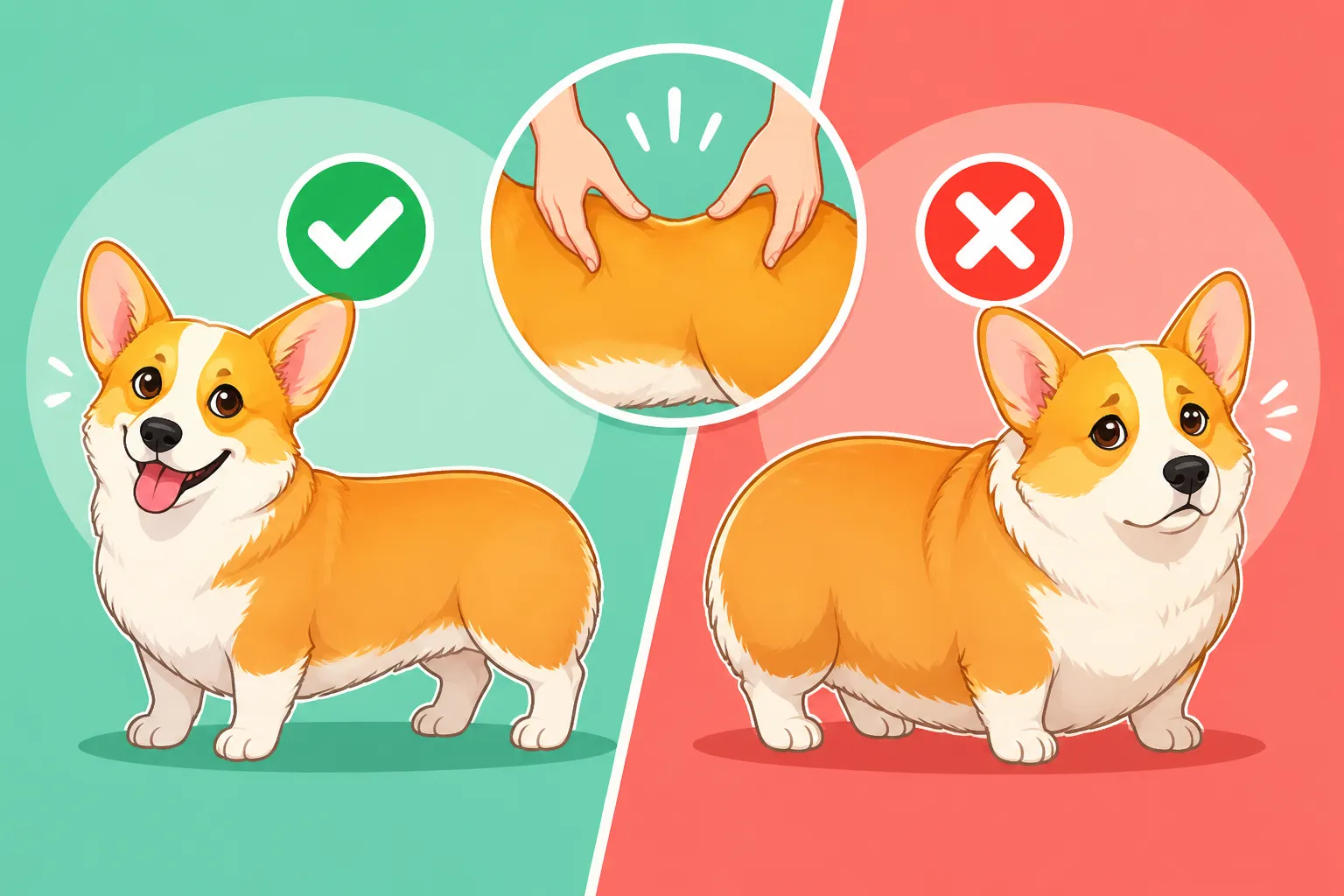
Spotting Weight Gain Hidden Under a Corgi Coat
One of the trickiest things about owning a Corgi, especially a fluffy one, is just how easily those extra pounds can sneak on without you even realizing it. Their compact, low-slung build and incredibly dense double coat are brilliant at camouflaging gradual weight gain, leading many of us to mistakenly think our beloved potato-dogs are still at a healthy size. This guide is here to equip you with the knowledge and practical tips to spot those hidden pounds before they become a bigger problem for your Corgi's long-term health and mobility.
The Corgi's Unique Predisposition to Weight Gain
Let's be real, Corgis are adorable little eating machines, and their body shape doesn't exactly scream "svelte." Understanding why they're so prone to packing on the pounds is the first step in prevention and early detection.
Why Their Body Shape and Instincts Make Them Prone
Corgis, whether Pembroke or Cardigan, were originally bred as robust herding dogs. Their low-rider stature was perfect for nipping at the heels of cattle without getting kicked. This working heritage instilled in them a fantastic appetite and a tendency to be quite food-motivated, which, let's face it, is a trait we all love when it comes to training with treats! However, in our modern homes, most Corgis aren't herding cattle for eight hours a day. Their energy output is often significantly lower than their ancestral diet would have required, but their appetite remains just as strong.
Their compact, barrel-chested build also means that even a few extra pounds can shift their center of gravity and place undue stress on their already long backs. It's not just about aesthetics; it's deeply tied to their structural health. Why Corgi Weight Is a Spinal Problem is something every Corgi owner needs to understand, as issues like intervertebral disc disease (IVDD) are a constant concern for our long-backed friends. It’s easy to think a little extra fluff is cute, but it’s a critical health consideration.
The Sneaky Role of the Double Coat in Hiding Pounds
Oh, that glorious Corgi coat! It's one of their most endearing features – thick, plush, and wonderfully insulating. But it's also a master of disguise. Unlike a short-haired breed where you can instantly see a thickening waistline or a broadening chest, a Corgi's dense undercoat and protective outer coat can add visual bulk, making a perfectly healthy dog look a bit chunky, and a chunky dog look downright rotund, all while masking the subtle changes of early weight gain.
Many Corgi owners have experienced that "aha!" moment during a bath or a vigorous grooming session, when their Corgi's true shape is temporarily revealed, and they realize, "Wait a minute, you're a bit squishier than I thought!" This visual camouflage can make it really challenging to accurately assess your dog's weight by sight alone, meaning we have to rely on other, more tactile methods. This is why regular, hands-on checks are absolutely essential for Corgis, more so than for many other breeds.
Beyond the Scale: Visual and Tactile Clues for Weight Assessment
While a scale gives you a number, it doesn't always tell the whole story, especially when that number is slowly creeping up. For Corgis, you really need to get hands-on and pay close attention to subtle shifts in their physical form.
The Rib Check: Feeling for What You Can't See
This is probably the most crucial tool in your weight-spotting arsenal. Because that beautiful coat hides so much, you need to feel for your Corgi's ribs. Here's how to do it effectively:
- Stand over your Corgi with them standing squarely on all fours.
- Place both hands on their chest, just behind their front legs, with your fingers spread out over their rib cage.
- Gently run your fingers along their sides. You should be able to feel their ribs without having to press hard. It should feel similar to feeling the back of your hand – you can feel the bones just under the skin.
- What you're looking for:
- Ideal weight: You should be able to feel the ribs distinctly, like running your fingers over a Venetian blind, but not see them. There should be a thin layer of fat and muscle over them.
- Overweight: If you have to press firmly to feel the ribs, or can't feel them at all, your Corgi is carrying too much weight. It will feel more like the palm of your hand, soft and padded.
- Underweight: If the ribs are very prominent and easily visible, and there's no padding at all, your Corgi might be underweight. This isn't usually the issue with Corgis, but it's good to know.
Make this a regular habit, perhaps during a cuddle session on the sofa, or while giving them a good brush. It's a quick, non-invasive check that gives you immediate feedback.
The Waistline Illusion: What a Corgi's Profile Should Really Look Like
Forget trying to find a dramatic "tuck" in a Corgi's waist from above – their natural silhouette is already low to the ground and a bit blocky. However, you can still observe their waistline, or lack thereof, from the side and by running your hands along their body.
When viewed from above, a Corgi should have a slight indentation or "waist" behind their ribs, before their hips. It shouldn't be a straight line from chest to tail, nor should it bulge outwards. From the side, looking at their underline, it should gently slope upwards from the bottom of their rib cage towards their hind legs. There should be a visible, albeit subtle, abdominal tuck. Whether a Corgi Should Have a Visible Tuck is a useful visual to keep in mind, even if it's not as pronounced as in sighthounds. If their belly hangs low and parallels the ground, or even dips, that's a red flag.
When you run your hands along their sides from ribs to hips, you should feel a gentle narrowing. If your hands slide straight down without any dip, or if the area feels uniformly soft and wide, it’s a strong indicator of excess fat accumulation. This hands-on method helps bypass the coat's deceptive visual bulk.
Observing Movement: Subtle Changes in Gait and Energy
Sometimes, your Corgi will tell you they're gaining weight through their actions before you even notice it physically. They might start moving differently or seem less enthusiastic about things they once loved.
One of the earliest signs can be a subtle change in their gait. An overweight Corgi might develop a slight waddle, or you might notice them A Corgi That Scuffs Its Back Nails more often, as the extra weight can affect their proprioception and how they place their feet. They might also appear a bit stiffer when getting up or lying down, or hesitate before jumping onto a low sofa (which, ideally, they shouldn't be doing anyway!).
Beyond gait, pay attention to their general energy levels. Are they suddenly less keen on their usual walk? Do they tire out faster during playtime? A Corgi who usually has endless energy but now seems sluggish might be feeling the burden of extra weight. This isn't just about laziness; extra weight puts a strain on their cardiovascular system and joints, making even moderate activity more demanding. It's not uncommon for an overweight Corgi to be less eager to engage in games or even to seem a bit breathless after short bursts of activity.
The Body Condition Score for Corgis: A Practical Tool
The Body Condition Score (BCS) is a universally recognized, objective tool that every Corgi owner should understand and regularly use. It helps you assess your dog's fat reserves and muscle mass, giving you a much clearer picture than just stepping on the scale.
Understanding the 5-Point and 9-Point BCS Scales
There are two main scales used for Body Condition Scoring: a 5-point scale and a 9-point scale. Both aim to classify a dog's condition from emaciated to obese, with the middle numbers representing an ideal weight.
-
5-Point Scale:
- 1 (Emaciated): Ribs, lumbar vertebrae, pelvic bones, and all bony prominences evident from a distance. No discernible body fat. Obvious loss of muscle mass.
- 2 (Underweight): Ribs, lumbar vertebrae, and pelvic bones easily palpable and visible. No discernible body fat. Some loss of muscle mass.
- 3 (Ideal): Ribs easily palpable without excess fat covering. Waist observed behind the ribs when viewed from above. Abdominal tuck when viewed from the side.
- 4 (Overweight): Ribs palpable with slight difficulty; slight fat covering. Noticeable fat deposits over lumbar area and base of tail. Waist absent or barely visible. Abdominal tuck may be absent.
- 5 (Obese): Ribs difficult to palpate under heavy fat cover; heavy fat deposits over lumbar area, face, and limbs. Abdominal distention. Obvious lack of waist and abdominal tuck.
-
9-Point Scale: This scale offers more nuance, with 5/9 being ideal. It breaks down the categories into finer increments, allowing for more precise tracking of small changes. For example, a 6/9 might be slightly overweight, while an 8/9 is definitely obese. Your vet often uses this scale.
Regardless of which scale you use, the key is consistency and knowing what an ideal Corgi looks like. The Body Condition Score a Corgi Owner Aims For is typically a 3 on the 5-point scale or a 4-5 on the 9-point scale. It’s about feeling, not just seeing.
Applying the BCS to Your Corgi: A Step-by-Step Guide
Applying the BCS to your Corgi is a hands-on process, blending the rib check and waist observation into a comprehensive assessment.
- Start with the Ribs: As discussed, place your hands on your Corgi's sides and feel for the ribs.
- Can you feel them easily without pressing? (Good sign for 3/5 or 4-5/9)
- Do you have to press a bit? (Potentially 4/5 or 6-7/9)
- Are they hard to find under a thick layer? (Likely 5/5 or 8-9/9)
- Check the Waist:
- From above: Does your Corgi have a slight curve behind the ribs?
- From the side: Is there a subtle tuck up to the belly?
- If the answer is no to both, or if there's a bulge, that indicates excess weight.
- Palpate the Spine and Tail Base: Gently run your hands along your Corgi's spine and over the base of their tail.
- Ideal: You should be able to feel the bumps of the vertebrae without seeing them, and the tail base should feel smooth with a slight amount of fat.
- Overweight: If you have trouble feeling the spinal bumps, or if the tail base feels cushiony and wide, there's too much fat.
- Observe Muscle Mass: While BCS primarily focuses on fat, consider muscle tone. A Corgi should have firm, well-developed leg muscles. Soft, flabby muscles can be another sign of being overweight or under-exercised.
It's a process of elimination and comparison. By doing this regularly, you'll become attuned to your Corgi's normal body condition, making it easier to spot even small changes. Remember, a fit Corgi is a healthier Corgi.
Common Mistakes When Assessing a Corgi's BCS
It’s easy to make mistakes, especially with a breed like the Corgi. Their inherent cuteness and fluffy appearance can fool even the most dedicated owner.
- Underestimating the Coat: This is the big one. That luxurious double coat is a fantastic insulator but also a superb camouflage. Never judge a Corgi's weight purely by looking at them from a distance. You absolutely have to get your hands on them. A Corgi can look perfectly fine from across the room but be significantly overweight underneath their floof.
- Confusing "Stocky" with "Fat": Corgis are naturally stocky and substantial. They are not meant to be delicate or slender. This stockiness can be misinterpreted as ideal weight even when they're carrying extra fat. An ideal Corgi, while robust, should still have that slight waist and palpable ribs. What an Ideal Corgi Weighs often surprises new owners; they're heavier than they look, but not meant to be round.
- Ignoring Gradual Changes: Weight gain rarely happens overnight. It's often a slow creep of a pound here, a pound there, over months or even years. Because it's so gradual, we adapt to seeing our dog at a slightly heavier weight and it becomes our new "normal." This is why routine, objective checks like the BCS and regular weigh-ins are so important. Looking back at Photographs That Show a Corgi Has Gained can sometimes be an eye-opener when you compare photos from a year ago to today!
- Relying Solely on the Scale: While important, the scale doesn't tell you if that weight is healthy muscle or unhealthy fat. Two Corgis could weigh the same, but one could be fit and muscular, while the other is overweight with poor muscle tone. The BCS gives context to the number on the scale.
Behavioral Indicators of Weight Creep
Beyond the physical changes, your Corgi's behavior can offer early clues that they're starting to carry too much weight. Sometimes, these behavioral shifts are the very first signs you'll notice.
Changes in Activity Levels and Stamina
One of the most noticeable impacts of extra weight on a Corgi is a reduction in their overall activity level and stamina. What used to be a brisk walk might become a slow amble, with more stops for sniffing or simply resting. You might find they're less eager to chase a ball for as long as they used to, or they might seem winded more quickly after a short sprint in the yard.
A Corgi who once loved hiking might now fall behind on trails, or a dog who used to bound up the stairs (though we encourage ramps for their back health!) now pauses, takes them slowly, or outright refuses. This isn't necessarily a sign of aging, especially if your Corgi is still in their prime. It could be that the extra effort required to move a heavier body is making them more sedentary. It's a vicious cycle: less activity leads to more weight gain, which further reduces activity. Keep an eye on their energy during typical playtimes. If they're cutting games short, or opting for naps over antics, it's worth considering their weight.
New Challenges with Everyday Movements
As weight increases, even simple, everyday movements can become more difficult or uncomfortable for a Corgi. Their short legs and long bodies are already a unique combination, and excess weight exacerbates any strain.
You might observe your Corgi struggling to get up from a lying position, especially after a nap. They might shift their weight awkwardly, or use their front legs more to push themselves up. Jumping on and off furniture (again, ideally, they should be using ramps or steps for safety, see Ramps and Steps That Save a Corgi's Back) becomes a bigger ordeal, or they might stop attempting it altogether. Some Corgis might even start to avoid certain activities, like playing with other dogs or navigating uneven terrain, because it’s physically taxing. You might notice them walking with a more labored gait, or appearing generally stiffer. This added strain not only impacts their comfort but also puts them at higher risk for joint issues like arthritis and even exacerbates spinal problems, contributing to Joint Damage From Corgi Weight Gain.
Increased Begging and Food-Seeking Behaviors
Corgis are notoriously food-motivated, and their begging game is strong. However, an increase in begging or other food-seeking behaviors can sometimes be a sign that their current portions aren't truly satisfying them, or that they're just plain hungry due to habits formed around overfeeding. It's a tricky one, because Corgis will often act like they haven't eaten in a week, even after a full meal!
If your Corgi suddenly seems more insistent around meal times, hovers in the kitchen constantly, or becomes exceptionally adept at scavenging crumbs, it might be time to reassess their diet. Are they getting too many high-calorie treats? Is their main meal balanced and appropriately portioned for their ideal weight, not their current weight? Often, owners increase food slightly over time without realizing, especially if they're "eyeballing" portions rather than weighing them. This ties into why Why a Corgi Should Never Eat Free Choice is so important. A free-fed Corgi will almost certainly become an overweight Corgi. They are smart, and they know how to work those puppy-dog eyes for an extra morsel.
Proactive Steps to Prevent and Address Weight Gain
The good news is that Corgi weight management is entirely within your control. With consistent effort and the right approach, you can keep your Corgi at a healthy weight and help them live their best, happiest life.
The Importance of Precise Portion Control
This is, without a doubt, the single most critical factor in managing a Corgi's weight. Because Corgis are so food-motivated and prone to weight gain, "eyeballing" their food portions simply won't cut it. You need to be precise.
- Weigh Their Food: Invest in a digital kitchen scale and weigh out your Corgi's kibble. A half-cup scoop can vary wildly depending on how packed it is, but a gram measurement is always consistent. Why a Corgi's Food Is Weighed, Not Scooped is a lesson many Corgi owners learn the hard way. Follow the feeding guidelines on your dog food bag, but use the lower end of the range, especially if your Corgi is less active or already a bit chunky. These guidelines are often for intact, highly active dogs, and may need to be reduced for spayed/neutered or less active pets.
- Calculate Calorie Targets: Work with your vet to determine your Corgi's ideal weight and then calculate their daily calorie needs based on that ideal weight and their current activity level. This is where precision really pays off. The Calorie Target for a Twenty-Eight Pound Corgi can be significantly different from a 35-pound Corgi, and adjusting by even a small amount can make a huge difference over time.
- Account for Treats: Those little training treats and bedtime biscuits add up! Don't forget to factor them into your Corgi's daily calorie allowance. Many people recommend that treats should make up no more than 10% of their total daily calories. Consider healthier, low-calorie options like small pieces of carrot, green beans, or even their own kibble as rewards. You can find many healthier options for treats on platforms like Chewy or Amazon.
- No Free-Feeding: As mentioned before, Corgis thrive on scheduled meals. Leaving food out all day is an open invitation for them to overeat. Stick to two distinct meal times a day.
Tailoring Exercise to Your Corgi's Needs and Back Health
Exercise is vital, but it needs to be appropriate for a Corgi's unique physical structure, particularly their long back. It’s not about how much, but how smart you exercise them.
- Low-Impact is Key: Focus on activities that build muscle and burn calories without putting excessive strain on their spine. Brisk walks on a leash are excellent. Swimming (with a life vest, of course!) is fantastic for building strength without impact. How Much Running Is Safe for a Corgi is an important consideration; short bursts are fine, but long-distance running or intense agility with high jumps can be risky for their backs.
- Short, Frequent Sessions: Instead of one long, exhausting walk, consider several shorter, more engaging walks throughout the day. This can keep their metabolism active without overstressing their joints.
- Mental Stimulation: Don't underestimate the power of mental exercise! Puzzle toys, sniff walks, and obedience training sessions can burn calories and energy just as effectively as physical exercise, often with less impact on their joints. Brands like Amazon offer a wide variety of interactive toys and puzzle feeders.
- Avoid High-Impact Jumps: Corgis should not be allowed to jump on and off furniture, or even repeatedly jump up to greet you. These sudden impacts can put immense stress on their spinal discs. Use ramps, steps, or simply lift them carefully (supporting their back and hindquarters) if they need to be on elevated surfaces.
Regular Weigh-Ins and Vet Check-ups
Even with all your best efforts, sometimes weight can still creep on. Regular monitoring and professional guidance are essential for catching issues early.
- Monthly Weigh-Ins at Home: If you have a suitable scale, try to weigh your Corgi once a month. Track the numbers. Even a pound or two of gain can be significant for a small dog like a Corgi. Many vet clinics also have scales you can pop into and use for free.
- Annual Vet Checks: Your Corgi's annual veterinary exam is more than just shots; it's a comprehensive health check. Your vet will perform a professional Body Condition Score, weigh your dog, and discuss their diet and exercise. They can give you objective feedback and help you adjust your plan. The Annual Exam Where a Corgi's Back Gets Checked is a vital opportunity to discuss any concerns about their weight and its impact on their spine.
- Don't Be Afraid to Ask for Help: If you're struggling to manage your Corgi's weight, don't hesitate to talk to your vet. They can help rule out any underlying medical conditions, suggest appropriate diet changes, or even recommend a prescription weight management food if necessary. Some clinics even offer Whether a Weight Clinic Helps a Corgi Owner programs designed to support owners through their pet's weight loss journey.
Resources and Support for Weight Management
You don't have to go it alone! There are plenty of resources and communities available to help you keep your Corgi at a healthy weight.
Utilizing Online Tools and Communities
The internet is a treasure trove of information and support for Corgi owners.
- Online Pet Food Retailers: Websites like Chewy and Amazon offer vast selections of dog food, including many specifically formulated for weight management. You can often read reviews from other Corgi owners and compare ingredients. Some even offer auto-ship options, making it easier to stick to a consistent food.
- Fresh Food Services: Companies like Ollie deliver fresh, human-grade food tailored to your dog's caloric needs. While this might be a different approach, it offers portion control and high-quality ingredients, which can be beneficial for weight management. Be sure to discuss any diet changes with your vet first.
- Corgi-Specific Forums and Social Media Groups: Online communities dedicated to Corgis are fantastic places to share experiences, ask questions, and get advice from other owners. You'll find many discussions on diet, exercise, and how to spot the sneaky signs of weight gain. These groups can offer a sense of camaraderie and shared understanding. Just be mindful that advice given online isn't a substitute for professional veterinary guidance.
- Calorie Calculators and BCS Charts: Many veterinary websites and pet nutrition sites offer free online calorie calculators and detailed Body Condition Score charts with visual examples. These can be incredibly helpful for getting a more objective assessment of your Corgi's condition.
Consulting Your Veterinarian for a Personalized Plan
While online resources are great for general information and community support, your veterinarian is your primary partner in your Corgi's health.
- Tailored Dietary Advice: Your vet can provide a precise calorie target for your Corgi based on their age, sex, activity level, and current health status. They can recommend specific food brands, discuss the pros and cons of different diets (like kibble, wet food, or even carefully balanced home-cooked meals), and help you formulate a realistic feeding plan.
- Exercise Prescriptions: If your Corgi has existing joint issues, spinal concerns, or other health limitations, your vet can advise on the safest and most effective exercise regimen. They might recommend specific types of physical therapy, such as hydrotherapy, or suggest modifications to your current exercise routine to prevent injury.
- Medical Oversight: In some cases, unexpected weight gain or difficulty losing weight can be a sign of an underlying medical condition, such as hypothyroidism. Your vet can perform diagnostic tests to rule out any health issues that might be contributing to the weight problem. They can also monitor your Corgi's progress and make adjustments to the plan as needed.
- Addressing Behavioral Challenges: If your Corgi is a persistent beggar or exhibits other difficult food-related behaviors, your vet can offer strategies to manage these. Sometimes, behavioral modification techniques or even a consultation with a veterinary behaviorist might be recommended to help you and your Corgi establish healthier habits.
Working closely with your vet ensures that your Corgi's weight management plan is safe, effective, and tailored specifically to their individual needs, setting them up for a long and healthy life.
Disclaimer
This article is for general informational purposes only and does not constitute professional advice. Laws, prices and regulations vary by location and change over time. Consult a qualified professional for guidance on your specific situation.