Six Weeks of Crate Rest With a Corgi
Six weeks of strict crate rest protects a Corgi spinal disc injury, letting inflammation subside so the body heals safely.
Know what to watch for.
Breed-specific conditions, screening and DNA tests, what surgery actually costs, and the daily habits that stretch a healthy lifespan.

Six weeks of strict crate rest protects a Corgi spinal disc injury, letting inflammation subside so the body heals safely.

Corgi spinal issues and disc disease require deciding between conservative rest and surgical intervention for back pain.
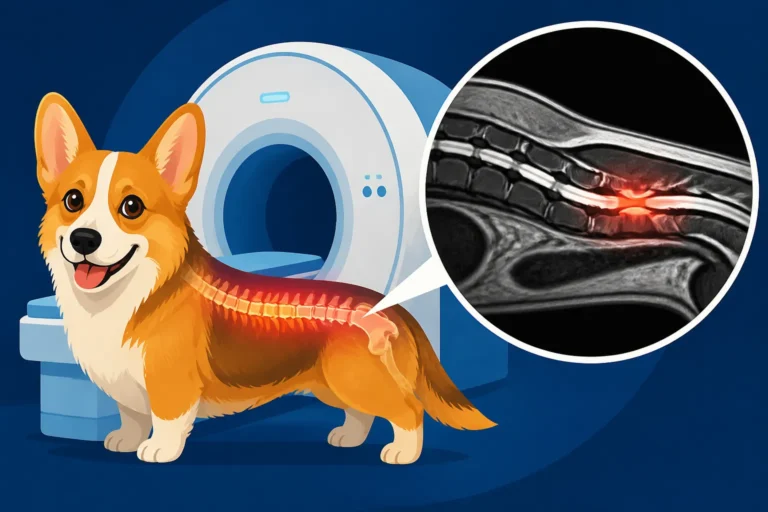
Corgi back magnetic resonance imaging reveals intervertebral disc disease, spinal cord compression, and other neurological conditions.
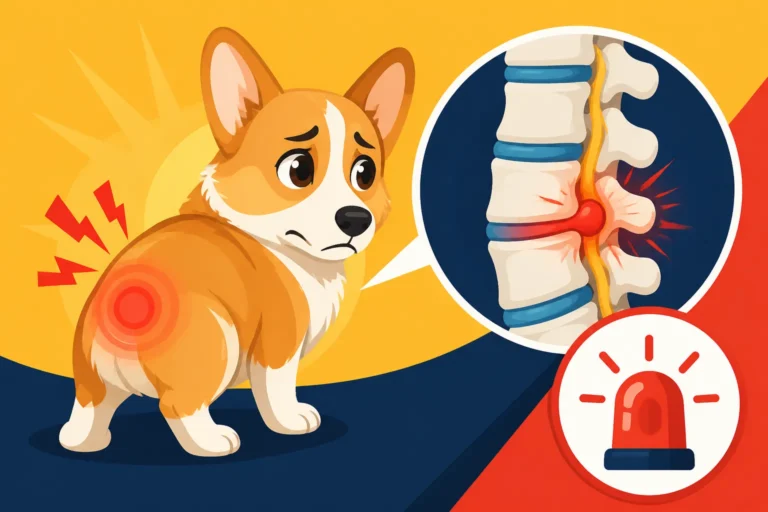
Corgi spinal disc injuries require emergency veterinary treatment within hours to prevent permanent damage and paralysis.

Corgi paw dragging and knuckling indicate neurological impairment or spinal issues requiring professional veterinary assessment and care.

Corgi stair avoidance reveals acute pain, chronic arthritis, or anatomical spine strain, demanding veterinary attention and practical home solutions.

Corgi back pain when lifted under the chest often indicates Intervertebral Disc Disease, muscle strain, arthritis, or abdominal issues.
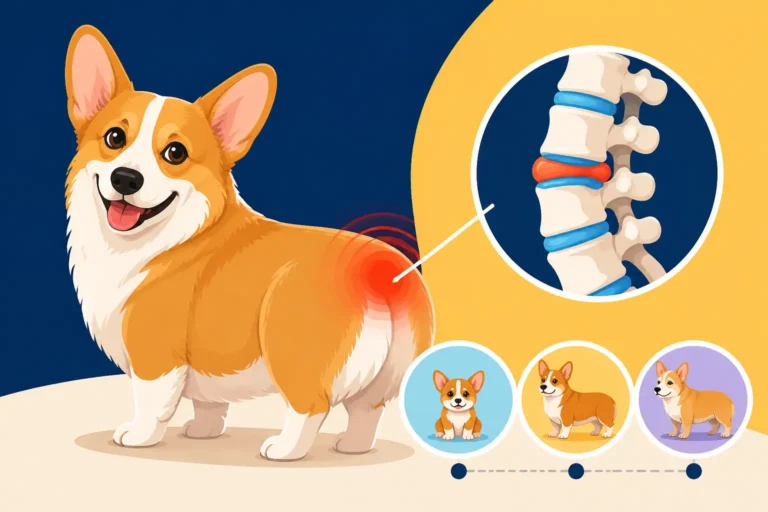
Corgi intervertebral disc disease and spinal degeneration typically appear when these chondrodystrophic dogs reach three to seven years old.

Corgi back health and Dachshund spinal anatomy compared, explaining cartilage disorders and intervertebral disc disease risks.
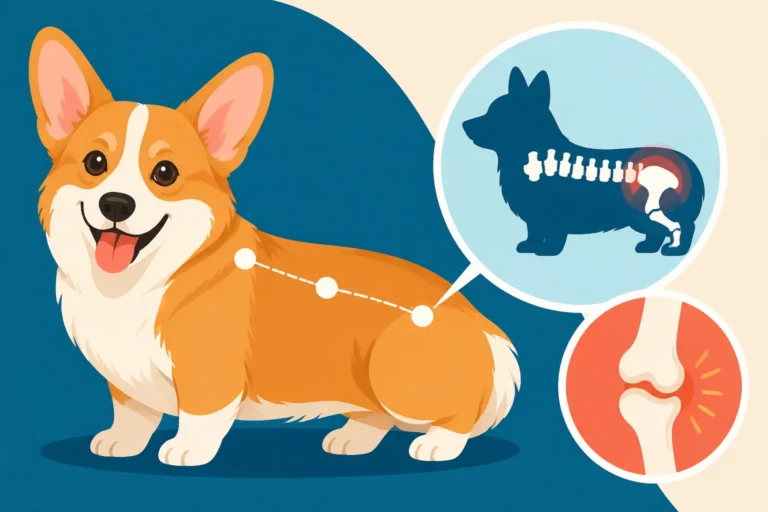
Chondrodystrophy in Corgis explains the genetic mutation causing short legs and intervertebral disc disease risks in the breed.