The Corgi Years When the Back End Gives Out
Aging Corgis often experience hindquarter weakness and wobbly gaits due to their long spines and inherited vulnerabilities.
Know what to watch for.
Breed-specific conditions, screening and DNA tests, what surgery actually costs, and the daily habits that stretch a healthy lifespan.
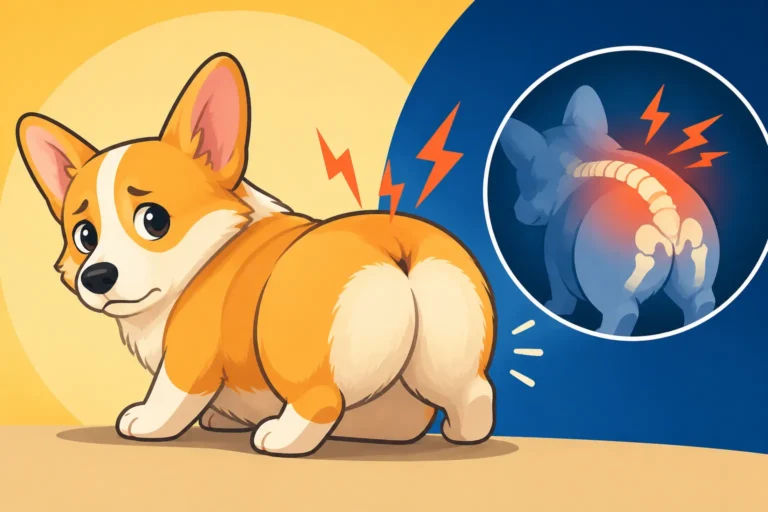
Aging Corgis often experience hindquarter weakness and wobbly gaits due to their long spines and inherited vulnerabilities.

Genetic DNA tests for Corgi breeders reveal hidden carrier genes for Degenerative Myelopathy, preventing devastating neurological diseases in puppies.
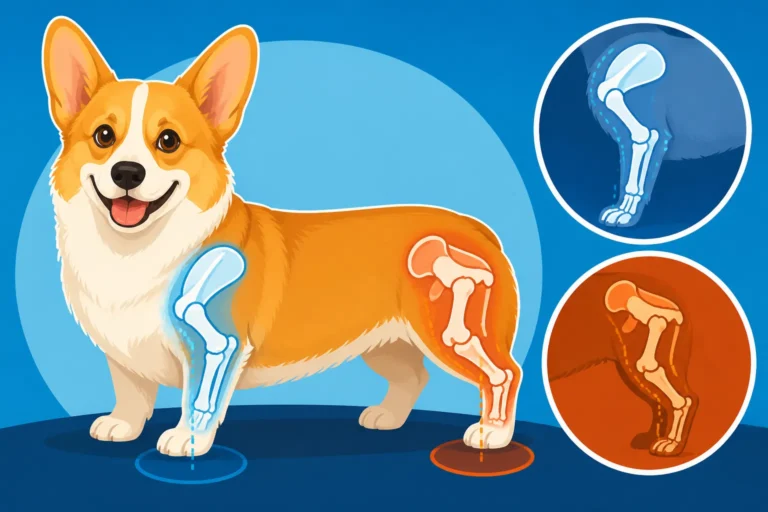
Corgi skeletal structure and chondrodystrophy explain mobility issues, joint wear, and common health problems affecting the breed.

Progressive retinal atrophy and other eye diseases in Pembroke Welsh Corgis, covering genetic vulnerabilities, conjunctivitis, and entropion.

Von Willebrand Disease in Pembroke Welsh Corgis causes blood clotting issues because dogs lack the crucial protein needed for normal healing.
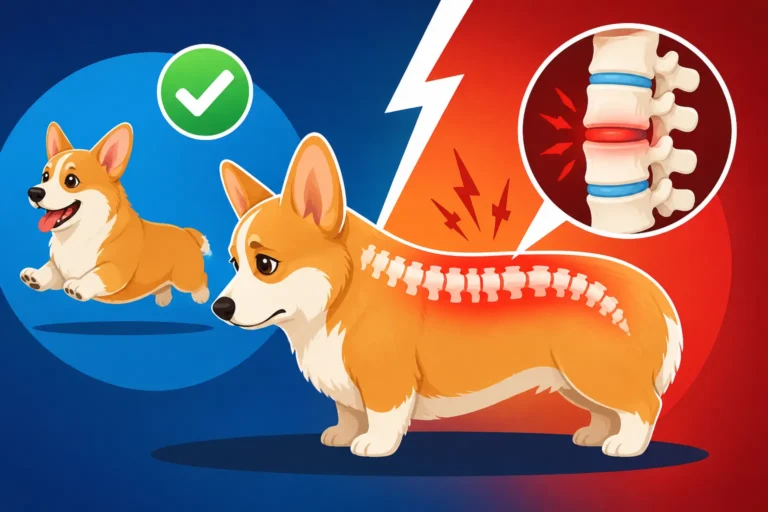
Excess Corgi weight increases spinal pressure because long bodies and short legs amplify mechanical stress on intervertebral discs.
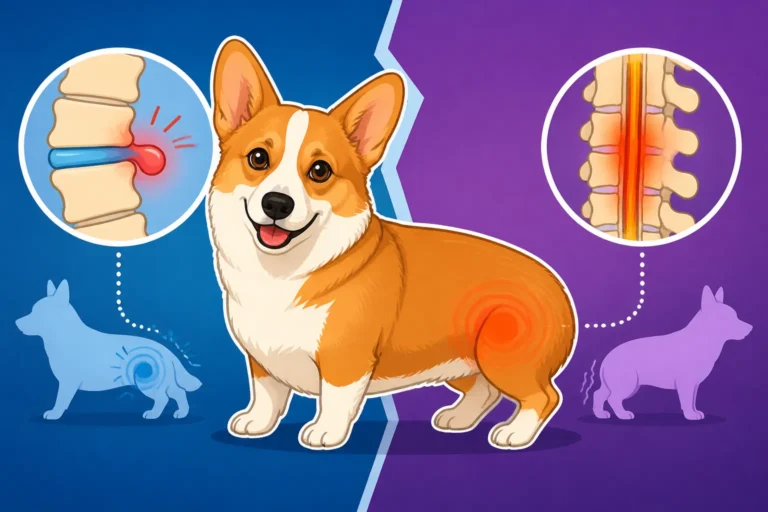
Distinguishing a Corgi slipped disc from degenerative myelopathy explains hind leg weakness causes and spinal health issues.
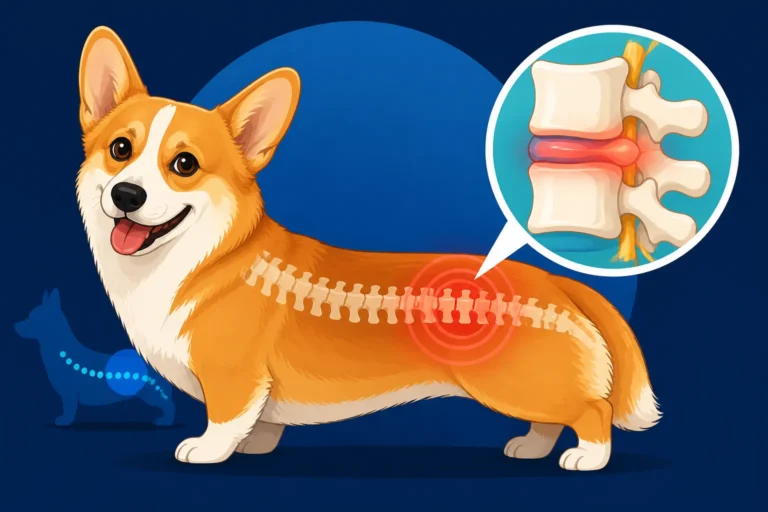
Intervertebral disc disease in Corgis explains how premature spinal cartilage calcification causes painful disc ruptures and dangerous spinal nerve pressure.

Corgis carrying the Degenerative Myelopathy gene usually stay well because carriers very rarely show symptoms of the disease.
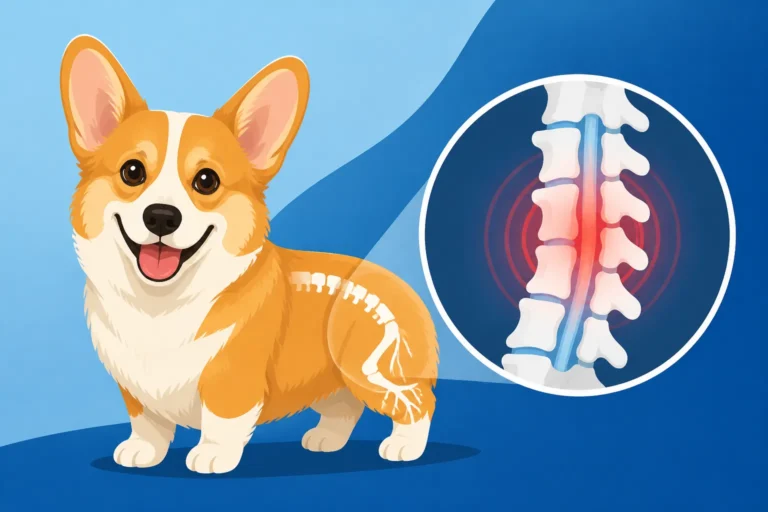
Degenerative myelopathy in Corgis is a progressive spinal cord disease linked to an SOD1 gene mutation causing hind limb paralysis.