A Corgi That Chases Bikes and Cars
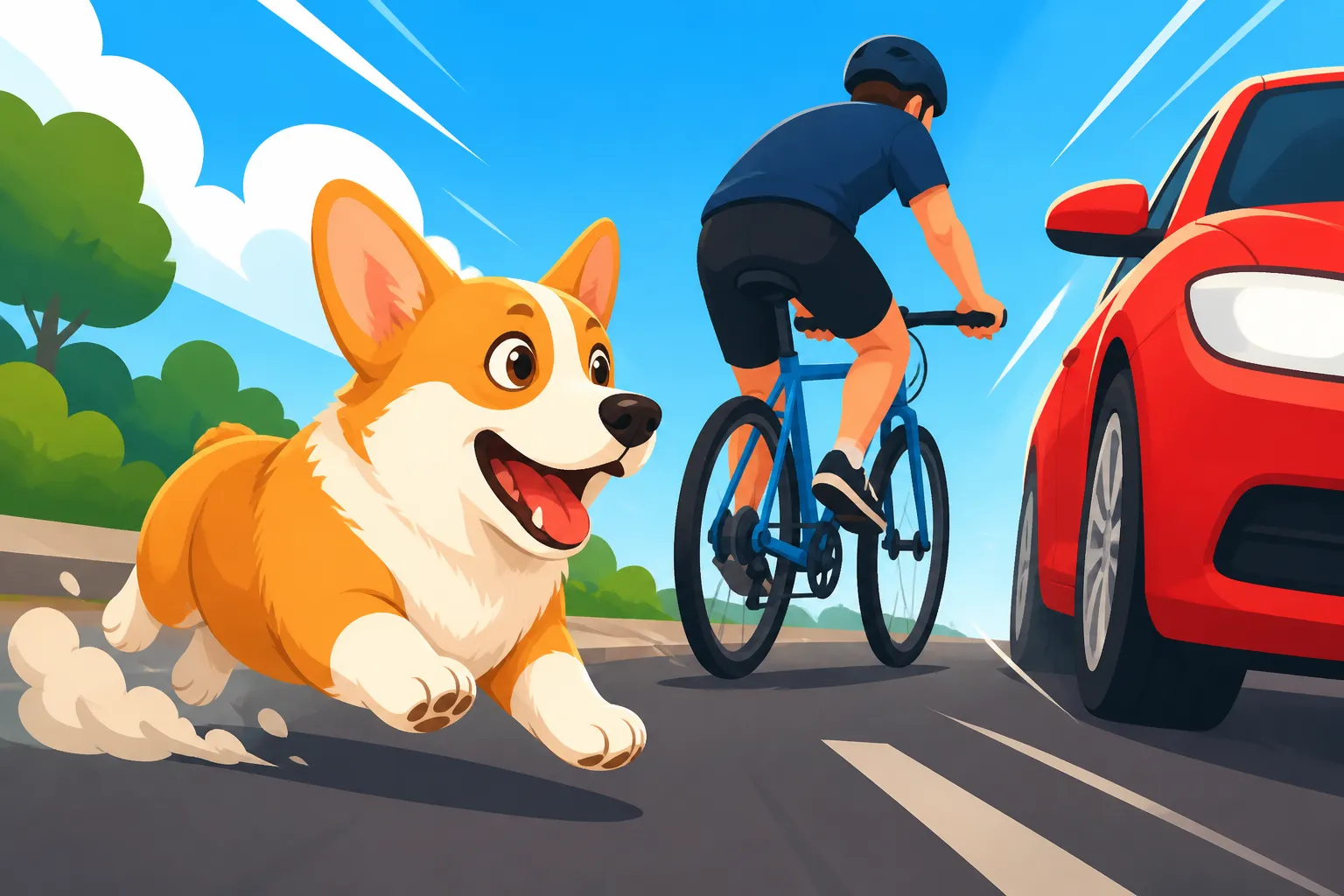
It's a familiar scenario for many Corgi owners: you're enjoying a lovely walk, admiring your furry companion trotting along, when suddenly a bicycle whizzes by or a car rounds the corner. Before you can react, your Corgi transforms from a polite little dog into a barking, lunging, determined blur, dragging you along as they attempt to "herd" the moving vehicle. This guide will delve into why Corgis develop this incredibly frustrating — and often dangerous — habit, and equip you with practical strategies and training advice to help your Corgi learn to safely ignore bikes and cars.
Understanding the Root of the Chase Instinct
That powerful urge to chase bikes and cars isn't your Corgi being disobedient or trying to annoy you; it's a deep-seated instinct manifesting in an inappropriate context. To truly address the behavior, we first need to understand where it comes from.
The Herding Dog Legacy
Corgis, both Pembrokes and Cardigans, are phenomenal herding dogs, bred over centuries to work cattle and sheep. Think about their original job: they'd nip at the heels of stubborn livestock, ducking under kicks, and driving the herd in the desired direction. This required incredible focus, quick reflexes, and a strong prey drive (or more accurately, a "movement drive") to manipulate large, moving animals. That genetic blueprint is still very much alive in your modern house pet, even if the closest they get to cattle is chasing a vacuum cleaner. It's the same instinct that makes them want to herd your children or nip at your ankles, a behavior sometimes called The Cattle-Driving Nip a Corgi Still Has.
When a bike or car moves past, especially at speed, it triggers this ancient programming. The vehicle becomes a surrogate "cow" or "sheep" in their minds, something that needs to be controlled, moved, or stopped. They aren't trying to cause trouble; they're simply trying to do their job, even if that job makes no sense in a suburban park or city street. It's a powerful, almost involuntary response, and ignoring it completely goes against everything their ancestors were bred to do.
Movement as a Trigger
For a Corgi, anything that moves quickly and erratically can be a trigger for their herding instinct. Bicycles, skateboards, scooters, cars, even running children or other dogs can become targets. The rapid motion stimulates their visual cortex, drawing their attention and activating that primal chase response. It's not necessarily about hostility; it's about engagement. They see the movement, their brain registers it as something to interact with, and their body follows suit. This is why even a small, seemingly harmless movement from a distance can suddenly set them off.
The speed and direction of the object also play a role. A slow-moving pedestrian might not elicit a reaction, but a cyclist gaining speed certainly will. This makes walks unpredictable and stressful, as you're constantly on alert for potential triggers. Understanding that it's the movement itself that acts as the primary stimulant helps us to design training strategies that address this fundamental aspect of their behavior. It's not personal; it's just biology.
The Satisfaction of the Chase
Here’s the tricky part: chasing is inherently rewarding for a Corgi. Every time they lunge and bark, whether they actually "catch" the bike or car (which, thankfully, they almost never do in a dangerous way), their brain releases feel-good chemicals. The act of running, barking, and attempting to control the moving object is intrinsically satisfying. It fulfills that deep-seated genetic drive. This means that every successful (from their perspective) chase reinforces the behavior, making it more likely to happen again.
This intrinsic reward makes it a really tough habit to break. If your Corgi manages to pull you a few feet closer to the moving object, even if they don't reach it, that's a win in their book. They learned that lunging gets them closer to their "prey." This is why a strong foundation in obedience and impulse control is so crucial, especially given the Corgi's intelligent yet independent nature. They often feel they know best, and their instincts are a powerful motivator.
Why This Behavior is Risky (and Frustrating!)
While understanding the root cause helps us feel more empathetic toward our Corgis, it doesn't change the very real dangers and frustrations associated with this chasing behavior. It's not just a nuisance; it's a safety hazard for everyone involved.
Safety Concerns for Your Corgi
The most immediate and terrifying risk is to your Corgi's physical safety. A sudden lunge into traffic, even if you have them on a leash, can result in serious injury or worse. Imagine a scenario where your Corgi pulls free from their collar or harness, or you lose your grip on the leash, and they bolt directly into the path of a car or a bicycle. Even if a vehicle manages to swerve, the sheer force of a collision with a bike could cause significant harm to a small, low-to-the-ground dog.
Beyond direct impact, there are other physical risks. Repeatedly lunging and jerking on a leash can cause neck injuries if they're wearing a collar, or put strain on their delicate back. Corgis are already predisposed to back issues like Intervertebral Disc Disease (IVDD) due to their long spines and short legs. Constant jarring and sudden movements while lunging only exacerbate this risk. Their short legs and low center of gravity might make them agile, but they are absolutely no match for a car or a speeding bicycle.
Public Perception and Liability
Let's be honest, seeing a dog lunge and bark aggressively at a car or a person on a bike can be alarming for bystanders. Even if your Corgi isn't intending harm, their behavior can appear threatening. People might assume your dog is aggressive, leading to uncomfortable confrontations or even complaints. This perception can lead to fear and negative interactions in public spaces, making walks less enjoyable for both you and your dog.
Furthermore, there's the very real issue of liability. If your Corgi causes a cyclist to swerve and crash, or a child on a scooter to fall, you could be held responsible for any injuries or damages. This is a terrifying prospect that underscores the importance of addressing this behavior proactively. It's not just about protecting your dog, but also about being a responsible pet owner in your community. A Corgi that is a known "bike chaser" might even limit your options for where you can walk them safely.
Stress on Both Ends of the Leash
Beyond the physical dangers, the constant vigilance and struggle to control your Corgi can take a massive toll on your mental well-being. Walks, which should be a relaxing and bonding experience, become a source of anxiety and frustration. You find yourself scanning ahead, dreading every approaching vehicle or cyclist, tightening your grip on the leash, and bracing for impact. This stress isn't just yours; your Corgi can pick up on your tension, which can, in turn, heighten their own reactivity. It becomes a vicious cycle.
This stress can also lead to fewer walks, which deprives your Corgi of much-needed exercise and mental stimulation. They thrive on activity and exploration, and limiting their outdoor time due to behavioral issues can lead to other problems like boredom, destructive behavior, or excessive barking at home. It's a lose-lose situation that chips away at the joy of dog ownership. This is why addressing this challenge head-on is so vital for both your sanity and your Corgi's overall well-being.
Practical Strategies for Managing the Chase
Once you understand why your Corgi chases, you can start implementing practical strategies to manage and eventually modify the behavior. This isn't a quick fix, but a consistent, patient approach will yield results.
Equipment for Safety and Control
Before you even start formal training, ensuring you have the right equipment is paramount for safety and control. A standard neck collar offers very little leverage when a determined Corgi decides to lunge. It can also put dangerous pressure on their throat and spine.
Consider a front-clip harness. These harnesses clip at the chest, which redirects your dog's momentum back towards you when they pull, making it much harder for them to drag you forward. Brands like the Easy Walk harness or the Freedom No-Pull harness are popular choices. You can easily find a variety of these options on platforms like Amazon, ensuring a good fit for your Corgi's unique build. A well-fitting harness should be snug but not restrictive, allowing full range of motion while preventing escape.
| Equipment Type | How It Works | Pros | Cons |
|---|---|---|---|
| Standard Collar | Attaches leash to a ring on the neck. | Simple, common. | Poor control for pulling, can cause neck/throat strain. |
| Front-Clip Harness | Leash attaches at the chest. | Redirects pulling, provides good control, safer for neck. | Can be tricky to fit correctly, some dogs dislike the feel. |
| Head Halter | Fits over snout and behind ears; controls head direction. | Excellent control, very effective for strong pullers. | Requires careful introduction, can be seen as muzzles, not for all dogs. |
| Martingale Collar | Tightens slightly under tension to prevent slipping. | Good for escape artists, less harsh than choke chains. | Still puts pressure on the neck if dog pulls consistently. |
In addition to a good harness, a sturdy leash is essential. Opt for a comfortable length, typically 4-6 feet, and avoid retractable leashes, as they give you less control and can teach your dog to pull. A longer training line, perhaps 10-15 feet, can be useful for practicing recall in safe, open spaces, but should only be used where there's no risk of entanglement with moving vehicles.
Desensitization and Counter-Conditioning
This is where the real behavior modification begins. The goal is to change your Corgi's emotional response to bikes and cars from "chase!" to "oh, a bike, where's my treat?"
- Start at a Distance: Begin your training sessions far away from the source of the trigger. This means finding a spot where bikes and cars are visible but far enough away that your Corgi notices them but doesn't react intensely. If they're lunging and barking, you're too close.
- Positive Association: The moment you spot a bike or car (before your Corgi reacts!), immediately start feeding your Corgi high-value treats. Keep a continuous stream of treats going until the trigger passes. The idea is for them to associate the sight of the moving object with delicious food.
- Gradual Approach: Over many sessions, slowly decrease the distance to the triggers. Only move closer when your Corgi can consistently remain calm and focused on you at the current distance. This might take weeks or even months. Remember, progress isn't linear. Some days will be better than others.
- Consistency is Key: Every time a trigger appears, you need to be ready with treats. If you miss an opportunity and your Corgi reverts to chasing, it reinforces the old habit. This method, known as "desensitization and counter-conditioning," is about changing their emotional response, not just suppressing the behavior.
Interrupting and Redirection Techniques
While you're working on desensitization, you'll also need strategies for those moments when a trigger appears unexpectedly or you're caught off guard.
- The "Watch Me" Command: Teach your Corgi a "watch me" or "look" command. Practice this in quiet environments first, rewarding them heavily for making eye contact. Once mastered, use it to get their attention before a bike or car gets too close. If they look at you, immediately reward with a treat and praise. This shifts their focus from the trigger to you.
- Quick U-Turn: If you see a trigger approaching and your Corgi is starting to fixate, sometimes the best strategy is a quick, decisive U-turn in the opposite direction. This breaks their focus and puts distance between them and the trigger. Reward them for following you, making the turn a positive experience.
- Body Block: For those unexpected, close-quarter encounters, you can physically step in front of your Corgi to block their line of sight to the trigger. Use your body as a shield while calmly giving a "leave it" command (more on that below) and redirecting their attention. This isn't about punishment; it's about managing the environment to prevent the undesired behavior.
- Engage with a Toy: Some Corgis respond well to a favorite squeaky toy or ball as a distraction. The moment a trigger appears, immediately pull out the toy and engage them in a quick game of "find it" or "tug" (if safe to do so). This diverts their attention and energy into a more appropriate outlet.
Building a Stronger Foundation Through Training
Managing the chase instinct is a long-term project that heavily relies on a strong foundation of general obedience and impulse control. Your Corgi needs to understand and respect your commands, especially when their instincts are screaming at them to do otherwise.
Mastering "Leave It" and "Come"
These two commands are absolute lifesavers for Corgis prone to chasing.
- "Leave It": Teach "leave it" by placing a low-value treat on the floor and covering it with your hand. When your Corgi ignores it and looks at you, mark the behavior (with a "yes!" or a clicker) and reward them with a different, higher-value treat. Gradually progress to leaving the treat uncovered, increasing the duration they must "leave it" before getting their reward. Once mastered with static objects, start practicing with slowly moving objects (a rolling ball) and eventually in the presence of bikes or cars at a distance. This command is about self-control, teaching them to ignore something highly desirable. You might find resources on platforms like BAXTER & Bella that offer detailed modules on impulse control specifically for high-drive dogs.
- "Come" (Recall): A reliable recall is perhaps the most important command for any dog, but especially one with a strong chase drive. Start practicing "come" in a quiet, distraction-free environment with high-value treats. Make it a fun, rewarding game. Gradually add distractions and increase the distance in safe, enclosed areas, like a securely fenced park. For Corgis, a long training line can be invaluable here. Corgi Recall and the Herding Instinct is a powerful force, and your "come" command needs to be even more powerful than the urge to chase. Practice, practice, practice! Make yourself the most exciting thing in the environment.
Structured Walks and Leash Manners
An unruly Corgi on a leash makes managing their chase behavior infinitely harder. Focus on teaching good leash manners from the start, or retraining if habits have already formed.
- Loose-Leash Walking: Practice walking with a loose leash in low-distraction environments. Reward your Corgi for walking by your side without pulling. If they pull, simply stop moving until the leash slackens, then continue. This teaches them that pulling gets them nowhere, while a loose leash allows them to keep moving forward. A front-clip harness, as discussed earlier, can be incredibly helpful here, as can Whether a Corgi Pulls on the Leash.
- Consistency with Direction Changes: Incorporate frequent changes in direction during your walks. Every time your Corgi checks in with you to see where you're going, reward them. This keeps them engaged with you and prevents them from fixating on distant triggers. Unexpected turns can also help break their focus if they start to become too engrossed in something moving in the distance.
- Controlled Greetings: If your Corgi tends to lunge at other dogs or people, work on controlled greetings. Teach them to sit politely or stand calmly by your side as others pass, rewarding them for good behavior. This builds general impulse control which transfers to other situations, like ignoring bikes and cars. Remember, your Corgi is observing everything around them, and a chaotic walk exacerbates their instinct to react to motion.
Providing Appropriate Outlets for Instinct
Remember, your Corgi has a job embedded in their DNA. If you don't provide appropriate outlets for that herding drive, they'll find their own, and that often means chasing things they shouldn't.
- Interactive Play: Engage your Corgi in games that mimic herding behaviors in a safe and controlled way. This could be playing fetch with a sturdy ball, or using a flirt pole (a pole with a lure on the end) where they can chase and "catch" the lure. These activities allow them to burn off energy and satisfy their chase drive without targeting inappropriate objects.
- Mental Stimulation: Corgis are intelligent dogs and need mental challenges as much as physical exercise. Puzzle toys, KONGs stuffed with treats, and scent work games (like hiding treats around the house for them to find) can be fantastic ways to engage their minds. This helps them be calmer and more focused during walks. Consider signing up for an online training program, like those offered by BAXTER & Bella, which often include ideas for mental enrichment games.
- Corgi-Specific Activities: Look into activities like barn hunt, treibball, or even beginner herding classes if available. These sports are designed to tap into a dog's natural instincts in a structured and safe environment. Even if you don't pursue competitive titles, the training involved can be incredibly beneficial for impulse control and channeling their energy. Sometimes, a Corgi just needs The Job a Corgi Needs Instead of Herding You to truly thrive.
- Adequate Exercise: While physical activity alone won't solve the chasing problem, an under-exercised Corgi is a bored Corgi, and a bored Corgi is more likely to create their own excitement by chasing. Ensure your Corgi gets sufficient daily exercise appropriate for their age and health. This isn't just about walks; it's about engaging their body and mind.
When to Seek Professional Help
Even with the best intentions and consistent effort, some Corgis present a challenge that requires more specialized guidance. Don't feel discouraged if you find yourself struggling; many owners face similar issues. Knowing when to call in a professional is a sign of responsible pet ownership.
Recognizing When You're Stuck
You've tried the tips, you've been consistent, but your Corgi's chase behavior is still:
- Intense and Unmanageable: You constantly feel overpowered on walks, unable to control their lunging or barking despite your best efforts.
- Getting Worse, Not Better: The frequency or intensity of the chasing is increasing, even with your training.
- Causing Safety Concerns: You're genuinely worried about your Corgi's safety or the safety of others due to their behavior.
- Impacting Your Quality of Life: Your walks are miserable, you're avoiding certain areas, or you feel isolated because of your Corgi's reactivity.
These are all clear indicators that you might benefit from an expert's perspective. There's no shame in admitting you need help; sometimes an outside pair of eyes can spot something you've missed or introduce a new technique.
What a Professional Trainer Can Offer
A qualified professional dog trainer, especially one experienced with herding breeds and reactivity, can be an invaluable resource.
- Personalized Assessment: They will observe your Corgi's behavior in real-time, assess the triggers, and evaluate your current handling techniques. They'll look at the nuances of your Corgi's body language and your interactions.
- Tailored Training Plan: Based on their assessment, they can create a customized training plan that addresses your Corgi's specific needs and your lifestyle. This might involve refining the desensitization process, introducing new commands, or adjusting your equipment.
- Hands-On Guidance: A trainer can provide hands-on demonstrations, guide you through exercises, and give immediate feedback, helping you perfect your timing and technique. This is crucial when dealing with fast-moving, instinct-driven behaviors. They can also offer specific advice on things like The Word That Stops a Corgi Mid-Chase or how to make yourself more engaging.
- Behavior Modification Expertise: For deeply ingrained behaviors, a trainer can offer advanced behavior modification techniques that might be difficult for an owner to implement alone. They understand the intricacies of canine learning theory and how to effectively interrupt and redirect strong instincts. Whether a Trainer Understands a Herding Corgi is an important question to ask when selecting one.
Finding the Right Expert
Choosing the right professional is key. Look for:
- Positive Reinforcement Trainers: Ensure the trainer uses positive, reward-based methods. Avoid anyone who suggests harsh corrections, punitive tools (like choke chains or prong collars, especially given a Corgi's delicate neck and back), or fear-based techniques, as these can damage your relationship with your Corgi and exacerbate anxiety.
- Experience with Herding Breeds/Reactivity: Ask about their experience with Corgis or other herding breeds, and their success in addressing leash reactivity or chase behaviors.
- Certifications and Credentials: Look for trainers who are certified by reputable organizations. This indicates they've met certain standards of knowledge and professionalism.
- Referrals: Ask your veterinarian for recommendations or seek referrals from other Corgi owners in your area. Many communities have dog training groups or online forums where you can find trusted professionals.
- Observe a Session: If possible, observe a training session without your dog to get a feel for the trainer's style and approach before committing.
Remember, addressing deeply ingrained instincts like chasing takes time, patience, and consistency. But with the right strategies, equipment, and sometimes professional guidance, you can help your Corgi learn to navigate the world safely and calmly, transforming walks from a battle into a bonding experience.
Disclaimer
This article is for general informational purposes only and does not constitute professional advice. Laws, prices and regulations vary by location and change over time. Consult a qualified professional for guidance on your specific situation.