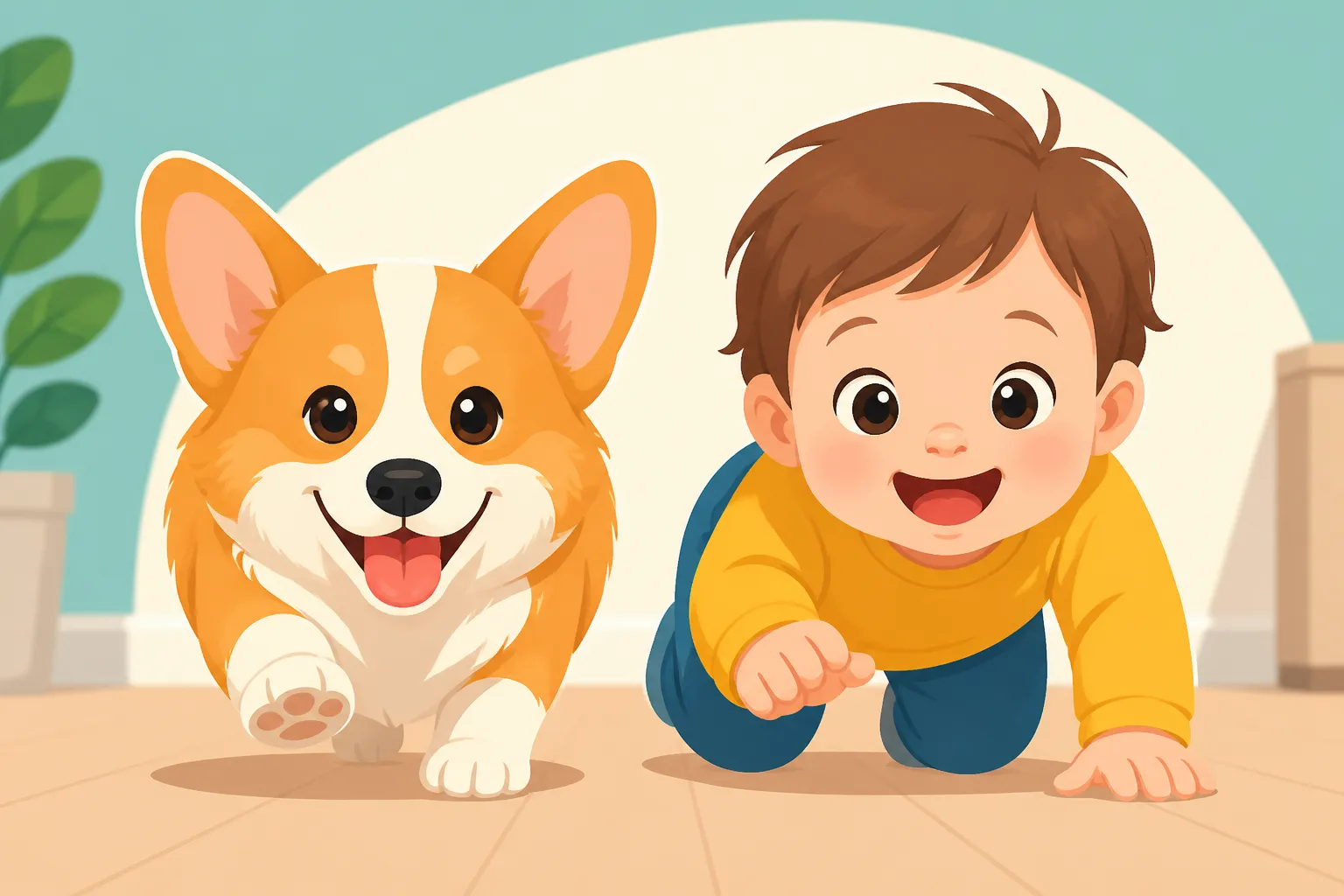
A Corgi and a Toddler Moving at the Same Height
Bringing a Corgi into a home with a toddler can feel like managing two equally determined, low-to-the-ground, and often vocal individuals who seem to speak entirely different languages. Many Corgi owners find themselves caught between their beloved canine and their curious child, struggling with the unique challenges that arise when both operate at eye-level, leading to frustrating nipping incidents or constant supervision. This guide will explore these specific dynamics, offer practical strategies for harmonious living, and provide actionable steps to ensure a safe and loving environment for both your Corgi and your toddler.
The Unique Dynamics of Corgis and Toddlers
It’s easy to assume that because Corgis are smaller dogs, they'd naturally be excellent companions for small children. The reality, however, is far more nuanced, and often, their similar heights create a specific set of challenges that catch many families off guard. We're talking about two beings who share a certain physical perspective on the world, and that perspective comes with its own unique behavioral implications.
Why Their Heights Create a Specific Challenge
Imagine the world from a Corgi’s point of view: everything is a bit bigger, and quick-moving objects (like little human legs) are prime candidates for herding. Now, picture the world from a toddler’s perspective: a furry, four-legged creature is at their eye level, moving, making noises, and often presenting a tempting target for a hug, a pat, or simply a curious poke. This shared low stature means that accidental bumps, face-to-face greetings, and sudden movements are incredibly common. A toddler, still learning about personal space and gentle interaction, might lean over a Corgi, getting directly into its comfort zone, or grab at its tail or ears, which are easily within reach. For a Corgi, especially one with strong herding instincts, this can be perceived as an invasion or a challenge, leading to defensive or correctional behaviors. They aren't trying to be mean; they're simply reacting to the world as they understand it, and a toddler's unpredictable movements and direct eye contact can be very intense for a dog.
The Instinctual Nudge and Nip
Corgis were bred for centuries to drive cattle by nipping at their heels and moving them along. This isn't just a quaint historical fact; it's deeply ingrained in their genetic makeup, a powerful instinct that manifests in various ways, even in a modern household. When you have a tiny human running around, making quick, erratic movements, often at the perfect height for a "correction," that ancient herding drive can kick in. It’s not necessarily aggression in the traditional sense, but rather a Corgi's attempt to control or direct movement. They might run circles around a toddling child, trying to "gather" them, or they might give a quick nip to the ankles or calves. This is usually not meant to cause serious harm, but it can be painful, frightening, and can easily break skin. Many owners are genuinely heartbroken and perplexed when their sweet Corgi suddenly nips their child, not realizing it's a deeply wired behavior. This is why understanding The Cattle-Driving Nip a Corgi Still Has is so crucial, as it informs all your training efforts.
Understanding Your Corgi's Herding Instinct Around Children
It's tempting to think of our Corgis as furry little people, but they are dogs with ancient instincts. When those instincts clash with the unpredictable nature of a toddler, it’s rarely a recipe for instant harmony. Truly understanding the "why" behind their behavior is the first step toward managing it effectively.
The Fine Line Between Play and Herding
For a Corgi, chasing and nipping can be a form of play, especially with other dogs. However, when applied to a child, this "play" can cross a dangerous line very quickly. A Corgi might see a child running and interpret it as a "flock" needing to be controlled. They might chase, bark, and even nip at the heels or clothing. What starts as what might seem like innocent interaction can escalate. A child laughing and running might encourage the Corgi's herding drive further, making the dog think it's part of a fun game. This is a common scenario, and it's where careful observation becomes your most important tool. You might see your Corgi crouch, stare intently, and then dash after a child. These are all signs of that deeply embedded herding behavior. It's not malicious, but it's not safe. Recognizing these early signals means you can intervene before a nip occurs. For more on this, you might want to read A Corgi That Nips Running Children.
Reading Your Corgi's Body Language
Our Corgis communicate constantly, often in subtle ways that we might miss if we're not paying attention. Learning to read their body language is paramount when they're around children. Before a nip or an overly enthusiastic herding attempt, a Corgi will almost always give off warning signals. Look for:
- Stiffening: Their body might become rigid, their tail held low or stiffly.
- Hard Stare: A fixed, unblinking gaze at the child.
- Lip Licking/Yawning: These can be displacement behaviors, indicating stress or discomfort.
- Whale Eye: You see the whites of their eyes, a sign of anxiety.
- Low Growl/Mutter: Even a subtle vocalization can be a warning.
- Moving Away: If your Corgi actively tries to retreat or hide, respect that space immediately.
Ignoring these signals can lead to escalation. It’s vital to understand that a Corgi moving away or showing subtle signs of stress is communicating that they are uncomfortable and need space. Pushing them to "tolerate" interaction when they're giving these signals is unfair and risky. Teaching your children to recognize these signs, too, is a huge step in prevention.
Setting Up a Safe Environment for Both
One of the most effective strategies for managing Corgis and toddlers is to prevent issues before they start. This means thoughtfully structuring their shared environment to minimize opportunities for conflict and maximize safety.
Creating Physical Barriers and Safe Zones
You absolutely cannot rely on constant vigilance alone; you need physical safeguards. Think about your home and how you can create distinct areas where your Corgi and your toddler can exist separately, especially during times when supervision might be divided or when either party needs a break.
- Baby Gates: These are your best friends. Install sturdy baby gates at doorways to block off rooms or sections of the house. This allows the Corgi to be in one room and the toddler in another, or allows the Corgi to have a "time out" space away from the child. Consider gates that are tall enough to discourage jumping and secure enough to withstand a curious toddler.
- Crates and Pens: A Corgi should have a comfortable, den-like crate that is their safe space. This is not a punishment area, but a place they can go to relax undisturbed. Teach your Corgi to love their crate by feeding them meals there and giving them special chew toys. Similarly, a toddler playpen can offer a safe zone for the child, keeping them contained and out of reach of a curious or overstimulated Corgi. Placing the crate or pen in a quiet corner away from the main thoroughfare can make a big difference.
- Elevated Spaces: Corgis are low to the ground, so giving them a spot that’s raised can offer them a sense of security and a vantage point away from busy toddler activity. A dog bed on a sturdy ottoman or a raised platform, accessible only to the dog, can be a great retreat. Always ensure the toddler understands this is the Corgi's special space and they should not intrude. Ramps and gates that stop a Corgi using stairs can also be useful for delineating safe zones within your home without constantly picking up your Corgi.
Tools and Equipment to Aid Supervision
Even with physical barriers, you'll still need to actively manage interactions. There are several tools and pieces of equipment that can make this easier and safer for everyone involved.
- Long Lines and Leashes: While inside the house, especially during initial integration or when you anticipate a busy period, a lightweight leash or a long line attached to your Corgi can give you quick, gentle control. This allows you to redirect them away from a child or prevent a chase without having to physically grab them. Just ensure it's not long enough to get tangled or become a tripping hazard for the child.
- Harnesses: Instead of a collar, a comfortable, well-fitting harness distributes pressure across your Corgi's chest, making it easier and safer to guide them. It provides a handle for quick, gentle redirection when needed. Look for options that don't put pressure on their spine, which is extra important for Corgis. Why a Corgi's Harness Should Not Press the Spine is a good read on this.
- Video Monitors: Just like baby monitors, dog monitors (many of which are available on Amazon) can be incredibly helpful when you step out of the room for a moment. This provides an extra layer of supervision, allowing you to monitor interactions and intervene quickly if needed, even if you’re not physically present.
- Enrichment Toys: Keeping your Corgi mentally stimulated and physically tired can significantly reduce their desire to herd. Puzzle toys, Kongs stuffed with treats, or slow feeder bowls (you can find a variety of these on Amazon) can occupy them independently while your toddler plays nearby. This diverts their attention and energy into appropriate activities.
Proactive Training Strategies for Your Corgi
Beyond managing the environment, intentional training is absolutely essential. You're teaching your Corgi a new set of rules for interacting with a very specific, wiggly, and sometimes loud creature. This requires patience, consistency, and a positive reinforcement approach.
Teaching "Leave It" and "Off" Reliably
These two commands are fundamental for safety in a Corgi-toddler household. A solid "leave it" can prevent your Corgi from snatching a dropped toy, a piece of food, or even from approaching a child when you deem it unsafe.
- "Leave It": Start this command in a low-distraction environment. Place a tempting treat on the floor, cover it with your hand, and say "Leave It." As soon as your Corgi looks away from the treat, mark the behavior (with a "yes!" or a clicker) and reward them with a different, even higher value treat from your other hand. Slowly progress to uncovered treats, then moving objects, and eventually to real-life scenarios involving your child's toys or food. The goal is for your Corgi to understand that "leave it" means disengage from the object in question.
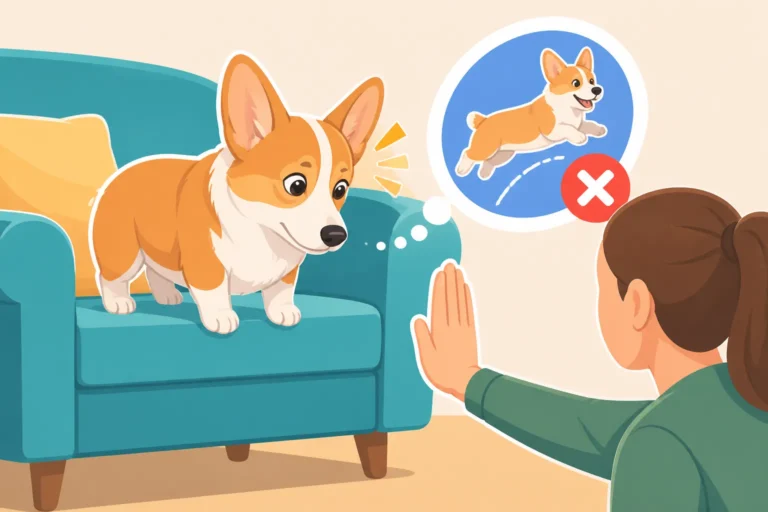
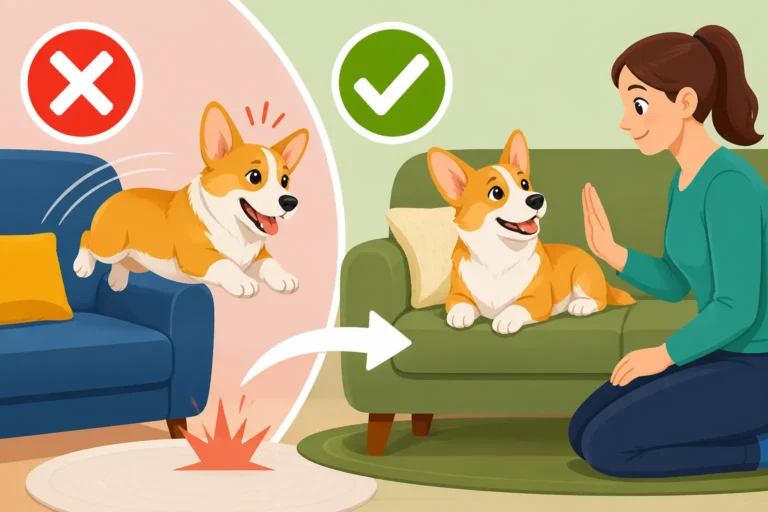
- "Off": This command teaches your Corgi to remove themselves from a piece of furniture, a person, or a specific area. If your Corgi tends to jump up on the sofa next to your child, "Off" can be a lifesaver. Lure them off the furniture with a treat, saying "Off" as they move down, then reward them once all four paws are on the floor. Practice this consistently. Similarly, you can use "Off" to tell your Corgi to move away from the child's play space. Consistent practice, even when there's no immediate need, builds reliability. For broader guidance, consider enrolling in an online puppy school like BAXTER & Bella, which offers comprehensive programs that include these foundational commands, preparing your dog for a variety of family situations.
Reinforcing Calm Behavior Around Movement
Corgis are highly sensitive to movement, which ties directly back to their herding roots. Therefore, actively rewarding calm behavior, especially when your toddler is in motion, is critical.
- "Place" or "Mat" Training: Teach your Corgi to go to a designated "place" (like their bed or a mat) and stay there. This gives you a tool to create physical distance and establish boundaries when your toddler is active. Reward heavily for staying on their mat, especially when there's commotion. Start with short durations and gradually increase the time and distractions.
- Observation and Reward: Actively look for moments when your Corgi is not reacting to your toddler. If your child is running past and your Corgi is lying calmly on their bed, reward them lavishly with a high-value treat. If your Corgi shows a moment of disinterest or chooses to move away from a boisterous child, praise and reward that choice. This reinforces that calm, independent behavior is desirable. This is especially important for A Corgi That Herds a Toddler and helping them learn alternative behaviors.
- Management Over Confrontation: Rather than constantly scolding or punishing your Corgi for herding attempts, focus on managing the environment and proactively rewarding desired behaviors. Yelling or punishment can increase stress and potentially lead to fear-based aggression, making the situation worse. Remember, your Corgi isn't being "naughty" on purpose; they're acting on instinct.
Educating Your Toddler on Respectful Interaction
Training isn't just for the dog; it's equally important for the tiny humans in the house. Toddlers, by their very nature, are explorers and testers of boundaries. Teaching them how to safely and respectfully interact with their Corgi is a long-term project that requires patience and consistency from you.
Teaching Gentle Hands and Quiet Voices
This is a continuous lesson, starting from their very first interactions. Toddlers need to learn that dogs are not toys to be poked, grabbed, or ridden.
- "Gentle Hands": Physically guide your toddler's hand to gently stroke the Corgi's back or chest (areas generally less sensitive than the head, ears, or tail). Narrate their actions: "Gentle hands, pat pat." If they grab or hit, immediately remove their hand and calmly reiterate "gentle hands." Consistency is key here. You are the bridge between your child's curiosity and your Corgi's comfort.
- "Quiet Voices": Corgis can be quite sensitive to loud noises, and a toddler's shrieks or sudden yells can be startling or even frightening. Encourage your child to use a calm, inside voice around the dog. If they get too loud, gently remind them: "Quiet voice for [Corgi's Name]." This isn't about silencing your child completely, but teaching them situational awareness.
- Supervised "Petting Sessions": Always supervise interactions closely. Sit with your child and Corgi. Model appropriate petting, and if your Corgi shows any signs of discomfort, calmly end the interaction and give the dog space. This is where Whether a Corgi Should Play With Small Children becomes a question of careful management rather than free interaction.
Recognizing When the Corgi Needs Space
Just as important as teaching gentle interaction is teaching your toddler to respect the Corgi's need for space and privacy. This helps prevent many potential incidents.
- Dog's "Safe Zone": Point out the Corgi's bed or crate as their special "house" where they go to rest. Teach your child that when the Corgi is in their crate or on their bed, they are not to be disturbed. "Corgi sleeping, leave alone."
- Body Language Basics: Even young children can begin to learn very simple dog body language. Teach them that if the Corgi turns its head away, walks away, or goes into its bed, it means "I need a break." You can use simple terms like "Corgi says no thanks" or "Corgi needs quiet."
- No Chasing Games: Explicitly teach your toddler that chasing the dog is not a game. If they start to chase, intervene immediately and redirect their play to toys or another activity. This reinforces Teaching Children Not to Run From a Corgi and prevents the activation of the Corgi's herding drive.
Remember, consistency is paramount. Every time your child interacts with the Corgi, you are either reinforcing good habits or inadvertently allowing potentially problematic ones.
Navigating Common Scenarios and Problem Solving
Despite your best efforts, life happens. There will be moments where a Corgi's instincts get the better of them, or a toddler's curiosity leads to an unexpected interaction. Knowing how to respond in these situations is key to preventing escalation and maintaining trust.
When a Nip Occurs: Immediate Steps
A nip can be a shocking and upsetting experience for everyone involved. Your immediate response is crucial.
- Separate Immediately: The very first thing to do is to calmly separate the Corgi and the child. Secure the Corgi in their crate or a separate room, ensuring no further interaction can occur. Do not yell at the dog in the heat of the moment, as this can heighten their stress and fear.
- Assess the Child: Check the child for injuries. Clean any broken skin thoroughly with soap and water, and seek medical attention if the wound is deep, bleeding heavily, or if you have any concerns about infection.
- Remain Calm (Externally): It's natural to feel upset, angry, or worried, but projecting this distress onto your Corgi or child can make things worse. Speak in a calm, low tone. Address the immediate needs of both.
- Analyze the Situation (Later): Once everyone is safe and calm, take time to think about what led to the nip. Was the Corgi trying to get away? Was the child invading their space? Were there warning signs missed? Understanding the trigger is essential for prevention. This critical assessment helps you adjust your management and training plan going forward. Was the Corgi overwhelmed? Did the toddler grab them? This helps inform prevention for Whether a Corgi Nip Ever Breaks Skin.
Long-Term Management for Continued Harmony
A nip is not necessarily the end of the world, but it is a serious warning sign that your current management plan needs adjustment. Long-term harmony requires dedication and ongoing effort.
| Strategy | Corgi Action | Toddler Action | Benefit |
|---|---|---|---|
| Constant Supervision | Ensure direct adult supervision during all interactions. | Adult guides gentle hands, intervenes if needed. | Prevents incidents, teaches appropriate touch. |
| Separation Protocol | Crate or gate Corgi when supervision is divided. | Toddler learns Corgi has 'safe space'. | Reduces stress for both, prevents accidental issues. |
| Leash/Harness Control | Corgi wears a leash in busy periods. | Adult uses leash for gentle redirection. | Quick control, prevents chasing/nipping. |
| Enrichment | Provide puzzle toys, chews (e.g., from Amazon). | Corgi occupied independently. | Reduces boredom, diverts herding energy. |
| Consistent Training | Reinforce "Leave It," "Off," "Place" daily. | Corgi understands boundaries and commands. | Builds reliability, creates predictable behavior. |
- Re-evaluate and Adjust: After an incident, or even just ongoing challenges, it's time to honestly assess your strategies. Are the barriers effective? Is your Corgi getting enough mental and physical exercise? Is your toddler consistently respecting boundaries? Be prepared to make significant changes, such as increasing separation time, intensifying training, or seeking professional help.
- Seek Professional Guidance: If you're struggling to achieve harmony or if there have been repeated incidents, do not hesitate to consult a certified professional dog trainer or a veterinary behaviorist. They can provide tailored advice, observe the dynamics in your home, and offer strategies that you might not have considered. Look for trainers who specialize in positive reinforcement and family integration. BAXTER & Bella, for example, offers resources that can support such training efforts from the comfort of your home.
- Prioritize Safety: Ultimately, the safety of both your child and your Corgi must be your top priority. If, despite all efforts, you cannot create a safe environment, you may need to consider difficult decisions like rehoming your Corgi to a home without young children. This is a last resort, but one that ensures everyone's well-being.
- Exercise and Mental Stimulation: A tired Corgi is often a good Corgi. Ensure your dog is getting adequate physical exercise, but also plenty of mental stimulation. Sniffing games, puzzle toys, and short training sessions throughout the day can help burn off that herding energy in constructive ways. This is part of giving them The Job a Corgi Needs Instead of Herding You.
Living with a Corgi and a toddler doesn't have to be a constant battle of wills. With understanding, proactive management, consistent training, and clear boundaries for both your dog and your child, you can foster a respectful and loving relationship where everyone feels safe and valued. It takes work, yes, but seeing them peacefully coexist, maybe even sharing a quiet moment, makes it all worth it.
Disclaimer
This article is for general informational purposes only and does not constitute professional advice. Laws, prices and regulations vary by location and change over time. Consult a qualified professional for guidance on your specific situation.