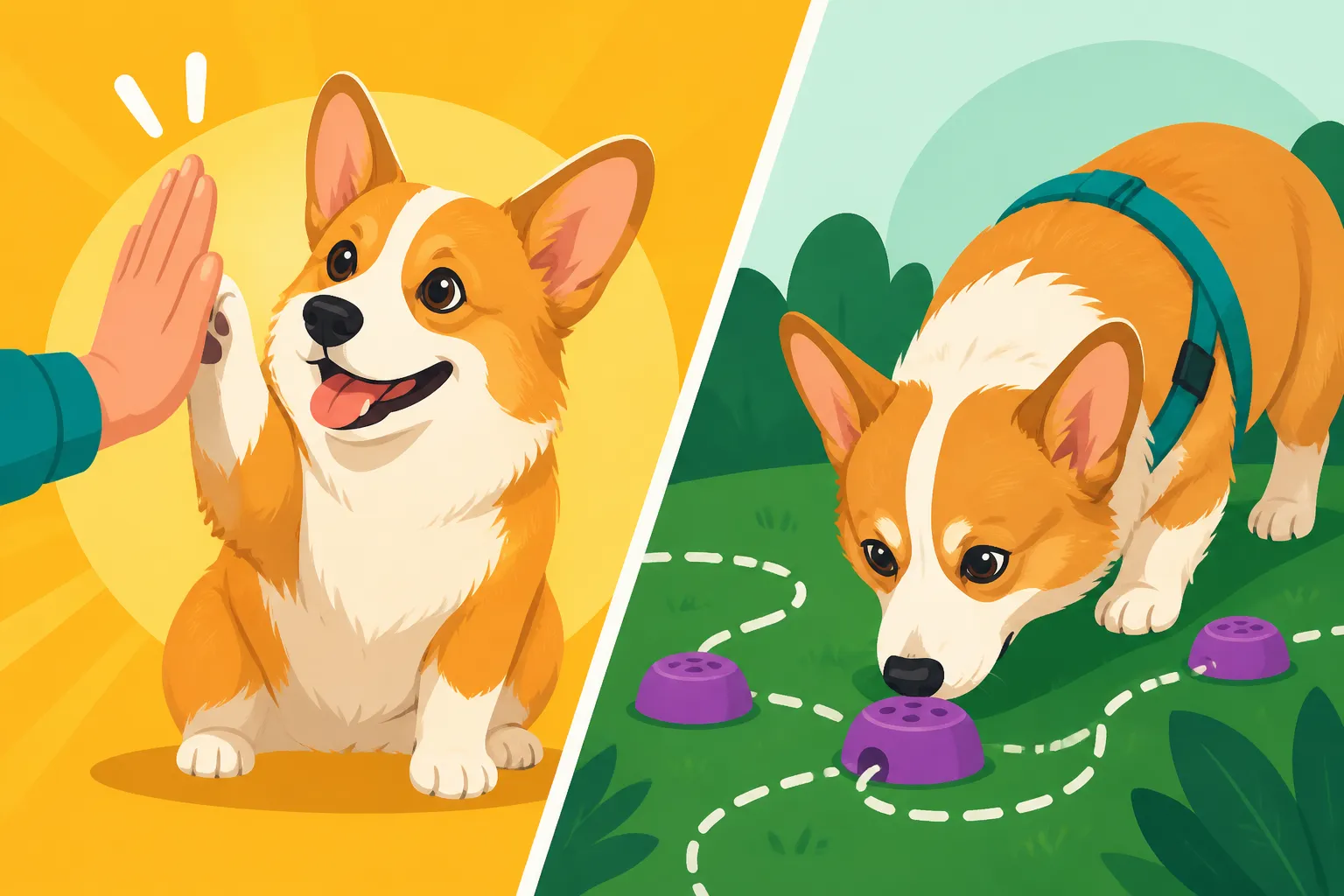
Trick and Scent Work for a Corgi
If you've ever lived with a Corgi, you know they're much more than just a cute face and fluffy butt; they're intelligent, driven little dynamos with an innate desire to do something. Simply walking around the block often isn't enough to satisfy their keen minds, which can lead to boredom-fueled mischief. This comprehensive guide will walk you through how trick and scent work can provide fulfilling mental and physical challenges for your Corgi, turning that excess energy into focused fun and strengthening your bond.
The Corgi Brain: Why They Need More Than Just Walks
Many Corgi owners find themselves scratching their heads when their seemingly well-exercised dog is still tearing through the house, barking at shadows, or nudging them incessantly. The truth is, Corgis were bred for a specific, demanding job: herding cattle. This isn't just about physical exertion; it's about quick thinking, problem-solving, and decisive action. Their brains are wired for activity, for processing information, and for strategizing. A simple walk, while good for their physical health, often doesn't tap into this deep-seated mental capacity.
Their Herding Heritage and Mental Drive
Imagine a Corgi on a Welsh farm, darting between the legs of cattle, nipping at heels, and directing the herd with cunning and agility. This wasn't a job for a dog that just followed orders mindlessly. It required an independent spirit, keen observation skills, and the ability to make split-second decisions. That heritage is still very much alive in your modern Corgi, even if their "herd" is now your family or the mailman. They're constantly evaluating their environment, looking for patterns, and often, trying to figure out how to take charge. This intense mental drive means they thrive when given a purpose, something to engage their intellect.
This powerful instinct to work and solve problems can be a blessing or a curse, depending on how it's channeled. If left undirected, it can manifest in ways we find frustrating, like excessive barking at passing squirrels or attempting to "herd" children or other pets by nipping at their ankles. Understanding that this isn't defiance, but rather an expression of their inherent nature, is the first step toward effective training. Providing them with appropriate mental outlets respects their breed history and sets them up for success.
The Pitfalls of Boredom and Understimulation
A bored Corgi is often a mischievous Corgi. When their minds aren't stimulated, they'll invent their own "jobs," which might include redecorating your sofa, excavating your prize-winning petunias, or staging a dramatic performance of barking at everything that moves outside the window. These behaviors aren't born of malice, but from a genuine need to engage their active brains and bodies. Think of it like a highly intelligent person stuck in a monotonous job; they're likely to find ways to amuse themselves, even if those ways aren't productive.
Understimulation can lead to more than just destructive habits. It can result in anxiety, excessive vocalization, and even a general sense of malaise or depression in some dogs. Their intelligence, which is a wonderful trait, can work against them if it's not given appropriate outlets. This is where activities like trick training and scent work shine, providing The Job a Corgi Needs Instead of Herding You and transforming their boundless energy into focused, positive engagement. It truly makes a difference in their overall well-being and happiness.
Getting Started with Corgi Trick Training
Trick training is an incredibly rewarding way to engage your Corgi's mind and body. It's not just about silly party tricks; it builds confidence, improves communication, and provides a wonderful mental workout. Plus, it's something you can do almost anywhere, with minimal equipment.
Choosing the Right First Tricks
When you're first diving into trick training with your Corgi, it's best to start with simple, easily achievable tricks that build their confidence and keep them motivated. Think about behaviors they already do naturally, and put them on cue. For instance, most Corgis love to sit or lie down. So, "sit" and "down" are excellent starting points, but you can add a twist: teach them "spin" or "shake a paw." These are relatively easy for a Corgi to grasp, as they involve natural body movements.
Consider tricks that are also practical, like "stay" or "come," which, while fundamental obedience, can be built upon as 'tricks' in fun ways. Once your Corgi masters a basic trick, you can combine them. For example, "spin" then "down," or "shake a paw" then "sit." The key is to keep it positive, use high-value treats (Corgis are often highly food-motivated!), and keep sessions short and sweet. Remember that Corgis can sometimes be a bit particular; Why a Corgi Does It Once and Then Refuses might mean you need to vary your approach or reward.
Breaking Down Complex Tricks
Some tricks might seem daunting at first, but the secret is to break them down into tiny, manageable steps. This is called "shaping." For a trick like "play dead" (flop over and stay), you wouldn't expect your Corgi to just know what you want. Instead, you'd reward them for:
- Lying down.
- Rolling slightly onto their side.
- Rolling further onto their side.
- Staying still in that position.
Each tiny step gets a reward, and you only move to the next step once the previous one is consistent. Tools like clickers can be incredibly effective here, as they mark the exact moment your Corgi performs the desired behavior, making it crystal clear what they're being rewarded for. Many trainers find that Whether a Clicker Holds a Corgi's Attention depends on the individual dog, but it's certainly worth trying. Don't be afraid to use a lure (a treat in your hand) to guide them into the position initially, then fade the lure as they understand the verbal cue.
Making Training Sessions Fun and Engaging
The absolute most important ingredient in Corgi trick training is fun. If it feels like a chore to either of you, you're doing it wrong! Corgis, with their strong personalities, are fantastic at sniffing out boredom. Keep your energy high, use an excited voice, and offer plenty of praise. Short, frequent training sessions are far more effective than long, drawn-out ones. Think 5-10 minutes, a few times a day, especially when your Corgi is fresh and motivated. This fits perfectly with Short Bursts of Training a Corgi Will Take.
Vary the tricks you're working on to keep things interesting. If you hit a roadblock on one trick, switch to another they already know well to end on a positive note. Incorporate toys and play into your sessions; some Corgis might even work for a quick game of tug or fetch alongside treats. The goal is to make training a collaborative game, not a command performance. Platforms like BAXTER & Bella offer comprehensive online puppy training programs that extend into trick training, providing structured lessons and live support that can be fantastic for keeping things fresh and engaging for both you and your Corgi. Their approach emphasizes positive reinforcement, which is crucial for Corgis who can sometimes display their independent streak if they feel coerced.
Unleashing the Nose: Introduction to Scent Work for Corgis
While Corgis are known for their herding prowess, their noses are also incredibly powerful tools, often underestimated. Scent work, sometimes called "nose work" or "detection work," taps into their natural ability to sniff out and locate specific odors, providing an unparalleled mental workout. This activity is fantastic for all Corgis, regardless of age or physical condition, as it's low-impact and highly engaging.
The Magic of the Corgi Nose
Corgis, like many dogs, live in a world of scent that we humans can barely comprehend. Their noses contain millions more olfactory receptors than ours, allowing them to detect and differentiate odors with incredible precision. While they might not be traditional "scent hounds," their intelligence and determination make them excellent candidates for nose work. They truly enjoy the process of solving a scent puzzle, and it provides an immense sense of satisfaction and confidence for them. This kind of work is intrinsically rewarding because it allows them to engage with the world in a way that is natural and deeply satisfying.
Think of it this way: for a Corgi, a walk isn't just about moving their legs; it's about processing a rich tapestry of smells. Every fire hydrant, blade of grass, and lamppost tells a story. Scent work harnesses this natural inclination and gives it purpose. It builds their focus and their problem-solving skills, and because it's such a natural behavior, it's incredibly de-stressing for them. Even a Corgi who might seem Why an Independent Corgi Ignores You during traditional obedience can light up and become incredibly focused when presented with a scent challenge.
Starting with Simple Scent Games at Home
You don't need fancy equipment or a professional trainer to get started with scent work. You can begin right in your living room with a few treats and some empty boxes. A classic beginner game is "find the treat."
- Let your Corgi watch you hide a high-value treat under one of several overturned cups or small boxes.
- Encourage them to sniff and find it. When they do, praise them enthusiastically and let them have the treat.
- As they get better, gradually increase the difficulty by hiding the treat when they're not watching, using more cups, or placing the cups in different locations around the room.
Another great game is a "box search." Gather a few cardboard boxes of various sizes and place them in a small area. Show your Corgi a treat, then hide it in one of the boxes. Let them sniff around and discover it. Over time, you can add more boxes, make the hides harder, and eventually even introduce a specific target odor (like a tiny cotton swab with a drop of birch oil, which is a common scent used in formal nose work). Just make sure any treats are easily accessible and don't pose a choking hazard. For additional tools, simple puzzle toys available on Amazon can be excellent starting points for engaging your Corgi's nose and mind, making them work a little for their reward.
Progressing to More Formal Scent Work
Once your Corgi has mastered basic scent games, you might consider enrolling in a formal scent work class or exploring competitive nose work. These programs typically introduce specific odors (birch, anise, clove) and teach your dog to locate them in various environments, such as containers, interiors, exteriors, and vehicles. The training is structured, progressive, and incredibly engaging. It's truly Scentwork as a Sport That Spares a Corgi's Back, as it requires minimal physical exertion but intense mental focus.
Formal classes provide the benefit of experienced instructors who can guide you through the process, help you troubleshoot, and ensure your Corgi is building a strong foundation. You'll learn how to "read" your dog's subtle indications when they've found the scent and how to properly reward them. Organizations like the National Association of Canine Scent Work (NACSW) offer trials for those who want to take their skills to a competitive level. Even if you never compete, the structured training is excellent for continuing to challenge your Corgi and keep their brilliant nose happy.
Benefits Beyond Entertainment: How This Work Helps Your Corgi
Beyond just having fun, engaging your Corgi in trick and scent work offers a multitude of tangible benefits for their overall well-being. It's not just a pastime; it's an investment in their mental, physical, and emotional health.
Building a Stronger Bond and Communication
When you spend dedicated time teaching your Corgi new tricks or guiding them through scent puzzles, you're not just training; you're building a deeper relationship. These activities require you to pay close attention to your dog's body language, to understand their cues, and to communicate effectively. This back-and-forth interaction fosters trust and mutual understanding. Your Corgi learns that you are a reliable source of fun and guidance, and you learn to appreciate their unique intelligence and problem-solving abilities.
This increased communication can translate into better behavior in other areas of life. A Corgi that feels heard and understood, and who has a strong, positive connection with their owner, is generally more responsive and well-adjusted. The focus and teamwork involved in these activities reinforce positive patterns of interaction, making your Corgi more attentive to your cues, not just during training, but in everyday situations. It truly is about becoming a team, working together to achieve a common goal.
Physical and Cognitive Health Advantages
While scent work is low-impact, both trick and scent training provide significant cognitive benefits. They challenge your Corgi to think, remember sequences, and solve problems, which helps keep their brains sharp, especially as they age. Just like humans, dogs benefit from mental exercise to ward off cognitive decline. Learning new skills uses different parts of their brain, strengthening neural pathways and keeping them mentally agile. This mental stimulation is often just as tiring, if not more so, than a long walk, and can contribute to a calmer, more settled dog at home.
Physically, trick training often involves movements that can improve balance, coordination, and body awareness. Teaching your Corgi to crawl, weave through your legs, or target objects can strengthen core muscles and improve their overall physical fitness without putting undue strain on their long backs. These controlled movements are much safer than uncontrolled jumping or rough play. This is especially important for a breed prone to back issues, making it a great way to ensure they stay active in a safe, mindful way. It also helps with Keeping a Confined Corgi Occupied if they're on rest orders, as many of these activities can be done in a small space.
Channeling That Signature Corgi Sass
Let's face it, Corgis have personality in spades – a good dose of "sass," as many owners lovingly call it. They're smart, opinionated, and can be quite vocal when they want something. This strong will, while sometimes challenging, can be a huge asset in trick and scent work. Their determination to figure things out, their endless curiosity, and their drive to succeed make them enthusiastic participants. Instead of that sass being directed towards bossing you around or barking at the neighbor's cat, it can be channeled into mastering a new skill or sniffing out a hidden treat.
These activities give your Corgi a productive outlet for their intelligence and energy, reducing the likelihood of them inventing their own, less desirable, forms of entertainment. When a Corgi's mind is engaged and satisfied, they are generally calmer and less prone to destructive behaviors or excessive vocalization. It gives them a sense of purpose and accomplishment, which every Corgi, deep down, truly desires. It’s a wonderful way to interact with their clever, sometimes challenging, personalities.
Common Challenges and How to Overcome Them
No training journey is without its bumps, and Corgis, with their unique blend of intelligence and stubbornness, can present their own set of challenges. But with patience, understanding, and the right approach, you can navigate these hurdles successfully.
Patience is a Virtue: Dealing with Corgi Willfulness
Corgis are notorious for their strong opinions and independent streak. They weren't bred to blindly follow commands; they were bred to think for themselves. This means that sometimes, your Corgi might give you the "Corgi stare" and decide that your request isn't worth their effort, especially if the reward isn't appealing enough. This isn't defiance for the sake of it, but often a cost-benefit analysis in their clever little minds. Whether a Corgi Works for Anything but Food really highlights this; often, food is the highest motivator.
The key to overcoming this Corgi willfulness is patience and consistency. Don't get frustrated or angry; that will only make them shut down. Instead:
- Increase the reward value: Use their absolute favorite treats.
- Shorten sessions: Keep them brief before your Corgi gets bored or decides to "veto" the activity.
- End on a positive note: Always finish with a trick they know and succeed at.
- Vary your approach: If one method isn't working, try another. Perhaps shaping is better than luring for that particular trick.
Remember, you're building a partnership, not dictating terms. Be more interesting than the distractions, and make it clear that cooperating with you leads to good things.
Managing Distractions and Maintaining Focus
Corgis are highly observant dogs, and their environment is full of fascinating sights, sounds, and especially smells. This means that distractions can easily derail a training session, especially when you're working outside the quiet confines of your home. A squirrel scampering by, a distant dog bark, or even the scent of yesterday's dinner could be enough to break your Corgi's concentration.
To help your Corgi maintain focus:
- Start in a low-distraction environment: Begin in a quiet room at home, then gradually introduce minor distractions.
- Build up duration and distance: Once your Corgi can perform a trick reliably in a calm setting, ask for it in a slightly more distracting place, or ask for longer durations of a "stay."
- Make yourself the most interesting thing: Use an excited voice, quick movements, and super high-value rewards to capture and hold their attention.
- Proofing: Practice tricks in different locations, with different people, and around varying levels of noise. This helps them generalize the behavior, so they understand the command applies everywhere.
- Recognize their limits: Some days, your Corgi might simply be too overwhelmed by their surroundings. It's okay to end the session and try again later.
Adapting for Physical Limitations
Corgis are known for their long backs and short legs, which, while endearing, make them prone to certain physical issues, particularly intervertebral disc disease (IVDD). This means you need to be mindful of the types of tricks and movements you encourage, especially when they involve jumping, twisting, or prolonged standing on hind legs. Understanding Whether a Corgi Understands Its Own Back is crucial; they don't always know what's safe.
When selecting tricks:
- Prioritize ground-based tricks: Focus on tricks like "crawl," "spin," "wave," "nose target," and "bow."
- Avoid high jumps: While agility can be fun, keep jump heights extremely low and avoid repetitive, forceful jumping movements.
- Mind the spine: Be cautious with tricks that involve prolonged "sit pretty" or standing on hind legs, as these can put strain on their spine. If you do teach these, keep them brief and ensure proper form.
- Consider hydrotherapy: For Corgis with existing back issues or those recovering from injury, hydrotherapy can be a fantastic way to build strength and mobility safely.
- Use ramps: Teach your Corgi to use ramps for getting on and off furniture and into cars to minimize impact on their back.
Always consult your veterinarian if you have concerns about your Corgi's physical limitations or before starting any new, strenuous physical activity. The Corgi Years When the Back End Gives Out can vary, so it's always best to be proactive and careful with their precious spines.
Integrating Fun into Daily Life: Making It a Routine
The beauty of trick and scent work is that it doesn't have to be a formal, once-a-week class. You can weave these engaging activities into your Corgi's daily routine, turning everyday moments into opportunities for learning and bonding.
Short, Regular Bursts for Maximum Impact
Remember that Corgis thrive on Short Bursts of Training a Corgi Will Take. Instead of trying to squeeze in one long training session, look for micro-moments throughout your day. Waiting for your coffee to brew? Teach "touch" (nose to your hand). Commercial break during your favorite show? Practice "weave" (through your legs). Right before dinner? Ask for a "sit-stay" and then a "shake."
These small, consistent interactions add up. They keep your Corgi's mind active, reinforce good habits, and prevent boredom from setting in. This constant engagement ensures that their intelligence is regularly challenged, and they feel like an active, valued member of the family rather than just a cute bystander. It also ensures that training remains light, fun, and something they look forward to.
DIY vs. Structured Classes or Programs
There's no single "right" way to approach trick and scent work; what matters most is finding what works best for you and your Corgi.
DIY Approach:
- Pros: Flexible, cost-effective, can be done entirely at home. You can tailor activities to your Corgi's specific interests and pace. There are countless online resources, YouTube videos, and books to guide you. Brands like Amazon offer a wide array of affordable training tools, from clickers to puzzle toys, which can kickstart your DIY journey.
- Cons: Requires self-discipline and knowledge. You might miss subtle cues or accidentally reinforce unwanted behaviors without expert guidance. Progress might be slower.
Structured Classes or Programs:
- Pros: Provides expert instruction, structured curriculum, and a social outlet for both you and your Corgi. Trainers can identify and correct issues quickly, offering personalized advice. It can be motivating to work alongside other dog owners. Whether a Corgi Suits Group Classes depends on the individual dog, but many thrive in the environment.
- Cons: Can be more expensive, requires adherence to a schedule, and might involve travel. Some Corgis might find group settings too distracting initially.
Many owners find a hybrid approach works best: start with DIY games and simple tricks at home, and then enroll in a class for more advanced skills or for specific activities like formal scent work. Companies like BAXTER & Bella also provide online resources that bridge the gap, offering structured programs with professional guidance you can access from home. This flexibility allows you to adapt to your Corgi's needs and your own lifestyle.
Equipment That Makes a Difference
While you don't need much to start, certain pieces of equipment can enhance your trick and scent work sessions:
| Equipment Category | Item Examples | How It Helps Your Corgi |
|---|---|---|
| Training Aids | Clicker, treat pouch | Precise communication, easy access to rewards, keeps you organized. |
| Motivation | High-value training treats, favorite toys | Keeps Corgis engaged and eager to work; essential for their food-driven nature. |
| Scent Work | Empty cardboard boxes, small containers, target odor kit (birch/anise) | Simple hides for 'find the treat', allows progression to formal scent detection. |
| Puzzle Toys | Snuffle mats, treat-dispensing toys, KONGs | Encourages problem-solving and mental engagement; perfect for Toys That Occupy a Corgi and for meal times. |
| Safety/Mobility | Ramps/steps for furniture/car, orthopedic bed | Protects their long backs by preventing jumps, provides supportive rest for recovery. |
| Leash/Harness | Well-fitting harness (front-clip if needed) | Reduces strain on their neck/back, important for walks to and from training. |
Investing in quality, Corgi-appropriate gear ensures comfort and safety, making the learning process more enjoyable for everyone. Remember, the goal is always to prevent injury, especially to their unique physique.
Disclaimer
This article is for general informational purposes only and does not constitute professional advice. Laws, prices and regulations vary by location and change over time. Consult a qualified professional for guidance on your specific situation.