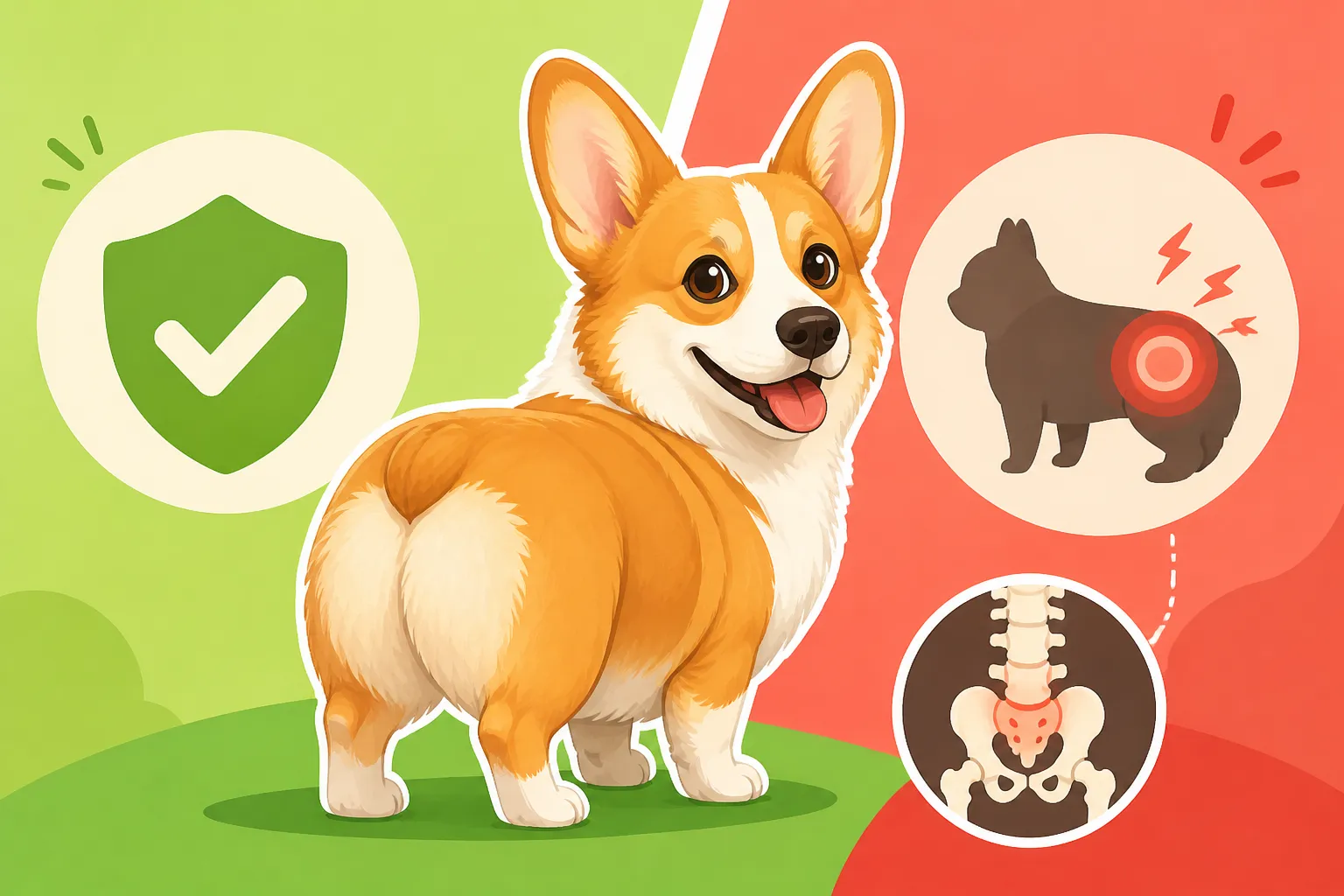
Whether the Corgi Bobtail Gene Causes Problems
One of the trickiest things about Corgis, beyond their shedding and their incredible talent for barking, is understanding their tails – or lack thereof. Many new Corgi owners, or even seasoned enthusiasts, are often left scratching their heads when they see a Corgi without a long, flowing tail, wondering if it's been docked or if it was simply born that way. This guide is here to unravel the mystery of the Corgi bobtail, delve into the genetics, and address the common worries about whether this unique trait brings any health complications for our beloved low-riders.
Understanding the Corgi Tail: Docked vs. Natural Bobtail
For centuries, Corgis, particularly the Pembroke Welsh Corgi, were commonly seen with short tails. This wasn't always due to nature; for a long time, it was a result of a practice called docking. But times have changed, laws have evolved, and awareness has grown, leading many to question the origins of a Corgi's short tail. It's not just about aesthetics anymore; it's about distinguishing between a purposeful alteration and a genetic predisposition.
The Historical Practice of Tail Docking
Historically, tail docking in working breeds like the Corgi was carried out for practical reasons. As cattle-herding dogs, Corgis would nip at the heels of livestock to move them along, and a long tail was thought to be a liability. The belief was that a lengthy tail could get stepped on, caught in machinery, or injured in the rough and tumble of farm life, leading to pain and infection for the dog. So, puppies would have their tails removed within the first few days of life, typically by a veterinarian, before the nervous system in the tail was fully developed. This practice was, for a long time, simply "how it was done" for Pembrokes, becoming an ingrained part of the breed's appearance.
However, as Corgis transitioned from farmhands to cherished family companions, the necessity of docking came under scrutiny. Many countries and regions have now banned or heavily restricted cosmetic tail docking, recognizing it as an unnecessary surgical procedure. This shift has meant that if you see a Pembroke Corgi with a short tail in a place where docking is restricted, there's a good chance it wasn't docked at all, but rather possesses a natural bobtail.
Identifying a Natural Bobtail
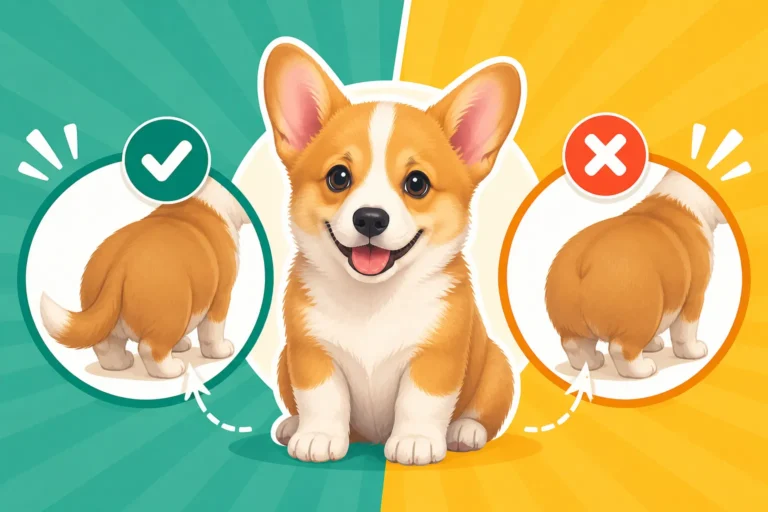
A natural bobtail (NBT) is exactly what it sounds like: a Corgi born with a tail that is naturally shorter than the breed's full-length standard. These tails can vary quite a bit in length, from a mere stump to a half-length tail that might even have a slight curl or kink. The key differentiator is that no surgical intervention has occurred; the dog's genetics dictated its tail length from birth. For instance, my neighbor's Corgi, Pip, has a charming little corkscrew tail that's about two inches long. He was born that way, and it’s a talking point wherever he goes.
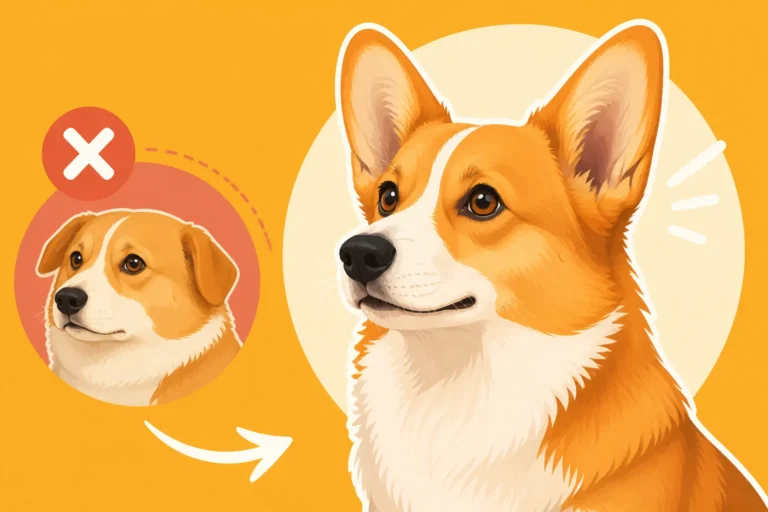
Visually, it can sometimes be hard for the untrained eye to tell the difference between a naturally bobbed tail and a docked tail, especially if the docking was done very neatly and symmetrically. However, a natural bobtail often has a more organic, slightly irregular shape or bend, rather than the clean, blunt cut that usually characterizes a docked tail. If you're looking at a puppy from a reputable breeder, they should be able to tell you whether a short tail is natural or the result of docking, and provide information about the parents' genetics if it's an NBT. The Corgi Tail Question delves deeper into the different appearances of Corgi tails.
The Genetics Behind the Natural Bobtail (NBT) Gene
Understanding the natural bobtail in Corgis requires a little dive into genetics. It's not just a random occurrence; there's a specific gene at play, and how it's inherited can have implications for a Corgi's appearance and, in some rare cases, its health. This genetic understanding is why responsible breeders are so careful about their breeding pairs.
The C189G Mutation and the T-Box Gene
The natural bobtail in many dog breeds, including the Corgi, is largely attributed to a specific mutation in the T-box transcription factor gene, often referred to as the C189G mutation. This gene plays a crucial role in embryonic development, including the formation of the tail vertebrae. When this particular mutation is present, it interferes with the normal development of the tail, leading to a shorter tail or even no tail at all. It's a dominant gene, meaning a dog only needs one copy of the mutated gene to express the bobtail trait. This is a fascinating aspect of canine genetics, showing how a single change can have such a visible impact.
Dogs inherit two copies of every gene, one from each parent. For the natural bobtail gene, there are three possible combinations:
- N/N (or T/T): The dog has two normal copies of the gene and will have a full-length tail. They cannot pass on the bobtail trait.
- N/S (or T/t): The dog has one normal copy and one mutated (short) copy. This dog will have a natural bobtail. They are considered a "carrier" of the bobtail gene and can pass it on to approximately 50% of their offspring.
- S/S (or t/t): The dog has two mutated copies of the gene. This is where things get complicated, and where potential problems can arise.
Homozygosity and Associated Risks
While inheriting one copy of the natural bobtail gene (N/S) results in a bobtail with no known health issues, inheriting two copies (S/S) is typically considered lethal in utero for most affected breeds. This means that embryos with two copies of the bobtail gene usually don't survive to term, leading to smaller litter sizes or reabsorption of fetuses. It's a genetic mechanism that largely self-regulates the population of natural bobtails, preventing the double-copy combination from entering the visible gene pool.
This phenomenon is why responsible Corgi breeders avoid breeding two natural bobtail Corgis together. If you breed an N/S dog with another N/S dog, statistically, 25% of the puppies would be N/N (full tail), 50% would be N/S (natural bobtail), and 25% would be S/S. That 25% of S/S puppies are unlikely to survive, leading to a reduced litter size and potentially heartache for the breeder. This is why genetic testing is so important, not just for bobtail genes, but for other conditions like The DNA Tests a Corgi Breeder Should Run.
Potential Health Concerns Associated with the Bobtail Gene
While a natural bobtail itself isn't a health problem, the gene behind it, when inherited in certain combinations, can indeed lead to issues. It's crucial for Corgi owners and prospective puppy buyers to understand these nuances so they can make informed decisions and support responsible breeding practices.
Spinal Anomalies and Development Issues
The T-box gene, responsible for tail development, also plays a role in spinal column formation. In other words, the tail is essentially an extension of the spine. When there are anomalies in this gene, particularly in breeds where the bobtail trait is not naturally occurring and is introduced, there can be a theoretical risk of spinal deformities or other developmental issues in the vertebrae further up the back. However, in Corgis, which have carried the natural bobtail gene for a long time, the gene is generally considered well-established, and the N/S (heterozygous) bobtail is not typically linked to widespread spinal health problems.
That being said, any unusual kinking or severe deformity in a natural bobtail should still be noted by a vet. While a slight curl is normal for many NBT Corgis, significant abnormalities could, in rare instances, point to a more complex developmental issue. It's always a good idea to discuss your Corgi's specific tail structure with your veterinarian during their regular check-ups, especially during puppyhood when growth is still occurring.
Impact on Litter Size and Breeding Practices
As mentioned, the most significant "problem" associated with the bobtail gene is its impact on breeding. The S/S homozygous combination typically leads to non-viable embryos. This means that breeders who pair two NBT Corgis together will, on average, produce fewer live puppies than they would if one or both parents had full tails. This isn't a direct health problem for the born puppies, but it's a critical consideration for breeders.
For ethical breeders, avoiding these lethal combinations is paramount. Genetic testing for the NBT gene is readily available, allowing breeders to know the tail genotype of their breeding dogs (N/N, N/S). This way, they can ensure that at least one parent is N/N (full tail), guaranteeing that no S/S embryos are produced and thus maximizing litter health and size. You can often find genetic testing kits, even from places like Chewy, to ensure you understand your dog's genetic makeup. This foresight prevents unnecessary loss of life and upholds the health of the breed.
Here's a quick comparison of Corgi tail types:
| Tail Type | Appearance | Genetic Basis (Primary) | Associated Health Concerns | Breeding Considerations |
|---|---|---|---|---|
| Full-Length Tail | Long, bushy, often carried over the back | Two normal gene copies (N/N) | Generally none related to tail length | Can be bred with NBT or N/N dogs without lethal gene risk |
| Natural Bobtail | Varies from stump to half-length, can be kinky | One normal, one NBT gene copy (N/S) | No direct health problems linked to the NBT itself; mild spinal anomalies are rare. | Should only be bred with full-length (N/N) tailed dogs to avoid lethal S/S combination |
| Docked Tail | Artificially shortened, blunt cut | Any genotype; surgically altered | Risks associated with surgery (infection, pain); phantom limb pain (rare) | Genetic basis irrelevant, as tail length is artificial |
| Lethal Homozygous | Not born (embryonic death) | Two NBT gene copies (S/S) | Lethal in utero, leading to smaller litter sizes. | Avoided through responsible breeding practices (N/S x N/N pairings) |
Distinguishing a Healthy Natural Bobtail from a Problem
It’s one thing to understand the genetics, but it’s another to know what to look for on your own Corgi. Most natural bobtails are perfectly healthy and pose no issues. However, knowing the subtle signs that might warrant a vet visit can save you a lot of worry and ensure your Corgi stays happy and comfortable.
What a Normal Natural Bobtail Looks Like
A healthy natural bobtail Corgi can have a tail that ranges from a very short nub to one that's about half the length of a full tail. It might be straight, slightly curved, or even have a charming little corkscrew appearance. The key is that it should be well-formed, covered in normal fur, and free of any open sores, signs of pain, or extreme structural irregularities. My friend’s Corgi, Barnaby, has a natural bobtail that’s quite short but has a lovely, soft plume of fur. He wags it just as enthusiastically as a long-tailed Corgi, using his whole backend!
When you gently touch the tail, your Corgi shouldn't show signs of discomfort or pain. The skin around the tail base should be clean and clear, and there shouldn't be any unusual lumps or bumps. It's essentially just a shorter version of a normal tail. If your Corgi has a natural bobtail, it should function just like any other Corgi tail in terms of communication and balance, albeit with a smaller range of motion. For example, my own Corgi, when happy, wiggles his entire posterior rather than just a tail, which is common for NBT Corgis. The Corgi Tail Question might offer further visual examples of different tails.
When to Consult Your Veterinarian
While most natural bobtails are harmless, there are a few scenarios where it's wise to get your vet's opinion. If you notice any of the following, don't hesitate to reach out to your vet:
- Signs of Pain or Discomfort: If your Corgi guards their tail, cries out when it's touched, or seems to be in pain, this definitely warrants a vet visit. It could be an injury, an infection, or, in very rare cases, a more complex spinal issue.
- Unusual Swelling or Redness: Any inflammation, pus, or persistent redness around the tail or its base could indicate an infection, especially if the tail has an unusual kink that creates skin folds.
- Difficulty with Bowel Movements or Urination: Although extremely rare, severe spinal deformities can sometimes affect nerve function, potentially leading to issues with bladder or bowel control. If your NBT Corgi suddenly develops incontinence, it's a serious concern that needs immediate veterinary attention. This is generally more of a concern in other bobtail breeds with different genetic mutations or severe congenital defects, but it's something to be aware of.
- Progressive Weakness or Ataxia in Hind Limbs: Again, this is exceedingly rare for NBT Corgis, but if you notice any hind-end weakness, stumbling, or uncoordinated gait (ataxia), especially without an obvious injury, it should be investigated. Conditions like Disc Disease in a Long-Backed Corgi or Degenerative Myelopathy and the Corgi are far more common causes of hind-end issues in Corgis, but it’s always best to rule out any possibilities.
Your veterinarian can conduct a thorough physical examination, and if necessary, recommend imaging like X-rays to assess the underlying spinal structure. They can provide peace of mind or identify any genuine issues early on.
Responsible Breeding and the Bobtail Gene
For anyone considering bringing a Corgi into their home, especially one with a natural bobtail, understanding responsible breeding practices is absolutely paramount. It’s the cornerstone of ensuring healthy puppies and avoiding unnecessary genetic problems. This isn't just about tails; it's about the overall health and well-being of the breed.
The Importance of Genetic Testing
As we’ve discussed, the natural bobtail gene, while producing an adorable trait, carries a risk when two carriers are bred together. This is why ethical breeders rigorously test their breeding stock for the NBT gene. A simple DNA test can determine if a dog is N/N (full tail), N/S (natural bobtail carrier), or if there's any confusion. This information is invaluable for planning safe and responsible breedings. Knowing a dog’s genotype allows breeders to avoid pairing two N/S dogs, thereby preventing the creation of S/S embryos, which are typically non-viable.
When you're speaking with a breeder, don't be shy about asking for proof of genetic testing. They should be transparent about the health screenings performed on both parent dogs, including tests for the natural bobtail gene. This transparency is a hallmark of a breeder who prioritizes the health of their puppies over anything else. Many quality breeders use comprehensive genetic panels that test for a variety of conditions, often available through services that ship kits directly to homes or vets for sample collection. Reading a Corgi SOD1 Test Result is another example of a critical genetic test reputable breeders perform.
Selecting a Responsible Breeder
Choosing a responsible breeder is perhaps the single most important step in ensuring you bring home a healthy Corgi, whether it has a bobtail or a full tail. A good breeder will do more than just genetic testing; they will:
- Be Knowledgeable and Transparent: They should be able to answer all your questions about the breed, its health, temperament, and the specific lineage of the puppies. They won't hide anything and will openly discuss both the positives and potential challenges of the breed.
- Provide Health Clearances: Beyond the NBT gene, responsible Corgi breeders conduct health clearances for common breed-specific issues like hip dysplasia, elbow dysplasia, eye conditions, and Degenerative Myelopathy (DM). Corgi Hips and Front-End Structure and Corgi Eye Disease and PRA are crucial clearances to inquire about.
- Prioritize Temperament: Good breeders focus on producing dogs with sound temperaments that are well-socialized from an early age. They'll ask you questions about your lifestyle to ensure a Corgi is a good fit.
- Offer Support: A responsible breeder will be a resource for the lifetime of your dog, willing to answer questions and offer advice long after the puppy goes home.
- Have Clean and Well-Maintained Facilities: They should allow you to visit their premises (if feasible) to see the puppies and their parents in a clean, stimulating environment.
If a breeder seems evasive, pushes for a quick sale, or doesn't have records of health testing, these are red flags. Remember, a Corgi is a lifetime commitment, and starting with a healthy, well-bred puppy is the best foundation you can provide. Don't be afraid to take your time, ask tough questions, and ensure you're working with someone who genuinely cares about the welfare of their dogs. Items like high-quality food from a brand like Chewy, a comfortable bed, and appropriate enrichment toys are also signs of a breeder committed to their puppies' well-being.
Disclaimer
This article is for general informational purposes only and does not constitute professional advice. Laws, prices and regulations vary by location and change over time. Consult a qualified professional for guidance on your specific situation.