The Jump That Ruptures a Corgi Disc
It’s a heartbreaking sight: your beloved Corgi, full of life and joy, suddenly cries out in pain after a seemingly harmless jump off the sofa or out of the car. Many Corgi owners have experienced the terrifying moment when their active, playful companion becomes suddenly paralyzed, barely able to move their hind legs. This guide will walk you through why jumping is so risky for Corgis, how to recognize the signs of a ruptured disc, and most importantly, how to prevent these painful and potentially life-altering injuries.
Understanding the Corgi Spine: Why Jumping is a High-Risk Activity
Corgis are undeniably adorable with their long bodies and short legs, but this very charming physique comes with a significant health vulnerability. Their unique build, while perfect for herding cattle by nipping at their heels and avoiding kicks, also puts immense strain on their spinal column. Understanding this inherent design flaw is the first step in protecting your furry friend from serious injury.
The Unique Anatomy of a Corgi's Back
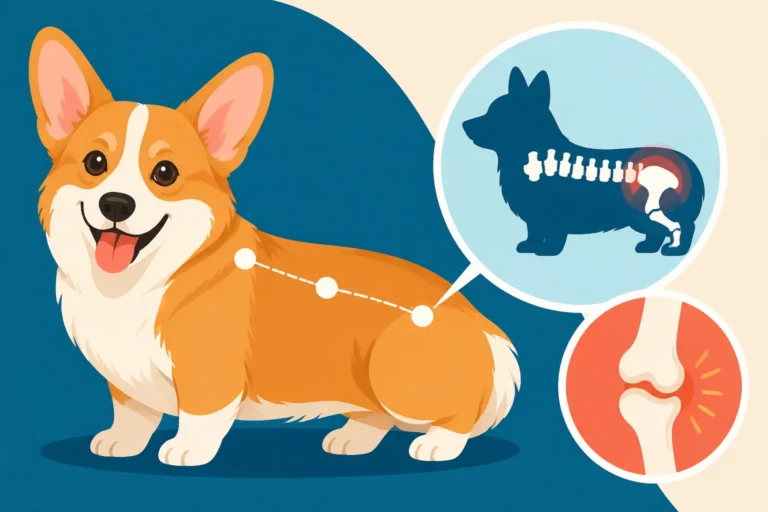
A Corgi's spine is effectively a normal-length spine packed into a much shorter overall body. This means the vertebrae and intervertebral discs are more compressed than in dogs with proportionate leg lengths. Imagine a slinky toy; if you compress it, the coils become much tighter and less flexible. This anatomical characteristic, known as chondrodystrophy, is what gives Corgis their distinctive long, low appearance, but it also means their spinal discs are predisposed to degeneration. You can learn more about What Chondrodystrophy Means for a Corgi.
These discs act as shock absorbers between the vertebrae, protecting the delicate spinal cord. In chondrodystrophic breeds like Corgis, these discs tend to mineralize and harden prematurely, often losing their jelly-like cushioning ability much earlier in life compared to other breeds. This makes them far more brittle and susceptible to rupture from even minor impacts or twists.
The Mechanics of Disc Herniation During Impact
When a Corgi jumps, especially from a height, the impact can be severe. The force of landing is absorbed by the legs and, crucially, by the spine. If a disc is already degenerating and has lost its elasticity, that sudden impact or twisting motion can cause it to bulge, protrude, or even rupture entirely. This is often referred to as a "slipped disc," though the disc doesn't actually slip out of place; rather, its inner material pushes out or completely breaks through its outer casing.
The protruding disc material then presses on the spinal cord, leading to immediate pain, inflammation, and neurological deficits. The severity of these symptoms depends on where the rupture occurs and how much pressure is exerted on the spinal cord. It can range from mild discomfort and awkward gait to complete paralysis and loss of bladder and bowel control.
The Breed's Predisposition to Intervertebral Disc Disease IVDD
Intervertebral Disc Disease, or IVDD, is a degenerative condition that affects the spinal discs. While any dog can develop IVDD, Corgis, along with Dachshunds, Beagles, and Basset Hounds, are genetically predisposed due to their chondrodystrophic genetics. This means they are born with a higher likelihood of developing disc problems. It's not a matter of if their discs will degenerate, but when and how severely. This predisposition is why discussing Disc Disease in a Long-Backed Corgi is so vital for every owner.
This genetic factor means that even with the most careful management, a Corgi still carries a risk. However, preventative measures can significantly reduce the chances of a sudden rupture, often delaying the onset of symptoms or preventing severe injury. It’s critical to remember that this isn't just about aging; young Corgis can also suffer disc ruptures, sometimes from seemingly innocent play or an accidental misstep.
Common Jumping Scenarios That Lead to Injury
It’s easy to think of a Corgi's short legs as a natural deterrent to high jumps, but their enthusiastic and often fearless nature means they often attempt feats that are simply unsafe for their unique anatomy. Many owners don't realize the danger until their dog is already in distress. Identifying these common risky behaviors is paramount to preventing a spinal emergency.
Leaping Off Furniture: Couches, Beds, and Chairs
This is perhaps the most frequent culprit behind Corgi disc injuries. A Corgi loves to be close to its family, and that often means cozying up on the sofa or snuggling in bed. The problem arises when they decide to launch themselves off these elevated surfaces. The downward force, combined with the awkward landing angle, can put immense stress on their lumbar and thoracic spine. Even a seemingly small jump from a cushion can have devastating effects on an already compromised disc.
Imagine a Corgi launching itself from the armrest of a sofa. The twisting motion as they propel themselves forward, followed by the impact on their front legs and subsequent jarring through their long back, is a perfect storm for a disc to rupture. Owners often witness these jumps daily without issue, leading to a false sense of security. It only takes one wrong jump, one bad angle, or one slightly harder landing for severe damage to occur. This is why we often ask, Whether a Corgi Should Ever Jump Off a Sofa.
Jumping Out of Vehicles: Cars, Trucks, and SUVs
Another major risk factor is the act of jumping out of a car. Whether it's a sedan or a large SUV, the height from the vehicle's floor to the ground can be significant for a low-slung Corgi. The excitement of arriving at a park or going for a walk often leads them to leap out without careful consideration, landing with considerable force. This is particularly dangerous as they often twist their body during the jump, compounding the risk.
Consider a busy parking lot or a quick stop on a walk. A Corgi, eager to explore, might spring from the back seat or cargo area without waiting to be lifted or for a ramp to be deployed. The combined impact and potential twist can cause a severe disc injury. Even if your Corgi has done it a hundred times before without incident, that doesn't mean the hundred-and-first time will be safe. Repeated micro-traumas can weaken the discs over time, making them ripe for a full rupture.
Repetitive Impact: Stairs and Playtime Jumps
While single dramatic jumps are often the immediate cause of a rupture, repetitive impacts and twists also contribute to disc degeneration and injury. Stairs, for example, involve constant up-and-down motion that jars the spine. A Corgi using stairs multiple times a day is constantly flexing and extending their back in a way that can strain the intervertebral discs. Each step, while seemingly minor, adds to the cumulative wear and tear.
Furthermore, enthusiastic playtime can lead to dangerous jumps. Chasing a ball, leaping to catch a toy, or jumping excitedly at the door when you come home can all put stress on the spine. Even innocent dog park play, where Corgis might jump and twist during interaction with other dogs, carries a risk. It’s not just about height; the combination of speed, impact, and unexpected movements makes any strenuous jumping activity a potential hazard for a Corgi's delicate back.
Recognizing the Signs of a Ruptured Disc
If your Corgi has a disc rupture, timely recognition and veterinary intervention are crucial for the best possible outcome. Unfortunately, the signs can sometimes be subtle, especially in the early stages, or they might be dramatic and terrifying. Knowing what to look for can help you act quickly and potentially save your Corgi from more severe damage or prolonged pain.
Sudden Pain and Vocalization
The most common and immediate sign of an acute disc rupture is sudden, intense pain. Your Corgi might cry out loudly, yelp, or whimper, especially when touched or moved. They might flinch or snap if you try to pick them up, even if they're normally affectionate. This pain is often localized to the area of the back where the rupture occurred, but it can radiate.
Beyond vocalization, behavioral changes indicating pain include reluctance to move, shivering, panting excessively (even when not hot or exercising), or adopting a hunched-over posture. They might refuse to lie down comfortably or constantly shift positions, trying to find relief. Some Corgis might even become withdrawn, hiding or avoiding interaction, which is a significant change for such a social breed. If you notice A Corgi That Cries When Lifted Under the Chest, this is a major red flag.
Changes in Mobility and Coordination
As the disc material presses on the spinal cord, it impairs the nerves responsible for movement and coordination. You might observe weakness in the hind legs, ranging from a slight wobble or unsteadiness to complete inability to stand or walk. Your Corgi might stumble, drag their paws, or scuff their nails on the ground. Their gait might appear drunken or uncoordinated.
One very specific sign to watch for is proprioceptive deficits. This means they lose awareness of where their limbs are in space. You might see A Corgi That Scuffs Its Back Nails or A Corgi Whose Back Legs Cross Over when they try to walk. They might stand with their paws turned under, or struggle to correct their paw placement if you gently flip it over. This loss of proprioception is a critical indicator of neurological compromise and requires immediate attention.
Neurological Symptoms and Emergency Indicators
In severe cases, a disc rupture can lead to more profound neurological symptoms, signifying a medical emergency. These include complete paralysis of the hind legs, where the Corgi cannot move them at all. They might lose deep pain sensation in their paws, meaning they don't react to a strong pinch. This is a very serious sign, as the longer the spinal cord is compressed, the more irreversible the damage can become.
Loss of bladder and bowel control is another critical emergency indicator. The nerves controlling these functions can be affected, leading to inappropriate urination or defecation, or straining to go without success. If your Corgi suddenly becomes incontinent, especially if combined with hind leg weakness or paralysis, it’s a sign of a severe spinal cord injury. These are all Emergency Signs of a Corgi Disc Injury that warrant an immediate trip to an emergency veterinary hospital. Time is of the essence, as prompt intervention can sometimes prevent permanent damage.
| Symptom Category | Mild to Moderate Disc Injury | Severe Disc Injury (Emergency) |
|---|---|---|
| Pain | Whimpering, reluctance to move, hunched posture, sensitivity to touch | Loud yelps, constant crying, severe agitation, avoids all touch |
| Mobility | Stiff gait, slight wobble, scuffing paws, reluctance to jump/climb | Hind leg weakness progressing to partial or complete paralysis |
| Coordination | Unsteady on feet, occasional stumbling, crossing back legs | Loss of proprioception (not knowing where feet are), dragging legs |
| Neurological | Decreased reflexes (mild), muscle twitching | Loss of deep pain sensation in hind limbs, loss of bladder/bowel control |
| Behavior | Withdrawn, restless, panting, seeking comfort | Panic, extreme lethargy, inability to get comfortable, uncontrollable shaking |
Disclaimer: This table is for informational purposes only and does not substitute professional veterinary advice. Always consult a vet for diagnosis and treatment.
Immediate Steps After a Suspected Disc Injury
Discovering your Corgi in pain or unable to move their back legs is terrifying. Your immediate actions can greatly influence their prognosis. Remaining calm and knowing the right steps to take can make a critical difference while you seek professional veterinary care.
Gentle Handling and Restricting Movement
The absolute first priority is to prevent further damage to the spinal cord. This means minimizing your Corgi's movement as much as possible. If they are on the floor, gently slide them onto a flat, rigid surface like a cutting board or a sturdy piece of cardboard. If you need to move them, support their entire body, especially their back. Avoid bending or twisting their spine. Ideally, one person supports the front end and another supports the hind end, moving them together like a stretcher. Learn more about Picking a Corgi Up Without Hurting It.
Confine them to a small, quiet space like a crate, where they cannot jump, climb, or even walk around excessively. If you don't have a crate, a small, enclosed bathroom or laundry room with soft bedding can work temporarily. The goal is complete rest and immobilization of the spine. Do not encourage them to walk "to see if they can," as this can worsen the injury. Keep them warm and comfortable while you prepare for the vet visit.
Emergency Vet Visit and Diagnostic Procedures
As soon as you suspect a disc rupture, contact your veterinarian or the nearest emergency veterinary hospital immediately. Explain your Corgi's symptoms clearly and tell them you suspect a back injury. This will help them prioritize your arrival and prepare for your Corgi's examination. Time is of the essence, especially with severe neurological deficits. Early intervention can drastically improve the outcome.
Once at the vet, the veterinarian will perform a thorough neurological exam to assess your Corgi's pain response, reflexes, proprioception, and motor function. This helps them localize the injury to a specific region of the spine and determine the severity of the spinal cord compression. To confirm the diagnosis and pinpoint the exact location and nature of the rupture, imaging tests like X-rays, myelograms, CT scans, or ideally, an MRI will be recommended. An MRI provides the most detailed view of the soft tissues, including the discs and spinal cord, and is often crucial for surgical planning. For a deeper dive into what these diagnostics reveal, consider reading What an MRI Shows in a Corgi Back.
Discussing Treatment Options: Medical vs. Surgical
Once the diagnosis is confirmed and the severity assessed, your vet will discuss treatment options. These generally fall into two categories: conservative medical management or surgical intervention.
Conservative management involves strict crate rest, often for 4-6 weeks, combined with anti-inflammatory medications (steroids or NSAIDs) and pain relievers. The goal is to reduce inflammation around the spinal cord and allow the disc material to resorb or stabilize, taking pressure off the nerves. This approach is usually considered for Corgis with mild to moderate pain and minimal neurological deficits, such as slight weakness but still able to walk. For more details on this, see Crate Rest for a Corgi With a Bad Back.
Surgical intervention is typically recommended for Corgis with severe pain that doesn't respond to medication, progressive neurological deficits, or complete paralysis. The surgery involves removing the offending disc material to decompress the spinal cord. This can be a life-saving and function-restoring procedure, but it is expensive and requires significant post-operative care and rehabilitation. Your vet will weigh the pros and cons of each approach based on your Corgi's specific situation, your financial capabilities, and your commitment to the recovery process. This is where having pet insurance like Healthy Paws can be incredibly beneficial, as spinal surgeries can cost thousands of dollars, making unexpected veterinary bills less of a burden. You might also want to explore Spinal Surgery on a Corgi for more in-depth information.
Prevention is Key: Protecting Your Corgi's Back
The best treatment for a Corgi disc rupture is prevention. Given their genetic predisposition and the significant impact of jumping, proactive measures are non-negotiable for Corgi owners. Implementing simple changes in your home and routine can dramatically reduce the risk of a painful spinal injury.
Implementing Ramps and Pet Steps in the Home
One of the most effective ways to protect your Corgi's back is to eliminate jumping from elevated surfaces within your home. This means providing ramps or pet steps for all furniture your Corgi interacts with regularly, such as sofas, chairs, and beds. Even if they don't always use them, having them available and teaching your Corgi to use them can prevent that one disastrous leap.
Start ramp training early, using positive reinforcement and treats. Place the ramp flush with the furniture and guide your Corgi up and down a few times a day. Consistency is key. You'll be amazed how quickly they adapt. There are many stylish and functional ramps available today that can blend seamlessly with your home decor, making it easier than ever to implement this vital preventative measure. Investing in Ramps and Steps That Save a Corgi's Back is a small price to pay for your Corgi's long-term health.
Safe Entry and Exit Strategies for Vehicles
Just as with indoor furniture, getting in and out of cars poses a significant risk. Never allow your Corgi to jump in or out of a vehicle unaided. The best solution is a portable ramp specifically designed for pets. These ramps fold up easily for storage in your car and extend to provide a gentle incline, allowing your Corgi to walk in and out safely without any jarring impact.
Alternatively, for smaller Corgis or if a ramp isn't feasible, always lift your Corgi into and out of the car. Remember to use proper lifting techniques: support their chest and hindquarters simultaneously to keep their spine level and minimize any twisting or bending. This practice eliminates the high-impact stress on their discs and becomes a routine part of every car trip. It also helps prevent any strain on your own back!
Managing Exercise and Play to Minimize Risk
While Corgis are energetic and require regular exercise, it’s crucial to manage their activities to protect their spine. Avoid activities that involve repetitive high-impact jumps, twisting, or sharp turns. This includes intense frisbee fetching where they might leap and land awkwardly, or prolonged roughhousing with larger dogs that could lead to unexpected tumbles.
Focus on low-impact exercises like brisk walks, controlled play sessions, and mental stimulation activities such as scent work or puzzle toys. Swimming can also be an excellent, non-weight-bearing exercise that builds muscle strength without stressing the joints or spine. When playing fetch, roll the ball instead of throwing it high, encouraging a chase rather than a jump. Keeping your Corgi at a healthy weight is also paramount, as extra pounds put additional strain on their back, making them more susceptible to injury. This is a critical factor addressed in Why Corgi Weight Is a Spinal Problem. Consider enrolling your Corgi in an obedience class to teach them better control and response to commands, which can help in preventing risky impulsive behaviors. Pet insurance options like Healthy Paws can also offer coverage for eligible rehabilitation therapies if an injury does occur, helping you afford the best care possible.
What to Do if You Suspect a Disc Rupture: A Quick Reference
Navigating a potential disc rupture can be overwhelming. Here’s a quick-action guide to help you in the moment:
- Stop All Movement: Immediately restrict your Corgi from moving, walking, or jumping.
- Gentle Transport: If you must move them, use a rigid surface (like a board) as a stretcher, supporting their entire body evenly.
- Contact Your Vet: Call your regular vet or an emergency clinic immediately. Describe symptoms clearly.
- Avoid Medication (Unless Directed): Do not give human pain relievers or unprescribed pet medications, as they can worsen the condition or interfere with vet diagnostics.
- Prepare for Diagnostics: Expect the vet to recommend X-rays, possibly a myelogram, or ideally an MRI to pinpoint the issue.
- Discuss Treatment: Be prepared to discuss conservative (crate rest, meds) vs. surgical options based on severity.
- Financial Preparedness: Consider how you will cover potential vet bills. This is where pet insurance like Healthy Paws can be a lifesaver, covering a significant portion of emergency care, diagnostics, and surgery costs. You may wish to review Insuring a Corgi Before Its First Back Episode to understand coverage options.
- Post-Treatment Care: Understand that recovery, whether from rest or surgery, requires strict adherence to veterinary instructions, often involving weeks of Crate Rest for a Corgi With a Bad Back and possibly physical therapy. You’ll want to know Whether a Corgi Recovers From a Disc Rupture and what that recovery entails.
By being prepared, you can offer your Corgi the best chance at recovery and a comfortable, pain-free life.
Disclaimer
The information provided in this guide is intended for general informational purposes only and does not constitute veterinary medical advice. Always consult with a qualified veterinarian for any health concerns or before making any decisions about your Corgi's medical care.