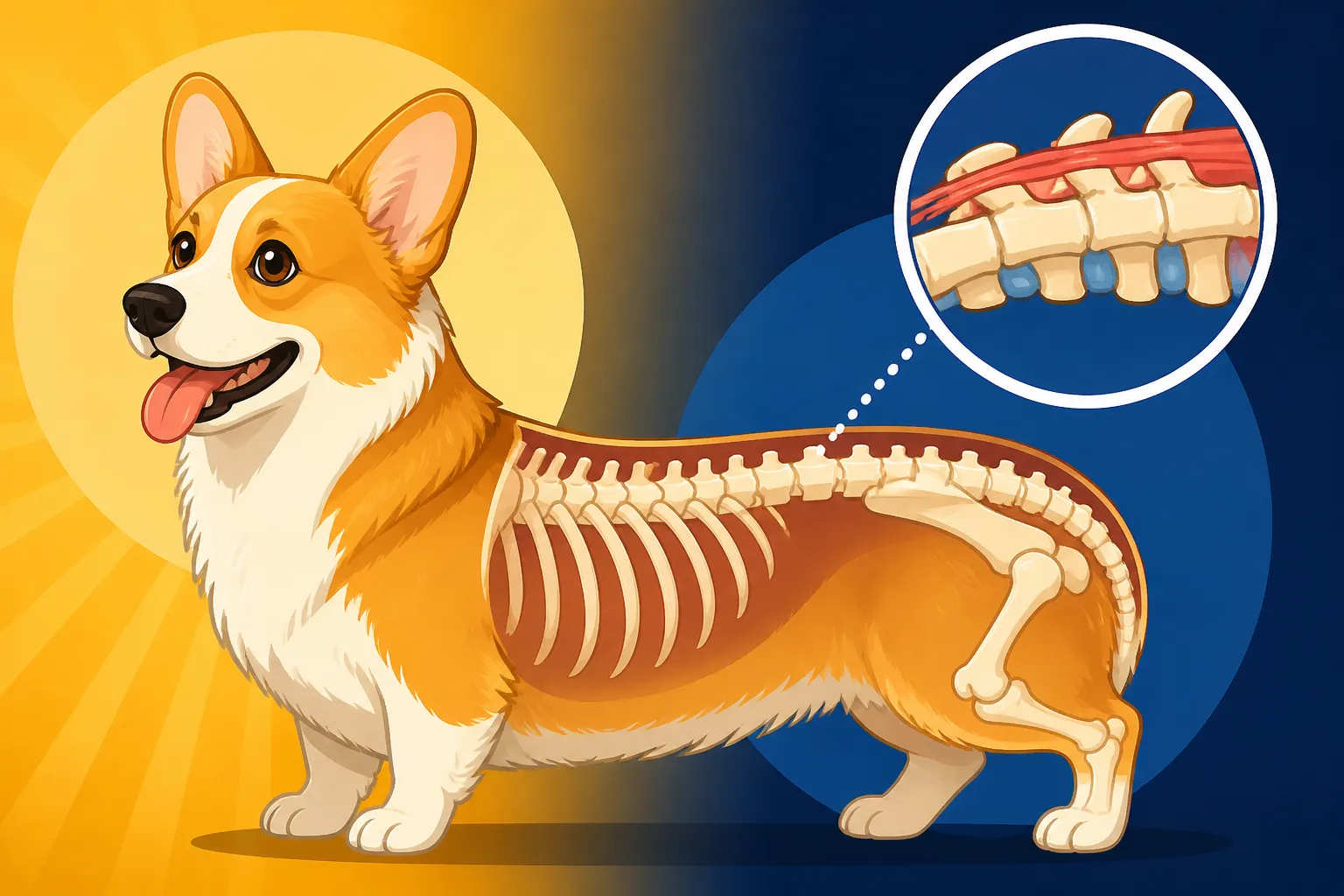
Why a Corgi’s Back Is Built the Way It Is
It’s a tough truth that many Corgi parents face: these adorable, low-riding companions, with their unmistakable waddle and cheerful dispositions, often come with a predisposition to back problems. It can be incredibly disheartening to witness your lively Corgi suddenly struggling, and you might find yourself wondering why their unique build, which is so central to their charm, also makes them so vulnerable. This guide will take a deep dive into the fascinating evolutionary history and specific anatomical quirks that make a Corgi’s back exactly the way it is, helping you understand both its strengths and its inherent fragilities.
The Ancestral Blueprint: Why Corgis Are Built Low to the Ground
To truly understand why your Corgi's back is designed the way it is, we have to travel back in time to their working roots on the farms and fields of Wales. These aren't just cute, squat dogs; they were purpose-bred for a very specific and demanding job, and every inch of their physique, including that iconic long back and short legs, tells a story of their heritage.
Driving Cattle Without Getting Kicked
Imagine a herd of grumpy, full-sized Welsh Black cattle. Now imagine a dog trying to move them. If a dog were too tall, it would be right in the firing line of a heavy hoof. This is precisely why the Corgi developed its low stature. Their job was to herd cattle by nipping at their heels, driving them forward or in the desired direction. Being so close to the ground meant they could easily duck and weave, avoiding potentially lethal kicks from disgruntled cows. This unique approach to herding made them incredibly efficient and invaluable to farmers.
This low profile allowed them to operate effectively and safely in a high-risk environment. A Corgi wasn't meant to run in front of the cattle, but rather to work strategically from below, a skill honed over centuries. Their compact size and agility, coupled with an intelligent herding instinct, made them perfectly suited for this role, defining their physical form long before they became beloved family pets. It’s a testament to their practicality that their build hasn’t changed drastically, retaining the functional aspects that made them such successful working dogs.
A Legacy of Agility and Low Center of Gravity
Despite their short legs, Corgis were and still are incredibly agile. Their low center of gravity is not just for avoiding kicks; it also gives them exceptional balance and stability. Think about how quickly a Corgi can turn on a dime or sprint across a yard, seemingly defying their stubby limbs. This agility was crucial for navigating uneven terrain and swiftly responding to the movements of livestock. They needed to be quick, nimble, and able to cover ground efficiently despite their height.
This inherent athleticism meant that while their back was long, it also needed to be strong and flexible enough to support their sudden bursts of speed and quick changes in direction. However, this same combination of length and low clearance creates a fulcrum effect, placing increased stress on the spinal column. It's a design optimized for a specific type of movement, but one that also inherently carries certain mechanical disadvantages when it comes to spinal health over a lifetime, especially if not properly managed or if subjected to repetitive stress from jumping or improper handling.
The Difference Between Pembroke and Cardigan Builds
While both Pembroke Welsh Corgis and Cardigan Welsh Corgis share the characteristic long back and short legs, there are subtle yet important differences in their builds that some believe contribute to varying degrees of spinal resilience. Cardigans generally tend to be slightly larger and heavier, with a more robust bone structure. Their backs might appear marginally longer in proportion to their body mass compared to a Pembroke, which is typically a bit more compact and lighter.
These slight variations, however, don't necessarily make one breed inherently "safer" from back issues than the other. Both breeds carry the chondrodystrophic gene (which we’ll get into next) that dictates their short limbs and long bodies. What's more important than these subtle breed differences is the individual dog's conformation, muscle tone, weight, and activity level. Regardless of whether you have a Pembroke or a Cardigan, understanding Why a Corgi's Back Is Built the Way It Is remains crucial for proactive care.
The Chondrodystrophic Trait: More Than Just Short Legs
When you look at a Corgi, the first thing you notice (besides their adorable faces) is often their short legs. This isn't just a random genetic lottery; it's a specific genetic trait known as chondrodystrophy. It’s a characteristic that defines many dwarf breeds and is intrinsically linked to the common back problems we see in Corgis.
The Genetics Behind the Short Stature
Chondrodystrophy is a genetic condition that affects the development of cartilage, particularly in the long bones of the limbs. In simple terms, it causes premature calcification of the growth plates, leading to shortened limbs. This trait was deliberately selected for in Corgis because, as we discussed, those short legs were essential for their cattle-herding job. While it gave them a significant advantage in the fields, it also came with an often-overlooked trade-off for their spinal health.
The presence of this gene means that the cartilage in other parts of their body, including the intervertebral discs that cushion their spine, can also be affected. Instead of remaining soft and jelly-like, these discs tend to harden and become more fibrous at an earlier age than in dogs without chondrodystrophy. This premature degeneration sets the stage for potential disc issues long before a Corgi enters its senior years, explaining The Age Corgi Disc Problems Usually Appear.
Intervertebral Disc Disease IVDD and Chondrodystrophy
Intervertebral Disc Disease (IVDD) is the primary concern for any Corgi owner, and it’s directly tied to their chondrodystrophic genetics. In dogs with normal cartilage development, the spinal discs are resilient shock absorbers, capable of flexing and cushioning the vertebrae. However, in Corgis, these discs are prone to degeneration. Over time, the soft, gelatinous center of the disc (nucleus pulposus) can harden and lose its elasticity.
When this happens, the disc can either bulge out (protrusion) or rupture entirely (extrusion), pressing on the spinal cord. This compression causes pain, nerve damage, and can lead to symptoms ranging from mild discomfort to complete paralysis. Understanding What Chondrodystrophy Means for a Corgi is the first step in appreciating the inherent risk factors and committing to preventive care. It's not just an "if" but a "when" for many Corgis if proper care isn't taken, making attentive ownership crucial.
When Short Legs Become a Vulnerability
While short legs were an advantage for herding, they also mean that the Corgi's relatively long body is carried very close to the ground, and their spine experiences different mechanical forces than a taller dog. The leverage created by their extended torso on short supports means that any sudden movement, jump, or even misstep can place immense strain on their spinal column. Think of it like a long bridge with short, widely spaced pylons – any significant impact or twist can compromise its integrity.
This isn't to say Corgis are fragile, but their unique proportions make them more susceptible to specific types of injuries. A simple jump off a sofa, a sudden twist during play, or even running too hard on slippery floors can exert excessive force on those already-predisposed discs. It means that what might be a minor bump for a German Shepherd could be a significant spinal event for a Corgi.
Spinal Structure Under Scrutiny: Discs and Vertebrae
To truly grasp the vulnerabilities of a Corgi’s back, it helps to understand the components of their spine and how they typically function, and then how these parts are affected by their unique genetics. It's a complex, finely tuned system that, when compromised, can cause immense pain and mobility issues.
The Gel-Filled Shock Absorbers
The spine of any mammal, including a Corgi, is made up of individual bones called vertebrae, stacked one on top of the other. Between each vertebra (except the first two) is an intervertebral disc. These discs are essentially nature's shock absorbers, designed to cushion the impact of movement and allow for flexibility. Each disc has two main parts: a tough, fibrous outer ring called the annulus fibrosus, and a soft, jelly-like inner core known as the nucleus pulposus.
In a healthy spine, these discs work tirelessly, day in and day out, absorbing the stresses of running, jumping, and twisting. They provide essential flexibility, allowing your Corgi to bend, stretch, and contort into all sorts of funny positions. However, in Corgis, because of their chondrodystrophic nature, this delicate balance is often disrupted much earlier in life compared to non-chondrodystrophic breeds.
How Discs Degenerate in Corgis
In Corgis, the chondrodystrophic gene accelerates a process that normally happens with old age: the drying out and hardening of the nucleus pulposus. Instead of remaining soft and hydrated, the inner gel becomes calcified and brittle. This means the disc loses its ability to cushion and absorb shock effectively. It becomes a rigid structure rather than a flexible one, making it much more susceptible to damage.
Once a disc hardens, it's like a dry sponge instead of a wet one – it can't compress or decompress properly. This hardened disc is prone to bulging outward or even rupturing when subjected to everyday stresses. When this happens, fragments of the disc material can press on the delicate spinal cord, leading to pain, neurological deficits, and potentially paralysis. This degenerative process is a ticking clock for many Corgis, making early awareness and preventive care absolutely paramount.
The Role of Vertebrae and Ligaments
Beyond the discs, the vertebrae themselves and the strong ligaments connecting them also play a crucial role in spinal integrity. The vertebrae protect the spinal cord, and their interlocking structure provides stability. Ligaments are tough bands of tissue that connect bones to other bones, acting like natural ropes that hold the entire spinal column together. In a Corgi, these structures are typically robust, but they are designed to work in conjunction with healthy, flexible discs.
When the discs degenerate, the entire biomechanics of the spine are affected. The pressure on the spinal cord can cause inflammation and swelling, further exacerbating symptoms. While the vertebrae and ligaments are strong, they cannot fully compensate for failing discs, especially given the leverage created by the Corgi's long body. The low placement of the Corgi's body means that every twist or sudden motion translates into increased shear forces on the spinal column, which the ligaments and vertebrae, along with the compromised discs, must absorb. This cumulative stress eventually takes its toll.
The Perils of the Long Back: Everyday Risks
The unique structure of a Corgi's back, while charming and functional for its original purpose, also means that everyday activities can pose significant risks. Many Corgi owners unwittingly contribute to potential spinal issues simply because they don't fully understand the mechanics of their dog's body.
The Jump That Ruptures a Corgi Disc
One of the most common and dangerous activities for a Corgi's back is jumping. Whether it's leaping off the sofa, bounding out of a car, or even excitedly jumping up to greet you, each impact sends a jolt through their long spine. Imagine dropping a long, flexible stick flat on the ground – it might just bounce. Now imagine dropping it end-first onto something hard – it's far more likely to snap or splinter. A Corgi's spine experiences similar forces.
When a Corgi jumps down, the force of landing is not evenly distributed. Their short legs create a sharp impact, and their long body means the stress is concentrated on a few vulnerable discs, particularly in the mid-back region. Over time, or even with one unfortunate jump, this repetitive stress can cause a weakened disc to bulge or rupture. This is why many vets strongly advise against allowing Corgis to jump on or off furniture, and why providing Ramps and Steps That Save a Corgi's Back is a critical preventive measure. A single incident, like The Jump That Ruptures a Corgi Disc, can lead to an emergency situation requiring immediate veterinary attention.
Common Household Hazards
It's not just jumping that poses a risk. The everyday environment of a home can be a minefield for a Corgi's spine if not properly adapted. Slippery floors, such as hardwood, laminate, or tile, can cause a Corgi's short legs to splay out, leading to sudden twists or hyperextension of the spine. Running at full speed and trying to stop or turn on a slick surface can put immense strain on their already vulnerable discs.
Stairs are another major hazard. While some Corgis can navigate stairs, the repetitive motion of ascending and descending, especially if they rush or bound, puts significant stress on their front and hind limbs, which then translates directly to their spine. Carrying a Corgi up and down stairs, where possible, or installing baby gates to block access, can significantly reduce this risk. Even sudden tugs on a collar during a walk, which can strain the neck and upper spine, can contribute to overall spinal issues. A good quality harness that distributes pressure evenly across the chest, rather than focusing it on the neck, is often recommended for Corgis.
The Impact of Excess Weight
This is perhaps one of the most significant, yet often underestimated, factors contributing to Corgi back problems. Corgis are notoriously prone to weight gain – they love their food, and their endearing "loaf" shape can sometimes mask a developing weight issue. However, every extra pound a Corgi carries puts additional strain on their already compromised spine and joints. It's like asking a bridge that's designed to carry light traffic to suddenly bear the weight of heavy trucks; eventually, something is going to give.
Excess weight alters their gait, puts more pressure on their intervertebral discs, and exacerbates the wear and tear on their joints. It hinders their natural agility, making them less able to recover from a stumble or twist. Maintaining The Body Condition Score a Corgi Should Hold is not just about aesthetics; it's a critical component of spinal health and overall longevity. A veterinarian can help you determine the ideal weight for your Corgi and guide you on diet and exercise. Pet insurance providers like Healthy Paws often emphasize the importance of preventative care and maintaining a healthy weight to reduce the likelihood of costly treatments for conditions like IVDD later in life.
Preventative Measures and Responsible Ownership
Understanding the inherent vulnerabilities of a Corgi's back is only the first step. The next, and arguably most important, is taking proactive measures to protect their spine. Responsible Corgi ownership means creating an environment and lifestyle that minimizes risk and maximizes their health and comfort.
Modifying Your Home Environment
Making your home Corgi-safe involves a few simple but impactful changes. First and foremost, address slippery surfaces. Place non-slip rugs or runners on hardwood, tile, or laminate floors, especially in high-traffic areas and where your Corgi likes to run. This provides traction and prevents dangerous slips and falls. Many Corgis enjoy a good game of zoomies, and ensuring they have a safe surface to play on is paramount.
Secondly, provide safe access to elevated surfaces. Investing in sturdy pet ramps or steps for sofas, beds, and even to get into and out of vehicles is crucial. Teach your Corgi to use these tools from a young age, associating them with positive reinforcement. This prevents them from attempting risky jumps that can injure their back. Remember, it's not enough to have the ramps; you need to train your Corgi to use them consistently. You might also consider baby gates to block off staircases, removing the temptation for them to use the stairs unsupervised.
Maintaining Ideal Weight and Muscle Tone
As previously highlighted, weight management is paramount for Corgi spinal health. Work with your veterinarian to determine your Corgi's ideal weight and feeding schedule. Corgis often act like they're perpetually starving, but portion control is key. Measure their food precisely and limit high-calorie treats. Instead, opt for healthy alternatives like carrot sticks or green beans, in moderation. Remember, every extra pound is an extra burden on their back.
Beyond weight, maintaining good muscle tone is equally important. Strong core and hindquarter muscles act as a natural brace for the spine, providing support and stability. Regular, moderate exercise tailored to your Corgi's age and health is essential. This could include controlled walks, gentle swimming (if they enjoy it), or engaging in low-impact games. Avoid high-impact activities like repeated jumping, intense fetch sessions that involve sharp turns, or agility courses unless specifically cleared and managed by a vet experienced with Corgi back health. Providers like Healthy Paws encourage preventative measures and a healthy lifestyle to reduce the risk of future health complications, including those related to the spine.
Recognizing Early Warning Signs
Being vigilant about your Corgi's behavior and movement is one of the best ways to catch potential back problems early, which can significantly improve outcomes. Look for subtle changes that might indicate discomfort or neurological issues. Signs to watch for include:
- Reluctance to jump or use stairs: If your Corgi suddenly hesitates to do things they normally would, it’s a red flag.
- Pain when lifted or touched: A yelp, growl, or flinching when you pick them up or stroke their back.
- Changes in posture or gait: A hunched back, stiffness, favoring one leg, or a wobbly walk. A Corgi That Scuffs Its Back Nails can be an early sign of neurological deficit.
- Decreased activity or lethargy: Less desire to play, walk, or engage.
- Loss of appetite: Pain can suppress hunger.
- Changes in potty habits: Accidents indoors, straining to urinate or defecate, or incontinence. Incontinence in a Corgi With DM or IVDD can be a late-stage symptom.
- Dragging or scuffing paws: One or both hind paws dragging, often noticeable by worn nails. A Corgi Dragging One Back Foot is a particularly worrying sign.
If you notice any of these signs, contact your vet immediately. Early intervention, whether it's through Conservative Treatment Costs for a Corgi Back like crate rest and anti-inflammatories, or more advanced diagnostics and treatments like Spinal Surgery on a Corgi, is crucial. Timely diagnosis and treatment can prevent further damage and improve your Corgi's quality of life. Even if it's just a mild discomfort, a quick check-up can set your mind at ease or get your dog started on a path to recovery.
| Activity/Factor | Risk Level for Corgi Spine | Explanation | Preventative Action |
|---|---|---|---|
| Jumping (on/off furniture) | High | Sudden impact and twisting forces strain discs, especially in mid-back. | Use ramps/steps, physically lift, train "wait" command. |
| Slippery Floors | High | Lack of traction leads to splaying, twists, and falls, causing disc damage. | Place non-slip rugs/runners, keep nails trimmed, use paw pads/booties. |
| Stairs | Medium-High | Repetitive impact and awkward movements, especially when rushing, stress the spine. | Carry Corgi, block access with gates, train slow, controlled stair use. |
| Excess Weight | High | Added pressure on discs and joints, reduced agility, exacerbates disc degeneration. | Maintain ideal Body Condition Score (BCS), precise food measurement, healthy treats. |
| High-Impact Play | Medium | Activities involving sharp turns, sudden stops, or repeated short jumps can strain the back. | Opt for controlled walks, gentle swimming, scent work, short-burst, low-impact games. |
| Improper Lifting | Medium | Twisting or lifting only from the chest can create shear forces on the spine. | Support both front and hindquarters, lift smoothly and evenly, avoid twisting. |
| Collar Pulling | Low-Medium | Sudden jerks on a collar can strain the neck/upper spine, contributing to overall spinal stress. | Use a well-fitting harness that distributes pressure across the chest and shoulders. |
| Lack of Muscle Tone | Medium | Weak core/hindquarter muscles offer less support, increasing disc vulnerability. | Regular, appropriate exercise, physical therapy exercises (e.g., core strengthening). |
Understanding the "Normal" Corgi Back
It’s easy to become overly worried about every little stumble or strange movement your Corgi makes, especially with all the information out there about their back problems. While vigilance is good, it’s also important to understand what a normal Corgi back looks like and how it functions throughout their life stages. Not every quirk is a crisis, but knowing the difference can save you a lot of anxiety.
What to Expect During Growth
A Corgi puppy's back is developing rapidly, and while they might seem like bundles of energy, it's a critical time for proper growth. During puppyhood, their growth plates are still open, and their bones and soft tissues are maturing. It's important to provide a balanced diet to support healthy development without encouraging rapid weight gain, which can stress immature joints and spines. Over-exercising a young Corgi, or allowing them to jump excessively during this phase, can set the stage for problems later on.
Puppies, like human children, don't always know their limits. It's up to us to guide them. While short bursts of play are fine, long, strenuous hikes or continuous jumping off high surfaces should be avoided. Carrying a Corgi puppy up and down stairs until their growth plates have closed, usually around 12-18 months, is often recommended. This careful approach helps ensure their spine has the best chance to develop strongly before being subjected to more rigorous activities.
Signs of a Healthy Spine
A healthy Corgi spine is one that allows for smooth, fluid movement without signs of pain or stiffness. When your Corgi walks, their back should appear relatively straight and stable, without any noticeable arching or dipping. They should be able to move their head freely, turn their body comfortably, and have good coordination in all four limbs. Their tail, whether docked or natural, should move without restriction if that's part of their communication style.
When you gently run your hands along their back, from neck to tail, they should not show any signs of discomfort, flinching, or yelping. They should be able to get up from a lying position easily and without struggle. A Corgi with a healthy back will typically be eager to engage in appropriate activities, maintain a normal appetite, and have consistent bladder and bowel control. Regular vet check-ups can also help monitor the health of their spine and catch any subtle changes early.
The Importance of Regular Vet Checks
Even if your Corgi appears perfectly healthy, regular veterinary check-ups are essential, especially as they age. Your vet can monitor their weight, assess their gait and posture, and gently palpate their spine for any signs of discomfort or stiffness. These routine visits allow your vet to establish a baseline for your Corgi's health, making it easier to detect deviations if problems arise. They can also provide guidance on nutrition, exercise, and preventative care tailored to your individual dog.
As Corgis get older, typically around The Corgi Years When the Back End Gives Out, the risk of disc degeneration increases naturally. Your vet might recommend specific exercises or supplements to support joint and spinal health. In some cases, if there are concerns, they might suggest specific diagnostic tests. Staying proactive with veterinary care is the best way to ensure your Corgi lives a long, comfortable, and active life, minimizing the impact of their unique back structure. Regular check-ups are also vital for keeping pet insurance, like policies from Healthy Paws, in good standing, as they often require proof of preventative care.
Disclaimer
The information provided in this article is for general informational purposes only and is not a substitute for professional veterinary advice. Always consult with a qualified veterinarian for any health concerns or before making any decisions related to your pet's health and treatment.