When the AKC Recognized Each Corgi Breed
It's quite common for new Corgi enthusiasts, and even some seasoned owners, to think of "Corgi" as one breed, or perhaps as two very similar varieties of the same dog. However, the truth is that the Pembroke Welsh Corgi and the Cardigan Welsh Corgi are, and have always been, distinct breeds with separate histories, traits, and, importantly for this discussion, separate recognition from major kennel clubs like the American Kennel Club (AKC). This guide will clear up the timeline of their official recognition and delve into why these delightful dogs received their own distinct places in the canine world.
The Shared Ancestry and Early Days of the Welsh Corgis
Before delving into the specifics of AKC recognition, it’s helpful to understand that while Pembrokes and Cardigans are two separate breeds today, their origins are deeply intertwined with the rural landscape and farming life of Wales. Both were indispensable working dogs, bred for the specific, demanding task of herding cattle. Their low-slung bodies, nimble movements, and fearless temperaments were perfectly adapted to nipping at the heels of stubborn livestock, ducking out of the way of kicks, and driving herds over vast stretches of Welsh countryside.
Tracing the Ancient Roots of Both Breeds
The Cardigan Welsh Corgi is considered the older of the two breeds, with a lineage that stretches back over a thousand years, potentially even to 1200 BC. Their ancestors are thought to be dogs brought to Wales by Celtic tribes, possibly sharing common ancestry with the Teckel family of dogs, which includes the Dachshund. These were resilient, hardy dogs, essential for survival in the harsh Welsh terrain. Imagine a Cardigan, with its distinctive long, brush-like tail, navigating rocky pastures and wet bogs, keeping the family's cattle in line. They were bred for endurance and a somewhat more independent working style, often covering large territories alone. This deep, ancient history speaks to their foundational role in Welsh agriculture, a history far preceding any formal kennel club recognition.
The Pembroke Welsh Corgi, while equally ancient, is believed to have a slightly different migratory history. It's thought that their ancestors arrived with Flemish weavers who settled in Pembrokeshire, Wales, around the 10th century. These dogs likely had Spitz-type origins, related to breeds like the Swedish Vallhund. This theory highlights why Pembrokes and Cardigans, despite their superficial similarities, have distinct genetic backgrounds. The Flemish weavers brought their skills and, it seems, their preferred working dogs, which then adapted to the Welsh environment and farming needs. The Cattle Dog Behind the Corgi gives a great insight into their working heritage.
The Geographical Divide and Developing Distinctions
The separation of these two Corgi types wasn't initially a matter of selective breeding for different purposes, but rather a natural consequence of geography. The mountainous terrain of Wales created natural barriers, isolating communities and, by extension, their dog populations. The Cardigan Corgi developed in Cardiganshire (now Ceredigion), while the Pembroke Corgi emerged in Pembrokeshire, regions separated by the Cambrian Mountains. For centuries, these dogs evolved independently, adapting to the specific demands of their local environments and the preferences of the farmers who relied on them.
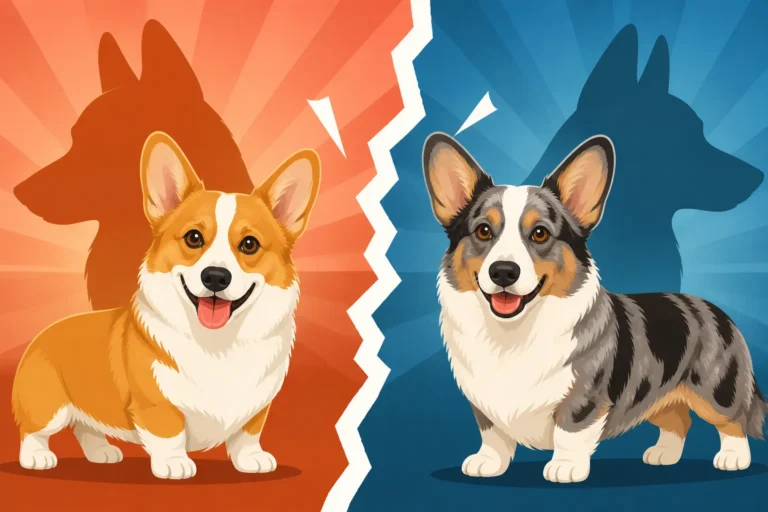
Over generations, subtle but significant differences in appearance and temperament began to emerge. The Cardigan retained its long, bushy tail, a characteristic that differentiates it immediately from the Pembroke, which often has a docked tail or a natural bobtail. The Cardigan also tends to be a bit larger, with a heavier bone structure, and often has a slightly calmer, more thoughtful demeanor. Pembrokes, on the other hand, are typically a bit more compact, often described as having a more "foxy" expression, and are known for their spirited, outgoing personalities. These differences, forged by centuries of natural selection and regional isolation, laid the groundwork for their eventual classification as two distinct breeds.
The Path to Official Recognition: A Tale of Two Breeds
For much of their history, both types of Corgi were simply "Welsh Corgis," working dogs judged purely on their ability to herd. The idea of breed standards, pedigrees, and show rings was a relatively modern development that began to take shape in the late 19th and early 20th centuries. As dog showing gained popularity, enthusiasts began to organize and define what constituted an ideal example of each type of dog.
The Joint Recognition and Initial Confusion
Interestingly, when Corgis first entered the competitive dog show world in the United Kingdom, the two types were often exhibited and judged together under the single classification of "Welsh Corgi." This situation led to considerable confusion among judges and breeders alike. Imagine trying to compare a dog with a long tail and a specific head shape to another with a docked tail and a different body type, all under one standard! It was like trying to judge apples and oranges in the same category. This period of joint recognition highlighted the clear distinctions between the two types and underscored the need for separate standards.
The lack of clear delineation caused problems for breeders who were trying to establish consistent lines. If a judge preferred the appearance of a Cardigan one day and a Pembroke the next, it was incredibly difficult to breed dogs with predictable traits. This frustration eventually led to a strong push from breeders and fanciers to formally recognize the Pembroke and Cardigan as separate breeds. They argued that their unique histories, physical characteristics, and temperaments warranted individual standards.
The Pivotal Split: Pembroke and Cardigan Go Their Separate Ways
The clamor for separate recognition eventually succeeded. In the United Kingdom, the Kennel Club officially recognized the Pembroke Welsh Corgi and the Cardigan Welsh Corgi as distinct breeds in 1934. This was a monumental decision, validating the long-held belief of Corgi enthusiasts that these were not just variations of a single breed, but two unique and valuable entities. This split allowed for the development of specific breed standards for each, guiding ethical breeding practices and ensuring the preservation of their individual characteristics.
This formal separation in their homeland had a ripple effect across the global dog community, paving the way for international kennel clubs, including the AKC, to follow suit. The decision meant that breeders could now focus on perfecting the specific traits of either a Pembroke or a Cardigan, rather than trying to fit both into a single, ill-fitting mold. It was a crucial step in the history of both breeds, marking their true emergence as defined entities in the purebred dog world. If you're looking for quality food or toys for your unique Corgi, whether Pembroke or Cardigan, a quick browse on Chewy will show you options tailored for small, active breeds.
When the AKC Officially Welcomed Each Corgi
The United States, like other countries, saw a growing interest in these charming, robust dogs. As their popularity increased, so did the need for formal recognition by the American Kennel Club, the primary governing body for purebred dogs in the U.S. The AKC's recognition process is rigorous, requiring a breed to demonstrate a sufficient population, a clear breed standard, and active participation in conformation events.
The Cardigan Welsh Corgi's Landmark Year
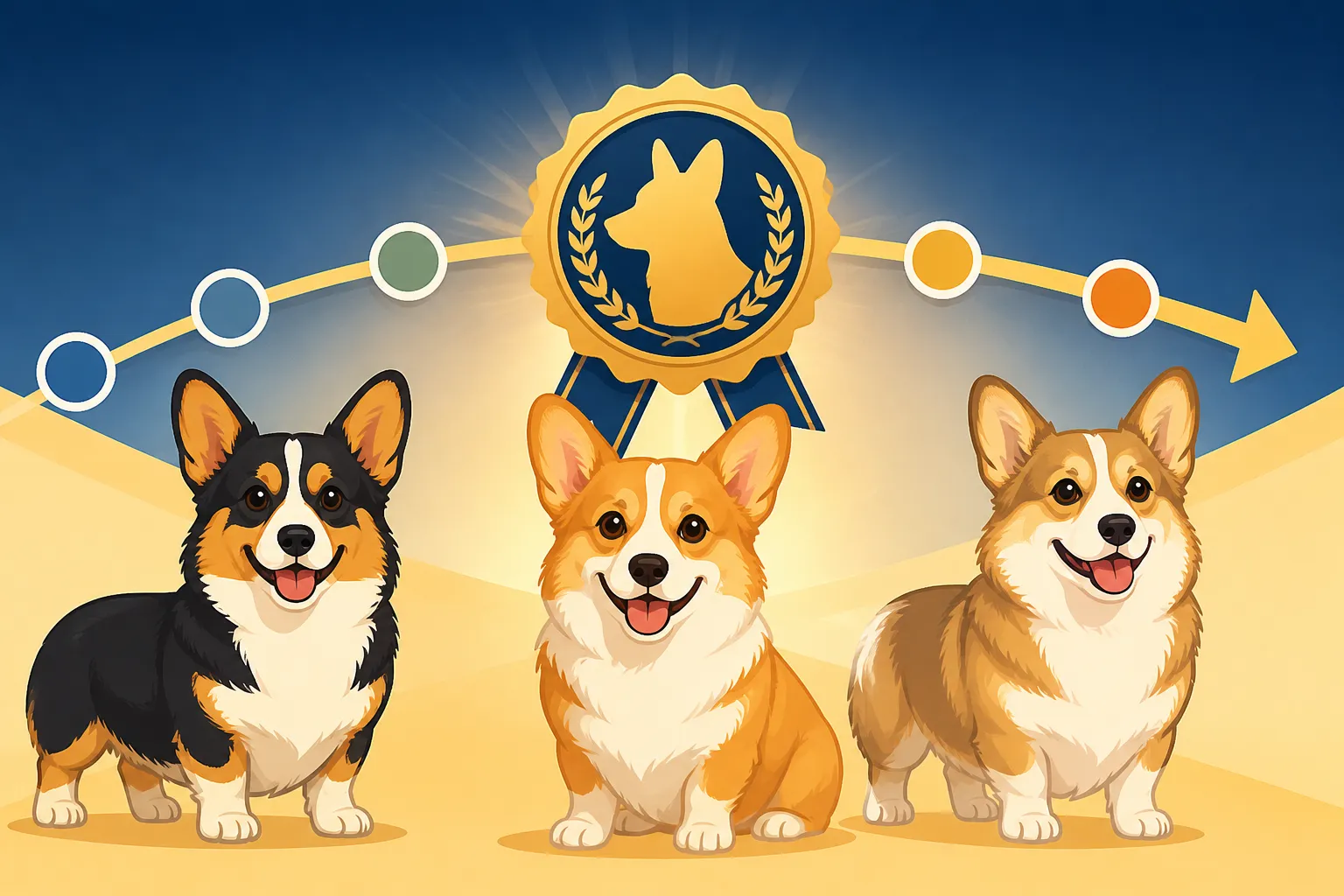
The Cardigan Welsh Corgi, being the older and perhaps slightly more established (in terms of ancient lineage) of the two, was the first to receive individual recognition from the AKC. The American Kennel Club officially recognized the Cardigan Welsh Corgi in 1935. This was a significant milestone for Cardigan breeders and fanciers in the United States, allowing them to participate in AKC-sanctioned events and providing a framework for preserving and promoting the breed.
Upon recognition, the AKC established a detailed breed standard for the Cardigan Welsh Corgi, outlining its ideal physical traits, temperament, and movement. This standard helped ensure consistency in breeding and judging across the country. It described the Cardigan's distinctive long tail, its slightly larger and heavier build, and its watchful, steady character. This recognition didn't just put them on the show circuit; it cemented their place as a distinct and valued member of the AKC's Herding Group, recognizing their historical role as cattle drovers. For new owners finding food suitable for their Cardigan, reputable sources like Chewy offer a range of specific breed-size diets.
The Pembroke Welsh Corgi's Distinctive Recognition
Hot on the heels of the Cardigan, the Pembroke Welsh Corgi also gained its independent standing. The American Kennel Club officially recognized the Pembroke Welsh Corgi in 1934. Yes, you read that right – the Pembroke was recognized by the AKC one year before the Cardigan, despite the Cardigan having gained independent recognition in the UK Kennel Club in the same year as the Pembroke (1934). This can be a point of minor confusion! The UK Kennel Club split them both in 1934, and the AKC recognized the Pembroke that very same year. Then, the AKC followed up with the Cardigan's recognition in 1935.
This timeline reflects the burgeoning popularity of the Pembroke Welsh Corgi, which quickly captured the hearts of many, including, famously, British royalty. Its lively personality, foxy expression, and often docked or naturally bobbed tail appealed to a broad audience. Like the Cardigan, its recognition came with a specific AKC breed standard, which detailed its more compact body, relatively lighter bone, and vivacious, outgoing temperament. The Pembroke also took its rightful place in the AKC's Herding Group, a testament to its ancestral working heritage. These separate recognitions were crucial steps in solidifying the identity and future of both Corgi breeds in America. The AKC Pembroke Welsh Corgi Standard provides a comprehensive look at what makes a Pembroke unique according to the club.
Understanding the Lasting Impact of Separate Recognition
The formal recognition of the Pembroke Welsh Corgi and the Cardigan Welsh Corgi as distinct breeds by the AKC was more than just a bureaucratic formality; it had profound and lasting implications for breeders, owners, and the breeds themselves. It solidified their individual identities and helped guide their development for decades to come.
Implications for Breeding and Show Standards
With separate recognition, breeders finally had clear, distinct standards to work towards. This meant that the confusion of cross-type judging was eliminated, allowing for more consistent and focused breeding programs. For Cardigan breeders, the emphasis was on maintaining their characteristic long tail, their unique head shape, and their slightly heavier build. For Pembroke breeders, the focus was on their foxy face, expressive eyes, and compact, athletic frame, often with the distinctive docked or natural bobtail. The DNA Tests a Corgi Breeder Should Run are now common practice to ensure health and adherence to breed standards.
This clear distinction also helped preserve the unique genetic lines of each breed. Without separate recognition, there might have been a temptation or even an allowance for interbreeding, which could have diluted the distinct traits that make each Corgi type so special. Instead, the AKC's decision ensured that the Cardigan Welsh Corgi and the Pembroke Welsh Corgi would continue to thrive as unique, independent breeds, each with its own loyal following and dedicated fanciers committed to preserving its heritage. It underscored the importance of Why the Two Corgi Breeds Were Kept Apart in the first place.
What Separate Recognition Means for Corgi Owners Today
For the average Corgi owner today, these historical recognition dates might seem like ancient history, but their impact is still very real. When you decide to bring a Corgi into your home, you are choosing one of two distinct breeds, each with its own specific characteristics and needs. A Cardigan is not just a Pembroke with a tail, and a Pembroke is not simply a smaller Cardigan. They have different origins, different breed standards, and often, subtle differences in temperament.
Understanding this distinction helps prospective owners make an informed choice. Do you prefer the slightly calmer, more substantial Cardigan, or the spirited, often more vocal Pembroke? Are you drawn to the long, expressive tail of the Cardigan, or the bobtail or docked tail of the Pembroke? These are important considerations that stem directly from the AKC's decision to recognize them as separate entities. Furthermore, separate recognition means there are distinct communities, breed clubs, and resources available for each. Whether you're seeking advice on training, health, or just connecting with other owners, you'll find dedicated groups for either Pembroke or Cardigan enthusiasts, ready to share their passion. And, of course, when you're stocking up on supplies for your beloved Corgi, be it for a Cardigan or a Pembroke, platforms like Chewy make it easy to find everything from breed-specific food recommendations to durable toys that can stand up to a Corgi's playful energy.
Disclaimer
This article is for general informational purposes only and does not constitute professional advice. Laws, prices and regulations vary by location and change over time. Consult a qualified professional for guidance on your specific situation.