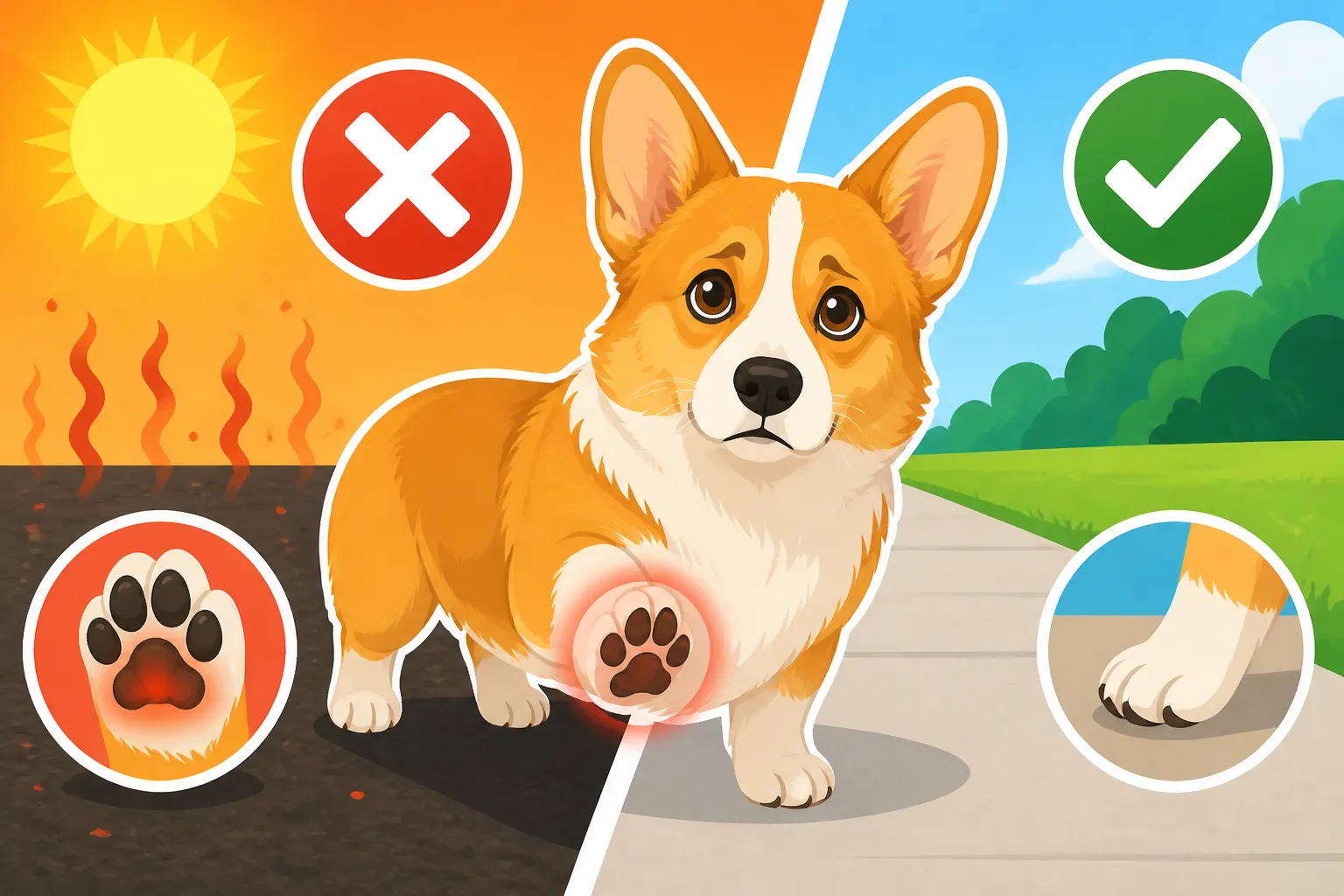
Whether a Corgi Should Walk on Hot Pavement
It's a beautiful sunny day, and your Corgi is bouncing with excitement, ready for their daily stroll. But before you grab the leash, have you stopped to consider just how hot that pavement under their little paws might be? Many of us, myself included, have made the mistake of thinking our dogs' paw pads are tough enough for anything, only to realize the hard way that concrete and asphalt can reach blistering temperatures that cause serious burns. This guide will walk you through understanding the real risks hot pavement poses to your beloved low-rider, how to assess the danger, and practical steps to keep their precious paws safe and sound.
The Hidden Danger of Hot Pavement for Your Low-Rider Corgi
Let's be honest, Corgis are built low to the ground, which is part of their charm and historical purpose. But this unique physique, while adorable, comes with its own set of considerations, especially when it comes to navigating summer sidewalks. The world at their level is a much hotter place than it is for us, and that ground contact is constant.
Why Corgis Are Especially Vulnerable
Imagine walking barefoot on black asphalt on a hot summer afternoon. Ouch, right? Now, picture your Corgi. Their short legs mean their bodies are much closer to the ground, absorbing radiant heat from the hot surface. This isn't just about their paws; their entire underside is getting a blast of heat. Their little engines are already working harder in warm weather due to their dense double coat, which helps them brave the cold but can make them susceptible to overheating when things get too toasty. Heat Sensitivity Under a Corgi's Double Coat becomes a very real concern, and hot pavement only exacerbates the overall heat burden on their bodies.
The surface of asphalt or concrete can get significantly hotter than the ambient air temperature. While the air might be a pleasant 75°F (around 24°C), the pavement could easily be soaring past 125°F (52°C) or even hotter in direct sunlight. Our Corgis have those wonderfully sturdy, short legs, but they're not impervious to these extreme temperatures. Their paw pads are designed for traction and protection on varied terrain, not as oven mitts. They sweat primarily through their paw pads and pant to regulate body temperature, so when their paws are cooking, it hinders one of their natural cooling mechanisms.
The Science Behind Paw Pad Burns
Dog paw pads are incredible structures – tough, yet sensitive. They're made of pigmented skin, thick layers of fat, and elastic connective tissue, all designed to absorb shock, provide grip, and protect against rough surfaces. However, they're not immune to thermal injury. When paw pads are exposed to temperatures exceeding certain thresholds, the cells can start to sustain damage, leading to burns. Think of it like cooking a steak; too much heat, and the protein changes structure. The same happens to the tissue in your Corgi's paws.
The severity of a paw pad burn depends on both the temperature of the surface and the duration of exposure. A quick dash across a very hot patch might cause a superficial burn, similar to a first-degree human burn – redness, tenderness, slight swelling. But prolonged exposure, or contact with even hotter surfaces, can lead to more severe damage: blisters, peeling skin, open sores, and even deeper tissue necrosis, which is like a second or third-degree burn for us. These deeper burns are excruciatingly painful, can get infected easily, and take a long time to heal. Recovery from such an injury can be a drawn-out and challenging process for both the dog and the owner.
Recognizing the Signs of Burned Paw Pads
It can be heartbreaking to realize your furry friend is in pain because of something you inadvertently overlooked. The good news is, by being vigilant, you can spot the signs of burned paw pads early. Your Corgi might not be able to tell you in words, but their behavior will often scream it.
Look for a change in gait, like limping, favoring one paw, or an overall reluctance to walk or put weight down. They might lift their paws more frequently or try to walk on cooler surfaces like grass whenever possible. If you gently inspect their paw pads, you might notice redness, swelling, or even darkening of the pad tissue. In more severe cases, you could see blisters, loose flaps of skin, or even raw, exposed tissue. Your Corgi might also be excessively licking or chewing at their paws, which is a clear indicator of discomfort. They may even become vocal, whining or yelping when their paws are touched or when attempting to walk. Remember, early detection is key to preventing further damage and ensuring a quicker, less painful recovery.
Testing the Pavement and Safe Walking Strategies
Knowing the risks is the first step, but preventing paw pad burns for your Corgi requires a proactive approach. It's all about awareness and making smart choices about when and where you walk.
The Five-Second Rule and Beyond
This is the golden rule every dog owner should live by in warmer weather. Before you ever consider walking your Corgi on pavement, place the back of your hand or your bare foot flat on the surface for five full seconds. If it's too hot for your hand or foot to comfortably stay there, it's definitely too hot for your Corgi's paws. It's a simple, quick test that can save your dog a lot of pain.
But don't stop there. Think about the entire walk. Are there shaded areas? Is the whole route on hot pavement? Even if the initial patch of pavement feels okay, remember that temperatures can vary along your walk, especially if you move from shade to direct sun. A quick check isn't just for asphalt or concrete; it applies to sand on the beach, metal drainage covers, and even artificial turf, all of which can heat up dramatically. Consider the ambient temperature and humidity as well, because these factors contribute to how quickly surfaces heat up and how effectively your Corgi can cool themselves.
Timing Your Corgi's Walks
The sun is strongest and the pavement hottest during the midday hours, typically between 10 AM and 4 PM. This is prime time for potential paw burns and general overheating. The best times to walk your Corgi when it's warm outside are during the cooler parts of the day: early morning or late evening.
An early morning walk, right as the sun is coming up, often provides the coolest temperatures and the most comfortable surfaces. The pavement has had all night to cool down, and the sun hasn't had a chance to bake it yet. Similarly, a late evening walk, after the sun has set and the ground has had a few hours to release its stored heat, can be much safer. Pay attention to how long the sun has been down; sometimes, in very hot climates, the pavement can retain heat well into the night. Adjust your schedule based on your local climate and the actual conditions. Some days might require an even earlier start or a much later finish to ensure safety.
Alternative Walking Surfaces
If the pavement is too hot, it doesn't mean your Corgi has to miss out on exercise and potty breaks. You just need to get a little creative with your routes. Seek out grassy areas, dirt paths, or shaded trails in parks. These surfaces tend to stay much cooler than asphalt or concrete because they don't absorb and retain heat in the same way. Natural ground cover also provides better cushioning for their joints, which is always a bonus for a breed like the Corgi, especially considering concerns like Disc Disease in a Long-Backed Corgi.
If you live in an urban area with limited grass, consider a short walk to a nearby park with more natural surfaces, or even make car rides to cooler spots a regular part of your summer routine. For quick potty breaks, a small patch of grass nearby or even a carefully carried trip to a shaded area can be enough. During peak heat, indoor play sessions or training can be excellent alternatives to keep your Corgi mentally and physically stimulated without putting their paws at risk. Fetch in the living room, hide-and-seek with treats, or practicing new tricks can burn off energy and keep their minds active.
Protecting Your Corgi's Paws from Extreme Heat
Even with careful timing and choosing alternative surfaces, there will be times when some pavement exposure is unavoidable, or you want an extra layer of protection. This is where paw protection measures come in handy.
Paw Protection Gear
Just like we wear shoes, there are options to protect your Corgi's delicate paw pads.
- Dog Booties: These are like little shoes for your Corgi. They come in various styles, from lightweight, breathable summer boots to more rugged, all-weather options. The key is to find a pair that fits well – not too tight, not too loose – and stays on without restricting movement. It can take some getting used to for your Corgi; many dogs do a funny high-step dance at first! Introduce them gradually, with positive reinforcement and short wear times indoors before tackling a walk. Brands available on sites like Chewy and Amazon offer a wide range of choices, so you can find ones with good grip and heat protection. They also offer protection from other hazards like salt or sharp objects.
- Paw Waxes and Balms: These products create a protective, breathable barrier on the paw pads. They don't offer the same level of heat insulation as booties, but they can help moisturize paws, prevent cracking, and provide a mild layer of defense against hot surfaces and irritants. Think of it as a protective layer, not a full shield. Apply them before walks and after, especially if paws seem dry. Look for natural ingredients that are safe if your Corgi licks them. While not a substitute for avoiding scorching pavement, they are a good addition to general paw care.
Here's a quick comparison of these options:
| Feature | Dog Booties | Paw Waxes/Balms |
|---|---|---|
| Pros | Excellent heat protection, physical barrier against sharp objects, salt, and chemicals, good traction. | Easy to apply, moisturizes and protects against minor irritants, Corgis typically tolerate them well. |
| Cons | Can be tricky to fit and keep on, Corgis may resist wearing them initially, can be bulky, may limit natural paw feel. | Offers mild heat protection only, not a barrier against sharp objects, needs frequent reapplication. |
| Best Use | Necessary for very hot pavement, long walks on varied terrain, extreme weather conditions (snow, ice). | Daily paw maintenance, mild heat, protecting from dry/cracked pads, minor irritants, and general paw conditioning. |
| Considerations | Choose breathable materials for summer, ensure a snug but comfortable fit. | Look for natural, non-toxic ingredients. Combine with other strategies for hot weather. |
Hydration and Cooling During Walks
Beyond paw protection, keeping your Corgi cool and hydrated is paramount during any warm weather outing. Always carry fresh water with you and offer it frequently. Collapsible bowls are fantastic for this and don't take up much space. Just like us, Corgis can dehydrate quickly, and staying hydrated helps their bodies regulate temperature more effectively.
Seek out shade whenever possible. Even a short break under a tree or awning can give your Corgi a chance to cool down their body and paws. If you know your route will have limited shade, consider shorter loops or planning rests. Cooling vests or bandanas, which you can wet and put on your Corgi, can also help by promoting evaporative cooling on their core. Just make sure they don't make your Corgi feel too restrictive. Always monitor your Corgi for any Heat Stroke Signs in a Corgi, such as excessive panting, lethargy, or stumbling, and head indoors immediately if you notice any.
First Aid for Burned Paws and When to See the Vet
Even with the best precautions, accidents can happen. If you suspect your Corgi has burned paws, immediate action is crucial.
- Stop the Walk Immediately: Get your Corgi off the hot surface and onto grass or into a shaded area.
- Cool the Paws: Gently rinse their paws with cool (not icy cold) water for several minutes. A spray bottle or a damp cloth can work if you don't have access to running water. This helps stop the burning process and soothe the pain.
- Inspect Carefully: Gently clean the paws and check for any visible damage: redness, blisters, peeling skin, or foreign objects.
- Protect and Pad: Apply a light, sterile bandage if there's any broken skin, using non-stick pads to prevent further irritation. Don't use cotton directly on the wound, as fibers can stick.
- Seek Veterinary Care: This is the most important step. Even mild burns can become infected or lead to more serious complications. A veterinarian can accurately assess the severity of the burns, clean the wounds properly, prescribe pain medication, and potentially antibiotics to prevent infection. They can also advise on proper wound care and healing time. Never try to self-diagnose or treat severe burns at home. Your vet can provide specialized medical care, which is vital for proper healing.
Broader Heat Safety for Your Corgi
Hot pavement is a significant hazard, but it's part of a larger picture of heat safety for your Corgi. Their unique physical characteristics make them prone to other heat-related issues that owners must be vigilant about.
Understanding Overall Heat Sensitivity in Corgis
As we touched on earlier, Corgis possess a dense double coat that, while excellent for keeping them warm, also makes them less efficient at shedding heat in hot weather. This coat traps a layer of air that insulates them from both cold and heat, but when ambient temperatures soar, that insulation can work against them. They also have relatively short snouts, though not as brachycephalic (flat-faced) as some breeds, which can slightly impede their ability to cool themselves through panting compared to a dog with a longer muzzle.
This combination of a heavy coat, low stature, and moderate muzzle length means Corgis can quickly overheat. Heat Stroke Signs in a Corgi are critical for every Corgi owner to know: excessive panting, drooling, weakness, stumbling, bright red gums, vomiting, or even collapse. If you notice any of these, it's an emergency. Immediately move your Corgi to a cooler place, offer water, apply cool (not cold) wet towels to their belly, armpits, and groin, and get to a vet as quickly as possible. Understanding How a Corgi Handles Hot Weather involves more than just their paws; it's a whole-body concern.
Avoiding Hot Cars and Other Heat Traps
We all know the cardinal rule: never leave a dog in a hot car. Even on a mild day, the temperature inside a car can rocket to dangerous levels in minutes. Cracking a window isn't enough. It's a risk not worth taking, ever.
But beyond cars, other seemingly innocuous places can become heat traps. Sun-baked patios, metal dog runs, dark-colored decks, or even sunrooms can reach dangerously high temperatures. If your Corgi spends time outdoors, ensure they always have access to ample shade and fresh water. A kiddie pool with a few inches of water can be a wonderful way for them to cool off their core and paws. Remember that even seemingly cool places, like shaded concrete, can still hold significant heat from earlier in the day. Always test the surface with your hand. The goal is to create an environment where your Corgi can safely enjoy the outdoors without risking heat-related illness.
Long-Term Paw Health and Maintenance
Beyond avoiding immediate burns, fostering long-term paw health is essential for your Corgi's overall well-being. Healthy, resilient paw pads are better equipped to handle everyday wear and tear and can be more resistant to minor irritations.
Regularly inspect your Corgi's paws, ideally after every walk, to check for cuts, scrapes, foreign objects (like burrs or small stones), or any signs of tenderness or redness. Keep the fur between their paw pads neatly trimmed to prevent matting, which can trap moisture and debris, leading to skin irritation or infections. This also helps with cooling in warm weather. Use a good quality paw balm (like those you might find on Chewy or Amazon) to keep their pads moisturized and supple, especially in dry climates or during winter when they can crack. Think of it as preventative care, ensuring those little paws are always in top condition. Providing a balanced, nutritious diet, perhaps from a brand like Ollie, can also contribute to overall skin and coat health, which includes healthy paw pads. Regular Corgi Nail, Ear and Tooth Routines should always include attention to paw pad care.
Disclaimer
This article is for general informational purposes only and does not constitute professional advice. Laws, prices and regulations vary by location and change over time. Consult a qualified professional for guidance on your specific situation.