Adjusting Corgi Food After the Spay
It's incredibly frustrating, isn't it? You get your beloved Corgi spayed or neutered, expecting them to be healthier and happier, only to find them slowly but surely packing on the pounds. This guide is here to walk you through exactly why this happens to so many Corgis after their surgery and, more importantly, how to adjust their food intake to keep them at a healthy weight, protecting their long backs and overall well-being.
Understanding the Metabolic Shift After Spay/Neuter
Many Corgi parents find themselves scratching their heads, wondering why their once svelte pup starts to look a little… rounder… after their spay or neuter surgery. It's not just your imagination, and it's certainly not a reflection on your care. There's a very real biological reason behind this common phenomenon, and understanding it is the first step to managing your Corgi's weight effectively.
Hormonal Changes and Their Impact
When a Corgi is spayed (for females) or neutered (for males), their reproductive organs are removed. This might sound straightforward, but those organs produce hormones that play a significant role in their metabolism. Think of it like a delicate internal balancing act that suddenly has a few key players missing.
For females, the removal of ovaries means a drastic drop in estrogen. Estrogen is known to influence metabolic rate. When it decreases, a Corgi's body often becomes more efficient at storing fat and can burn calories at a slightly slower rate than before. It’s almost as if their body says, "Okay, we don't need to prioritize reproduction anymore, let's conserve energy!" For males, the removal of testes means a drop in testosterone. Testosterone also plays a role in muscle mass and metabolism. Lower testosterone can lead to a decrease in lean muscle mass (which burns more calories at rest) and an increase in fat storage. So, essentially, both sexes experience a shift that predisposes them to gain weight, even if their food intake and exercise levels remain exactly the same as before the surgery. It’s a natural, physiological response, but one we need to proactively address.
Reduced Energy Requirements
Beyond the direct hormonal impact, there's another piece to the puzzle: your Corgi's overall energy needs change. Unaltered dogs, especially intact females during heat cycles or intact males who are more actively "patrolling" their territory and potentially seeking mates, often have higher energy expenditures. They might be more restless, more prone to roaming, or just generally more active due to their reproductive drives.
Once spayed or neutered, many Corgis settle down a bit. They might become slightly calmer, less driven by hormonal urges, and as a result, their daily energy output can decrease. If they're not burning as many calories as they used to, but still consuming the same amount of food, those extra calories quickly turn into extra pounds. It's a double whammy: a slower metabolism combined with potentially lower activity. This is particularly crucial for Corgis with their long backs, as Why Corgi Weight Is a Spinal Problem is a serious concern. Every extra pound places undue stress on their delicate spine, increasing their risk for disc issues down the line.
Spotting the Signs of Weight Gain in a Corgi
Corgis, with their dense double coats and naturally sturdy builds, can be masters of disguise when it comes to hiding a few extra pounds. It’s not like they have a super obvious waistline to begin with! Because their healthy weight is so critical for their long-term spinal health, being vigilant and knowing what to look for is absolutely essential. Don't wait until they look truly "round" to take action.
The Subtle Clues Under the Fluff
You might think you’d notice if your Corgi gained weight, but it can be sneaky. The first place to check isn't just by looking. You need to get your hands on your dog. Stand over your Corgi and feel along their sides. Can you easily feel their ribs without pressing hard? You should be able to. If you have to push to feel them, or if you can't feel them at all, that's a red flag.
Next, feel along their spine. You should be able to feel the bony prominences of their vertebrae with just light pressure. If it feels like a soft, padded cushion over their spine, that's excess fat. Finally, look at their profile from the side. A healthy Corgi should have a slight tuck-up from their rib cage to their hips, not a straight line or, worse, a saggy belly. This tuck can be hard to spot with their low-slung bodies and generous feathering, but it's there if you look closely. If their "trousers" (the fur on their hind legs) look extra thick, or their waddle seems more pronounced, these are subtle signs that fat is accumulating.
The Impact on Mobility and Energy
Beyond the physical appearance, subtle changes in your Corgi's behavior can also indicate weight gain. Are they a little slower on walks? Do they seem less enthusiastic about playtime, preferring to nap more often? Perhaps they struggle a bit more to get up from a lying position, or they're hesitant to jump onto the sofa (which, let's be honest, they probably shouldn't be doing anyway if we're protecting those backs!).
You might also notice them panting more easily, even after moderate exercise. These aren't necessarily signs of aging; they can be direct consequences of carrying extra weight. Even a pound or two on a small, long-backed dog like a Corgi is significant. It puts more strain on their joints, makes their heart work harder, and can exacerbate underlying conditions or even precipitate new issues, particularly concerning their spine. Regularly checking their The Body Condition Score a Corgi Owner Aims For is an objective way to monitor their progress.
How to Adjust Your Corgi's Diet After Spay/Neuter
Now that you understand why your Corgi is prone to weight gain post-spay/neuter, let's talk about the practical steps you can take to prevent it. The good news is that managing their weight is largely within your control, and it starts with a careful re-evaluation of their diet. This isn't about drastic cuts, but smart adjustments.
Calorie Reduction: It's All About the Math
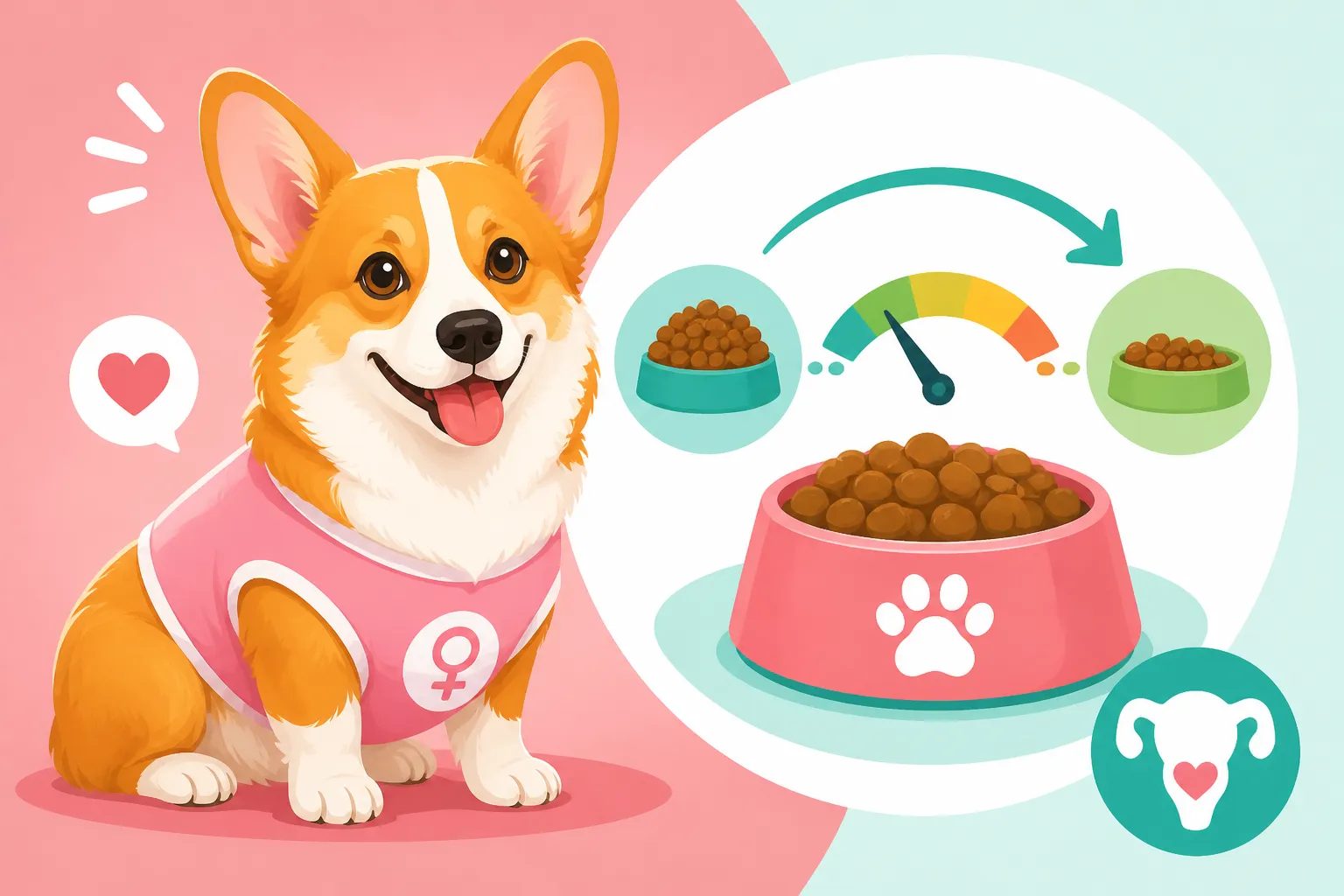
The most important adjustment is to reduce their caloric intake. As we discussed, their metabolism slows down, and their energy requirements decrease. The general rule of thumb is that a spayed or neutered dog may need anywhere from 20-30% fewer calories than their intact counterparts to maintain the same weight. This is a significant reduction, and it's why feeding the same amount as before surgery often leads to weight gain.
First, figure out how many calories your Corgi was eating daily before the surgery. Check the feeding guidelines on your dog's food bag, but remember these are often generic and can be overestimated for less active dogs. A better approach is to calculate their Resting Energy Requirement (RER) and then multiply it by an appropriate factor for their activity level and neutered status. Your vet can help you with this calculation, or you can find formulas online.
Once you have a target calorie range, start by reducing your Corgi's current food portion by about 10-15%. Monitor their weight over the next few weeks. If they continue to gain or plateau at an unhealthy weight, you'll need to make further small reductions. Conversely, if they start losing weight too rapidly, you might need to slightly increase it. Slow and steady wins the race when it comes to weight management. Remember, How Slowly a Corgi Should Come Down in Weight is important for their health.
Measuring Food Accurately
This might seem obvious, but it's a step many of us overlook. Scooping food with a generic cup is notoriously inaccurate. A quarter-cup scoop might hold more or less than an actual ¼ cup, depending on the food's density and how packed it is. For Corgis, where every calorie counts due to their predisposition to spinal issues with excess weight, precision is paramount.
Invest in a digital kitchen scale and weigh your Corgi's kibble. Most food manufacturers list feeding recommendations by weight (grams or ounces) as well as by volume (cups). Weight is always more accurate. For example, if your bag says to feed 100 grams, measure out 100 grams. This ensures consistency and accuracy in calorie control. You can find affordable kitchen scales on Amazon that are perfect for this task. This simple change can make a huge difference in managing their The Calorie Target for a Twenty-Eight Pound Corgi.
Rethinking Treats and Table Scraps
Those adorable Corgi eyes are hard to resist, aren't they? But treats and table scraps are often hidden calorie bombs that can quickly sabotage your weight management efforts. A few small training treats here, a bite of cheese there, and suddenly you've added hundreds of extra calories to their day without realizing it.
After spaying or neutering, it's time for a stricter approach. Eliminate table scraps entirely. For treats, switch to very low-calorie options like plain steamed green beans, carrot sticks, or small pieces of apple (without seeds). Many dog food brands also offer low-calorie training treats. If you use commercial treats, break them into tiny pieces – your Corgi doesn't care about the size, only the reward. Even better, use a portion of their daily kibble allowance as training treats. This way, they're still getting their allocated calories but spread throughout the day. This is an excellent strategy, as Treats Priced Into a Corgi's Daily Ration can really make a difference. Consider options from reputable online retailers like Chewy for a wide selection of healthy, low-calorie treat alternatives or even custom meal plans from services like Ollie that can help you precisely control calories.
Here's a quick comparison of pre- and post-spay feeding strategies:
| Aspect | Pre-Spay/Neuter Strategy | Post-Spay/Neuter Strategy |
|---|---|---|
| Caloric Intake | Based on current weight, activity, and growth (if puppy) | Reduced by 20-30% due to metabolic changes and lower energy needs |
| Food Measurement | Often by volume (scoops), less precise | By weight (grams) using a digital scale for accuracy |
| Treats | Moderate use of commercial treats, occasional scraps tolerated | Very low-calorie options (veggies, fruit), daily kibble portion for training |
| Food Type | Standard adult or puppy formula | Potentially a "weight management" or "light" formula, or just less of current food |
| Monitoring | Less frequent weight checks | Regular weekly/bi-weekly weight checks, body condition scoring |
| Goals | Maintain healthy growth/weight | Prevent weight gain, maintain ideal adult weight for spinal health |
Considering a "Light" or Weight Management Formula
Sometimes, simply reducing the quantity of your Corgi's regular food isn't enough, or it leaves them feeling too hungry. This is where a specially formulated "light" or "weight management" dog food can be beneficial. These foods are designed to be lower in calories but still provide all the essential nutrients your Corgi needs. They often achieve this by being higher in fiber, which helps dogs feel fuller on fewer calories.
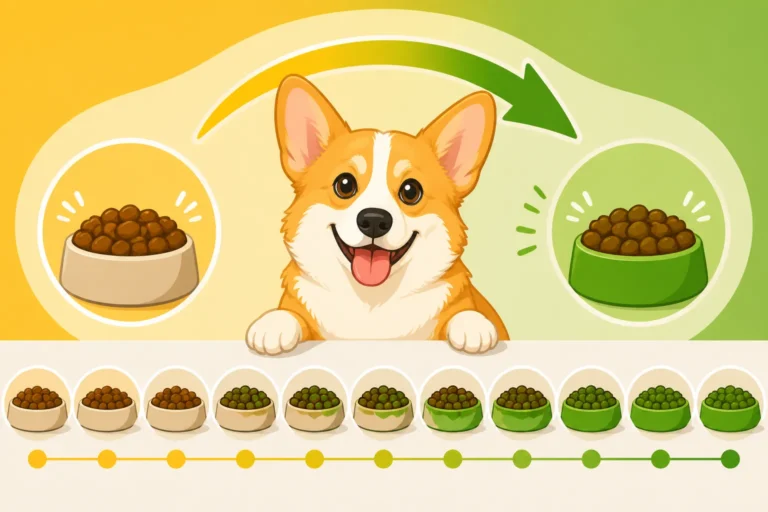
Before switching, it's always a good idea to consult your veterinarian. They can help you determine if a weight management formula is appropriate for your Corgi, considering their age, overall health, and specific needs. If you do switch, do so gradually over 7-10 days by mixing increasing amounts of the new food with decreasing amounts of the old food. This helps prevent digestive upset. You can find a wide variety of these specialized foods on Chewy, complete with detailed nutritional information to help you compare. For some Corgis, just reducing the standard kibble is sufficient, as discussed in Whether a Corgi Needs a Vet Diet or Just Less.
Beyond Diet: Supporting a Healthy Weight
While diet is undeniably the cornerstone of post-spay/neuter weight management for your Corgi, it's not the only piece of the puzzle. A holistic approach that integrates appropriate exercise, mental stimulation, and regular monitoring will give your Corgi the best chance at a long, healthy life, especially protecting their unique physique.
Tailored Exercise Routines
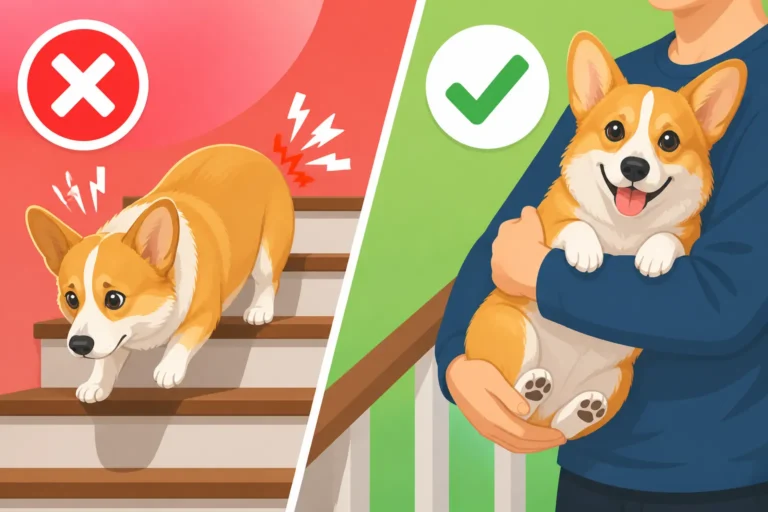
Just because your Corgi's metabolism has slowed and they might seem calmer, it doesn't mean they don't need regular exercise. In fact, it becomes even more crucial! The key is appropriate exercise that supports their physical well-being without putting undue strain on their long backs. High-impact activities like excessive jumping (especially off furniture or high places) should be minimized or avoided entirely, as The Jump That Ruptures a Corgi Disc is a very real concern.
Instead, focus on consistent, moderate exercise. Two to three shorter walks throughout the day are often better than one long one, allowing for more frequent potty breaks and lower-impact activity. Brisk walks, gentle games of fetch (on a flat, soft surface), and even "sniffaris" where they can explore scents at their own pace are excellent options. Swimming, if your Corgi enjoys it, is fantastic for joint health and muscle building without impact. Remember to adjust exercise duration and intensity based on their individual fitness level and any existing health concerns. Consider activities like Scentwork as a Sport That Spares a Corgi's Back for mental and physical enrichment.
Mental Stimulation and Enrichment
A bored Corgi is often a Corgi looking for ways to entertain themselves, and that entertainment often involves food. Whether it's begging, scavenging, or just generally being restless, an under-stimulated dog is more likely to overeat or seek out extra calories. Mental exercise can burn almost as much energy as physical exercise, and it can help keep your Corgi satisfied and less focused on food.
Incorporate puzzle toys, snuffle mats, or treat-dispensing toys into their routine. These force your Corgi to "work" for their food, slowing down their eating and providing valuable mental engagement. You can use their measured daily kibble in these toys, turning mealtime into a stimulating activity. Learning new tricks, practicing obedience commands, or even simple scent games around the house can also provide excellent mental enrichment. Rotating toys and activities keeps things fresh and interesting. Many great puzzle feeders are available on Amazon or Chewy.
Regular Vet Check-ups and Monitoring
Even with the best intentions and efforts, weight management can be a challenge. That's why consistent communication with your veterinarian is so important. During their annual check-ups, your vet will weigh your Corgi and assess their body condition. Don't hesitate to schedule extra weigh-ins at the clinic between annual visits, especially if you're actively trying to manage their weight. Most clinics are happy to let you pop in for a quick scale visit.
Your vet can also rule out any underlying medical conditions that might be contributing to weight gain (though this is less common immediately after spay/neuter, it's good practice). They can offer personalized advice on calorie targets, recommend specific food brands if necessary, and help you create a safe and effective exercise plan tailored to your Corgi's unique needs. Think of them as your essential partner in keeping your Corgi healthy and active for many years to come. Remember, The Vet Visits a Corgi Puppy Needs First are just the beginning of a lifelong partnership with your vet.
Disclaimer
This article is for general informational purposes only and does not constitute professional advice. Laws, prices and regulations vary by location and change over time. Consult a qualified professional for guidance on your specific situation.