Whether a Corgi Is a Good Farm Dog Today
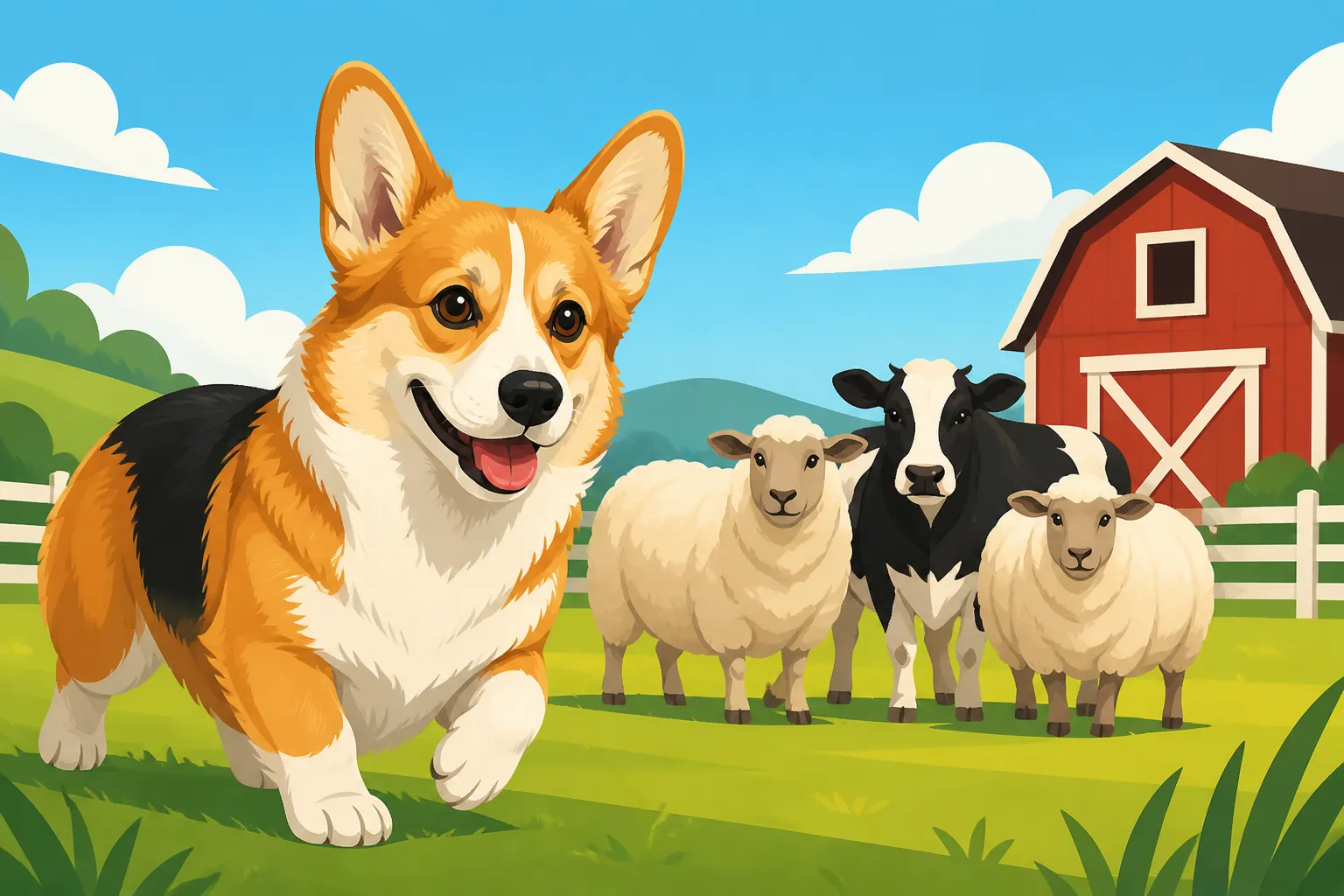
A Corgi can still be a useful farm companion, but the answer depends on what you expect it to do. These compact herding dogs may help move livestock, alert you to activity, and keep busy around a rural home. They are not a substitute for a trained livestock guardian or a reliable farmhand. This guide explains where a Corgi fits—and where it doesn’t.
What a Corgi Can Do on a Farm Today
Herding instincts are still there
Corgis were developed as working dogs, and their instincts have not disappeared just because many now live in suburban homes. They can be alert, persistent and quick to notice movement. Some will naturally try to gather animals or control where they are going. The historical work of the breed is explored in What a Welsh Corgi Did on a Farm All Day and Whether Corgis Still Work Cattle.
That instinct can be useful when a dog is properly introduced to livestock and trained for the job. A Corgi might help move a small group of animals through a gate or keep pressure on stock during a short, familiar task. But instinct alone does not make a dog livestock-ready. A dog that chases, barks at or nips animals without responding to its handler can create stress, injury and extra work.
Corgis are heelers: they may nip at the lower legs or heels of animals to influence movement. Historically, their low stature helped them work around cattle feet, but a modern dog still needs guidance and a suitable setting. The breed’s height and working style are discussed in Driving Cattle With a Corgi Six Inches Tall and Why the Corgi Was Bred So Low.
Farm chores and companion duties
Even when a Corgi is not actively herding, it may enjoy the daily rhythm of a farm. Walking with you between the house, barn and yard, watching activity from a safe spot, and learning routines can provide the engagement many Corgis crave. A dog that gets to participate in predictable, supervised tasks may be more content than one left alone for long stretches.
That does not mean every farm activity is appropriate. A Corgi should not be expected to trail machinery, dart between moving vehicles, or work around animals that could kick or trample it. Its short legs and compact body do not make it immune to farm hazards. If you are carrying feed, operating equipment or working in a busy livestock area, keeping the dog in a secure, separate space may be the safest choice.
A rural address alone also does not guarantee a good fit. Farms can be loud, exposed and full of tempting movement, from cats and chickens to tractors and wildlife. For a broader look at what country living asks of the breed, see Whether a Corgi Would Suit a Rural Home.
What a Corgi is not
A Corgi can be watchful and vocal, but that is different from being a livestock guardian. Guardian breeds are selected and trained for a distinct role: staying with stock and deterring threats. A Corgi may bark when something changes, yet barking does not mean it can safely protect animals from predators or intruders.
Nor should a Corgi be treated as a miniature version of a larger working dog. Individual temperament, experience, training and physical ability matter more than breed reputation. Some Corgis may show little interest in herding; others may be so eager to chase that they need careful management around livestock. If your farm needs dependable stock work, look for a dog with suitable aptitude and seek hands-on guidance from an experienced herding trainer.
Which Farm Jobs Suit a Corgi
Tasks that may be a good match
A Corgi may suit a farm household looking for an active companion that can learn boundaries, accompany its owner on appropriate walks and take part in short, supervised activities. Some dogs may be introduced to herding lessons or simple stock movement under an experienced handler. The aim should be controlled work, not turning the dog loose and hoping instinct takes over.
Small-scale or familiar settings can be easier to manage than large, busy operations. For example, a Corgi might learn to move with its person through a quiet yard while livestock is secured and the handler remains in control. That is very different from being sent to gather unfamiliar cattle across a large pasture. Start with training and assessment, and stop if the dog becomes frightened, overexcited or difficult to call away.
Corgis also need mental work outside livestock duties. Short training sessions, scent games and food puzzles can provide useful outlets on days when farm work is unsafe or impractical. If you use food for training, count it as part of the dog’s daily ration rather than adding unlimited treats. Chewy may be one place to compare routine food or enrichment supplies, but your dog’s needs should guide the choice.
Tasks that need extra caution
Chickens, ducks, rabbits and other small animals can trigger a Corgi’s chase or herding behavior. Even a dog that seems friendly may frighten birds, rush a pen or injure a small animal through rough play. Introductions should happen slowly, with secure barriers and close supervision. A dog that fixates, lunges or cannot disengage should not be given free access.
The specific challenges of poultry and small livestock are worth considering before bringing a Corgi into that environment. Corgis With Chickens and Small Stock offers a related look at managing those interactions. Even with good training, physical separation may be the most dependable arrangement when nobody is supervising.
Machinery, open gates, livestock fencing and farm chemicals add further hazards. A Corgi should be taught a reliable recall and boundary cues, but training is not a replacement for secure fencing. Some dogs will chase a mower, ATV or moving vehicle, so use a lead or enclosed area until you know how your dog responds. Never let a Corgi roam near active equipment simply because it has behaved well before.
How the work differs by individual dog
Pembrokes and Cardigans share a working heritage, but neither type guarantees a particular working style. Within either breed, one dog may be bold and eager while another is cautious or more interested in sniffing around. Age, previous training, health and confidence can all affect whether farm work is a good fit.
A young dog may be easily distracted by every moving animal and piece of equipment. An adult with a steady temperament may settle into routines more readily, but still needs an introduction to the farm and clear rules. Older dogs, dogs with mobility concerns and dogs recovering from injury may need a much quieter role. For background on the distinction between the two breeds, see Pembroke and Cardigan Are Two Different Breeds.
Training and Managing a Corgi on a Farm
Build control before introducing livestock
Before livestock training, teach the basics in low-distraction places: responding to its name, coming when called, waiting at gates, walking calmly on a lead and settling on a mat or in a safe area. Keep sessions short and reward the behavior you want. A Corgi that can pause and turn its attention back to you is easier to manage than one that has only learned to run toward whatever moves.
Practice around mild distractions first. A person walking past a fence or a stationary tractor may be a safer starting point than animals moving nearby. Increase difficulty gradually, and keep enough distance that the dog can still respond. If it is barking intensely, pulling hard, staring fixedly or ignoring familiar cues, move farther away instead of pressing on.
Do not use harsh corrections to force a dog into close contact with livestock. Fear can make a difficult situation more dangerous, and it may damage the dog’s trust in you. A qualified herding instructor can assess whether your Corgi has the temperament and control needed for stock work. For the breed’s general training challenges, Training a Corgi That Makes Its Own Decisions is also relevant.
Set up safe boundaries and routines
Farm rules should be consistent. Decide where the dog is allowed, which gates are off-limits, where it waits during machinery use and how it is separated from animals when nobody is supervising. A secure fenced area near the house can give the dog a safe place to be outdoors without allowing it to wander into pastures or work zones.
Teach the dog to wait while gates open and close. This simple routine matters: a Corgi slipping through a gate can end up in a field with livestock, on a road, or near equipment. A lead is useful for early farm walks, and a well-fitted harness can give you more control without relying on a collar when the dog pulls. Still, a harness does not replace training or fencing.
Give the dog a predictable place to rest. Farms can be stimulating, and constant access to activity may leave a Corgi overtired and more reactive. A quiet indoor room, crate or secure pen can help the dog settle while you handle tasks that are not safe to share. Chewy may help owners compare basic dog supplies such as food-storage or enrichment items; check that any product suits the dog and the way your home is arranged.
Protect the dog’s health while it works
Working around a farm can mean uneven ground, mud, heat, cold and long periods on foot. Build activity gradually and offer fresh water, shade and rest. Avoid asking a dog to keep up with machinery or livestock over distances it cannot comfortably manage. A Corgi’s short legs do not necessarily prevent it from being active, but its fitness and condition should determine the pace.
Keep up with routine veterinary care and inspect the dog after outdoor work. Check paws for cuts, burrs and debris, and look over the coat for ticks or other hitchhikers. Be especially cautious around chemicals, baits, rodent control products and farm medications; store them securely and contact a veterinarian promptly if you suspect the dog has ingested something hazardous.
Body condition matters, too. Carrying excess weight can make everyday movement harder, particularly for a long-backed dog. Measure food rather than relying on a scoop, account for training rewards, and ask your veterinarian about an appropriate weight and exercise plan. Chewy can be a practical place to compare food options, but a product label or online calculator cannot replace veterinary advice when a dog has a health condition or needs a weight change.
Is a Corgi the Right Farm Dog for Your Setup
Compare the job with the dog’s abilities
A Corgi may be a good farm dog if you mainly want a companion, can provide training and supervision, and have a secure way to keep the dog away from unsafe work. It may also be suitable for carefully managed herding activities if the individual dog shows aptitude and you have experienced instruction.
It is a poorer fit if you need a dog to guard livestock alone, work long hours without close handling, or move large groups of animals reliably from the outset. A farm with open access to roads, frequent machinery use, or small animals that cannot be safely separated may also require more management than the household can provide. That does not automatically rule out a Corgi, but it should shape expectations before the dog arrives.
| Farm need | How a Corgi may fit | What to plan for |
|---|---|---|
| Companion during daily routines | Often a reasonable fit | Supervision, rest periods and clear boundaries |
| Alerting to activity | May be a fit for some dogs | Barking management and safe access to the yard |
| Herding livestock | Possible for a suitable, trained dog | Assessment, instruction and controlled practice |
| Guarding livestock from predators | Generally not the role to expect | A purpose-suited guardian and secure livestock management |
| Living around poultry or small stock | Possible only with careful management | Barriers, gradual introductions and supervision |
| Roaming freely around a busy farm | Risky for many dogs | Secure fencing, recall training and restricted zones |
Make the decision around your actual farm
Think through an ordinary day rather than an ideal one. Where will the dog be while you move a tractor? What happens when a gate is open? Can you keep it away from the chicken run? Who supervises it if you are working in a field? A realistic plan for these moments is more valuable than assuming the dog will simply learn to stay out of trouble.
If you already have livestock, introduce the dog gradually and protect both sides of the interaction. Keep the first meetings controlled, use barriers or a lead where appropriate, and do not force contact. If the dog chases, nips or becomes difficult to interrupt, pause the introduction and consult a knowledgeable trainer. The goal is not to prove that a Corgi can work every farm job; it is to find a safe, worthwhile role for the dog you have.
A Corgi can thrive in a rural home when its exercise, companionship and safety needs are met. It may even contribute useful herding skills in the right circumstances. But it is best viewed as a compact, intelligent working companion—not an automatic livestock tool. Match the dog’s temperament and training to the work, and keep safety ahead of romantic ideas about farm life.
Disclaimer
This article is for general informational purposes only and does not constitute professional advice. Laws, prices and regulations vary by location and change over time. Consult a qualified professional for guidance on your specific situation.