Whether Corgis Still Work Cattle
A Corgi can still work cattle, but it is no longer a common sight on most farms. The breed’s low build, quick reactions, and instinct to move livestock have not disappeared; what has changed is how often owners have cattle, training, and safe working conditions. This guide explains where Corgis still herd, what the work involves, and why instinct alone is not enough.
Corgis were built to move cattle
How a small dog could handle large animals
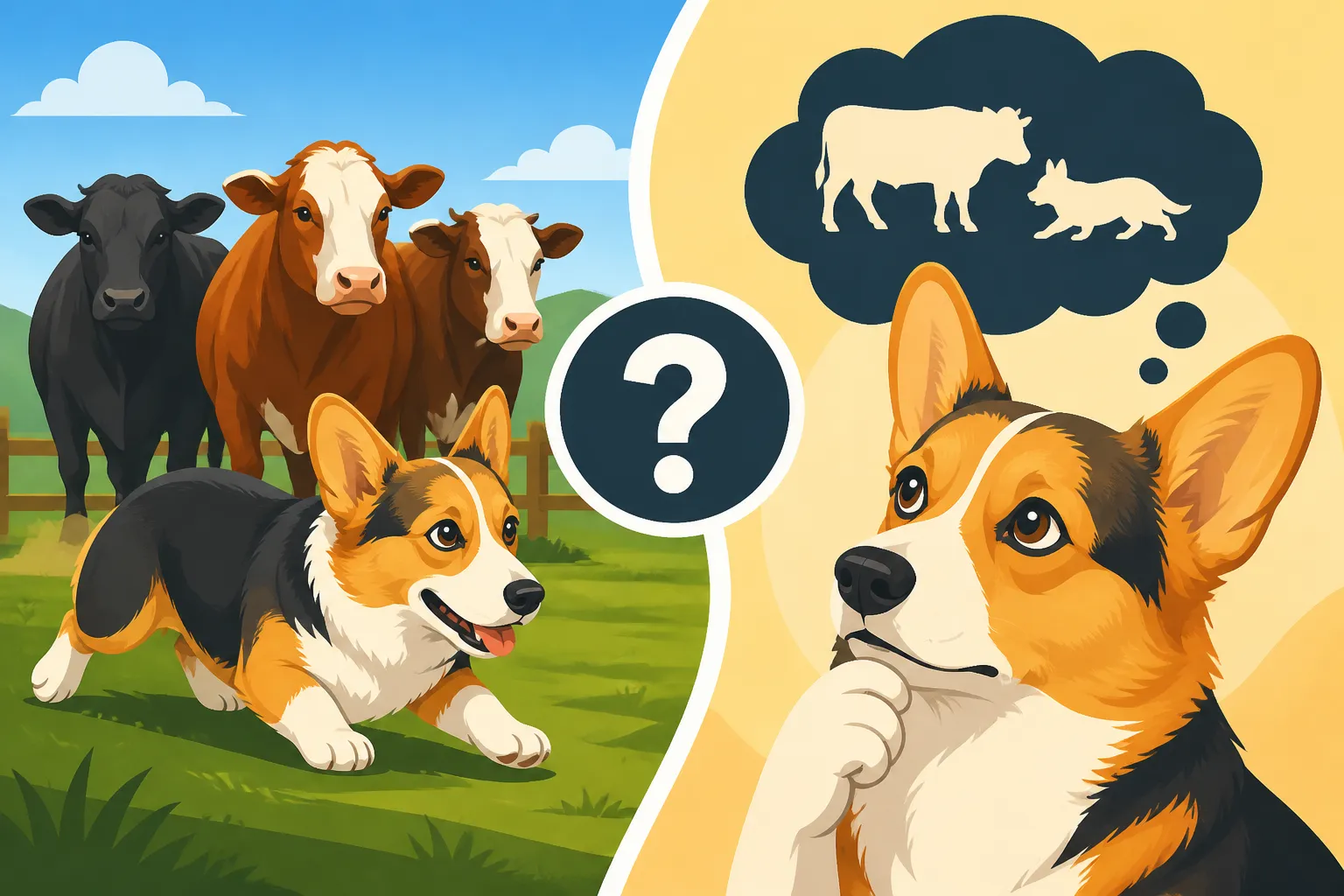
Corgis were developed as working farm dogs in Wales, where they helped move cattle between grazing areas and along routes. Their short legs gave them a practical advantage: they could dart close to a cow’s heels and get out of the way if the animal kicked. Their size did not make them powerful enough to physically control cattle. Instead, they relied on quick movement, persistence, and the ability to influence where the herd went.
A Corgi’s job was not simply to chase animals around. A useful stock dog has to notice movement, respond to pressure from the handler, and adjust when livestock resist or scatter. A dog that rushes in without control can make cattle bolt, frighten them, or put itself in danger. The traditional work depended on more than enthusiasm: the dog needed sound judgment and a handler who understood livestock.
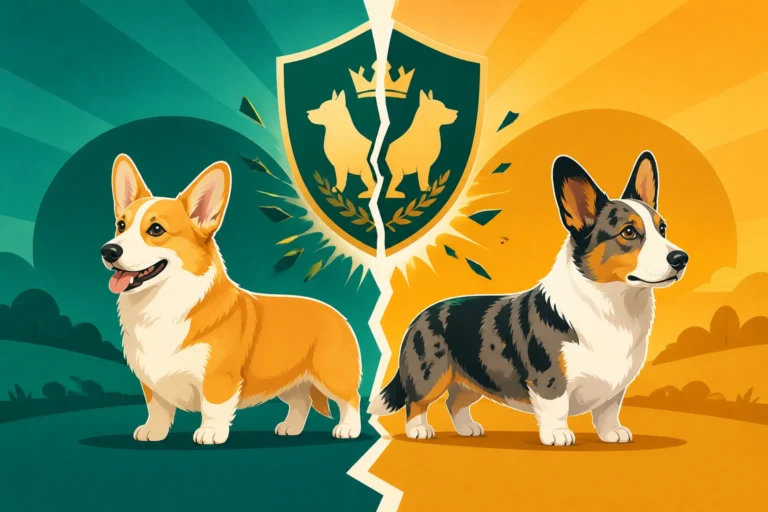
The breeds share this history, though Pembroke Welsh Corgis and Cardigan Welsh Corgis are distinct breeds with their own development. The broader story of what farm work demanded is explored in What a Welsh Corgi Did on a Farm All Day and Driving Cattle With a Corgi Six Inches Tall. Their low stature was not a novelty or a fashion feature; it was part of how they could work around livestock.
Instinct is not the same as a trained cattle dog
Many Corgis still show behaviors that make sense for a herding dog: watching movement closely, circling, barking, and trying to control where people or animals go. That can look impressive in a backyard, but it does not mean the dog knows how to safely move cattle. Herding drive is a starting point, not a finished skill.
For example, a Corgi might instinctively rush after a running calf but have no understanding of how much pressure to apply or when to back off. In a living room, that impulse might show up as chasing a child or nipping at moving feet. Around cattle, the consequences can be much more serious. A dog can be injured, and stressed livestock can injure themselves or people nearby.
A safe introduction requires appropriate livestock, a knowledgeable handler, and a setting where the dog can be controlled. An experienced herding instructor can help assess whether a Corgi has workable interest and can learn to respond to cues. Owners interested in this side of the breed can also read Starting Herding With a Corgi and What an Instinct Test Involves for a Corgi.
Do Corgis still work cattle today?
Some do, but most are companion dogs
Yes, some Corgis still work cattle. They may live on farms, help move livestock in a small operation, or take part in structured herding activities. But most Corgis today are household companions rather than full-time stock dogs. A dog may have strong herding instincts without ever seeing a cow, and a farm setting alone does not make a dog experienced or safe around livestock.
Modern cattle work also varies widely. Moving a few animals through a familiar gate is different from gathering a large herd across rough pasture. The dog’s job, the temperament and training of the cattle, the terrain, and the handler’s experience all matter. A Corgi suited to controlled work with calm animals may not be suitable for every kind of livestock task.
The difference between traditional work and modern life is worth keeping in mind when deciding what to expect from a pet Corgi. The breed’s history explains some of its tendencies, but it does not guarantee that any individual dog will enjoy or excel at stock work. Whether Corgis Still Work Cattle is one piece of a larger picture of the breed’s working background and present-day role.
Herding trials give some dogs a structured outlet
For owners without cattle, herding trials and instinct tests can offer a supervised way to explore a Corgi’s interest in livestock. These activities are organized settings, not casual play. Dogs work under guidance, and the handler learns how to direct movement rather than letting the dog chase freely. Trial formats and access to suitable training differ by location, so owners generally need to find a local club or instructor.
A trial can also reveal that a dog’s natural enthusiasm needs shaping. One Corgi may be keen to approach stock but struggle to listen; another may be cautious at first and become more confident with patient instruction. Neither response should be treated as a failure. The purpose is to understand the individual dog and build safe, controlled behavior.
Herding is not the only way to give a Corgi an engaging job. Scent work, obedience, and structured games can exercise the dog’s attention without involving livestock. For other options that fit the breed’s working nature, see Trick and Scent Work for a Corgi and Whether a Pet Corgi Should Herd Sheep.
| Setting | What the Corgi may do | What matters most |
|---|---|---|
| Working farm | Help move or gather livestock under direction | Experienced handling, suitable cattle, and reliable control |
| Herding lesson | Learn to respond to stock in a supervised setting | A qualified instructor and gradual introduction |
| Herding trial | Demonstrate trained skills in an organized event | Preparation, clear cues, and attention to safety |
| Pet home without livestock | Show herding behaviors toward people or other animals | Redirection, training, and appropriate enrichment |
What safe cattle work requires
Training, handling, and livestock awareness
A dog should not be turned loose with cattle to “see what happens.” Before any stock work, the handler needs to understand the setting, the animals, and the dog’s behavior. Cattle can react suddenly, especially if crowded, startled, protective of calves, or unfamiliar with dogs. A Corgi’s agility can help it move away from danger, but it does not make the dog immune to kicks or trampling.
Good training emphasizes control. The dog needs to respond to the handler, disengage when asked, and work at a pace that does not panic the animals. A Corgi that ignores recall or becomes intensely fixated may need more foundation work before being near livestock. Owners working with an instructor should be prepared for the possibility that their dog is not a good fit for cattle work, at least at that stage.
The handler also has to respect the livestock. A dog should not be allowed to harass cattle, chase them for entertainment, or repeatedly nip at them without direction. The goal is controlled movement, not letting the dog indulge every impulse. If the dog or stock becomes distressed, the session should stop and the setup should be reassessed.
Physical suitability and day-to-day care
Working around cattle is physically demanding, even when the dog is small. Uneven ground, sudden turns, slippery surfaces, and long periods of activity can challenge a Corgi’s joints and back. Fitness should be built gradually, and an owner should discuss the dog’s health and activity plan with a veterinarian, especially if the Corgi has a history of pain, mobility issues, or excess weight.
The dog’s condition matters as much as its enthusiasm. An overweight Corgi may tire more quickly and face extra strain during sharp turns or bursts of movement. Keeping the dog at a healthy body condition and monitoring for stiffness, limping, or reluctance to move are sensible parts of responsible activity. Why Corgi Weight Is a Spinal Problem explains why weight management is especially relevant to this breed.
After a session, check the dog for soreness, cuts, burrs, and signs of fatigue. Fresh water, rest, and a gradual return to normal activity help avoid turning an exciting outing into an overexertion problem. If a Corgi is not physically suited to stock work, a different activity can still provide a meaningful outlet for its energy and attention.
Is cattle herding right for your Corgi?
Signs your dog may enjoy the work
A Corgi that notices livestock, tracks their movement, and remains curious rather than frightened may be a candidate for an introductory lesson. Interest is only one part of the picture, though. The dog also needs to be able to take direction, recover from excitement, and remain responsive around distractions. A trainer can help distinguish useful working interest from uncontrolled chasing.
A pet owner might notice early clues on ordinary walks: the Corgi watches joggers, circles other dogs, or tries to steer family members toward a doorway. Those behaviors do not prove the dog will work cattle, but they can point to a strong desire to control movement. If this is happening at home, teach alternative behaviors and practice recall rather than assuming the dog will naturally know what to do on a farm. The Cattle-Driving Nip a Corgi Still Has offers more context on how that instinct can appear in everyday life.
Some owners need practical equipment for safe training and travel, such as a well-fitted leash, a secure crate, or cleanup supplies. Chewy is one place owners may look for routine dog-care items, but equipment should suit the dog and the activity, and it cannot replace a suitable instructor or a safe stock setup. When shopping, focus on fit, durability, and whether the item is appropriate for the specific use.
When another activity is a better choice
Cattle work may not suit a Corgi that is fearful around large animals, difficult to redirect, physically uncomfortable, or overly excited by movement. It may also be impractical when the owner has no access to a qualified instructor or suitable livestock. There is no need to force the activity simply because Corgis have a working history.
A dog that cannot safely herd can still benefit from having a job. Short training sessions, scent games, food puzzles, and calm structured walks let a Corgi use its brain and body without adding livestock risk. Chewy may offer puzzle feeders or other enrichment products, but owners can also make simple games at home using the dog’s regular food and safe household items. The useful part is thoughtful engagement, not the purchase itself.
If a Corgi is chasing, circling, or nipping at people or pets, address that behavior separately instead of treating it as practice for cattle work. Consistent cues, reward-based training, and management can help redirect the dog. Chewy can be a source for everyday training supplies such as treat pouches, but a qualified trainer is the more appropriate resource when the behavior is escalating or difficult to manage.
Disclaimer
This article is for general informational purposes only and does not constitute professional advice. Laws, prices and regulations vary by location and change over time. Consult a qualified professional for guidance on your specific situation.