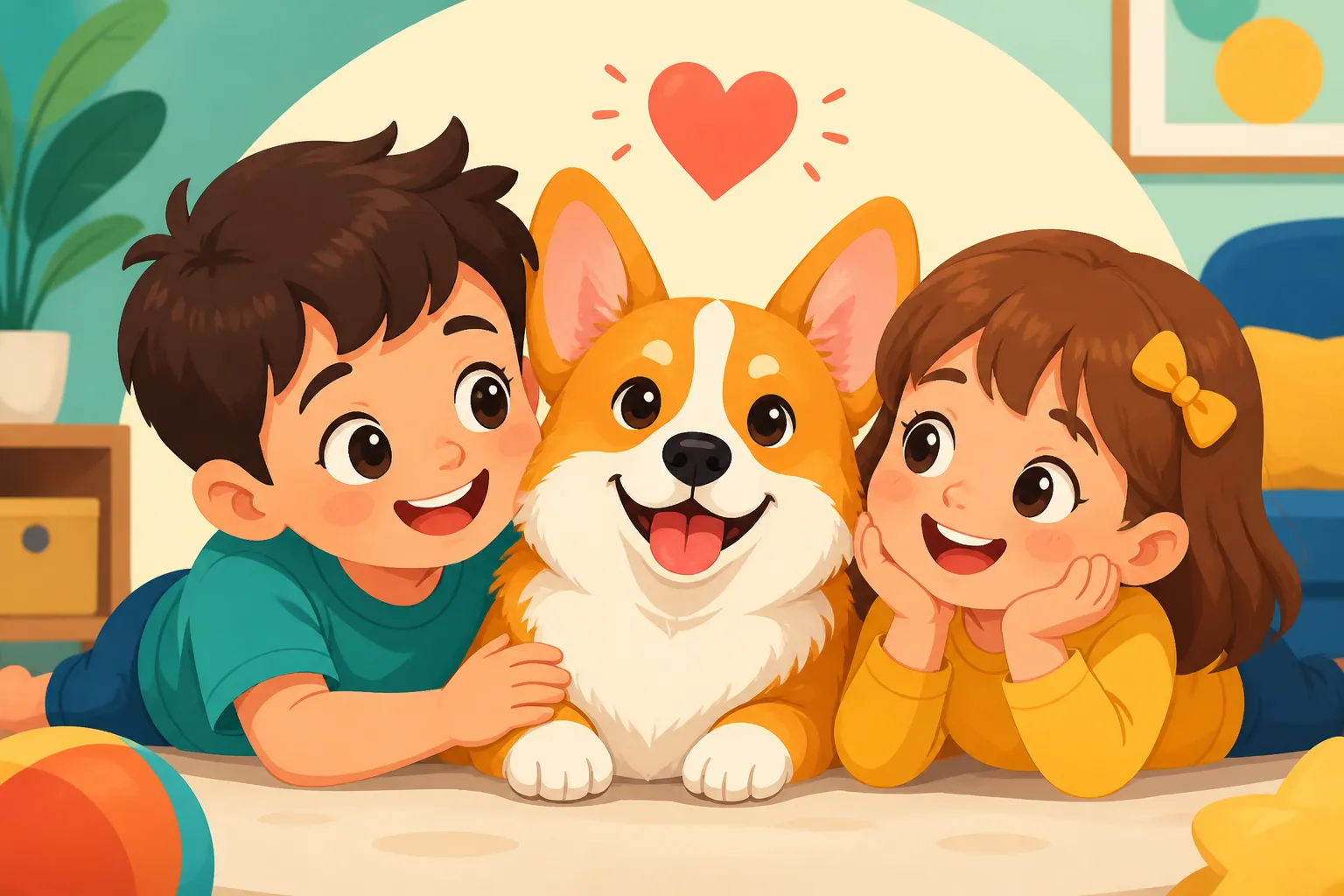
Corgis Raised Alongside Children
Bringing a Corgi into a home with children, or bringing a child into a home that already has a Corgi, can feel like navigating a charming, fuzzy minefield. On one hand, you have these incredibly affectionate, often clownish dogs. On the other, they are true herding breeds with powerful instincts, sharp minds, and a low-to-the-ground perspective that puts them right at kid-level. This guide is here to walk you through the realistic expectations, potential hurdles, and practical strategies for fostering a safe, loving, and harmonious relationship between your Corgi and the little humans in your life.
Understanding the Corgi Temperament Around Kids
Corgis are not inherently "bad with kids," but they are also not the perpetually patient, fluffy teddy bears some might imagine. They are intelligent, opinionated, and full of personality, traits that make them wonderful companions but also require careful management, especially when small, unpredictable children are in the mix. Understanding their core nature is the first step to ensuring everyone's safety and happiness.
The Herding Instinct and Little Legs
Let's be honest, those short legs and long bodies were designed for a very specific job: moving cattle by nipping at their heels and staying low to avoid kicks. Fast-forward to your living room, and that instinct is still very much alive, even if the "cattle" are now your fast-moving toddlers. This isn't malice; it's instinct. A child running, squealing, or even just moving quickly can trigger that deep-seated desire to gather and control.
This herding drive often manifests as nipping at ankles, legs, or even clothing. While it's rarely intended to injure seriously, a Corgi's nip can certainly hurt, especially a small child's delicate skin. Imagine a little one running through the house, and your Corgi sees a moving target that needs to be brought into line. It's a natural, albeit unwelcome, behavior in a domestic setting. Understanding Where the Corgi Heel Nip Comes From can help you recognize it as a breed characteristic rather than a personal failing on your dog's part. It requires consistent, gentle redirection and training, not punishment.
Corgi Confidence and Potential Bossiness
Corgis are often described as big dogs in small bodies, and it's true! They possess a remarkable confidence and aren't shy about making their opinions known. This can be charming when they're "talking back" to you in a playful way, but it can become problematic if they start trying to "manage" the household, including the children. They can be quite discerning about who they believe is in charge, and without clear leadership from their human parents, they may try to assert dominance over younger, less confident family members.
This bossiness might look like body blocking, pushing, or even growling if a child encroaches on their space or possessions. They might decide a child shouldn't be playing with a particular toy, or that a child is too close to "their" person (you!). It's crucial to establish yourself as the consistent, calm leader from day one, so your Corgi understands their place in the family hierarchy and feels secure enough not to take on the responsibility themselves. The Corgi's independence means they will often "make their own decisions" if you don't provide clear guidance, and this is especially true when it comes to children. Why an Independent Corgi Ignores You isn't about disrespect, but about a breed wired to think for itself.
Their Vocal Nature and Startled Reactions
Corgis are known barkers. They bark at the doorbell, at passing squirrels, at the mail carrier, at other dogs, and sometimes, it seems, just because the wind blew the wrong way. This vocal nature, while often endearing to owners, can be overwhelming for young children, and a child's sudden scream or quick movement can just as easily startle a Corgi. A Corgi's alarm barking isn't just noise; it's a deeply ingrained herding trait, a way to alert the "flock" to perceived threats. Why Corgis Bark More Than Most goes into more detail about this, but for now, know that their instinct is to vocalize.
A child's sudden scream, a dropped toy, or a rapid, unexpected movement can trigger a Corgi's protective instincts or, conversely, cause them to feel startled and react defensively. A frightened Corgi might snap, even if they wouldn't normally. The combination of a child's loud, unpredictable behaviors and a Corgi's natural inclination to bark and sometimes react to sudden stimuli means careful management and exposure are essential. It's not about fearing your dog, but understanding their responses and proactively creating a calm environment.
Setting Up for Success: Preparing Your Home and Corgi
Bringing a Corgi and children together isn't about hoping for the best; it's about intentional preparation. Just as you would child-proof your home, you need to Corgi-proof it for child interactions and vice-versa. This proactive approach minimizes stress for everyone and lays the groundwork for a positive relationship.
Creating Safe Spaces for Both Dog and Child
One of the most critical steps you can take is to ensure both your Corgi and your children have designated safe spaces where they can retreat and be undisturbed. For your Corgi, this might be a crate, a dog bed in a quiet room, or a designated corner that is off-limits to children. This isn't just about giving them a break from the kids; it's about giving them a place where they feel secure and can truly relax without constantly being on guard.
For children, this could be a playpen, a gated area, or a room where the Corgi isn't allowed unsupervised. This separation is vital, especially during times when you can't offer 100% supervision. Tools like baby gates are your best friend here, creating physical barriers that prevent accidental encounters. You can find sturdy, reliable gates at places like Chewy, which can make a huge difference in managing the household flow. It teaches children to respect the dog's space and gives the dog peace of mind, knowing they won't be bothered when they're in their "den."
Establishing Rules and Boundaries
Consistency is key when integrating Corgis and children. Both species need clear rules and boundaries that are enforced by all adults in the household. For your Corgi, this means teaching commands like "leave it," "stay," "go to your bed," and "settle." These commands are invaluable for managing their interactions with children, allowing you to redirect their attention or create distance when needed. It's not about being harsh; it's about clear communication.
For children, the rules revolve around respectful interaction with the dog. No pulling tails, no riding the dog, no disturbing them while they're eating or sleeping, and no taking their toys. Children, especially young ones, need constant supervision and gentle reminders. Explaining why these rules exist – "Sparky needs his quiet time," or "we let Lucy eat her dinner in peace" – helps children understand empathy and respect for animals. Everyone in the household, from grandparents to babysitters, must be on the same page and enforce these rules consistently.
Introducing a Corgi to a New Baby or Toddler
If you're bringing a new baby home to an existing Corgi, or adopting a Corgi into a home with a baby, the introduction process is paramount. Before the baby arrives, slowly introduce baby-related scents and sounds. Let your Corgi sniff baby blankets, lotions, and even listen to recordings of baby cries. This helps desensitize them to the new stimuli.
When the baby first comes home, keep the initial interactions controlled and brief. Allow the Corgi to sniff the baby while you hold the baby securely, praising calm behavior. Never leave a Corgi unsupervised with a baby or young child, even for a second. As the child grows into a toddler, continue to supervise all interactions. Teach your child gentle hands, and always be present to redirect any undesirable Corgi behaviors (like nipping) or inappropriate child behaviors (like pulling fur). The goal is positive associations, building a foundation of trust and respect for both your Corgi and your child.
Managing Interactions: Supervision and Training
Even with the best preparation, ongoing management and training are essential. Think of it as an evolving process as your children grow and your Corgi ages. Active supervision is not just about preventing problems; it's about teaching appropriate behaviors and strengthening the bond between your dog and your kids.
Teaching Children How to Interact Respectfully
Children, especially young ones, don't instinctively know how to interact with dogs. It's our job as parents to teach them. Start with basic lessons: "Be gentle," "Use soft hands," "Pat, don't grab." Demonstrate how to properly pet a dog (on the shoulders or chest, avoiding the head or tail). Teach them to recognize when a dog wants to be left alone – turning away, yawning, licking lips, or going to their safe space.
Crucially, teach children to never approach a dog that is eating, sleeping, or playing with its own toys. Emphasize that dogs need their privacy, just like people. Role-play these scenarios if necessary. If your child is running and the Corgi starts to herd or nip, teach them to "be a tree" – stand still and quiet – rather than running further, which can escalate the herding instinct. Consistent reinforcement of these respectful interactions is the bedrock of a positive relationship.
Training Your Corgi for Calmness and Compliance
A well-trained Corgi is a safer Corgi, especially around children. Focus on commands that promote calm behavior and impulse control. "Sit," "stay," and "down" are fundamental. Practicing these commands in various environments, including around children, helps generalize the behavior. Reward calm behavior when children are present. If your Corgi lies quietly while your child plays, offer a treat and praise.
It's also beneficial to teach your Corgi to "go to mat" or "go to bed" as a reliable way to get them to a designated safe spot when things get too chaotic. This helps prevent undesirable interactions before they start. Consider enrolling in obedience classes that focus on positive reinforcement. A professional trainer can offer invaluable guidance tailored to your specific family dynamics and Corgi's personality. Remember, Whether a Corgi Suits Group Classes depends on the individual dog and the class environment, but individual training is always an option.
Recognizing and De-escalating Stress Signals
Learning to read your Corgi's body language is critical. Dogs communicate their discomfort long before they resort to growling or snapping. Look for subtle signs of stress: lip licking, yawning (when not tired), turning their head away, showing the whites of their eyes (whale eye), tense body posture, or tail tucked low. These are all signals that your Corgi is feeling uncomfortable or overwhelmed.
When you observe these signs, intervene immediately. It's not about punishing the Corgi for feeling stressed, but about removing them from the stressful situation. Guide them to their safe space, use a calming command, or simply redirect the child's activity. Understanding these signals allows you to proactively de-escalate potential conflicts, keeping everyone safe and helping your Corgi feel understood and protected. Ignoring stress signals can lead to increased anxiety in your Corgi and, eventually, more overt warnings.
Common Challenges and Realistic Solutions
Even with the best intentions and training, living with Corgis and children will present challenges. These aren't failures; they're opportunities for learning and refining your approach. Being prepared for common issues allows you to address them effectively and maintain harmony.
Dealing with Nipping and Herding Behaviors
The classic Corgi nip, often aimed at ankles or calves, is arguably the most common challenge in homes with children. As discussed, it stems from their strong herding instinct. The key is consistent redirection and preventing the behavior from becoming ingrained. When your Corgi nips, immediately redirect them to an appropriate chew toy. This teaches them what they can bite. If the nipping is persistent, a brief "time-out" in their crate can be effective, but only if delivered calmly and immediately after the nip, so they associate the consequence with the action.
Management strategies are also crucial. Use baby gates to separate your Corgi from children during times of high activity or when you can't supervise actively. Supervise all interactions closely, anticipating situations where the herding might kick in, such as when children are running. Teaching children not to run from the Corgi can also help, as chasing an immobile object isn't as fun for the dog. Consistency across all family members is vital for stopping A Corgi Nipping at a Running Child. For additional support, products like dental chews or puzzle toys from Chewy can redirect their need to chew and work, keeping their minds and mouths busy in a positive way.
Addressing Resource Guarding Around Toys or Food
Corgis, like many dogs, can develop resource guarding behaviors, where they become protective of their food, toys, sleeping spots, or even their people. When children are involved, this can be particularly concerning. A Corgi growling or snapping over a toy is a serious issue that needs immediate, careful attention.
The best approach is prevention. Teach children from a very young age never to approach the Corgi while it's eating, or to take its toys away. Provide the Corgi with its meals and high-value treats in a quiet, undisturbed location, ideally in its crate or a separate room. For toys, teach a "trade" command, offering a higher-value treat in exchange for a toy, so the dog learns that giving up an item results in something better. If you notice signs of resource guarding, such as growling over a toy or food, seek guidance from a professional dog trainer or veterinary behaviorist. This isn't a behavior to be ignored or handled with punishment, as it can escalate the problem.
Preventing Accidental Injuries to Corgi or Child
Corgis are sturdy little dogs, but their long backs make them prone to spinal issues like Intervertebral Disc Disease (IVDD). A child accidentally falling on a Corgi or picking them up incorrectly could cause a serious back injury. Similarly, a Corgi's low stature puts their eyes, ears, and nose at perfect height for accidental pokes or kicks from a child's flailing limbs.
To prevent injuries, strictly teach children how to interact gently and safely. Never allow children to pick up the Corgi. If the Corgi needs to be moved, an adult should always do it, supporting their long back properly. Teach children to avoid sudden movements near the Corgi, especially when the dog is resting. Provide soft, comfortable bedding that supports the Corgi's spine, such as orthopedic beds, to minimize daily strain. Understanding Why a Corgi's Back Is Built the Way It Is highlights the importance of protecting it. Always supervise play, and be prepared to step in if either child or dog is at risk of accidental harm.
Enrichment and Exercise for a Harmonious Household
A happy, well-exercised, and mentally stimulated Corgi is far more likely to be a calm and well-behaved companion for children. Addressing their physical and mental needs is not just good dog ownership; it's a vital part of integrating them successfully into a busy family home.
Structured Play and Mental Stimulation
Corgis are intelligent dogs who thrive on having a "job" to do. Without adequate mental stimulation, they can become bored, destructive, and more prone to undesirable behaviors like excessive barking or attempting to "herd" children. Structured playtime, puzzle toys, and training sessions are excellent ways to engage their minds.
Instead of just letting them "play" with the kids, which can sometimes escalate into chaos, incorporate games that have rules. Fetch, hide-and-seek with toys, or working on new tricks can be fantastic. Puzzle toys, especially those that dispense kibble, can keep a Corgi happily occupied and mentally challenged for periods. Look for a variety of puzzle toys at retailers like Chewy. Even short, daily training sessions where you teach new commands or reinforce old ones can provide valuable mental exercise. Remember, Short Bursts of Training a Corgi Will Take often work best for this intelligent but sometimes easily distracted breed.
Age-Appropriate Exercise Routines
While Corgis are robust, their unique build means their exercise needs must be managed carefully, especially in a household with active children. They need regular exercise to maintain a healthy weight and release energy, but it needs to be appropriate for their long backs and short legs. Excessive jumping, hard landings, or overly strenuous, repetitive activities can put strain on their spine.
Daily walks are essential. Aim for a couple of moderate walks a day, allowing them to sniff and explore. Supervised playtime in a securely fenced yard is also great, but monitor for too much wild, uncontrolled running or sharp turns. Avoid high-impact activities like repeated jumping on and off furniture. Instead, encourage games like rolling a ball or structured fetch that keeps their feet on the ground. If you have older children who want to exercise the dog, make sure they understand the limitations and appropriate types of play. Overweight Corgis are at even higher risk for back issues, so careful diet and appropriate exercise are doubly important. What Extra Weight Does to a Corgi Spine can be a serious concern.
Involving Children in Corgi Care Safely
Involving children in the care of your Corgi, under strict adult supervision, can foster a deeper bond and sense of responsibility. Even young children can help with simple tasks, while older children can take on more significant roles. This isn't just about sharing the load; it's about teaching empathy and animal husbandry.
Younger children can help with feeding by putting the food bowl down (after an adult has prepared the meal) or giving pre-measured treats during training sessions. Older children can assist with brushing the Corgi (teaching them The Rake and Comb a Corgi Coat Actually Needs), refilling water bowls, or picking up after the dog in the yard. Always ensure that these interactions are calm, supervised, and positive. Never allow children to be solely responsible for the Corgi's care, but rather view it as a family effort. This shared responsibility reinforces the idea that the Corgi is a valued family member and strengthens the human-animal bond for everyone.
Disclaimer
This article is for general informational purposes only and does not constitute professional advice. Laws, prices and regulations vary by location and change over time. Consult a qualified professional for guidance on your specific situation.