A Corgi That Herds the Cat Into a Corner
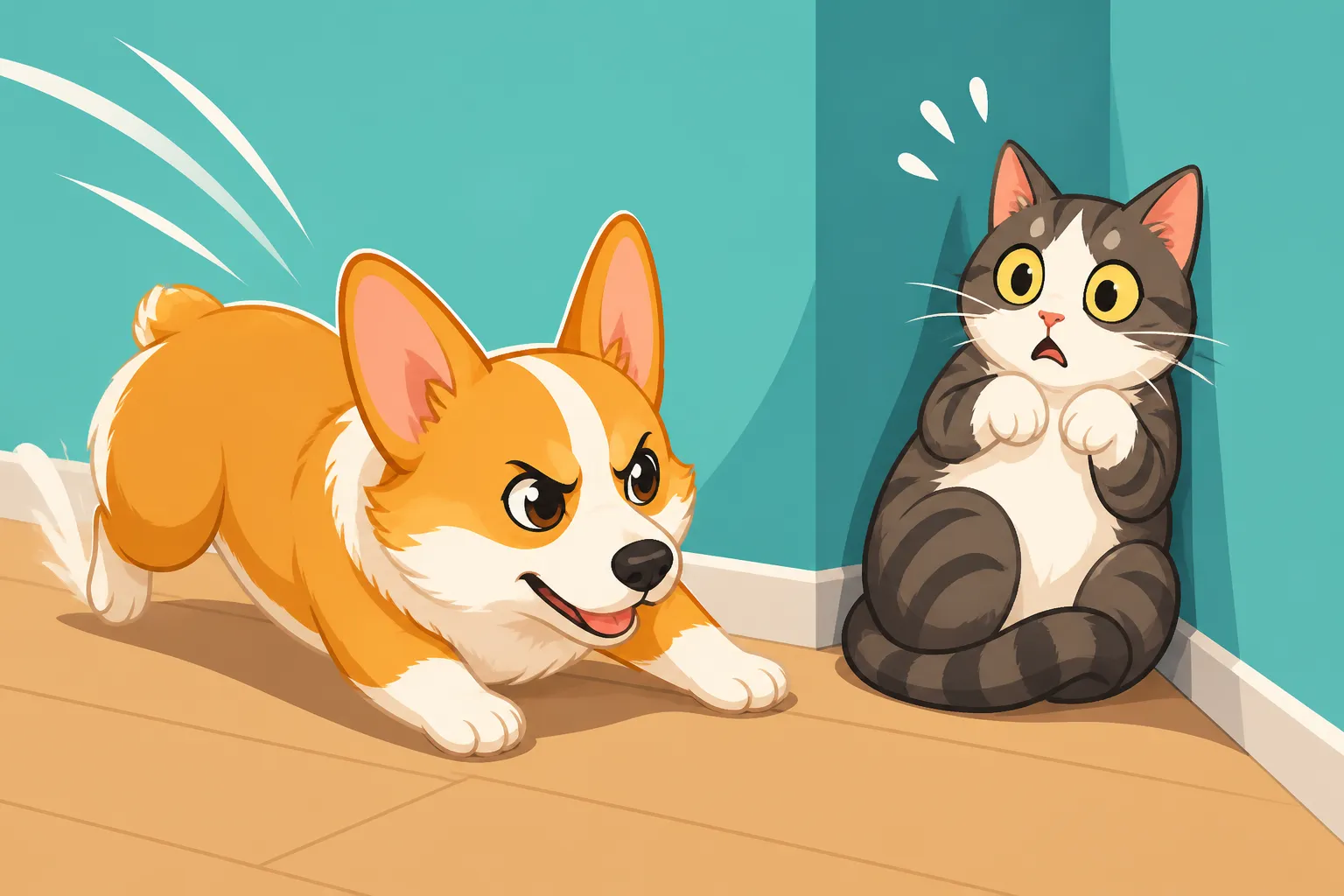
It’s a scene many Corgi owners know all too well: your lovable, low-rider, seemingly innocent Corgi suddenly decides your feline family member is just another cow to be rounded up, pushing them into a tight spot, maybe even with a little nip at the heels. This isn't your Corgi being mean; it’s their deep-seated herding instinct kicking in, and it can be incredibly frustrating for both you and your poor cat. This guide is here to help you understand why this happens and, more importantly, what you can realistically do to manage and redirect this behavior, creating a more peaceful multi-species household.
Understanding the Corgi's Herding Instinct
Corgis, both Pembrokes and Cardigans, were originally bred for a very specific job: herding cattle. They’re short, agile, and courageous, perfectly designed to nip at the heels of stubborn livestock, ducking out of the way of kicks. This isn't just a fun fact about their history; it’s a fundamental part of their genetic makeup, a hardwired instinct that still drives many of their behaviors today.
The Deep-Seated Drive to Gather
Imagine being born with an innate compulsion to organize things, to bring scattered items together. That's essentially what a Corgi experiences with their herding drive. They see movement, especially quick, darting movements, and their brains light up with the primal urge to collect, control, and direct. This isn't something they can easily turn off, nor is it a sign of disobedience. It's simply who they are. They are bred to be independent thinkers, making decisions in the field without constant human direction, and that independence can sometimes translate into them deciding for themselves that the cat needs to be "managed." This instinct is so strong, it's often why Corgis are so good at things like agility or rally obedience, where they can use their sharp minds and bodies.
This deep-seated drive means that your Corgi isn't doing it to be malicious or to terrorize your cat. From their perspective, they are simply doing their job. They might see your cat darting across the room, disappearing under a chair, and their instinct tells them, "Ah, an animal is out of place! I must gather it!" It's a powerful impulse that can be difficult to override, especially for a dog that has not been given appropriate outlets for this energy. Understanding this helps us approach the problem with empathy for our Corgis, even as we work to protect our cats. You might find that your Corgi also tends to A Corgi That Grabs Trouser Legs – it's all part of that same herding package!
Why Cats Become "Livestock"
So, why cats specifically? Cats, by their very nature, exhibit many behaviors that can trigger a Corgi's herding instinct. They move quickly, often unpredictably, and sometimes run when approached, which to a Corgi, looks exactly like a cow trying to bolt from the herd. A cat's independent nature, its tendency to lounge in high places, or suddenly spring into action can all be perceived as "disorder" in the Corgi's world, demanding their intervention.
Furthermore, Corgis are low to the ground, putting them at eye level with smaller animals like cats. This perspective can make a cat seem even more like something to be controlled. The Corgi's natural herding technique involves circling, blocking, and nipping at the heels, and unfortunately, these actions can be terrifying and physically harmful to a cat. If your cat reacts by hissing, swatting, or running away, it can often escalate the Corgi's drive, making them think their "livestock" is even more unruly and requires more assertive herding. This is a classic case of miscommunication between species, where one is trying to play a role and the other is simply trying to survive.
The Difference Between Play and Predatory Behavior
It’s crucial to distinguish between a Corgi attempting to herd your cat and exhibiting true predatory behavior. While both can involve chasing and grabbing, the underlying intent and associated body language are different. Herding, even when intense, is typically about control and direction. The Corgi might circle, bark, push with its nose, or give a light nip to the cat's rear or legs to get it to move. Their body language, while focused, usually indicates a desire to gather or guide, rather than to kill or consume. They aren't trying to hunt the cat as prey.
Predatory behavior, on the other hand, is much more serious. This involves stalking, a silent, intense focus, followed by a sudden pounce with the intent to bite and shake, often targeting the neck. The Corgi's body would be rigid, low to the ground, and their eyes fixed on the cat as prey. Fortunately, true predatory aggression towards household cats is less common in Corgis than herding behavior. However, any behavior that causes genuine fear or injury to your cat needs immediate intervention. It’s important to observe your Corgi’s full sequence of actions: do they chase and then disengage, or do they hold on, shake, or attempt to re-engage aggressively? The vast majority of Corgi-cat interactions that cause concern are rooted in misguided herding instincts, not predatory intent, but vigilance is always necessary. If you're struggling to understand your Corgi's motivations, sometimes their general independence can make them seem like they're Why an Independent Corgi Ignores You, but it's often just their strong herding drive at play.
Recognizing the Signs and What Triggers Them
To effectively manage your Corgi's herding behavior, you first need to become a detective in your own home. Understanding when and why your Corgi targets your cat will give you the power to intervene before things escalate. It's often not a random act but a response to specific triggers.
Common Corgi Herding Cues
Corgis often display a predictable set of behaviors when their herding instinct is activated. These cues can range from subtle to overt. You might notice your Corgi stiffening its body, lowering its head, and intensely staring at the cat. Sometimes, they'll start to circle the cat, slowly at first, then perhaps picking up speed, attempting to cut off the cat's escape routes. They might let out short, sharp barks, almost like a command, or a low growl to encourage movement. The classic "heel nip" might also come into play, where they quickly dart in to give a gentle (or not-so-gentle) bite to the cat's hindquarters or legs, aiming to direct them.
These cues are the Corgi’s way of communicating their "intent to herd." They're not necessarily aggressive, but they are purposeful. Pay close attention to these warning signs. If you see your Corgi adopting this body language, it's your cue to step in and redirect their attention immediately. Early intervention is key to preventing the situation from escalating into a stressful or potentially harmful encounter for your cat. Your Corgi isn't being "bad" here; they're simply responding to their hardwired instincts, and it's up to us to teach them appropriate boundaries.
Environmental and Situational Triggers
Beyond the cat's movements, several environmental and situational factors can trigger or exacerbate a Corgi's herding behavior. High-energy moments in the household are prime examples. Think about when children are running and playing, or when there's a lot of commotion. Your Corgi might feel the need to "manage" all this chaos, and the cat, being another moving target, becomes part of the equation. Sudden noises, visitors arriving, or even just your daily routine (like moving from one room to another) can create a dynamic that triggers the herding drive.
Another common trigger is boredom or a lack of appropriate physical and mental stimulation. A Corgi with pent-up energy, who hasn't had enough exercise or engaging mental tasks, is more likely to turn their herding instincts onto the readily available "livestock" – your cat. Consider the layout of your home too. Open spaces might encourage chasing, while narrow hallways or dead ends can create those "cornering" situations that are so stressful for cats. Identifying these triggers will help you preemptively manage situations. If you know that your Corgi gets wound up when the kids play, that's your cue to secure the Corgi in another room or on a leash with a chew toy before the play session begins.
The Cat's Reaction and Escalation
The cat's reaction plays a significant role in how the herding dynamic escalates. A cat that freezes or, conversely, bolts in a panic, will often intensify the Corgi's herding drive. For a Corgi, a fleeing cat signals that the "livestock" is attempting to escape, reinforcing their need to pursue and control. Hissing, spitting, or swatting, while understandable defensive behaviors for a cat, can sometimes be interpreted by the Corgi as resistance, making them more determined to assert their perceived authority.
This creates a vicious cycle: the Corgi herds, the cat reacts with fear or aggression, which in turn fuels the Corgi's instinct further. It's a lose-lose situation that builds stress for both animals. Observe your cat's body language closely. Are they flattening their ears, tucking their tail, or trying to make themselves small? These are signs of fear and stress. Your goal is to break this cycle by managing the Corgi's behavior before the cat even has a chance to react negatively. Providing your cat with ample escape routes and safe, elevated spaces is crucial to helping them feel secure and less like a target.
Practical Strategies to Redirect Herding Behavior
Once you understand why your Corgi herds the cat, you can start implementing practical strategies to manage and redirect this behavior. This isn't about punishing your Corgi; it's about providing them with appropriate outlets for their instincts and teaching them new, acceptable ways to interact with the cat. Consistency is truly your best friend here.
Creating Safe Zones for Your Cat
One of the most immediate and effective strategies is to ensure your cat has plenty of safe, Corgi-free zones where they can escape and relax without fear of being herded. Think vertically! Cats naturally love high places. Investing in tall cat trees, shelves, or even just clearing space on top of bookshelves can provide invaluable sanctuary. Make sure these areas are easily accessible to your cat but impossible for your Corgi to reach. Placing food, water, and litter boxes in these elevated or Corgi-inaccessible areas can further enhance your cat's sense of security.
Physical barriers are also incredibly useful. Baby gates, especially taller ones, can be installed in doorways to create cat-only rooms or areas where your Corgi cannot enter. A gate with a small cat door integrated into it allows your cat free passage while keeping your Corgi contained. This gives your cat agency and control over their environment, which significantly reduces stress. You can find a wide variety of effective gates on platforms like Amazon. Remember, the goal isn't to separate them permanently, but to give both animals a break and to teach your Corgi that not all spaces are theirs to patrol.
Providing Appropriate Outlets for Your Corgi's Instincts
Since herding is an instinct, you can't simply extinguish it; you must redirect it. Your Corgi needs appropriate outlets for their intelligence, energy, and desire to "work." Engaging them in structured play and training sessions is vital. Think about activities that mimic herding but are directed towards objects or approved activities, not your cat.
Here are some ideas:
- Fetch or Ball Herding: Many Corgis love chasing and "herding" a ball. Use multiple balls in a fenced yard and encourage them to bring them back. This allows them to use their circling and retrieving instincts.
- Flirt Poles: A flirt pole is essentially a giant cat toy for dogs. It involves a pole with a lure (like a strip of fabric or a toy) attached to a rope. This allows you to simulate prey movement, letting your Corgi chase, pounce, and "catch" the lure in a controlled, safe way.
- Scent Work and Puzzle Toys: Engage their brains! Hiding treats around the house for them to "find" or using puzzle feeders can provide significant mental stimulation and reduce boredom. These activities engage their problem-solving skills, which are often tied to their working drive.
- Training Games: Short, engaging training sessions focused on impulse control, recalls, and stays can be incredibly satisfying for a Corgi. Teaching them to "settle" on a mat or go to their "place" can give them a job to do that isn't harassing the cat. Resources like BAXTER & Bella offer excellent online training programs that focus on positive reinforcement and can help channel your Corgi's mental energy effectively. They really thrive when they have a job to do. Consider activities like The Job a Corgi Needs Instead of Herding You or Herding Trials and Instinct Tests for a Corgi to fully satisfy their breed drives.
Remember to keep these sessions short and sweet, typically 10-15 minutes, as Corgis can have short attention spans for formal training. Short Bursts of Training a Corgi Will Take often yield the best results.
Consistent Training and Management Techniques
Beyond providing outlets, consistent training and management in your daily interactions are paramount. This involves teaching your Corgi what to do instead of herding the cat, and diligently managing their environment.
Management:
- Supervised Interactions: Never leave your Corgi and cat unsupervised until you are absolutely confident the herding behavior is under control. Even then, occasional supervision is a good idea.
- Leash Management: During initial stages or when you anticipate triggers, keep your Corgi on a leash in the house. This allows you to quickly and gently redirect them without physical confrontation.
- Crate Training: A crate can be a wonderful tool for both management and providing your Corgi with a safe den. When you can't actively supervise, crating your Corgi with a chew toy or a puzzle can ensure your cat's safety and give your Corgi a quiet place to relax. This is especially helpful if your Corgi needs to be confined for longer periods, for example, during Six Weeks in a Crate After a Corgi Disc Injury.
Training:
- "Leave It" Command: This is invaluable. Teach your Corgi to ignore the cat on command. Start with low distractions and gradually introduce the cat into the training environment, rewarding heavily when they disengage.
- "Place" or "Mat" Training: Teach your Corgi to go to a designated "place" (like a dog bed or mat) and stay there until released. This provides an alternative behavior when the cat is moving around.
- Positive Reinforcement: Always reward desired behaviors! If your Corgi is calmly ignoring the cat, sitting nicely, or engaging with an appropriate toy, praise and treat them generously. You're shaping their behavior by making good choices more rewarding than herding.
- Interrupt and Redirect: If you see your Corgi starting to display herding cues, immediately interrupt the behavior with a verbal cue (like "Nope!" or a gentle "Ah-ah!") and then redirect them to an appropriate activity, like a puzzle toy or a quick training session.
| Redirection Technique | Description | Benefits for Corgi | Benefits for Cat |
|---|---|---|---|
| Structured Play | Engaging your Corgi in games like fetch, flirt poles, or 'find it' to use their energy and focus. | Physical and mental exercise, satisfies herding drive through appropriate outlets. | Less direct interaction, more peace and quiet. |
| Puzzle Toys | Food-dispensing toys that require problem-solving, distracting the Corgi. | Mental stimulation, slows down eating, reduces boredom-driven herding. | Not involved, can relax away from the Corgi. |
| Training Sessions | Short, positive reinforcement-based training sessions focusing on 'sit,' 'stay,' 'come,' and impulse control. | Builds focus, strengthens human-dog bond, teaches alternative behaviors. | Corgi is engaged elsewhere, not focused on cat. |
| Barrier/Gate Use | Physically separating the Corgi and cat with baby gates or crates. | Prevents unwanted herding, provides a calm space for both. | Ensures safety and personal space, reduces stress. |
| Designated Cat Spaces | Providing high perches, cat trees, or rooms inaccessible to the Corgi. | Creates clear boundaries, teaches Corgi to respect cat's space over time. | Safe retreat, sense of security, reduces confrontations. |
Consistency from every member of the household is crucial. Everyone needs to be on the same page about how to manage these interactions. Over time, your Corgi will learn that herding the cat doesn't get them what they want, but engaging with you in appropriate ways does.
When to Seek Professional Help and Why
While many Corgi owners can make significant progress with consistent effort, there are times when the behavior is simply too ingrained, too intense, or too stressful for you to manage alone. Knowing when to call in a professional can save a lot of heartache (and potentially vet bills for an injured cat).
Identifying When the Behavior Becomes Problematic
The line between "annoying but manageable" and "genuinely problematic" can be blurry, but some clear indicators suggest you might need professional help. If your Corgi's herding is consistently causing physical harm to your cat, even if it's just minor nips or scratches from the cat's defensive reactions, it's a problem. Constant stress on your cat, evidenced by hiding, reduced appetite, over-grooming, or inappropriate urination/defecation, is another strong signal. If your Corgi is becoming increasingly intense, ignoring your commands, or if the behavior is escalating despite your best efforts at redirection, it's time for outside assistance.
Also, consider your own stress levels. Living in a household where you constantly have to monitor interactions can be exhausting. If you find yourself constantly anxious about your pets' safety or dreading certain times of day, that's a sign that you need help establishing a more peaceful coexistence. A professional can offer fresh eyes, new strategies, and the support you need to implement them effectively. Don't feel like a failure for seeking help; it's a responsible choice for both your pets and your own well-being.
The Role of a Certified Professional Dog Trainer
A certified professional dog trainer (CPDT) or a veterinary behaviorist can be an invaluable resource. They have extensive knowledge of canine behavior, breed-specific instincts, and effective modification techniques. They can observe your Corgi and cat in their home environment, identify specific triggers you might have missed, and develop a customized training plan tailored to your unique situation. This plan might include advanced techniques for impulse control, boundary training, and teaching your Corgi more appropriate engagement skills.
A good trainer will use positive reinforcement methods, focusing on rewarding desired behaviors rather than punishing unwanted ones. They can also help you understand your Corgi's communication signals better and teach you how to respond effectively. Look for trainers who have experience with herding breeds and multi-pet households. Online training platforms, like BAXTER & Bella, can also provide structured guidance and access to professional advice remotely, offering a robust curriculum that addresses common behavioral issues and helps you build a strong foundation with your Corgi. Sometimes, the issue isn't just about herding, but about your Corgi's general temperament, which a trainer can also help with, especially if you have A Corgi in a House Full of Children and Animals.
Behavioral Modification vs. Simple Management
It's important to understand the difference between behavior management and behavior modification. Management techniques, like using gates and providing safe zones, are about preventing the behavior from happening. They are crucial for immediate safety and stress reduction. However, management alone doesn't change your Corgi's underlying instinct or teach them alternative behaviors.
Behavior modification, on the other hand, aims to change the actual behavior pattern over time. This involves systematic training to reduce the intensity of the herding drive towards the cat and to teach your Corgi new, acceptable responses. A professional trainer can guide you through these modification protocols, which often involve desensitization, counter-conditioning, and teaching incompatible behaviors. For instance, instead of herding, your Corgi learns that seeing the cat means looking at you for a treat or going to their "place." It's a longer process than simple management but offers a more lasting solution for a harmonious household. While management buys you time and safety, modification builds a new, better relationship between your Corgi and your cat.
Disclaimer
This article is for general informational purposes only and does not constitute professional advice. Laws, prices and regulations vary by location and change over time. Consult a qualified professional for guidance on your specific situation.