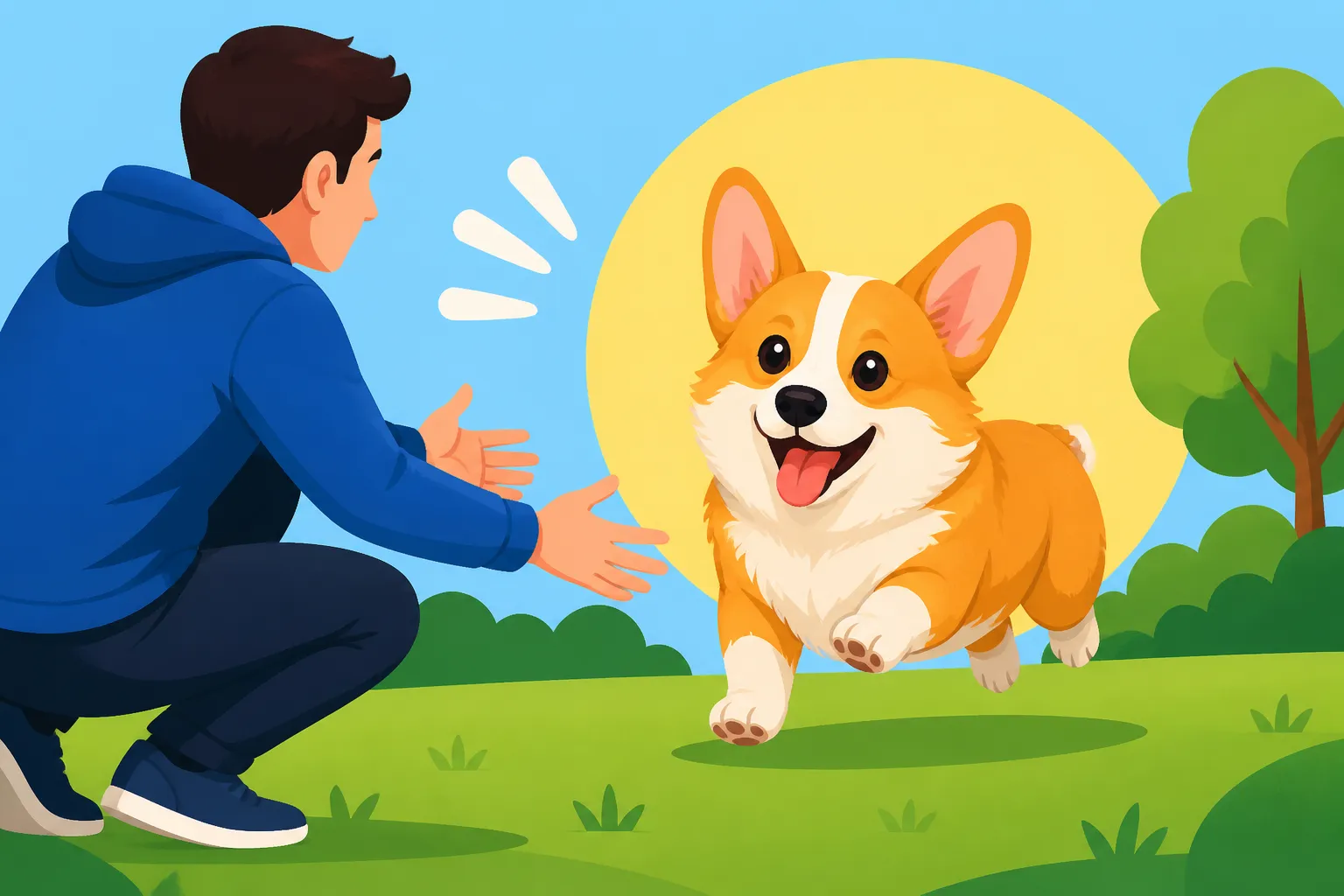
Whether a Corgi Comes When Called
One of the most common frustrations Corgi owners face is the feeling that their beloved, short-legged companion has selective hearing, especially when it comes to the "come" command. You call their name, you say "come," and they give you that characteristic Corgi side-eye before taking off after a squirrel or a particularly interesting scent. It’s not just annoying; it can be downright dangerous. This guide is dedicated to tackling that stubborn Corgi independence head-on, offering practical, empathetic strategies to help you build a "come when called" response that actually sticks, keeping your Corgi safe and giving you peace of mind.
The Corgi Mindset: Why "Come" Isn't Always Their First Choice
Let's be honest, Corgis are intelligent, resourceful, and wonderfully opinionated little dogs. They were bred for a demanding job: herding cattle, often by nipping at their heels and then ducking out of the way. This required immense independence, quick thinking, and a certain level of self-reliance. They weren't bred to slavishly follow every command but to make their own decisions on the pasture. This innate drive is still very much alive in your modern Corgi, and it's the primary reason why "come when called" can feel like such an uphill battle.
When your Corgi decides that sniffing that fascinating patch of grass or chasing that leaf blowing across the park is more rewarding than returning to you, it's not personal. It's their ancient herding brain assessing priorities. They're weighing the immediate, tangible reward of the chase or the scent against the perceived, often less exciting, reward of coming back to you. Understanding this fundamental aspect of their breed is the first step toward effective training. You can't fight their nature, but you can channel it and make coming to you the most irresistible option available.
Their low stature also means they're constantly immersed in a world of smells that we simply can't perceive. A Corgi's nose is a powerful tool, drawing them away on sensory adventures. They are literally built to follow their instincts and ignore distractions, a trait that was incredibly valuable on the farm but can be a nightmare at the dog park. This isn't just about stubbornness; it's about deep-seated instinct and powerful sensory input. You're competing with a lifetime of evolutionary programming, which means your recall training needs to be top-notch.
Building a Bulletproof Recall: Step-by-Step Training Strategies
Teaching a reliable "come" command, also known as recall, requires patience, consistency, and making yourself the most exciting thing in your Corgi's universe. It's not a one-and-done command; it's something you'll practice throughout their lives, in countless environments, and with varying distractions. Start in a low-distraction environment and gradually build up to more challenging scenarios. This incremental approach is key to success.
Making Recall a Party, Not a Punishment
The absolute golden rule of recall training is to always make coming back a positive experience. Never call your Corgi to you to do something they dislike, like giving them a bath, trimming their nails, or ending a fun play session in a harsh manner. If "come" consistently leads to something unpleasant, why would they ever choose to return? Instead, associate "come" with the best things in their world: high-value treats, exciting toys, enthusiastic praise, and a happy reunion.
When your Corgi does come, even if it took a moment, celebrate! Throw a tiny party. Offer a super special treat they only get for recall, like a piece of cooked chicken, cheese, or hot dogs. Use a happy, excited tone of voice and give them lots of physical affection if they enjoy it. Sometimes, I even play a quick game of tug or fetch when my Corgi comes back, just to reinforce that coming to me means more fun, not less. Remember, you want them to think, "Oh, goodie! Mom/Dad called me, something awesome is about to happen!" You can find fantastic high-value treats and training aids on Amazon to keep things interesting.
Practicing in Controlled Environments
Begin your recall training indoors, where distractions are minimal. Practice in short, frequent bursts. Start by simply calling your Corgi from across the room, rewarding them lavishly when they arrive. As they get better, move to a fenced yard, still keeping distractions to a minimum. Then, gradually introduce minor distractions like a toy on the ground or another person in the yard. Never progress to a more distracting environment until your Corgi is consistently successful in the current one.
This slow progression is vital. If you try to call your Corgi at the dog park before they have a solid recall in your backyard, you're setting them up for failure and weakening the command. Think of it like teaching a child to ride a bike – you don't start them on a busy highway. For structured guidance, online programs like those from BAXTER & Bella offer step-by-step recall modules that can be incredibly helpful, taking the guesswork out of progression. Remember, a Corgi's success is your success, and building that foundation slowly will pay dividends down the line. You might also find some good pointers in Whether a Corgi Learns to Use a Doorbell Button about consistent training methods.
Overcoming Obstacles: Common Recall Challenges and Solutions
Even with the best intentions, Corgi recall training can hit snags. Their independent nature and keen senses can make them particularly challenging students. Understanding these common roadblocks and having strategies to overcome them will empower you to keep pushing forward and achieve your recall goals.
The Power of Distractions
For a Corgi, the world is an endless buffet of fascinating sights, sounds, and smells. A rustling leaf, a distant jogger, or the faint scent of a rabbit can instantly become 100 times more interesting than your enthusiastic calls. This is where many owners get frustrated, feeling like their Corgi is deliberately ignoring them. But remember, it's their heritage; they were bred to focus on a task, and sometimes that task is exploring.
To combat this, you need to become more compelling than the distraction. This means having extremely high-value rewards at the ready. Kibble might work indoors, but out in the park, you'll need something irresistible. Think chunks of cheese, cooked chicken, or even a favorite squeaky toy they only get for recall. Another strategy is to keep your Corgi on a long line in distracting environments. A 15-30 foot training leash allows them to explore while still giving you control to gently guide them back when you call. When they reach the end of the line, reel them in with your cheerful "come" command, and reward them when they get to you, even if they had a little "help." This ensures they always complete the command successfully.
"My Corgi Knows What 'Come' Means, They Just Choose Not To!"
This is a sentiment I hear often, and there's a kernel of truth to it. Your Corgi likely does understand the word "come." The issue lies in their motivation. They've learned that coming to you is an option, not a mandatory, highly rewarding action. This often happens if recall has been used inconsistently or if the rewards aren't compelling enough in the face of strong distractions. If a Corgi consistently ignores you, you need to re-evaluate the training environment and your rewards.
Go back to basics. Practice in a completely fenced-in area with no distractions. Use those incredibly high-value treats and make your recall enthusiastic. Call them once, cheerfully. If they don't come, don't repeat the command. Instead, move towards them, making happy noises, and gently guide them back to you, still rewarding them when they arrive. The goal is to prevent them from "practicing" ignoring you. Every time you call and they don't come, it reinforces their choice to ignore you. By always ensuring they eventually respond, even with a little help, you're building a habit of completion. Consistency is vital, as you can read more about in Training a Corgi That Makes Its Own Decisions.
The "Catch Me If You Can" Game
Sometimes, a Corgi turns recall into a game of chase, especially if they've learned that coming to you means the end of fun. This is incredibly frustrating and counterproductive. If your Corgi starts running away when you call, immediately stop chasing them. Turn and run away from them, making happy, excited noises. Most Corgis, with their herding instinct, can't resist chasing someone who's moving away from them. When they catch up, reward them lavishly!
Another technique is to always change direction frequently on walks. Call your Corgi, reward them when they come, and then immediately release them to continue playing. Don't always make recall mean "leash up and go home." Call them, reward, and let them play again several times during a walk. This helps them understand that "come" isn't always the end of the party; sometimes, it's just a quick check-in for a treat and then more fun. For more on managing their inherent drives, look into Corgi Recall and the Herding Instinct.
Tools and Techniques to Support Your Corgi's Recall Journey
Beyond the fundamental principles of positive reinforcement and consistent practice, there are several practical tools and techniques that can significantly boost your Corgi's recall success. These aids help bridge the gap between initial learning and reliable performance in real-world scenarios.
The Power of a Long Line
A long line (a lightweight leash, typically 15 to 50 feet long) is perhaps the most indispensable tool for recall training with a Corgi. It allows you to practice recall in open spaces without giving up control. Your Corgi gets the freedom to explore, sniff, and run, while you retain the ability to gently guide them back if they get too distracted or choose to ignore your call.
Using a long line effectively means not just letting it drag. Keep a light hold on the end, or be ready to step on it if your Corgi bolts. When you call your Corgi and they start to wander, give a gentle, consistent tug on the line while repeating your cheerful "come" command. As soon as they turn towards you, release the tension, praise them, and reward them generously when they reach you. This teaches them that resisting the call leads to a gentle reminder, while responding brings immediate rewards. Long lines can be easily found on Amazon and are a small investment for a big step in recall confidence. Practicing Corgi Recall in a Fenced Field discusses scenarios where a long line is invaluable.
Whistles and Unique Call Sounds
While using your voice is important, sometimes a whistle can cut through distractions more effectively. A dog whistle produces a consistent sound that carries well over distance and isn't subject to your emotional tone, which can vary. Introduce the whistle (or a unique sound like a kissy noise) by pairing it with your verbal "come" command and high-value rewards. Blow the whistle, say "come," and reward. Repeat this until your Corgi associates the whistle sound with the immediate expectation of a treat and a happy return.
Once they understand the association, you can start using the whistle for recall, especially in windy conditions or noisy environments where your voice might not carry. The key is consistency; every whistle blow must be followed by a reward when your Corgi arrives. This makes the whistle a strong, unambiguous cue.
The Role of High-Value Rewards
We've touched on this, but it bears repeating: the value of your reward must outweigh the value of the distraction. For many Corgis, regular kibble just won't cut it when there's a fascinating smell or another dog to play with. Experiment to find what your Corgi considers the absolute best treat ever. This might be small pieces of boiled chicken, cheese, hot dogs, freeze-dried liver, or even a favorite squeaky toy.
Carry a variety of treats so you can keep things interesting. Reserve the highest value treats exclusively for recall practice, making it a truly special event. This isn't about bribing; it's about paying your Corgi well for doing a tough job. Imagine if your boss paid you in Monopoly money for a huge project – you wouldn't be very motivated! Your Corgi needs real currency for their hard work. For ideas on managing these treats within their daily intake, consider Keeping Treats Inside a Corgi's Ration.
Here's a quick comparison of popular recall training tools:
| Tool | Description | Best Use | Corgi Specific Benefit |
|---|---|---|---|
| Long Line | Lightweight leash (15-50 ft) for extended freedom with control. | Outdoor practice, parks, gradual increase in distractions. | Prevents "practicing" ignoring; ensures success. |
| Dog Whistle | Consistent, far-reaching sound. | Noisy environments, long distances, consistent cue. | Cuts through distractions; always sounds the same. |
| Clicker | Marks the exact moment of desired behavior with a distinct sound. | Precise timing in initial training, building positive associations. | Corgis respond well to clear, consistent markers. |
| High-Value Treats | Irresistible food items (chicken, cheese, etc.). | Any recall practice, especially in distracting environments. | Outcompetes distractions; highly motivating for food-driven Corgis. |
| Bait Bag | Easily accessible pouch for carrying treats. | All training sessions, ensures rewards are always ready. | Keeps hands free; makes rewarding immediate and efficient. |
Staying Patient and Positive
Training a Corgi to come when called can be a marathon, not a sprint. There will be days when your Corgi seems to forget everything you've taught them, and it's easy to get frustrated. But remember, your attitude directly impacts your dog's willingness to engage. If you become angry or punitive, you'll damage the positive association with recall.
Celebrate every small success, be patient with setbacks, and always end your training sessions on a positive note. Consistency over time, coupled with high-value rewards and clear, positive communication, will eventually lead to a Corgi who reliably comes when called. It’s a journey, but a rewarding one that strengthens the bond between you and your smart, sassy companion. And when they do come back, no matter how long it took, the relief and joy are absolutely worth it.
Disclaimer
This article is for general informational purposes only and does not constitute professional advice. Laws, prices and regulations vary by location and change over time. Consult a qualified professional for guidance on your specific situation.