Teaching a Corgi to Stop on Cue
One of the biggest frustrations for Corgi owners is feeling like their clever, independent little dogs sometimes have selective hearing, especially when it comes to stopping a chase or a sudden dash. It can be genuinely alarming when your Corgi decides to bolt towards something interesting, or ignores your calls because they're too engrossed in a scent or a squirrel. This guide is all about giving you the tools and the understanding to teach your Corgi a truly reliable "stop" cue, one that works even when distractions are high and their herding instincts kick in.
Understanding the Corgi's Innate Drive to Go-Go-Go
Corgis, with their short legs and robust bodies, might look like adorable furry loaves, but don't let that fool you. They are working dogs through and through, bred for centuries to herd cattle. This heritage means they come with a built-in drive to chase, to move things, and to make their own decisions in a fast-paced environment. It's not rudeness when they ignore you; it's often their instincts taking over.
The Herding Drive: More Than Just a Cute Nudge
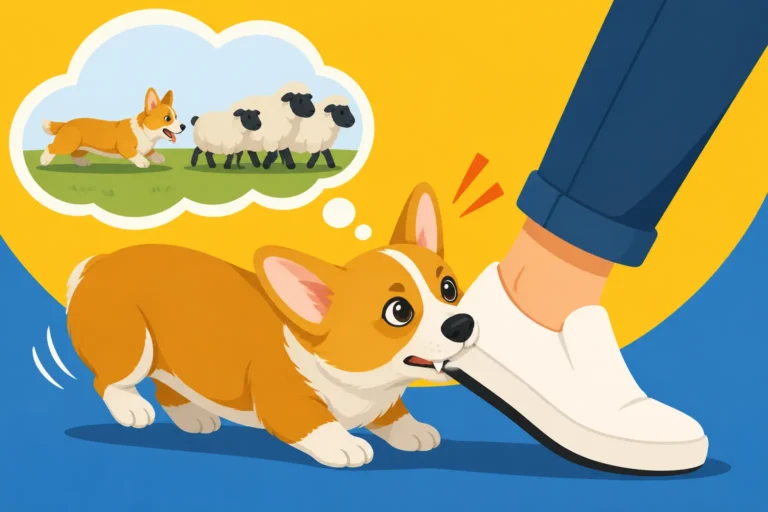
That strong herding instinct means your Corgi is wired to move things. When they see a person jogging, a child running, or even a leaf blowing across the yard, their brain might light up with the ancient command: herd. This manifests as chasing, nipping at heels, or simply dashing off to investigate and "control" the movement. It’s part of their genetic makeup, which is why a simple "come" might not always cut through that intense focus. You might notice them trying to The Cattle-Driving Nip a Corgi Still Has on your ankles or your kids' legs, which is a direct link to their ancestry.
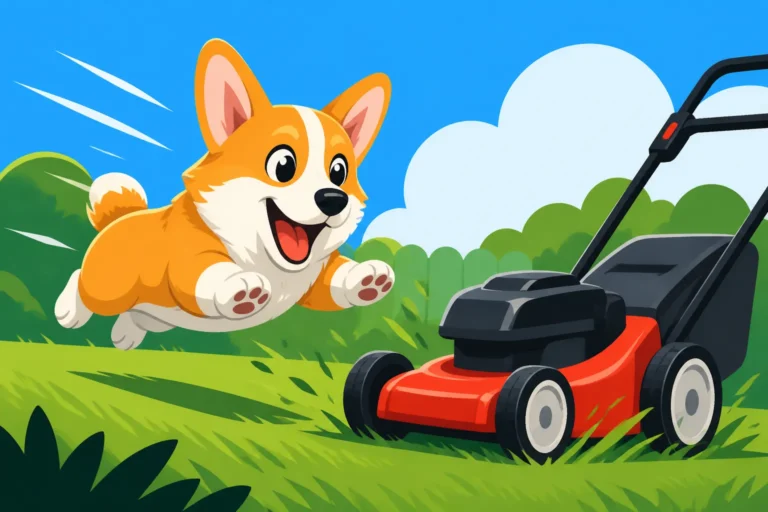
When a Corgi locks onto a perceived "charge" – be it a person, a bike, or another dog – their attention can be incredibly singular. It’s not that they don’t hear you, it’s that the instinctual drive is so powerful it overrides learned responses, especially if those responses haven't been practiced under similar levels of excitement. This deep-seated drive makes teaching a reliable stop not just a convenience, but a critical safety measure, preventing them from running into traffic or getting lost.
Independent Thinkers: When Your Corgi Makes Its Own Decisions
Corgis were not bred to be mindless followers. On the farm, they needed to be intelligent and decisive, often working independently of the shepherd to manage large animals. This independent nature is one of their most charming, yet challenging, traits. They are problem-solvers, often asking, "What's in it for me?" before complying. This means they are far more likely to Why an Independent Corgi Ignores You if they perceive a greater reward or a more interesting task (like chasing a squirrel) than responding to your call.
This isn't stubbornness, but rather a strong sense of self-preservation and efficiency. If your Corgi has learned that ignoring you sometimes leads to something fun or that your rewards aren't compelling enough, they will make the "logical" choice for them. Building a strong "stop" cue requires tapping into this intelligence, convincing them that responding to you is always the most rewarding option, even more so than that fleeting chase. It means making the cue incredibly valuable and irresistible.
Laying the Groundwork: Foundational Training for the "Stop" Cue
Before you can teach a dog to slam on the brakes, you need a solid foundation of communication and motivation. Think of it like building a house – you wouldn't start with the roof! For a Corgi, this foundation involves establishing what truly motivates them and ensuring they understand that paying attention to you is always worthwhile.
Building Value for High-Value Rewards
Corgis are often highly food-motivated, which is a fantastic asset for training. However, not all treats are created equal. For a powerful cue like "stop," especially when competing with instinct, you need to bring out the big guns. This means identifying what your Corgi considers "high-value." Is it boiled chicken? Small pieces of cheese? Hot dogs? Whatever it is, save these special treats exclusively for training your "stop" and other critical safety cues.
When you start training, these rewards should flow freely and consistently. Your Corgi needs to associate responding to you with an immediate, undeniable jackpot. Don't be stingy! The more they feel they "win" by listening, the more likely they are to choose you over a distraction. Some owners find that a varied "treat bag" with different textures and smells keeps things exciting, almost like a surprise lottery. You can find some excellent training treat pouches and varied treats on Amazon, making it easy to keep these high-value rewards handy.
Focus and Attention Drills: Getting Your Corgi to "Look"
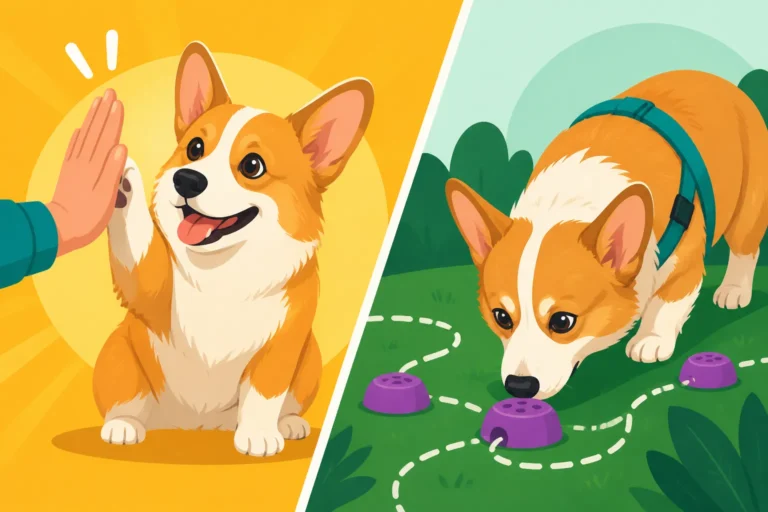
A dog can't stop if they aren't paying attention to you in the first place. This is where "watch me" or "look" commands come in. These simple cues teach your Corgi to make eye contact with you, even for a brief moment, cutting through minor distractions. Start in a quiet room, hold a treat near your eye, and as soon as your Corgi glances at your face, mark the behavior (with a clicker or a verbal "yes!") and reward them.
Practice these drills frequently, gradually increasing the duration of eye contact before rewarding. Once they're reliably making eye contact in a quiet setting, slowly introduce mild distractions – a family member walking by, a toy dropping. The goal is for your Corgi to understand that no matter what else is happening, a moment of focus on you means a reward. This foundational attention is crucial because it gives you that split second to deliver your "stop" cue before they fully commit to a chase. You can find structured courses from platforms like BAXTER & Bella that walk you through these foundational steps, often starting with puppy basics and building up.
Introducing the "Stop" Cue: Step-by-Step
Once your Corgi is highly motivated by rewards and can offer you their attention, you're ready to introduce the actual "stop" cue. The key here is to start in a controlled environment and build up slowly.
Starting in a Low-Distraction Environment
Begin your "stop" training in a place with absolutely no distractions – your living room, a quiet hallway, or a securely fenced yard where nothing exciting ever happens. The goal is to make it easy for your Corgi to succeed. Start with your Corgi a short distance from you, maybe just a few steps.
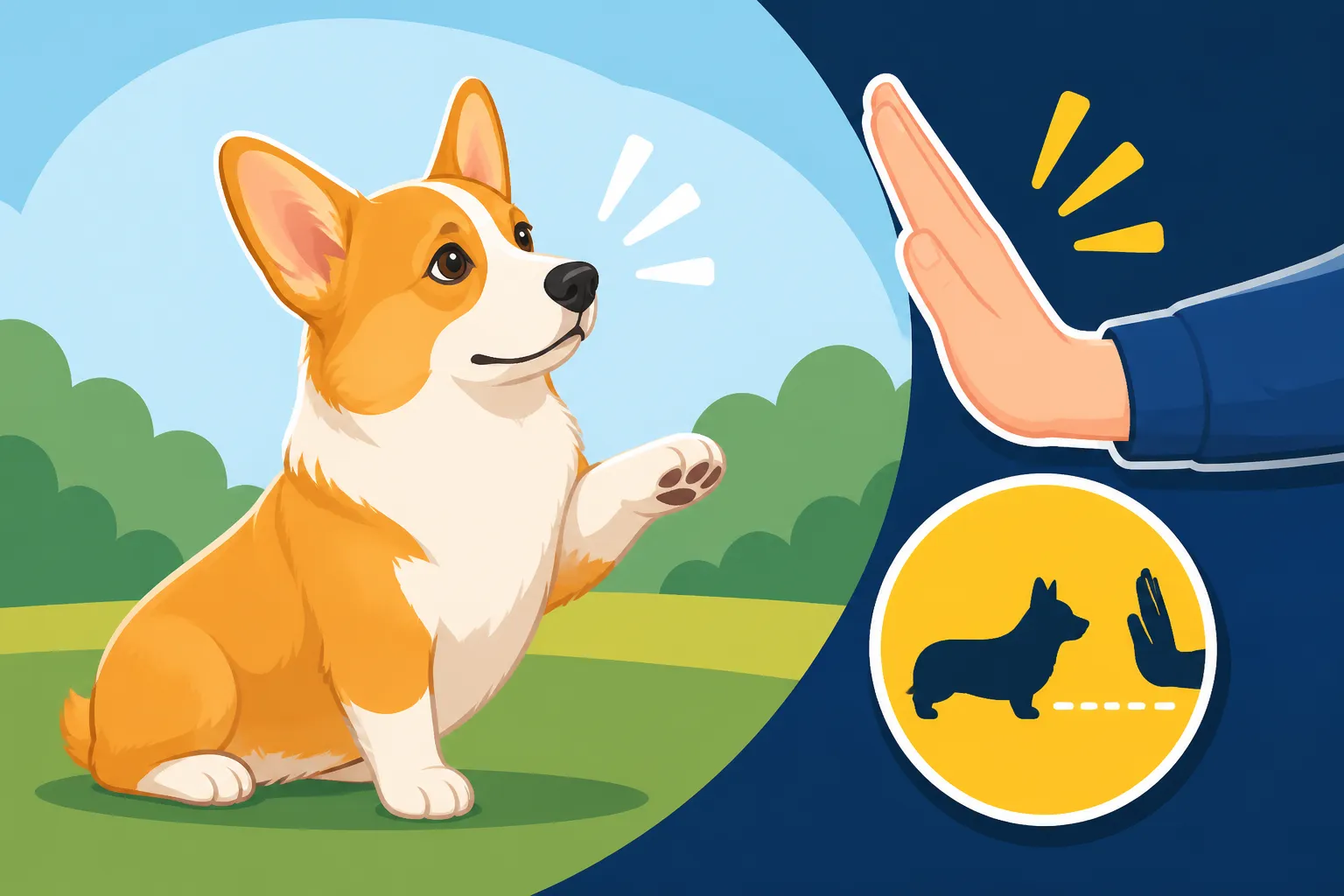
When they are walking away from you, or even just trotting a few feet, say your chosen "stop" cue (e.g., "Stop!", "Halt!", "Freeze!"). The instant you say it, step in front of them, gently blocking their path with your body, and immediately offer that high-value reward directly to their nose. The physical block helps them understand the action associated with the word. Don't push or pull; just make yourself a temporary, soft barrier. Repeat this many, many times, always ensuring success by keeping distances short and distractions nonexistent. They should associate the word "stop" with ceasing movement and getting a delicious treat.
Adding Distance and Duration Gradually
Once your Corgi reliably stops within a few steps in a quiet environment, you can start to increase the challenge incrementally. First, gradually increase the distance between you and your Corgi when you give the cue. Instead of two steps, try five, then ten. Continue to use your body to gently block, reinforcing the "no forward motion" aspect.
Next, work on duration. Can your Corgi hold the "stop" position for a second or two before getting the treat? Gradually extend this time. Ask for "stop," count to one, then reward. Then two, then three. Always reward before they break the stop. If they move, shorten the duration in the next repetition. Remember, every successful repetition builds confidence and understanding. This methodical progression is vital for a Corgi, as their independent minds need clear, consistent lessons to embed new behaviors deeply.
Proofing and Generalizing the "Stop": Making It Work Everywhere
A cue isn't truly reliable until it works in a variety of situations and environments. This process, called "proofing," is where many owners get stuck. It’s about systematically introducing real-world challenges while ensuring your Corgi still understands and responds to "stop."
Varying Locations and Distractions
Now that your Corgi understands "stop" at home, it's time to take the show on the road – or, at least, to different rooms in your house, then the backyard, and eventually public parks. Start by practicing in a new, slightly more distracting environment, like another room with familiar smells or the quietest part of your garden. Each time you change locations, dial back the difficulty a little; perhaps go back to a shorter distance before increasing it again.
Gradually introduce minor distractions: a squeaky toy off to the side (but not thrown), a family member walking by quietly, the sound of the TV. The key is to introduce one distraction at a time and ensure your Corgi can still succeed. If they fail, the distraction was too much, too soon. Make sure your rewards are still super high-value, and always celebrate big when they succeed in a new, challenging spot. Consistency and patience here are paramount.
Here's a small table to help you visualize the progression of distractions:
| Level | Environment | Distraction Examples | Reward Strategy |
|---|---|---|---|
| 1 | Quiet home | None | High-value, immediate |
| 2 | Different room/yard | Familiar sounds, static objects | High-value, immediate |
| 3 | Quiet park/trail | Distant people/dogs, rustling leaves | High-value, enthusiastic |
| 4 | Busy park/street | Joggers, cyclists, other dogs, loud noises | Jackpot, super enthusiastic |
| 5 | High-excitement | Squirrels, cats, favorite toy being played with | Ultimate jackpot! |
Practicing Around Motion and Other Dogs
This is often the ultimate test for a Corgi's "stop" cue, as motion and other dogs trigger those powerful herding and social instincts. You'll need to set up controlled scenarios. Start with a trusted friend and their dog (or a family member running gently). Have the "distraction" move at a distance, and practice your "stop" cue with your Corgi before they get too aroused.
For example, if your friend is walking their dog 50 feet away, practice your stop cue with your Corgi. If your Corgi stops, reward heavily. Gradually decrease the distance or increase the speed of the motion, always ensuring your Corgi is successful at least 80% of the time. If they fail, go back a step. Never let them practice failing the cue; always set them up to win. Practicing Corgi Recall in a Fenced Field can also be a great place to proof your "stop" cue, as the controlled environment allows for safe practice around other dogs or people moving. You might also want to explore Whether a Corgi Can Be Off Leash after mastering these advanced stages.
Troubleshooting Common Challenges When Teaching "Stop"
Even with the best intentions and consistent training, Corgis can throw us curveballs. Their intelligence and strong drives mean you'll likely encounter moments where the "stop" cue feels like it's just not sinking in. Don't get discouraged – it's part of the process!
When Your Corgi Blows You Off: Re-evaluating Your Approach
It’s incredibly frustrating when you call "stop!" and your Corgi continues on their merry way, tail wagging, as if you're merely a distant echo. This isn't necessarily defiance; it's often a sign that one of three things is happening: the cue isn't strong enough, the distraction is too high, or your reward isn't compelling enough. First, re-evaluate your rewards. Are you still using those super high-value treats? If not, bring them back. Are you using them consistently?
Next, assess the environment. Have you jumped too many steps in the proofing process? Go back to a less distracting environment where your Corgi consistently succeeds. It’s better to have 10 perfect stops in your living room than one ignored cue at the dog park. You might also need to strengthen your "watch me" command, so you can grab their attention before giving the "stop" cue. Sometimes, the problem is simply that the cue has been overused without enough positive reinforcement in highly distracting settings, essentially "poisoning" the cue.
Dealing with Excitement Overload: Managing Impulses
Corgis can get easily overstimulated, especially around moving objects, new people, or other dogs. When they're in a high-arousal state, their brains effectively go offline for rational thought, and instinct takes over. Trying to teach a "stop" cue when they're already at a ten on the excitement scale is like trying to have a calm conversation during a rock concert. It’s simply not going to happen effectively.
The key here is prevention and management. Avoid situations that consistently push your Corgi past their threshold. Instead, work on controlled exposure. If another dog makes them instantly lose their mind, start practicing "stop" from a distance where they can notice the other dog but not become fully overstimulated. Reward them for simply acknowledging the dog and not reacting strongly, then work on the "stop" cue. Learning A Corgi That Barks at Every Passing Dog is another aspect of managing excitement. You might also consider seeking guidance from a professional trainer who understands herding breeds and can help you implement impulse control exercises, such as "leave it" or "wait," that complement your "stop" training.
The Critical Importance of a Reliable "Stop" Cue
Having a dog that stops on cue is more than just a party trick; it's a fundamental aspect of responsible pet ownership, particularly with a breed like the Corgi. Their combination of small stature, quick speed, and strong instincts means a reliable "stop" can quite literally be a lifesaver.
Emergency Situations: Safety First
Imagine this scenario: you're walking your Corgi on a leash (as you should always do in unfenced areas), and suddenly their leash slips, or a squirrel darts across the road. Their herding instinct kicks in, and they're off like a shot. In that terrifying moment, a solid "stop" cue could prevent them from running into traffic, getting lost, or encountering danger. It buys you precious seconds to react and get to them.
It's also vital when encountering unexpected hazards in the park – a patch of broken glass, discarded food, or an aggressive dog appearing suddenly. A "stop" can prevent them from reaching something harmful before you can intervene. For Corgis, who are often low to the ground and curious, this kind of immediate obedience is non-negotiable for their safety. This is why How Fast a Corgi Disc Injury Needs Treating is so critical, as an uncontrolled dash or jump can lead to serious spinal issues.
Enhancing Everyday Life: Harmony and Freedom
Beyond emergencies, a reliable "stop" cue significantly enhances your everyday life with your Corgi. It means you can have more relaxed walks, knowing you have a tool to manage unexpected surges of interest. It allows you to safely let them explore a bit more off-leash in appropriate, securely fenced areas, trusting that you can bring them to a halt if needed.
At home, "stop" can be useful to prevent them from bolting out an open door, jumping on guests, or diving for dropped food. It fosters a sense of calm and control, reducing your stress and building a stronger bond of trust between you and your Corgi. This training isn't just about obedience; it's about providing your Corgi with the structure they need to navigate a human world safely and happily, allowing them more freedom within those boundaries. It supports their overall well-being and allows for more enjoyable interactions, whether at home or out on adventures.
Disclaimer
This article is for general informational purposes only and does not constitute professional advice. Laws, prices and regulations vary by location and change over time. Consult a qualified professional for guidance on your specific situation.