A Corgi That Nips Running Children
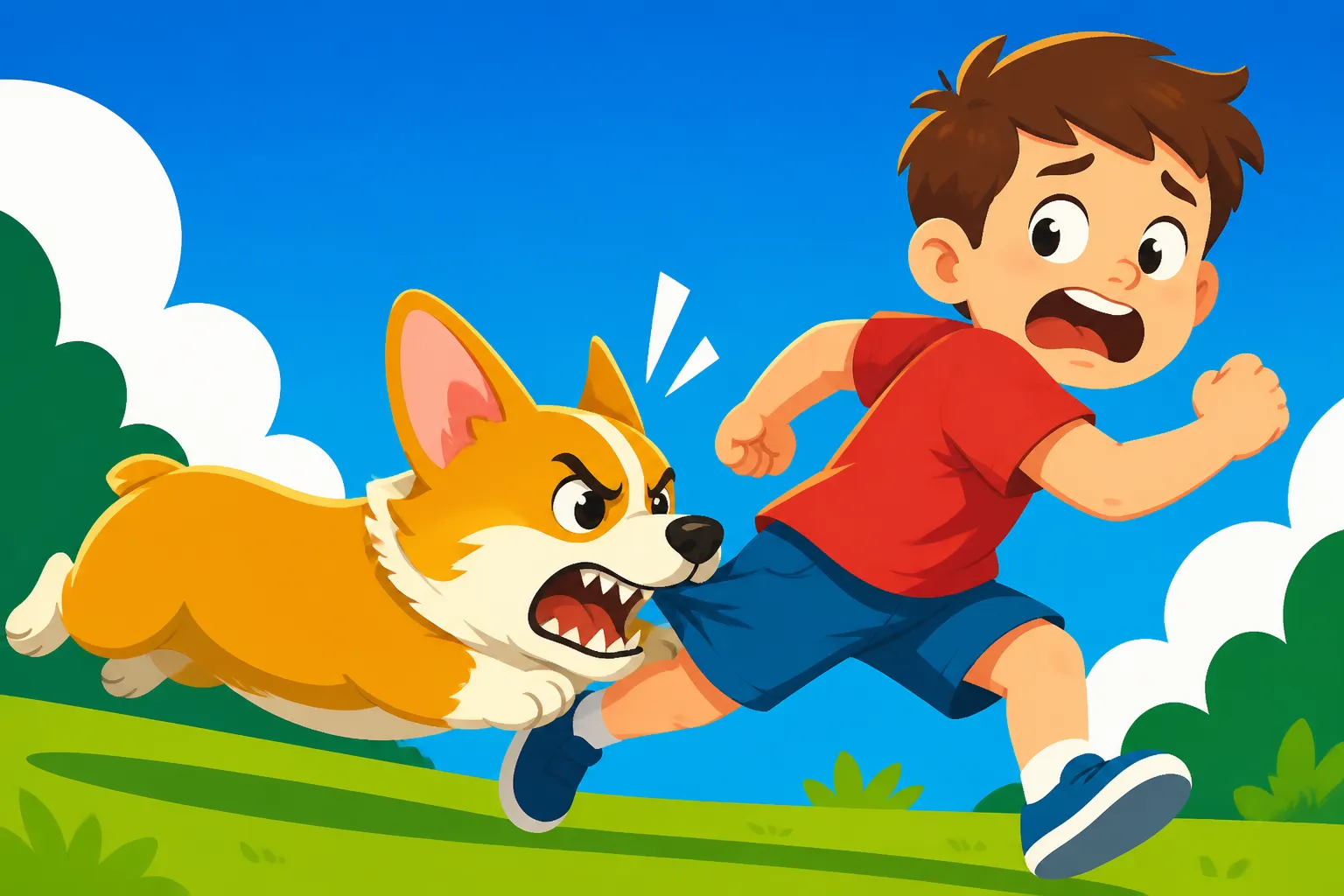
It’s a scenario many Corgi owners, especially those with young, energetic children, know all too well: your little one dashes across the living room, giggling, and suddenly, your beloved Corgi is at their heels, giving a quick, sharp nip. This isn't aggressive behavior in the traditional sense, but it's certainly alarming and can be frustrating and even frightening for both child and parent. This guide will walk you through understanding why your Corgi nips running children, how to manage it in the moment, and most importantly, how to train for a harmonious household.
The Deep-Rooted Herding Instinct in Corgis
Corgis are simply doing what they were bred to do. Their lineage is steeped in the ancient art of herding, and that instinct is incredibly strong. When we see them nipping at heels, it's not malice; it's a centuries-old job kicking in.
From Cattle Heels to Tiny Toes: Understanding the Ancestral Drive
Imagine the fields of Wales hundreds of years ago. A Corgi, low to the ground, would dart among the legs of cattle, nipping at their heels to move them in the desired direction. Their short stature wasn't just cute; it was a strategic advantage, allowing them to duck under swinging hooves and avoid injury while effectively controlling livestock. This "heel nipping" was essential for their role as herding dogs. It wasn't about hurting the cattle, but about providing a quick, startling sensation that would make them move.
Now, fast forward to your home. That same instinct is hardwired into your Corgi's DNA. They are still "working dogs" at heart, even if their current job involves supervising the living room. When they see movement, especially fast, erratic movement, their genetic programming tells them, "Something needs to be gathered, directed, or stopped!" It's a powerful, almost involuntary response. This instinct is what makes them such diligent, intelligent, and sometimes, bossy companions. The challenge for us as owners is to understand this deeply ingrained behavior and provide appropriate outlets or redirection for it. Many owners wonder Where the Corgi Heel Nip Comes From, and it truly is a direct link to their past.
Why Young, Fast-Moving Children Become "Livestock"
Children, bless their energetic hearts, are often prime candidates for a Corgi's herding attention. Think about it: they move quickly, often unpredictably, and sometimes with high-pitched sounds and excited squeals. From a Corgi's perspective, this is exactly the kind of chaotic, unpredictable movement they were bred to control. A child running through the house might, to your Corgi, look very much like a stray calf needing to be brought back into line.
The height of children also plays a role. Corgis are short dogs, and a running child is at just the right height for their instinct to kick in and target those lower legs and heels. They aren't trying to injure; they're trying to communicate, to stop the movement, to "herd." It can be incredibly frustrating for parents who just want their children to play freely, but it's crucial to remember that your Corgi isn't being naughty or mean. They are simply acting on an instinct that feels as natural to them as breathing. This is why it's so important to actively manage interactions, especially when children are small and most prone to quick, darting movements that trigger the Corgi's herding drive. It's a common issue, and understanding this underlying motivation is the first step in addressing A Corgi That Herds a Toddler.
Recognizing the Nipping Behavior and Its Triggers
Before you can effectively manage and prevent nipping, you need to be able to recognize it for what it is and understand what sets your Corgi off. It's not always obvious, and sometimes, the subtle cues are missed until the nip has already happened.
The Difference Between a Play Nip and a Herding Nip
It's important to distinguish between a playful nip and a true herding nip. A playful nip might happen during a game of tug or chase with a toy, often involving more of the mouth and less direct contact with the skin, and usually stops when the game stops. The Corgi's body language in play is typically loose, wiggly, and inviting. You might see a "play bow" with their front end down and rear end up, or a happy, open-mouthed pant.
A herding nip, on the other hand, is usually quick, precise, and targeted specifically at the ankles, calves, or heels. The Corgi's body language might be more intense; they might be staring intently, low to the ground, possibly circling, and the nip is often accompanied by a low, insistent bark or grumble. Their body may be stiff, focused on the "target." The intent isn't to draw blood, but to stop the movement. It's an attempt to control, not an invitation to play. If a child runs past, and your Corgi lunges for the back of their leg, that's a classic herding nip. Understanding this distinction is vital, as it informs how you respond and what training approach you take. Often, the Corgi is simply trying to redirect the child's movement, much like their ancestors did with livestock.
Common Scenarios Where Nipping Flares Up
Certain situations are practically guaranteed to trigger a Corgi's herding instinct, making them more likely to nip. The most common scenario is, predictably, children running. Whether it's a frantic game of tag in the yard, a race down the hallway, or even just running excitedly to greet someone, rapid, unpredictable motion is a major trigger. The sounds of excited squeals and laughter from children can further escalate the Corgi's arousal levels, making them more prone to act on impulse.
Other triggers can include children riding bikes, skateboards, or even just quickly moving strollers. Anything that moves fast and low to the ground can activate that innate drive to collect and control. Even a child simply walking quickly away can sometimes be enough. Pay close attention to your Corgi's body language in these moments. Do they tense up? Do their eyes lock onto the moving child? Do they start to circle or stalk? Learning to spot these pre-nip signals is crucial for intervening before the actual nip occurs. Knowing these triggers allows you to be proactive in managing interactions and teaching your Corgi alternative behaviors. It's about recognizing the warning signs before your Corgi decides it needs to A Corgi That Nips Running Children.
Immediate Strategies for Management and Prevention
When you have a Corgi and children in the same household, particularly if the nipping has started, immediate management is paramount. You need to prevent the unwanted behavior from happening while you work on long-term training solutions.
Active Supervision as Your First Line of Defense
This cannot be stressed enough: never leave your Corgi and children unsupervised. Not even for a second. Active supervision means you are not just in the same room, but you are actively watching their interactions, anticipating triggers, and ready to intervene. This might mean keeping your Corgi on a leash tethered to you, even indoors, when children are playing. It might mean placing a hand on their collar or having them on a 'place' mat when the children are particularly boisterous.
Your role is to act as a buffer and a teacher, for both your dog and your children. If you see the early signs of your Corgi winding up to nip – the intense stare, the low body posture, the slight crouch – immediately redirect their attention with a sound or a gentle touch, or move them to a different area. The goal is to prevent the nip from ever happening, breaking the cycle where the Corgi "practices" the unwanted behavior. This constant vigilance is tiring, yes, but it’s essential for safety and for successfully modifying behavior. Remember, every time the Corgi successfully nips, the behavior is reinforced in their mind, making it harder to stop in the future.
Creating Safe Zones and Physical Barriers
Another vital management strategy is to use physical barriers to separate your Corgi and children when you can't offer active supervision, or during high-energy playtimes. Baby gates are an absolute lifesaver for Corgi owners. You can use them to block off rooms, create a designated "Corgi zone" where your dog can relax undisturbed, or to give children a safe space to play without canine interference. A sturdy gate purchased from a retailer like Amazon can be a game-changer for household peace. Ramps and gates that save a Corgi's back are often considered for older Corgis, but for pups, gates are just as important for behavior management.
An exercise pen, or 'ex-pen,' can also be a fantastic tool. It allows your Corgi to be in the same general area as the family but physically separated, preventing them from chasing or nipping. Ensure these safe zones are positive places for your Corgi, filled with comfortable bedding, water, and appropriate chew toys. They should see these areas as retreats, not as punishment. This separation isn't about isolating your Corgi; it's about managing the environment to prevent problematic behaviors while everyone learns how to coexist safely and happily. These tools are indispensable in a busy home environment.
Teaching Children to Interact Safely with Your Corgi
While we focus a lot on training the dog, it's equally important to train the humans, especially the little ones! Children need to learn appropriate ways to behave around their Corgi to avoid triggering that nipping instinct. This includes teaching them not to run around the dog, especially not directly at or away from them. A simple rule like "walk, don't run" when the dog is present can make a huge difference. Teach them to be "trees" – if the Corgi starts to get too excited or shows signs of nipping, they should stand still and quiet, like a tree.
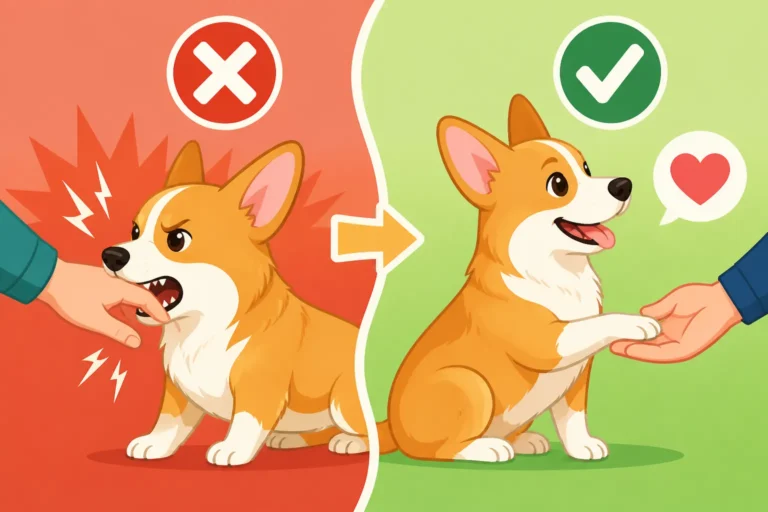
It's also crucial to educate children on respecting the dog's space, especially when the Corgi is eating, sleeping, or enjoying a chew toy. Gentle, slow movements are always better than sudden ones. Teach them how to properly pet the dog (no pulling ears or tails, gentle strokes on the body, not the head). Role-playing these scenarios can be incredibly effective. Explain to them that the Corgi isn't being mean, but is simply trying to do its "job" of herding, and that they can help the Corgi learn new ways to play. This combined approach of managing the environment, training the dog, and educating the children is key to preventing A Corgi Nipping at a Running Child.
| Child's Action to Avoid | Why it Triggers a Corgi | Safe Alternative for Child |
|---|---|---|
| Running/Screaming | Mimics fleeing livestock; increases excitement | Walk calmly; use inside voices |
| Sudden movements | Perceived as unpredictable chaos | Move slowly and predictably |
| Teasing with toys/food | Can lead to guarding or frustration nipping | Offer toys gently; never take food |
| Approaching a sleeping Corgi | Startles the dog; perceived as intrusion | Let a sleeping dog lie; call from a distance |
| Invading Corgi's "safe space" | Disrupts dog's sense of security | Respect gates/pens; allow alone time |
Effective Training and Redirection Techniques
Once you have management strategies in place, you can focus on training your Corgi to redirect their natural herding instincts into more appropriate and acceptable behaviors. This takes consistency, patience, and positive reinforcement.
Channelling the Herding Instinct Into Appropriate Activities
The key to stopping unwanted herding behavior is not to eliminate the instinct, but to channel it. Your Corgi still has that drive, and they need an outlet for it. Think about activities that mimic the chase and control without involving human children. Flirt poles are fantastic for this – they allow your Corgi to chase and "catch" a toy on a string, satisfying their predatory and herding drive in a safe, directed way. Large, sturdy herding balls, designed for dogs to push and chase, can also be a great option. Some Corgis absolutely love pushing these balls around a yard, getting a fantastic mental and physical workout.
Scent work is another excellent way to engage your Corgi's mind. While not directly herding, it taps into their natural problem-solving abilities and uses their powerful nose, providing a fulfilling "job" that doesn't involve nipping. You can hide treats around the house or yard and encourage your Corgi to sniff them out. These activities provide mental and physical stimulation, helping to tire out your Corgi and make them less likely to "self-employ" by herding children. Offering these constructive outlets will go a long way in managing The Cattle-Driving Nip a Corgi Still Has. It's about giving them The Job a Corgi Needs Instead of Herding You.
Foundation Obedience and Impulse Control
Solid obedience training is fundamental to managing any challenging behavior, and nipping is no exception. Commands like "Leave It," "Stay," and "Go to Your Place" are absolutely invaluable. "Leave It" can be used to interrupt your Corgi before they nip, redirecting their attention away from the child's feet. "Stay" can keep them in a safe position while children move around. "Go to Your Place" teaches them to go to a designated bed or mat and remain there, providing a clear boundary during busy times.
Practice these commands diligently in calm environments first, rewarding generously with high-value treats and praise. Once your Corgi is proficient, gradually introduce more distractions, including children moving at a distance, slowly increasing the challenge. The goal is to build up their impulse control so that even when their herding instinct kicks in, they can override it with a trained response. Consistency is key here; everyone in the household needs to use the same commands and expectations. Training for impulse control is a cornerstone of successfully Redirecting a Corgi Off Ankles.
Using Tools and Resources for Consistent Training
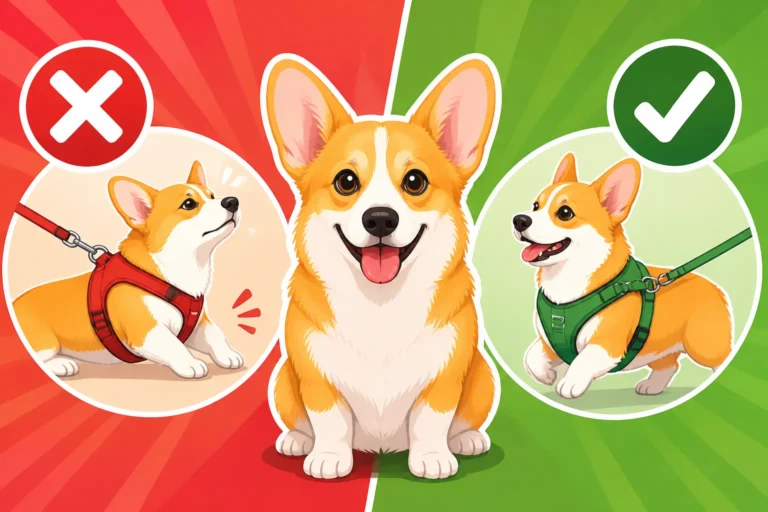
To ensure your training is effective, consistency is key, and having the right tools and resources can make a big difference. Positive reinforcement methods, such as clicker training, can be incredibly effective with Corgis. They are smart dogs and respond well to clear markers and rewards for desired behaviors. Investing in a good quality, comfortable harness that doesn't put pressure on their delicate spine, along with a sturdy leash, can help you maintain control during supervised interactions. You might find a great selection of durable training aids and interactive toys on Amazon to support your efforts.
For those seeking structured guidance, online training programs can be a fantastic resource. Platforms like BAXTER & Bella offer comprehensive online puppy and dog training courses with video tutorials, live Q&A sessions, and a supportive community. These types of resources can guide you step-by-step through impulse control exercises, proper leash manners, and even how to introduce your Corgi to children in a controlled manner. Having access to professional advice and structured lessons, even from your own home, can provide the confidence and knowledge needed to tackle persistent nipping issues effectively.
When to Seek Professional Help and Long-Term Harmony
Sometimes, despite your best efforts, the nipping behavior persists or even escalates. This is when it's crucial to acknowledge that you might need external expertise.
Recognizing When You Need a Certified Professional
There's no shame in admitting you need help; in fact, it's a responsible choice for your family and your Corgi. If the nipping is becoming more frequent, more intense, drawing blood, or if you feel you're losing control of the situation, it's time to bring in a certified professional dog trainer or a veterinary behaviorist. These experts can assess your Corgi's individual temperament, observe the specific triggers in your home, and develop a tailored training plan that addresses the root causes of the behavior. They can help distinguish if the behavior is solely herding instinct or if there are other factors at play, such as anxiety or frustration.
A good professional will use positive, humane training methods and will work with you to implement strategies that are practical for your family's lifestyle. They can provide hands-on coaching, helping you perfect your timing and technique, and guide you through more complex behavior modification protocols. Don't wait until someone gets seriously hurt or until your Corgi develops a negative association with children. Early intervention with a professional can prevent the problem from becoming entrenched and can significantly improve the chances of a successful outcome. This is especially true if you suspect the nipping is crossing the line from herding to something more concerning.
Building a Harmonious Household with Clear Expectations
Achieving a harmonious household where your Corgi and children coexist peacefully requires clear expectations and consistent effort from every family member. Everyone needs to be on the same page regarding rules for the Corgi and rules for interacting with the Corgi. This means consistent use of commands, consistent management strategies (like using baby gates), and consistent responses to both desired and undesired behaviors. If one family member allows the Corgi to nip without correction while another tries to prevent it, the Corgi will become confused and the behavior will be harder to extinguish.
Establishing predictable routines can also greatly benefit your Corgi. Dogs thrive on routine, and knowing when to expect walks, meals, and playtimes can reduce anxiety and make them more settled. Regularly revisit your family's rules and ensure everyone, including older children, understands their role in reinforcing good behavior. This commitment to a unified approach creates a secure and predictable environment for your Corgi, which in turn fosters a more relaxed and well-behaved companion. Ultimately, your Corgi wants to be part of the family, and clear expectations help them understand how to best fit in, creating A Corgi in a House Full of Children and Animals.
Managing Exercise and Mental Stimulation to Prevent Nipping
A tired Corgi is often a good Corgi. Many behavioral issues, including excessive nipping, can stem from a lack of adequate physical exercise and mental stimulation. Corgis are intelligent, active dogs, and if they don't get enough outlets for their energy and brains, they will find their own "jobs"—and sometimes that job becomes herding your children!
Ensure your Corgi gets daily, structured exercise. This doesn't just mean letting them out in the yard; it means engaging walks, games of fetch, or even short bursts of training. Beyond physical exercise, mental stimulation is equally important. Puzzle toys that dispense treats, sniff mats, or regular short training sessions can engage their minds and satisfy their need to "work." Rotate toys to keep them interesting and offer new challenges. A Corgi that has expended its energy and used its brain will be much calmer and less likely to feel the need to "manage" the children's movements. This proactive approach to their overall well-being is a critical component of preventing unwanted herding behaviors and fostering a calm, well-adjusted family pet.
Disclaimer
This article is for general informational purposes only and does not constitute professional advice. Laws, prices and regulations vary by location and change over time. Consult a qualified professional for guidance on your specific situation.