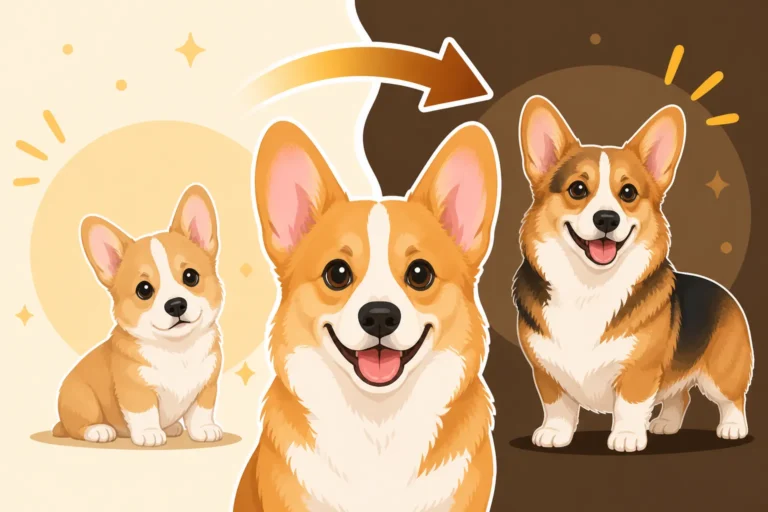
How Big a Corgi Is Meant to Be
It’s easy to look at a Corgi and just see a fluffy, low-riding bundle of joy. But have you ever found yourself wondering if your own Corgi is the "right" size? Perhaps your little friend seems a bit chunkier or leggier than others you’ve seen, or maybe you're trying to gauge if a puppy you're considering is on track for a healthy adult stature. This can be a genuine source of confusion and even anxiety for Corgi owners, especially when you consider how crucial proper weight and build are to their unique physique and long-term health. This comprehensive guide will walk you through the official breed standards for both Pembroke and Cardigan Welsh Corgis, helping you understand what "ideal size" truly means for these wonderful dogs and why it's so important for their well-being.
Understanding the Breed Standard for Corgi Size
When we talk about a dog's "size," it's not just about how much they weigh or how tall they stand. For Corgis, like many purebreds, there's a specific blueprint, known as the breed standard, that outlines the ideal physical characteristics. This isn't just for aesthetics in the show ring; it's deeply rooted in their historical purpose and their health.
Why Breed Standards Exist for Dogs
Breed standards are, in essence, the genetic blueprints that guide responsible breeders and help preserve the unique traits of a particular dog breed. Think of it as a detailed description of what a Corgi should look like, from the tip of their nose to the end of their tail. These standards cover everything from coat color and ear set to, yes, their ideal height and weight. The goal isn't just about winning ribbons at dog shows; it's about maintaining consistency in temperament, appearance, and, most crucially, health. By adhering to a standard, breeders can work to produce dogs that are predictable in their traits and less prone to certain genetic issues that might arise from haphazard breeding. Without these guidelines, breeds could diverge wildly, losing their characteristic charm and potentially developing new health vulnerabilities.
The Role of the Pembroke Welsh Corgi Standard
For the lively Pembroke Welsh Corgi, the breed standard is quite specific about size. It outlines a compact, sturdy dog, built for agility and endurance rather than sheer speed. The standard aims for a dog that is well-balanced and capable of its original job: herding cattle by nipping at their heels and dodging kicks. If a Pembroke were too tall, they'd be more vulnerable; too short or too heavy, and they'd lose their necessary agility. The standard emphasizes a dog that is "long and low," but with substance, not delicacy. It's a fine line, truly. You can dive deeper into the specific points that make up this ideal image by looking into The AKC Pembroke Welsh Corgi Standard. This document is the ultimate reference for breeders and owners who want to understand the exact nuances of what makes a Pembroke a Pembroke.
The Cardigan Welsh Corgi Standard's Specifications
Now, let's talk about their slightly larger, often-tailed cousins, the Cardigan Welsh Corgis. While they share the "Corgi" name, it's really important to remember that Pembroke and Cardigan Are Two Different Breeds, each with its own distinct history and breed standard. The Cardigan standard generally describes a dog that is slightly heavier in bone and body than the Pembroke. They still embody that low-set, long body type, but with a sense of greater substance. Their build reflects a similar herding heritage, but perhaps one that required a bit more robustness to contend with various terrains and livestock. The Cardigan standard, while similar in spirit, has its own unique measurements and descriptors that emphasize their slightly more substantial frame, maintaining their distinct identity from their Pembroke relatives.
Pembroke Welsh Corgi: Ideal Dimensions
So, what are these all-important numbers? Let's get down to the brass tacks for the beloved Pembroke Welsh Corgi. These aren't just arbitrary figures; they're the result of generations of breeding for a specific purpose and physique that allows them to thrive.
Height at the Withers
For Pembroke Welsh Corgis, the breed standard sets a very precise height range, measured "at the withers." If you're wondering what "withers" means, it's the highest point of the shoulder blades, right where the neck meets the back. This is the universally accepted spot for measuring a dog's height. For Pembrokes, the ideal height for both males and females is typically between 10 to 12 inches (25 to 30 cm). This might sound surprisingly short to some, but it's absolutely crucial to their historical role. Imagine a cow's legs – a taller dog would be at risk of getting a hoof to the head or body when trying to herd. This low stature allowed them to nip at the ankles and quickly duck out of the way, making them incredibly effective herders. This specific height range is why we often refer to them as The Ten to Twelve Inch Corgi, and it's a defining characteristic of their functional build.
Ideal Weight Range for Pembrokes
While height is a fixed skeletal measurement, weight is a bit more fluid and depends heavily on an individual dog's build, muscle mass, and body condition. However, the Pembroke breed standard does provide an ideal weight range to aim for. For males, the typical healthy weight falls between 27 to 30 pounds (12 to 14 kg). For females, it's slightly less, usually between 25 to 28 pounds (11 to 13 kg). Now, a number on a scale is one thing, but it's even more important to remember that this is a range, not a strict dictate. What truly matters is a healthy body condition, where you can easily feel their ribs but not see them, and they have a distinct waist tuck. A Corgi that's a few pounds over this range might still be healthy if they're very muscular, but a Corgi that is soft and round at the same weight is likely overweight. This is a critical point because What a Pembroke Should Weigh is as much about their shape as the number.
The Importance of Proportion and Length of Back
Beyond just height and weight, the overall proportion of a Pembroke Welsh Corgi is paramount. The standard emphasizes a dog that is "long and low," meaning their length from the sternum (breastbone) to the back of the hindquarters should be significantly greater than their height at the withers. Typically, they are about 40% longer than they are tall. This unique body shape is fundamental to their identity and their history. However, this charming long back is also their Achilles' heel, making them particularly susceptible to spinal issues like intervertebral disc disease (IVDD) if their proportions are off, or if they carry too much weight. A Corgi isn't just a short dog; it's a dog built specifically to be low to the ground with a robust, well-muscled body to support that length. Understanding The Corgi Topline and Length of Back is vital for appreciating their build and the care they need. Any deviation from this ideal proportion – too short, too long, too leggy – can put undue stress on their spine.
Cardigan Welsh Corgi: Ideal Dimensions
The Cardigan Welsh Corgi, while sharing the Corgi name and some general characteristics, possesses its own distinct set of ideal dimensions. These differences, though sometimes subtle, are important to appreciate when comparing the two breeds.
Height Expectations for Cardigans
Just like their Pembroke counterparts, Cardigan Welsh Corgis also have a specific height range measured at the withers, and it's quite similar. The ideal height for a Cardigan is typically between 10.5 to 12.5 inches (26.5 to 32 cm). You'll notice this is a slightly broader and marginally taller range than the Pembroke. While both breeds are undeniably "low riders," the Cardigan often presents with a bit more overall stature and ground clearance due to their heavier bone structure. This minor difference in height allows for a slightly more robust framework that aligns with their historical background and the specific terrains they may have worked on. They maintain that characteristic low-slung appearance, but with a feeling of greater substance beneath that fluffy exterior.
Weight Considerations for Cardigans
When it comes to weight, Cardigan Welsh Corgis generally carry more substance than Pembrokes, which is reflected in their ideal weight range. For a healthy adult Cardigan, males typically weigh between 30 to 38 pounds (13.6 to 17.2 kg), and females usually fall between 25 to 34 pounds (11.3 to 15.4 kg). This again is a range, and individual build will play a part. A Cardigan at the higher end of the weight scale may still be perfectly healthy if they are well-conditioned and muscular, reflecting their slightly heavier bone structure. It's a common observation that What a Cardigan Carries More Weight Than a Pembroke is a noticeable difference, and it's not necessarily an indication of being overweight. However, just like Pembrokes, a healthy body condition score, where you can easily feel the ribs and see a waist tuck, remains the gold standard, far more so than simply hitting a number on the scale.
Cardigan Build: More Substance, Still Low
The overall impression of a Cardigan Welsh Corgi's build is one of strength and substance. While still unmistakably a long and low dog, they tend to have a heavier bone structure and a deeper chest compared to Pembrokes. Their body is well-muscled and powerful, designed for endurance and stability over rougher ground. This isn't to say they are bulky; rather, they possess a sturdy, well-built frame that supports their length effectively. Their ribcage should be oval and deep, giving them plenty of lung capacity. This slightly more robust construction reinforces their status as distinct from the Pembroke, built for a similar, yet perhaps subtly different, working environment. It's a testament to the thoughtful development of each breed to suit their specific regional needs in Wales.
Why "Ideal Size" Matters Beyond the Show Ring
While breed standards might seem like something only competitive show dog owners need to obsess over, the truth is, a Corgi's size and build have profound implications for their health and happiness in everyday life. It's not just about looks; it's about comfort, longevity, and quality of life.
Impact on Spinal Health and Mobility
This is arguably the most critical reason why your Corgi's size and weight matter so much. Both Pembroke and Cardigan Welsh Corgis are chondrodystrophic breeds, meaning they have a genetic predisposition to abnormal cartilage development, which leads to their characteristically short legs and long backs. This makes them highly susceptible to intervertebral disc disease (IVDD), where the discs cushioning their vertebrae can bulge or rupture, causing immense pain, nerve damage, and even paralysis. When a Corgi is outside its ideal weight, especially if they are overweight, it puts tremendous, unrelenting strain on their spine. Imagine carrying a heavy backpack all day, every day – that's what extra pounds feel like to a Corgi's delicate back. This added stress significantly increases their risk of a debilitating disc injury. Understanding Why Corgi Weight Is a Spinal Problem is not just about keeping them trim; it's about protecting their most vulnerable anatomical feature.
Their length of back, relative to their height, is also a factor. While a long back is characteristic, an excessively long or poorly proportioned back can also create mechanical disadvantages, making them more prone to injury with everyday movements like jumping or twisting. Maintaining that ideal, well-balanced proportion helps distribute weight and forces more evenly along the spine, offering some degree of protection against the stresses of movement.
Health Implications of Being Oversized or Undersized
Beyond spinal issues, deviations from the ideal size can lead to a host of other health problems. An oversized Corgi, especially one that is obese, faces numerous risks. What Extra Weight Does to a Corgi Spine is just one piece of the puzzle. They are also at a higher risk for:
- Joint problems: The extra weight stresses not only the spine but also their hips, knees, and elbows, potentially leading to or exacerbating conditions like arthritis or cruciate ligament injuries.
- Heart and respiratory issues: Carrying excess weight makes the heart work harder and can strain the respiratory system, leading to exercise intolerance and other cardiovascular problems.
- Diabetes: Obesity is a significant risk factor for developing diabetes in dogs.
- Heat intolerance: A heavier dog with a thick double coat struggles more in warm weather.
Conversely, an undersized or underweight Corgi might also indicate underlying issues, such as poor nutrition, parasites, or other chronic illnesses. While rare, an extremely small Corgi could also have skeletal deformities or other developmental problems. The breed standard, therefore, serves as a healthy target range that optimizes overall well-being.
Maintaining the Breed's Original Purpose and Function
Let's not forget that Corgis were bred for a job! Their unique size and build were specifically designed to make them efficient and effective cattle herders. Driving Cattle With a Corgi Six Inches Tall wasn't just a cute image; it was a functional necessity. Their low center of gravity, agility, and powerful, compact bodies allowed them to dart around the legs of livestock, nipping to guide them, while staying safe from kicks. A Corgi that is too tall would lose this advantage, becoming more vulnerable to injury. A Corgi that is too heavy would lose its quickness and endurance.
Even if your Corgi's biggest job today is herding dust bunnies or chasing squirrels in the yard, maintaining their ideal size and conformation helps preserve those inherent traits. It means they are better equipped for healthy movement, play, and expressing their natural instincts without undue physical strain. It ensures they remain the sturdy, active, and charming dogs they were always meant to be.
How to Assess Your Corgi's Size and Body Condition
Okay, so we know why it's important, but how do you actually figure out if your Corgi is hitting those sweet spots for size and condition? It's not always as simple as weighing them, especially with all that glorious Corgi floof!
Measuring Your Corgi's Height and Length Accurately
Getting an accurate measure of your Corgi's height can be a fun little project, and it doesn't require specialized equipment. You'll need a tape measure and a flat wall.
- Stand tall: Have your Corgi stand squarely on a level surface, preferably against a wall, with their head in a natural, upright position. Don't let them slouch or stretch their neck up.
- Locate the withers: Feel for the highest point between their shoulder blades – this is the withers.
- Use a level: Place a carpenter's level or a flat ruler horizontally across their withers, touching the wall. Mark the spot on the wall where the bottom of the level touches.
- Measure: Use your tape measure to measure from the floor to your mark on the wall. That's their height!
For length, measure from the point of their sternum (breastbone) straight back to the point of their hindquarters, making sure not to include the tail. Compare these numbers to the breed standards we discussed earlier. Remember, Pembrokes are generally about 40% longer than they are tall, and Cardigans might be a little longer still.
Understanding the Body Condition Score (BCS)
While a weight scale gives you a number, a Body Condition Score (BCS) gives you a clearer picture of your Corgi's actual health status. It's a hands-on assessment that goes beyond the fluff and is often more important than the exact weight number. Most veterinarians use a 5-point or 9-point scale. Here's a simplified look at what to aim for:
| BCS Score (5-point) | Description | What to Feel/See |
|---|---|---|
| 1 (Too Thin) | Emaciated | Ribs, spine, and pelvic bones easily visible from a distance. No fat. Severe muscle loss. |
| 2 (Underweight) | Thin | Ribs easily palpable and slightly visible. Top of vertebrae visible. Marked abdominal tuck. |
| 3 (Ideal) | Optimal Weight | Ribs easily palpable without excess fat. Waist easily noted when viewed from above. Abdominal tuck present. |
| 4 (Overweight) | Heavy | Ribs difficult to feel under a slight fat layer. Waist discernible but not prominent. Slight abdominal tuck. |
| 5 (Obese) | Severely Overweight | Ribs very difficult to feel. No waist. Abdomen distended. Obvious fat deposits. |
To assess your Corgi, you need to get your hands on them, despite their thick double coat. Start by gently running your hands along their sides. You should be able to feel their ribs quite easily, almost like the knuckles on your hand, but without them feeling sharp or bony. If you can't feel them at all, or it takes significant pressure, your Corgi is likely carrying too much weight. Then, look at them from above: can you see a distinct waist where their body tucks in slightly behind the ribs? Lastly, check for an abdominal tuck when viewed from the side – their belly should rise up, not hang low. This hands-on assessment of The Body Condition Score a Corgi Owner Aims For is far more informative than just a number on the scale. For more detailed instructions on how to evaluate, especially through their thick fur, check out Feeling for Ribs Through a Corgi's Undercoat.
When to Consult Your Veterinarian
If you're unsure about your Corgi's size, weight, or body condition, don't hesitate to consult your veterinarian. They are your best resource for an accurate assessment and personalized advice. They can help you:
- Confirm their height and weight against the breed standard.
- Give an objective Body Condition Score.
- Discuss if your Corgi is growing too fast or too slow (for puppies).
- Create a tailored weight management plan if your Corgi is overweight, including diet recommendations and appropriate exercise levels. Chewy, for example, offers a wide range of veterinary-approved weight management foods and treats that your vet might recommend.
- Rule out any underlying health issues that could be contributing to weight gain or loss.
Remember, early intervention for weight issues is always better for Corgis, given their predisposition to back problems. Your vet can provide guidance and support to keep your Corgi in their prime.
Factors Influencing a Corgi's Size
While the breed standard gives us an ideal, several factors can influence your individual Corgi's actual size and build. It's a complex interplay of genetics, environment, and lifestyle.
Genetics and Breeding Practices
The primary determinant of your Corgi's ultimate adult size is genetics. They inherit their potential height, bone structure, and even their predisposition to certain body shapes from their parents. This is why reputable breeders are so crucial. They carefully select breeding pairs that conform to the breed standard, not just in appearance but also in health. Good breeders will understand the lineage of their dogs and aim to produce puppies that fall within the ideal size and proportion ranges, minimizing the risk of health issues associated with extremes. They prioritize health-tested parents to ensure they're passing on the best possible genes for a sturdy, healthy Corgi. Conversely, irresponsible breeding, often focused on "designer" looks or quick sales, can lead to Corgis that deviate significantly from the standard, potentially inheriting exaggerated features that could compromise their health.
Nutrition and Exercise in Growth and Adulthood
While genetics sets the potential, nutrition and exercise during a Corgi's life greatly influence whether they reach that potential healthily.
- Puppyhood: Proper nutrition during puppyhood is vital for healthy bone and muscle development. Overfeeding a Corgi puppy can lead to rapid growth, which paradoxically can strain developing joints and contribute to orthopedic problems later on, even if they aren't technically "overweight" at that stage. A balanced diet, appropriate for their age and activity level, ensures steady, healthy growth.
- Adulthood: For adult Corgis, a balanced diet in appropriate portions, combined with regular, moderate exercise, is key to maintaining their ideal weight. It's incredibly easy for Corgis to gain weight; they are highly food-motivated and their small stature means even a few extra pounds can make a huge difference to their overall health and spinal load. Feeding a Corgi So Its Spine Carries Less isn't just a suggestion; it's a preventative health measure. Many owners find that precise portion control and measuring their food, rather than eyeballing it, is the only way to keep their Corgi trim. Websites like Chewy offer auto-ship options for specific foods, making it easier to stick to a consistent diet.
Age-Related Changes in Weight and Muscle Mass
Just like humans, Corgis experience changes as they age. Their metabolism tends to slow down, and they may naturally become less active, even if it's just a subtle decrease in zoomies. These factors can make it easier for them to gain weight, even if their diet hasn't changed. As Corgis enter their senior years, typically around age 7-8, they might start to lose muscle mass, which can affect their overall strength and support for their long backs. This is often When a Corgi Starts Being Treated as Old and may require adjustments to their diet, possibly a lower-calorie senior formula, and continued appropriate exercise tailored to their energy levels and any developing joint issues. Regular vet check-ups become even more important to monitor their weight and muscle condition and adjust their care plan accordingly to keep them comfortable and mobile.
Common Misconceptions About Corgi Size
The internet and anecdotal stories can sometimes lead to misunderstandings about Corgi size. Let's clear up some common myths to ensure you have accurate information.
"Bigger is Better" or "Teacup Corgis" Myths
One of the most persistent and potentially harmful misconceptions is the idea that "bigger is better" for a Corgi, or conversely, the dangerous trend of "teacup Corgis." Neither of these extremes aligns with the breed standard or promotes health. A Corgi that is significantly oversized, beyond the standard weight and height, is likely carrying excess fat, which, as we've discussed, puts immense strain on their joints and spine. It can also indicate a deviation from proper breeding, where size has not been carefully managed for health and function.
On the other end of the spectrum, "teacup Corgis" are a marketing gimmick, not a recognized or healthy variation of the breed. These dogs are often the result of breeding runts, dogs with dwarfism beyond the normal Corgi short stature, or even cross-breeding with smaller dogs. Such practices frequently lead to a host of severe health problems, including fragile bones, organ issues, and a significantly shortened lifespan. Responsible breeders will strongly advise against seeking out these extremes, prioritizing health and adherence to the breed standard above all else.
The "Fluffy" Coat and Perceived Size
Ah, the beloved "fluffy Corgi"! While undeniably adorable, it's important to understand that a fluffy coat makes a Corgi look bigger, but it doesn't actually change their underlying skeletal size or weight. A fluffy Corgi is simply a Pembroke Welsh Corgi (the fluffy gene is more common in Pembrokes, though Cardigans can also carry a similar gene for longer coats) that carries a recessive gene causing its coat to be longer and softer than the standard double coat. This extra fur adds volume, making them appear broader or more substantial than they truly are.
The breed standard for Pembrokes, however, considers a fluffy coat a fault in the show ring. For pet owners, it's purely an aesthetic difference, but it's vital to remember that a fluffy coat doesn't grant them extra bone or muscle mass. Their ideal height and weight ranges remain the same as their standard-coated counterparts. So, if you have a fluffy Corgi, don't let the luxurious mane trick you into thinking they can carry more weight or are inherently larger. You still need to manage their weight and assess their body condition with the same diligence. For more on this, you might find The Fluffy Corgi and the Standard an interesting read.
Gender Differences in Size and Build
While both male and female Corgis adhere to the same overall breed standard for height and proportion, there are typically slight differences in their overall build and weight. Males generally tend to be a little heavier and more substantial in bone than females. For instance, a male Pembroke might naturally sit at the higher end of the 27-30 pound range, while a female might be more comfortably in the 25-28 pound range.
These differences are usually subtle and largely influenced by individual genetics and conditioning. However, it's a good general guideline to keep in mind. Just as with humans, there can be significant variation within genders, so don't be alarmed if your female Corgi is a bit on the sturdier side, or your male is a touch more refined, as long as they are within a healthy body condition score. It’s about fitting the general mold, not being an exact clone.
Disclaimer
This article is for general informational purposes only and does not constitute professional advice. Laws, prices and regulations vary by location and change over time. Consult a qualified professional for guidance on your specific situation.