Burrs Caught in Corgi Leg Feathering
If you've ever taken your beloved Corgi out for a joyful romp through a field, a hike on a woodsy trail, or even just a visit to a slightly overgrown park, you've probably encountered the enemy: burrs. These sticky, tenacious little hitchhikers have an uncanny ability to burrow deep into your Corgi's luxurious leg feathering, turning a pleasant outing into a frustrating, painful grooming session. This guide will walk you through effective strategies for removing those stubborn burrs and, more importantly, how to prevent them from becoming an ongoing battle for you and your furry friend.
The Frustration of Feathered Legs and Burrs
There's nothing quite like the sight of a Corgi trotting along, their fluffy legs moving like little pistons, but that charming feathering can quickly become a tangled mess if not properly managed. Burrs are a real headache for many Corgi owners, and understanding why they're such a magnet is the first step to conquering them.
Why Corgi Feathering is a Burr Magnet
Corgis, with their signature low-rider stature and their magnificent double coats, are practically designed to pick up every bit of nature's debris. Their body is only inches off the ground, meaning their belly, chest, and especially their leg feathering are constantly brushing against grass, weeds, and undergrowth where burrs love to hide.
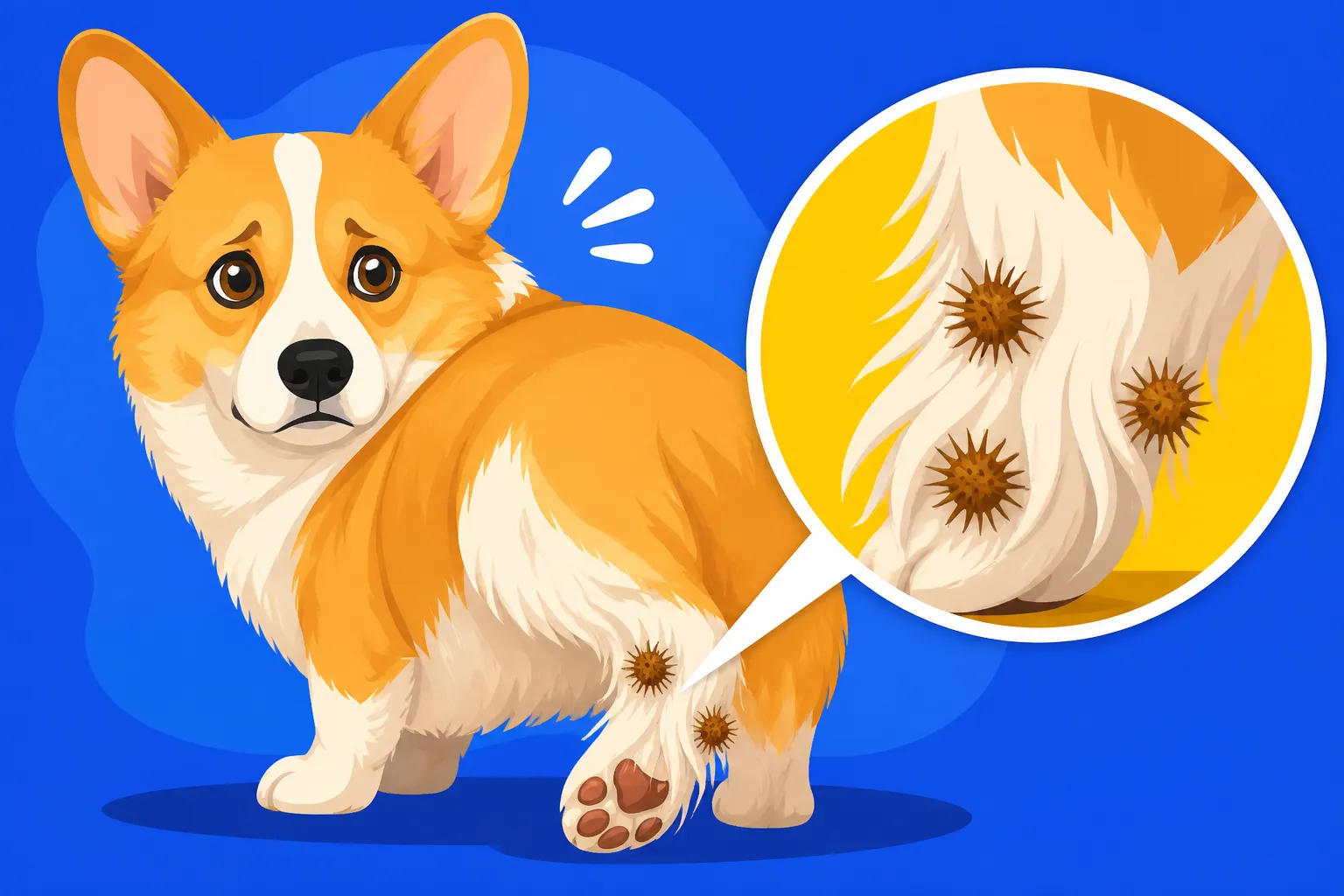
That beautiful, flowing hair on their legs, often called "feathering" or "trousers" on their hindquarters, acts like a net. It's soft, dense, and perfectly structured to catch and hold onto anything it comes into contact with. Burrs, those clever little seeds covered in tiny hooks, are just looking for a ride, and a Corgi's feathering offers them a first-class ticket. We're not just talking about one type of burr, either. There are foxtails, cockleburs, beggar-ticks, and burdock seeds, among others, each with its own level of stickiness and propensity to work its way deep into the coat, right down to the skin. It’s a common challenge for those of us who adore this breed, and it’s important to appreciate why our dogs are so vulnerable.
The Immediate Problems Burrs Cause
Finding a few burrs after a walk might seem like a minor inconvenience, but if left unattended, they can quickly escalate into bigger problems for your Corgi. The most immediate issue is discomfort and pain. Imagine having tiny, barbed hooks tugging at your hair with every step; that's what your Corgi experiences. They might start licking or chewing at the affected area, trying to dislodge the burrs themselves, which can lead to further irritation or even skin breakage.
Beyond the initial discomfort, burrs are notorious for causing mats. When multiple burrs get caught, they knot the surrounding fur into tight, painful clumps that pull on the skin. These mats can restrict movement, causing your Corgi to walk awkwardly or even limp to avoid pain. If mats are allowed to tighten and stay on the skin, they can cut off air circulation, creating a breeding ground for bacteria and yeast, leading to hot spots or skin infections. Plus, some burrs, particularly foxtails, have sharp points that can actually penetrate the skin and migrate under the surface, potentially causing abscesses or more serious internal issues. It’s a very real concern for any owner whose Corgi loves to explore.
Essential Tools and Techniques for Burr Removal
Dealing with burrs can test your patience, especially when your Corgi isn't thrilled about being held still. But with the right approach and a few key tools, you can make the process much smoother and less stressful for both of you.
Gathering Your Corgi Grooming Arsenal
Before you even attempt to tackle those stubborn burrs, set yourself up for success by having all your necessary tools within reach. Trust me, you don't want to be fumbling around for a comb with a wriggly Corgi on your lap.
First, a good quality, fine-toothed metal comb is indispensable. This isn't your everyday brushing comb; you're looking for something with closely spaced teeth that can really work its way through the feathering. A slicker brush can also be helpful for general detangling around the burrs once the worst are out. Second, a detangling spray or conditioner is a lifesaver. These products lubricate the fur, making it easier for burrs to slide out and helping to prevent further knotting. You can find excellent options from pet supply retailers like Chewy or look for highly-rated detangling sprays on Amazon.
Third, a small, blunt-nosed pair of scissors. These should be a last resort, used only for cutting out extremely stubborn or matted sections of fur where burrs are deeply embedded, and always with extreme caution to avoid nipping the skin. For this reason, blunt tips are key. Finally, consider a little mineral oil, coconut oil, or even cornstarch. These can sometimes help loosen burrs by making the fur around them slippery or less sticky. Having a few treats on hand to reward your Corgi's patience, and a calm, quiet space to work, rounds out your essential kit. For a deeper dive into general grooming tools, you might want to read The Rake and Comb a Corgi Coat Actually Needs.
Step-by-Step Burr Extraction
Now that you're armed with your toolkit, let's get down to the actual removal process. The key here is patience, gentleness, and a calm demeanor. Your Corgi will pick up on your stress, so take a deep breath!
- Create a Calm Environment: Find a quiet spot where your Corgi feels comfortable. Lay down a towel or mat to catch any fallen debris. If your Corgi is prone to squirming, having another person gently hold them or offer distractions (like a Kong filled with peanut butter) can be incredibly helpful.
- Assess the Situation: Gently part the fur to get a good look at the burrs. Note how many there are, how deeply they're embedded, and if there are any existing mats. This helps you plan your attack.
- Initial Hand Removal: Start by trying to gently pull out any loose burrs with your fingers. Work from the outside of the burr cluster inwards, separating the burr from the surrounding fur. Be careful not to pull too hard, which can cause pain.
- Apply Detangler or Oil: For more stubborn burrs, spritz the affected area generously with detangling spray or apply a small amount of mineral oil or coconut oil. Gently massage it into the fur around the burr. Let it sit for a minute or two to work its magic. This helps to loosen the burr's grip and allows it to slide out more easily.
- Comb It Out (Carefully!): Take your fine-toothed comb and, starting from the very end of the feathering furthest from the skin, begin to gently comb through the fur. Work in small sections, always combing away from the skin. When you hit a burr, try to hold the fur at the skin base with one hand to minimize pulling, and then use the comb to carefully tease the burr out. It’s like gently detangling a knot in your own hair.
- When Scissors are Necessary: If a burr is hopelessly matted and knotted, or your Corgi is in distress, sometimes carefully cutting it out is the only option. Remember, this is a last resort. Use your blunt-nosed scissors, pointing them away from your Corgi's body. Slide the blades under the mat, close to the skin but without touching it, and snip. It’s often best to cut the entire matted section rather than trying to cut individual burrs, as this minimizes the risk of injuring your dog. You might sacrifice a bit of feathering, but your Corgi's comfort and safety are paramount.
- Check for Residue and Skin Irritation: Once all the visible burrs are removed, thoroughly check the area for any smaller seeds or irritation. Run your fingers through the fur to ensure no hidden burrs remain. Check for redness, bumps, or broken skin.
Remember to offer praise and treats throughout the process. A positive experience will make future burr battles much easier.
Preventing Future Burr Incidents
While burr removal is a necessary skill for any Corgi owner, prevention is always the best medicine. By implementing some proactive strategies, you can significantly reduce the chances of your Corgi turning into a walking burr bush.
Proactive Grooming Strategies
Regular grooming is your first line of defense against burrs and many other coat issues. Corgis have dense double coats that require consistent care to stay healthy and mat-free.
After every walk, especially if you've been in areas with tall grass or undergrowth, make it a habit to do a quick "burr check." A thorough once-over with a brush, focusing on the leg feathering, belly, and tail, can catch burrs before they have a chance to work their way deep into the coat. This is much easier than tackling a matted mess later. Incorporate a good slicker brush and a metal comb into your daily routine. Brushing not only removes potential burrs but also loose undercoat, which can help prevent tangles and mats that burrs love to exploit. You might find our guide Grooming a Corgi That Sits Six Inches Off the Ground helpful for more tips on keeping that low-riding body pristine.
Using a detangling spray or leave-in conditioner as part of your regular grooming can also make a big difference. These products can create a smoother surface on the fur, making it harder for burrs to latch on and easier for them to slide out if they do. You can spray a light mist on your Corgi's legs before heading out for a walk as a preventative measure. Think of it as putting a protective barrier on their beautiful fur. Regular baths, using a good quality dog shampoo and conditioner, also contribute to a healthy coat that's less prone to matting and holding onto debris. To learn more about coat maintenance, check out How Much Hair a Twenty-Eight Pound Corgi Drops and Why a Corgi Sheds All Year and Not Just Twice.
Environmental Management and Protective Gear
Sometimes, the best prevention involves avoiding the problem altogether. While it's wonderful to let your Corgi explore, being mindful of their environment can greatly reduce burr exposure.
If you know certain areas are prone to burrs, like specific sections of a trail, overgrown fields, or the edges of dog parks, try to steer your Corgi away from them. Stick to mown paths, paved areas, or manicured lawns when possible. If you frequent a park that tends to get weedy, consider advocating for better maintenance. Of course, Corgis love to sniff and explore, and we don't want to limit their joy entirely! So, for those unavoidable adventures into the wild, consider some protective gear.
Lightweight, breathable dog booties or leg coverings are available that can cover your Corgi's lower legs and feathering, providing a physical barrier against burrs. While some dogs might initially object to wearing them, many get used to them quickly, especially if introduced with positive reinforcement. You might be surprised at the variety available on Chewy or Amazon. These aren't just for burrs; they can also protect against harsh weather, hot pavement, or even minor scrapes. They might seem a bit much at first, but for Corgis with particularly long feathering or those who are frequently in burr-heavy areas, they can be a real game-changer for keeping those fluffy legs clean and tangle-free.
Diet and Coat Health
While good nutrition won't make burrs magically bounce off your Corgi, it absolutely plays a role in overall coat health, which in turn can influence how easily burrs tangle and how resilient the fur is to damage. A healthy coat is less prone to breakage, has a stronger, smoother texture, and can be easier to detangle.
Ensure your Corgi is eating a high-quality, balanced diet that provides essential fatty acids like Omega-3 and Omega-6. These nutrients are crucial for skin and coat health, helping to keep the fur strong, shiny, and less brittle. Many premium kibbles are formulated with these in mind. Some owners even supplement their Corgi's diet with fish oil, which can further boost coat quality. If you're exploring fresh food options like those from Ollie, ensure they are nutritionally complete and address coat health as part of their benefits. A healthy coat is more supple, less dry, and therefore less likely to snap and form tight knots around burrs. It’s a subtle but important aspect of overall care that contributes to a more manageable coat. Plus, maintaining a healthy weight, as discussed in What an Ideal Corgi Weighs, ensures your Corgi is active and healthy enough to enjoy walks where burrs might be encountered.
When to Call the Vet
Most burr encounters can be handled at home with patience and the right tools. However, there are times when a burr incident goes beyond a simple grooming task and warrants a trip to the veterinarian. Knowing when to seek professional help is crucial for your Corgi's well-being.
Signs of Skin Irritation or Infection
After you've removed all the burrs, it's vital to inspect your Corgi's skin carefully. Sometimes, despite your best efforts, the burrs may have caused irritation. Look for any areas of redness, swelling, or tenderness. If your Corgi continues to lick, chew, or scratch persistently at a particular spot even after the burrs are gone, it's a red flag. This behavior could indicate ongoing irritation, or it might be the start of a hot spot. Hot spots are acute moist dermatitis, where the skin becomes inflamed, red, and often oozes, and they can develop very quickly, especially in a dense Corgi coat.
If you notice any oozing, pus, a foul odor, or an area that feels unusually warm to the touch, it's definitely time for a vet visit. These are classic signs of a bacterial infection that will require professional treatment, likely including antibiotics or medicated shampoos. Don't try to treat a suspected infection at home with over-the-counter creams unless specifically advised by your vet, as some products can actually make things worse. For more information on identifying and addressing skin issues, you might find Wet Patches That Turn Into Corgi Hot Spots a helpful read.
Deeply Embedded Burrs or Injuries
While most burrs stick to the surface, some, particularly certain types like foxtails, have an insidious ability to actually burrow into the skin. These are far more serious than surface-level burrs and cannot be removed safely at home. If you notice a burr seems to be partially or fully embedded, with only a small portion visible or none at all, or if you see a small, persistent bump that doesn't feel like a typical burr, contact your vet immediately.
Embedded burrs can travel under the skin, causing severe inflammation, abscesses, and even migrating to internal organs, leading to very serious health problems. The vet will be able to properly locate and remove the burr, often requiring sedation or a minor surgical procedure, and can clean and treat any resulting wound. Furthermore, if your Corgi sustained a cut or puncture wound while running through the brush, even if a burr isn't directly involved, a vet visit is wise. Puncture wounds can be deceptively deep and can introduce bacteria, leading to infection. It’s always better to be safe than sorry when it comes to potential injuries, especially with our Corgis who are so low to the ground and prone to picking up things in their path.
Disclaimer
This article is for general informational purposes only and does not constitute professional advice. Laws, prices and regulations vary by location and change over time. Consult a qualified professional for guidance on your specific situation.