Whether a Fluffy Corgi Needs a Groomer
Bringing a fluffy Corgi into your life is an absolute joy, but many new owners quickly realize that the stunning, flowing coat that initially charmed them comes with its own unique set of challenges, leaving them wondering if managing it at home is even possible or if a professional groomer is truly a necessity. This comprehensive guide aims to demystify the grooming needs of the adorable fluffy Corgi, helping you understand their coat, the tools and techniques you can employ at home, and when it’s truly time to call in the professionals.
Understanding the Fluffy Corgi Coat
A fluffy Corgi's coat is truly a sight to behold, a luxurious mane that can make them look like a majestic little lion. But beneath that beauty lies a significant difference from the standard Corgi coat, one that dictates a whole different approach to grooming. It’s not just a bit longer; it’s fundamentally different in texture and structure, and understanding this is the first step in deciding on your grooming strategy.
What Makes a Fluffy Coat Unique?
The "fluffy" trait in Corgis is due to a recessive gene, meaning both parents must carry it for a puppy to inherit the trait. While standard Corgis have a dense double coat with a harsh outer layer that protects them from the elements and a soft undercoat for insulation, the fluffy coat lacks that protective, harsh guard hair. Instead, it’s characterized by soft, long, often wavy or curly fur that extends beyond the typical feathering, particularly around the ears, neck, chest, belly, and hindquarters, almost like a miniature Old English Sheepdog in places. This softness is what makes it so appealing to many, but it also creates specific grooming hurdles.
Unlike the standard coat, which tends to shed dirt and resist matting more easily, the fluffy coat is a magnet for debris. Burrs, twigs, and leaves cling to it like Velcro, and wet mud can quickly become a cemented mess. Its fine texture means it tangles and mats with alarming speed, especially in high-friction areas like behind the ears, armpits, and under the tail. Imagine trying to untangle a ball of fine yarn versus a thicker rope – that’s the difference. This predisposes them to knots and painful mats if not diligently cared for, far more so than their standard-coated counterparts.
Seasonal Shedding: A Fluffy Avalanche
All Corgis are known for being prolific shedders, but with a fluffy Corgi, it can feel like you’re experiencing a year-round snowstorm, punctuated by blizzards during seasonal "blows." Standard Corgis shed consistently, with two major seasonal sheds (often in spring and fall) when they "blow" their undercoat to adapt to temperature changes. For a fluffy Corgi, this seasonal shedding is amplified by the sheer volume and texture of their hair. The softer, longer hair tends to hold onto dead undercoat more readily, forming dense clumps and mats if not brushed out meticulously.
During these peak shedding seasons, the amount of hair that comes off can be truly astonishing. If you’re not prepared with the right tools and a daily routine, your house will quickly resemble a Corgi fur factory. This is where the debate often begins: can you effectively manage this hair at home, or is a professional groomer better equipped to handle the sheer volume and potential for matting that comes with a fluffy coat? Many owners underestimate just how much hair a fluffy Corgi drops, and quickly find themselves overwhelmed. How Much Hair a Twenty-Eight Pound Corgi Drops is a good read on this topic.
DIY Grooming for Fluffy Corgis: Tools and Techniques
Many dedicated Corgi owners, especially those who love a good challenge, opt to tackle the grooming of their fluffy companions at home. While it’s certainly achievable, it requires commitment, the right equipment, and a good understanding of what their unique coat needs. It's not just a quick brush; it's a routine, a ritual, and sometimes, a full-body workout.
Essential Tools for Your Fluffy Friend
Before you even think about brushing, you need to arm yourself with the right arsenal of grooming tools. Generic dog brushes simply won't cut it for a fluffy Corgi. You need specialized equipment designed to penetrate their dense, soft coat and address the matting challenge. Think of it like a carpenter needing the right saw for the job.
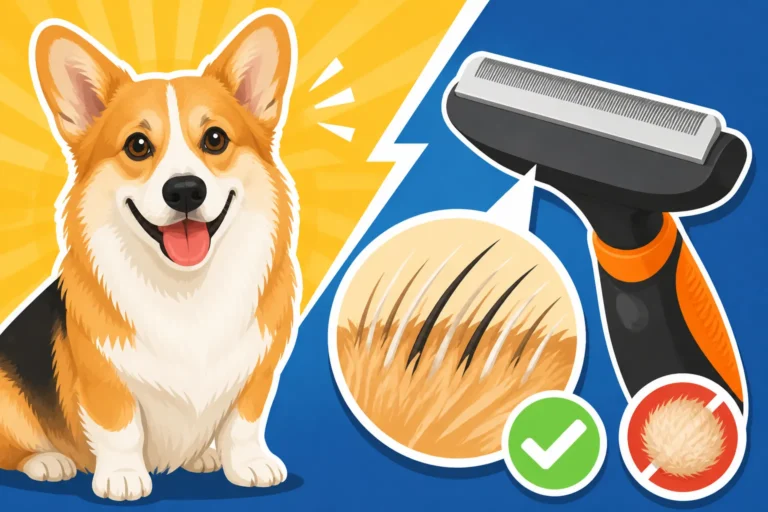
First, a good quality undercoat rake is non-negotiable. This tool has long, rotating teeth that can gently reach through the topcoat and pull out loose undercoat without damaging the guard hairs (though fluffy Corgis have fewer traditional guard hairs, this still applies to the top layers). A slicker brush, with its fine, wire bristles, is excellent for working out smaller tangles and smoothing the coat, especially on the feathering. You'll also need a wide-toothed comb and a greyhound comb (a metal comb with both wide and fine teeth) for checking for mats after brushing. Finally, a good pair of blunt-nosed grooming scissors is essential for carefully trimming around the paws and sanitary areas – never sharp-pointed ones for safety. You can find many of these specialized tools on platforms like Chewy or Amazon. For more on what brushes you need, check out The Rake and Comb a Corgi Coat Actually Needs.
Developing a Regular Brushing Routine
Consistency is absolutely key when grooming a fluffy Corgi at home. A casual brush once a week won’t prevent mats; you’ll likely need to implement a daily or every-other-day routine, especially during heavy shedding periods. Start with your undercoat rake, working in small sections, gently raking through the coat. Pay particular attention to those mat-prone areas: behind the ears, in the armpits, and around the "trousers" on their hind legs. Always brush down to the skin, but be gentle – you don't want to cause brush burn.
Follow up with a slicker brush to smooth the coat and catch any remaining loose hairs. Finish with your metal comb to ensure there are no hidden tangles. If the comb snags, go back to the slicker brush or even your fingers to carefully work out the knot. It’s always easier to prevent a mat than to remove one. If you find a mat forming, try to gently tease it apart with your fingers first, then use the wide-toothed comb, slowly working from the outside of the mat inward. Never pull or rip through a mat, as this is painful for your dog. For severe mats, it’s often best to consult a professional to avoid hurting your Corgi or cutting their skin.
Bathing Your Fluffy Corgi at Home
Bathing a fluffy Corgi is another aspect that requires a bit more effort than with a standard coat. Their dense, soft fur can be surprisingly resistant to getting thoroughly wet, and even more challenging to dry completely. A quick rinse isn't enough; you need to ensure the water and shampoo penetrate all the way to the skin to clean properly. Use a good quality dog shampoo and conditioner, working it gently into the coat. Rinse meticulously, as any leftover shampoo residue can irritate the skin and actually promote matting.
The real challenge often comes with drying. Air drying a fluffy Corgi is generally not recommended, as the dense undercoat can hold moisture for hours, leading to skin irritation, hot spots, and even fungal infections. You'll need a powerful dog-specific blow dryer (human hair dryers can be too hot for their skin and fur) to thoroughly dry their coat, layer by layer, while brushing to prevent tangles and static. This process can take a significant amount of time, often an hour or more, depending on your Corgi's size and coat density. It's a task that many owners find tedious and difficult to master, often leading them to consider professional assistance. Getting a Corgi Dry Through the Undercoat delves deeper into this.
When Professional Grooming Becomes Essential
While dedicated home grooming is commendable, there are definitely times when calling in a professional groomer isn't just a luxury, but a necessity for the health and comfort of your fluffy Corgi. Recognizing these moments can save you a lot of stress and your Corgi a lot of discomfort.
Dealing with Extreme Shedding and Undercoat Blows
Even with a diligent home brushing routine, those intense seasonal "coat blows" can overwhelm even the most prepared Corgi owner. During these periods, a fluffy Corgi can shed what feels like another dog's worth of fur every few days. A professional groomer has specialized high-velocity dryers and techniques that can literally "blow out" massive amounts of loose undercoat far more effectively than any home dryer or brush. This deep deshedding helps prevent matting, reduces shedding in your home, and allows your Corgi's skin to breathe better.
Think of it as a deep clean versus your regular tidying. A groomer can remove layers of dead coat that you might struggle to reach, making your daily maintenance much easier for weeks afterward. If you find yourself brushing for hours every day and still pulling out handfuls of fur, or if your vacuum cleaner is constantly begging for mercy, it might be time to schedule a professional deshedding appointment. It's an investment in both your Corgi's comfort and your sanity.
Matting and Tangling: Beyond DIY Capabilities
This is perhaps the biggest reason many fluffy Corgi owners turn to professionals. The soft, fine texture of a fluffy coat makes it incredibly prone to matting, and once a mat forms, it can quickly become tight, painful, and dangerously close to the skin. Mats can restrict movement, pull on the skin, and even hide skin infections. If left untreated, severe matting can lead to circulation issues and open sores. Trying to remove a severe mat at home with scissors is incredibly risky; it's alarmingly easy to accidentally cut your dog's skin, which is often pulled taut and hidden underneath the mat.
A professional groomer has the experience, tools, and training to safely and efficiently remove mats. They might use specialized dematting tools, or if the mats are too severe, they can carefully clip them out, often requiring a full shave-down to give the coat a fresh start. This isn’t a judgment on your grooming skills; it’s simply acknowledging that some situations require expert intervention. A matted coat is not just a cosmetic issue; it's a welfare issue for your dog. For more on severe matting, consider reading Tangles Behind a Fluffy Corgi's Ears.
Special Circumstances: Hygiene and Comfort Trims
While Corgis shouldn't be shaved down (doing so can ruin their double coat's insulating properties and expose them to sunburn), a professional groomer can perform essential comfort and hygiene trims that are tricky to do safely at home. These include sanitary trims around the hindquarters to prevent fecal matter from collecting, trimming the fur on the belly to prevent urine staining, and neatening up the fur around the paws for better traction and to prevent debris accumulation.
A groomer can also tidy up the long feathering on the legs and chest to make the coat more manageable without compromising its natural protection. They know exactly which areas need attention and how to trim them without creating uneven patches or leaving your Corgi vulnerable. If you’re struggling with keeping your Corgi’s nether regions clean or if their long paw fur is causing them to slip on smooth floors, a professional trim can make a world of difference.
Choosing the Right Groomer for Your Fluffy Corgi
Deciding to use a professional groomer is one thing; finding the right one for a fluffy Corgi is another. Not all groomers are equally experienced with double-coated breeds, let alone the specific challenges of a fluffy Corgi. A good groomer understands the nuances of their coat and prioritizes their comfort and health.
What to Look For in a Professional Groomer
When seeking a groomer, start by asking about their experience with Corgis or other double-coated breeds like Australian Shepherds, Shelties, or Golden Retrievers. A groomer who understands the "no shave" rule for double coats (unless medically necessary for severe matting) is a good sign. They should advocate for deshedding and thorough brushing over shaving, as Why Clipping a Corgi Ruins the Coat explains. Ask about their drying methods; high-velocity dryers are a must for fluffy coats to prevent skin issues.
Look for a clean, well-maintained facility with clear safety protocols. A good groomer will also take the time to discuss your Corgi's specific needs, temperament, and any problem areas (like matting). Don't be afraid to ask for a tour of their facility or to see examples of their work. Word-of-mouth referrals from other Corgi owners in your area can also be incredibly valuable. Remember, a cheap groom isn't always the best groom, especially for a coat as demanding as a fluffy Corgi's. What a Corgi Groom Costs at a Salon can give you an idea of typical pricing.
Communicating Your Corgi's Needs and Temperament
Once you’ve chosen a groomer, clear communication is paramount. Be honest about your Corgi's temperament. Are they anxious? Do they nip? Are they sensitive about their paws or hindquarters? Sharing this information helps the groomer adjust their approach to make the experience as positive as possible. Also, clearly state your grooming goals. Do you want a full deshed, a sanitary trim, or just help with maintenance? Bring photos if it helps illustrate what you're looking for.
If your Corgi is prone to matting in specific spots, point those out. If they have any health conditions, especially back issues, ensure the groomer is aware so they can handle your Corgi with extra care. A good groomer will listen attentively and offer advice rather than just rushing through the process. It's a partnership to keep your fluffy Corgi looking and feeling their best.
Combining Home and Professional Grooming
For many fluffy Corgi owners, the ideal solution lies not in an either/or scenario, but in a smart combination of home maintenance and professional assistance. This hybrid approach often proves to be the most effective for keeping their luxurious coats in top condition without overwhelming the owner or breaking the bank.
The Benefits of a Hybrid Approach
By regularly brushing and performing basic clean-ups at home, you keep your Corgi’s coat in good shape between professional appointments. This home care significantly reduces the chances of severe matting, making the groomer's job easier and often less stressful (and sometimes less expensive) for your dog. For instance, you might handle daily brushing, minor detangling, and routine paw/ear checks.
Then, every 6-8 weeks (or more frequently during peak shedding seasons), a professional groomer can step in to provide that deep deshedding, thorough bathing and drying, and precise comfort trims that are harder to achieve at home. This allows you to tackle the manageable tasks, while leaving the more challenging, time-consuming, or specialized aspects to an expert. This balance ensures your fluffy Corgi always looks fantastic and feels comfortable, while also fostering a bond through daily handling and care. Whether a Corgi Coat Can Be Managed at Home and Grooming a Corgi That Sits Six Inches Off the Ground further illustrate the commitment needed for home care.
When to Schedule Professional Visits
The frequency of professional grooming depends on several factors: the density of your Corgi’s fluffy coat, how prone they are to matting, your dedication to home grooming, and the time of year. During heavy shedding periods, you might find professional visits are necessary every 4-6 weeks to manage the sheer volume of loose hair. Other times, 8-10 weeks might suffice.
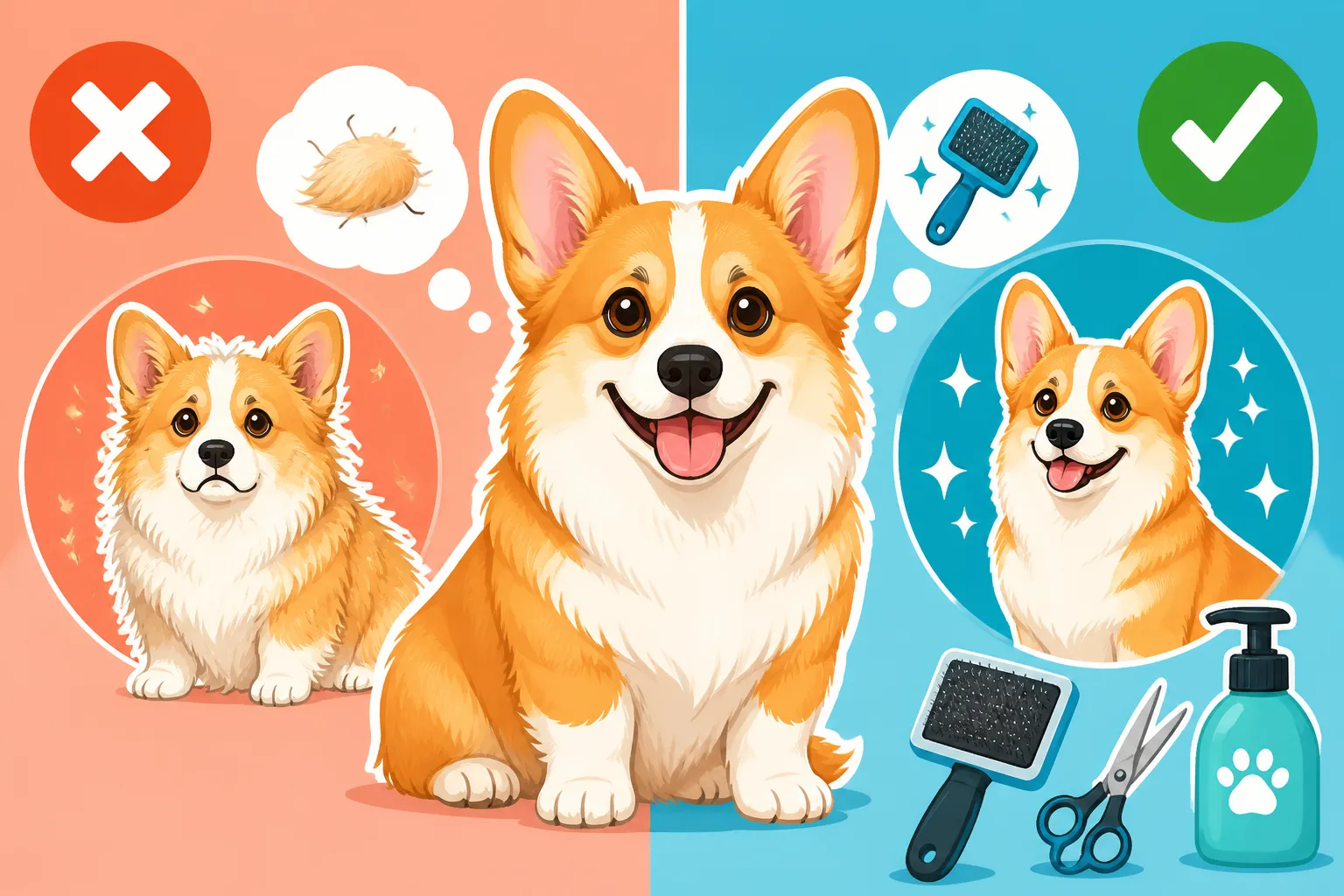
A good starting point is to schedule a full professional groom every 6-8 weeks. After the first few visits, you and your groomer can assess how well your Corgi’s coat is holding up and adjust the schedule accordingly. If you notice mats forming despite your best efforts, or if your Corgi starts to get noticeably uncomfortable, don’t hesitate to call your groomer sooner. Regular, proactive visits are always better than waiting until a severe problem develops.
Maintaining Coat Health Beyond Brushing
Beyond brushing and bathing, a fluffy Corgi's coat health is also influenced by their overall well-being. A high-quality diet, for instance, provides the nutrients necessary for healthy skin and a shiny coat. Look for foods with omega fatty acids, which can support skin hydration and coat luster. You can find excellent food options for all life stages, including those supporting coat health, on sites like Ollie. Regular exercise, fresh water, and routine vet check-ups also contribute to a healthy coat, making grooming easier.
It's a holistic approach: good nutrition provides the building blocks, diligent home grooming keeps it tangle-free, and professional expertise handles the heavy lifting. By combining these elements, you can ensure your fluffy Corgi’s stunning coat remains a source of joy, not a constant battle.
Grooming Schedule Comparison: DIY vs. Professional
To give you a clearer picture, here’s a quick comparison of what managing a fluffy Corgi’s coat typically entails with a purely DIY approach versus leveraging professional groomers.
| Aspect | DIY Grooming (Home) | Professional Grooming (Salon) | Hybrid Approach (Home + Salon) |
|---|---|---|---|
| Frequency | Daily to Every Other Day (brushing) | Every 4-10 Weeks (full groom) | Weekly/Daily (home) + Every 6-8 Weeks (professional) |
| Time Commitment | High (daily brushing 15-30 min, bath 1-2+ hrs) | Moderate (drop-off/pick-up, wait time) | Moderate (daily home care, less frequent professional visits) |
| Skill Required | Moderate to High (mat removal, drying techniques) | High (specialized training, tools) | Moderate (basic home care, professional for complex tasks) |
| Tools Needed | Rake, slicker, combs, dryer, scissors, shampoo | Full range of professional tools & equipment | Basic home tools, professional tools for groomer |
| Cost | Initial tool investment, ongoing product cost | Ongoing service fee per visit | Initial home tool investment, ongoing professional fees |
| Effectiveness | Good for maintenance, challenging for deep deshed | Excellent for deep deshed, mat removal, hygiene trims | Optimal: balances thoroughness with owner involvement |
| Mat Prevention | Depends heavily on consistency and technique | Excellent for prevention through deep cleaning | Best for consistent mat prevention |
| Stress for Corgi | Can be low if started young and positive | Can vary by groomer and dog's temperament | Generally lower stress with consistent positive experiences |
Ultimately, whether a fluffy Corgi needs a groomer isn’t a simple yes or no. It depends on your comfort level, commitment, and the specific needs of your dog's coat. However, for most owners, a partnership with a skilled professional groomer, combined with diligent home care, is the most practical and beneficial approach to keeping these magnificent little dogs looking and feeling their very best.
Disclaimer
This article is for general informational purposes only and does not constitute professional advice. Laws, prices and regulations vary by location and change over time. Consult a qualified professional for guidance on your specific situation.