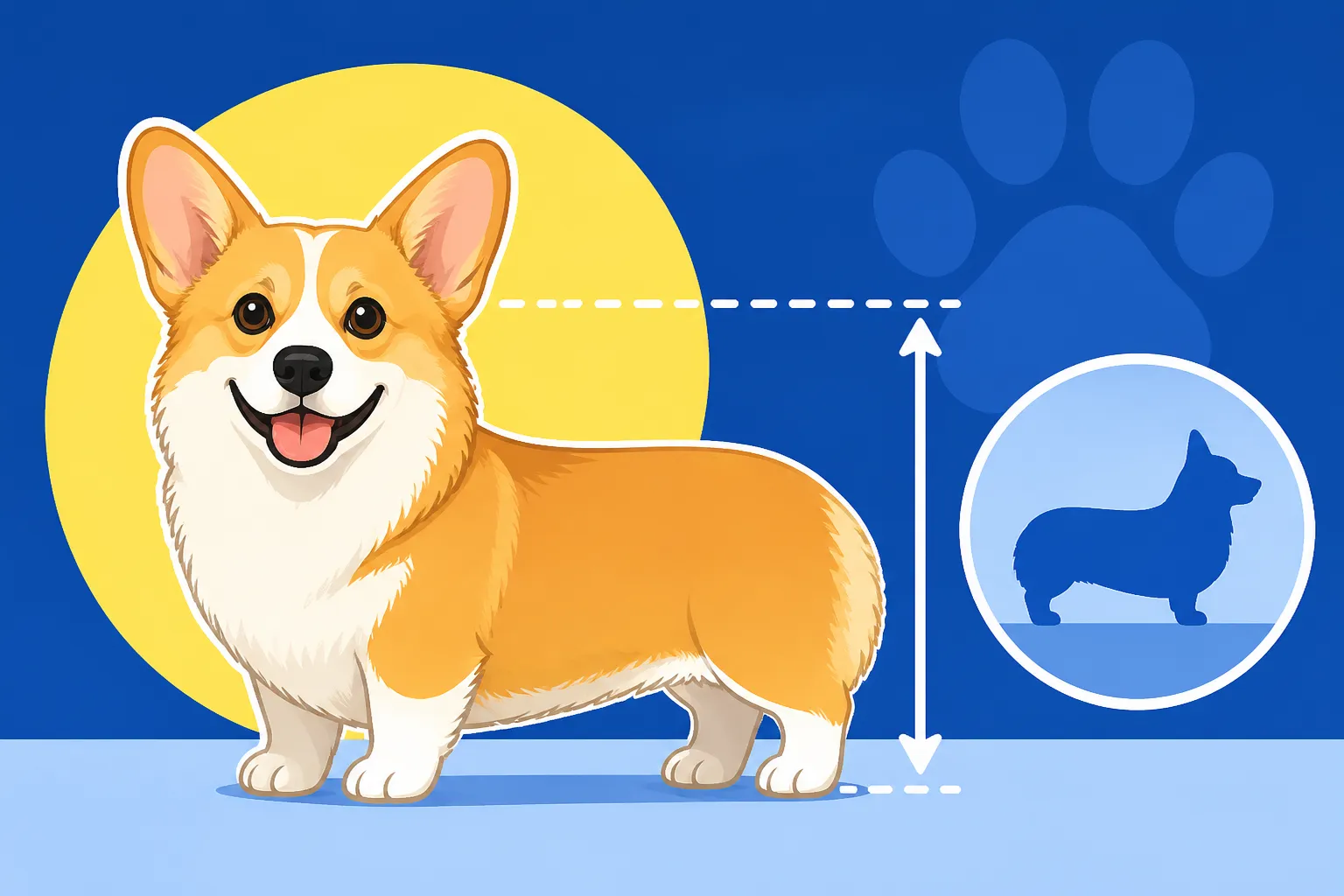
How Tall a Corgi Should Stand
It's completely normal to gaze at your adorable Corgi puppy, or even your fully grown adult, and wonder if they're "just right." With their famously short legs and long bodies, Corgis have such a distinctive shape that it can be tricky to know if your furry family member is truly standing at the ideal height according to the breed standard. This guide is here to demystify Corgi height, explain why it matters, and help you understand what's considered typical for these wonderful dogs.
The Official Breed Standard for Corgi Height
When we talk about how tall a Corgi should stand, we're really looking at the breed standard. This isn't just a fancy rulebook for show dogs; it's a blueprint that describes the ideal characteristics of the breed, including their physical build, temperament, and movement. Understanding it gives us insight into the very essence of what makes a Corgi a Corgi.
Pembroke Welsh Corgi Height Guidelines
For the beloved Pembroke Welsh Corgi, the breed standard specifies a particular height at the withers. The withers are that spot between your dog's shoulder blades, the highest point of the back, and it's the standard place to measure a dog's height. An adult Pembroke Welsh Corgi should typically stand between 10 and 12 inches (25 to 30 cm) at the withers. This might seem like a small range, but for a dog with such short legs, every inch makes a difference in their overall balance and how they move.
It's all about proportion. A Pembroke is a sturdy, active little herder, and its height contributes to its ability to perform its original job of driving cattle by nipping at their heels while avoiding kicks. If a Pembroke is too tall, it might lose that low-slung, agile build. If it's too short, it might appear cumbersome or lack the necessary leg length for efficient movement. You often hear discussions about The Ten to Twelve Inch Corgi because this specific range is so key to the breed's identity and function. Breeders work hard to produce dogs within this range, prioritizing sound structure over extreme size.
Cardigan Welsh Corgi Height Guidelines
Now, let's talk about their slightly larger cousins, the Cardigan Welsh Corgi. While they share the "Corgi" name and a similar long, low profile, Cardigans have their own distinct breed standard, which includes a slightly different height requirement. An adult Cardigan Welsh Corgi usually stands between 10.5 and 12.5 inches (26.5 to 32 cm) at the withers.
As you can see, the Cardigan tends to be just a touch taller, with a bit more bone and substance overall. This aligns with their own history and development as a slightly older, perhaps more robust, cattle-driving dog. They also tend to carry a bit more weight for their size than Pembrokes, which is part of their breed type. You can learn more about this in articles like What a Pembroke Weighs Against a Cardigan. Just like with Pembrokes, these measurements are about ensuring the dog possesses the physical attributes to move freely and perform the tasks it was bred for. A good breeder will always strive for correct breed type, ensuring the dog's height is in proportion to its length and substance, creating a balanced and functional dog.
Why "How Tall" Matters Beyond the Tape Measure
You might be thinking, "My Corgi isn't going to be a show dog, so why should I care about inches and centimeters?" It's a valid question, and for many pet owners, an inch or two outside the standard isn't the end of the world. However, understanding the why behind the standard can give you valuable insights into your Corgi's health and structural soundness.
Health Implications of Off-Standard Height
When a Corgi falls significantly outside the established height range, especially if they are overly tall or unusually short, it can sometimes be an indicator of underlying structural imbalances. Corgis are a chondrodystrophic breed, meaning they have a form of dwarfism that results in their characteristic short legs. This specific genetic trait also means they are predisposed to certain spinal issues, most notably Intervertebral Disc Disease (IVDD), which you can read more about in Disc Disease in a Long-Backed Corgi.
A Corgi's back is literally built the way it is to support their specific physique, and an extreme deviation in height can impact this. If a Corgi is too tall, its legs might be out of proportion to its body length, potentially affecting joint alignment and putting undue stress on certain areas. Conversely, an abnormally short Corgi might have even more compressed vertebrae, which could contribute to spinal issues, though it's important to remember that genetics and overall care play huge roles. It's less about the exact number and more about how the entire dog's The Corgi Body the Standard Describes comes together as a cohesive, healthy unit. These are things responsible breeders consider diligently.
Show Ring Standards vs. Pet Ownership
For those involved in conformation shows, strict adherence to the breed standard, including height, is paramount. A judge is looking for the ideal representation of the breed, and a Corgi that is significantly too tall or too short might be penalized or even disqualified, as discussed in Whether a Big Corgi Is Over the Standard. The goal is to preserve the breed's unique characteristics and ensure healthy, functional dogs continue to be bred.
However, for us everyday Corgi enthusiasts whose dogs are cherished family members rather than show contenders, a slight deviation from the "perfect" height is usually not a cause for alarm. What truly matters is that your Corgi is healthy, happy, and well-cared for. A Corgi that is a little taller or shorter than the standard can still live a full and joyful life, as long as they are structurally sound and free from pain. Your veterinarian will always be your best resource for evaluating your Corgi's overall health and discussing any concerns about their physical build or potential health risks. What we truly want are healthy, well-proportioned dogs, not just dogs that hit a precise number.
What Influences a Corgi's Adult Height?
Just like with humans, a Corgi's adult height is a blend of nature and nurture. While their genetic blueprint sets the potential, environmental factors during growth can also play a role. Understanding these influences can help you appreciate your Corgi's unique development.
Genetics and Breeding
The primary determinant of your Corgi's adult height is its genetic heritage. Simply put, genetics from the parents dictate much of a puppy's eventual size. Reputable breeders pay close attention to the heights of their breeding stock, aiming to produce puppies that fall within the breed standard for The AKC Pembroke Welsh Corgi Standard or the Cardigan equivalent. They understand that consistent adherence to the standard over generations helps maintain the breed's characteristics and structural integrity.
When you're looking for a Corgi puppy, a good breeder will be transparent about the size of the parents and can often give you a reasonable estimate of how tall their puppies are likely to be as adults. They'll also be aware of the genetic conditions associated with the breed's unique structure, such as What Chondrodystrophy Means for a Corgi. It's not just about height, but the entire skeletal system. Genetic predisposition plays a huge role in overall structure, which in turn affects lifespan and quality of life, especially in later years, as explored in The Corgi Years When the Back End Gives Out. Choosing a puppy from well-researched lines is always a wise decision for long-term health.
Growth Stages and Expectations
Corgi puppies grow quite rapidly in their first few months! They typically reach most of their adult height by about 6 to 8 months of age, though they may continue to fill out and add muscle mass until they are 12 to 18 months old. During their rapid growth phase, it's not uncommon for puppies to look a little gangly or disproportionate. Their legs might seem too long one week, and then their body seems to catch up the next.
It's important not to worry excessively about precise measurements during puppyhood. Focus instead on providing a high-quality, balanced diet specifically formulated for puppies of small to medium breeds. Overfeeding can lead to rapid growth, which can sometimes put stress on developing joints, so maintaining a healthy weight is crucial from day one. You can find excellent puppy food options and guidance on proper nutrition from retailers like Chewy. Monitoring their general well-being and growth progression with your vet is far more important than trying to predict their exact adult height too early. Let them grow naturally, focusing on solid nutrition and appropriate exercise for their age.
Measuring Your Corgi's Height Accurately
So, you want to know how your Corgi stacks up? Measuring your dog accurately at home is definitely doable, but it requires a bit of patience and knowing where to place that tape measure. Precision is key, especially when comparing to breed standards.
Tools and Techniques for Home Measurement
To measure your Corgi's height at the withers, you'll need a couple of things:
- A measuring tape or a specialized dog measuring stick/wicket: A tailor's tape measure works, but a rigid ruler or a carpenter's square can be more accurate. You can even find dog-specific measuring wickets available on sites like Chewy that are designed for this purpose.
- A flat, level surface: This is crucial. Your dog needs to stand squarely on a hard, flat floor, not on a carpet where their feet might sink slightly.
- A willing Corgi: This is often the trickiest part! A treat or a helper can make this much easier.
Here's how to do it:
- Get your Corgi to stand square: This means all four feet should be directly under them, not stretched out front or back. Their head should be held naturally, not craning up or dipping down. Imagine them standing proud, as if they're about to herd a flock of sheep.
- Locate the withers: Feel for the prominent bony ridge between their shoulder blades. This is the highest point of their back.
- Measure:
- If using a tape measure/ruler: Place one end of the tape on the floor directly next to your Corgi's front foot. Then, using a level (a carpenter's level works great here, or even a book held flat), extend it from the top of the withers straight across to the tape measure. Read the measurement where the level intersects the tape.
- If using a dog wicket: Simply adjust the horizontal bar of the wicket until it rests gently on your Corgi's withers, ensuring the vertical part is flush with the floor. The measurement will be indicated on the wicket.
Remember to take the measurement a few times to ensure consistency. It's amazing how much an inch can vary if your dog shifts its weight!
When to Seek a Professional Opinion
While home measurements are great for general curiosity, there are times when a professional's eye is invaluable. If you're seriously considering showing your Corgi, an experienced breeder or a show judge will have specialized equipment (like a proper wicket) and the trained eye to measure your Corgi with exacting precision. They understand The Corgi Head and Ear Set and other nuances of the breed standard, so they can assess your dog's overall conformation, not just height.
Furthermore, if you have any concerns about your Corgi's growth, gait, or posture, a visit to your veterinarian is always the best course of action. They can evaluate their skeletal development and pinpoint any potential issues that might arise from an unusual height or overall structure. For example, if you notice an awkward gait or signs of discomfort, it's vital to rule out problems like Early Arthritis in a Corgi or other structural concerns. Your vet can provide accurate measurements, and more importantly, interpret those measurements in the context of your individual dog's health and well-being.
Corgi Height Comparison: Pembroke vs. Cardigan
To give you a quick visual reference of the typical height ranges, here's a handy comparison table between the two Corgi breeds. Remember, these are ideal ranges for mature, adult dogs.
| Feature | Pembroke Welsh Corgi | Cardigan Welsh Corgi |
|---|---|---|
| Height at Withers | 10-12 inches (25-30 cm) | 10.5-12.5 inches (26.5-32 cm) |
| General Build | Slightly lighter-boned, agile | Slightly heavier-boned, robust |
| Head Shape | More foxy, pointed ears | Broader, rounder ears |
| Tail | Naturally bobtail or docked | Long, fox-like tail |
| Overall Impression | Foxy, lively, alert | Sturdy, powerful, active |
This table highlights that while both are distinctly Corgi, those small differences in height, coupled with other traits, contribute to their unique breed identities. Regardless of whether you have a Pembroke or a Cardigan, the core idea is a well-balanced, sturdy dog that is built for durability and activity. It's about overall health and structural soundness more than hitting a precise number on a tape measure. You'll want to think about Why a Corgi's Back Is Built the Way It Is in conjunction with its leg length.
Disclaimer
This article is for general informational purposes only and does not constitute professional advice. Laws, prices and regulations vary by location and change over time. Consult a qualified professional for guidance on your specific situation.