Feeders That Make a Corgi Work for Dinner
It's a familiar scene in many Corgi households: you put down the food bowl, and before you can even turn around, it's empty. Your beloved Corgi has inhaled their dinner faster than a vacuum cleaner, leaving you wondering if they even tasted it. This lightning-fast eating isn't just a quirky habit; it can lead to digestive upset, boredom, and even contribute to weight management challenges. This guide is all about tackling that speedy eating and enriching your Corgi's mealtime by exploring feeders that make them slow down and work for their dinner.
Why Your Corgi Benefits from Working for Their Dinner
Let's be honest, Corgis are smart cookies, and they thrive when given a job to do. When their dinner comes too easily, they miss out on a valuable opportunity for mental and physical engagement. Turning mealtime into a bit of a challenge doesn't just make it last longer; it genuinely benefits their overall well-being.
Slowing Down Mealtime for Better Digestion
When a Corgi scarfs down their food in mere seconds, they're not just gulping kibble; they're also gulping a lot of air. This rapid ingestion can lead to all sorts of digestive discomfort, from gas and bloating to more serious issues like regurgitation or even an increased risk of bloat (gastric dilation-volvulus), though that's more commonly associated with deeper-chested breeds. Even for Corgis, a slower eating pace means they chew their food more thoroughly, mixing it with saliva, which is the first step in proper digestion. Their stomach has a chance to prepare for the incoming meal, and the entire digestive process becomes smoother and more efficient. Think of it like a leisurely human meal versus chugging a soda — one feels a lot better afterward.
Giving your Corgi a chance to actually taste their food and process it mentally also helps them feel more satisfied. Instead of a sudden burst of calories followed by immediate hunger cues, the prolonged eating experience signals to their brain that they're full. This can be a game-changer if you have a Corgi that seems to Whether a Corgi Ever Says It Is Full, always looking for more food even right after their meal.
Combating Boredom and Channeling That Corgi Brain
Corgis, with their herding heritage, are incredibly intelligent and often have a strong desire to problem-solve. If they're not given appropriate outlets for this mental energy, they can easily become bored, and a bored Corgi is often a mischievous Corgi. Chewing on furniture, excessive barking, or even herding family members (and nipping at ankles!) can stem from a lack of mental stimulation. Making them work for their food taps into their natural instincts to forage and figure things out. It turns a mundane daily routine into an engaging activity, reducing restlessness and providing a healthy outlet for their bright minds.
Imagine your Corgi spending 15-20 minutes focused on getting every last piece of kibble out of a puzzle, rather than finishing in 30 seconds and then wandering off to find trouble. This sustained mental effort is surprisingly tiring for dogs, similar to how a long day of thinking can make us feel exhausted. It contributes significantly to their overall happiness and can reduce unwanted behaviors that often arise from under-stimulation. This sort of engagement is just as important as physical exercise for their well-being, especially for a breed known for its intelligence and independent spirit. You might find your Corgi A Corgi That Will Not Settle Indoors actually settling down better after a mentally stimulating meal.
Supporting Healthy Weight Management
Corgis are notoriously prone to weight gain. Their adorable, low-slung bodies make it easy for extra pounds to sneak up under their thick coats, and those extra pounds put significant strain on their already sensitive backs. Why Corgi Weight Is a Spinal Problem is a serious concern, and managing their intake is paramount. By making your Corgi work for their dinner, you naturally extend the time it takes them to eat, which can contribute to a feeling of fullness on smaller portions. When they eat quickly, their brain doesn't have enough time to register satiety, leading them to feel hungry sooner or beg for more.
Slow feeders and puzzle feeders are excellent tools for managing The Body Condition Score a Corgi Should Hold. If you're struggling to keep your Corgi at a healthy weight, incorporating these feeders can be a simple yet effective strategy. It encourages mindful eating and can help you stick to their prescribed The Calorie Target for a Twenty-Eight Pound Corgi without them feeling deprived. Plus, some of these feeders involve a bit of physical manipulation, adding a tiny bit of low-impact "exercise" to their mealtime routine.
Types of Feeders That Make Your Corgi Work
The market for feeders that slow down eating and provide mental enrichment has exploded, which is fantastic news for Corgi owners. There's a huge variety out there, from simple modifications to complex puzzles. You can find many options on sites like Amazon, making it easy to explore different styles and materials to see what works best for your Corgi.
Classic Slow Feeder Bowls
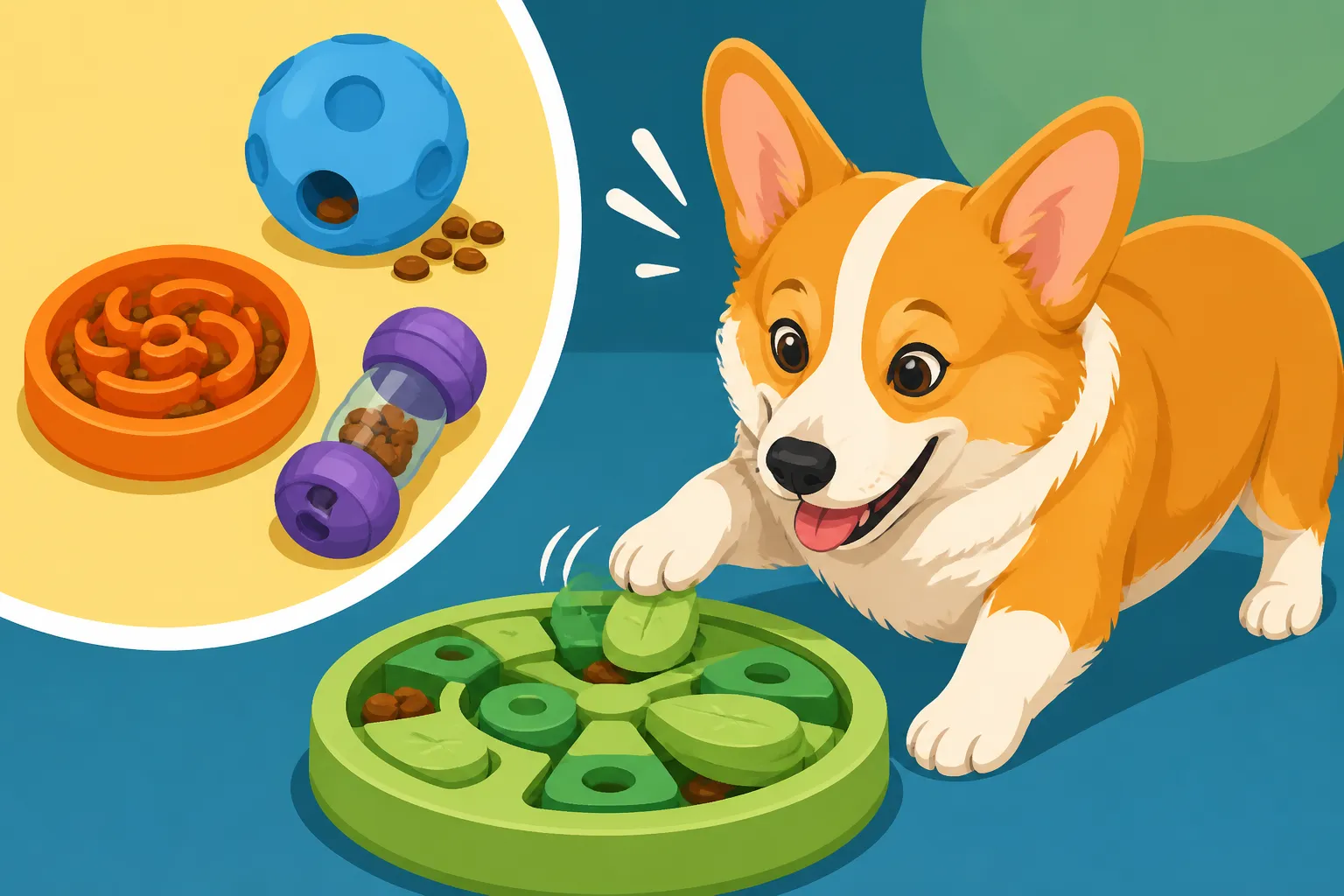
The most straightforward option is the classic slow feeder bowl. These bowls aren't designed to be puzzles in the traditional sense, but rather have ridges, mazes, or pillars built into the bottom that force your Corgi to navigate around obstacles to get to their kibble. Instead of a flat surface where they can scoop up mouthfuls, they have to use their tongue or nose to push pieces around, picking them up one by one.
These are a fantastic starting point for any Corgi that's currently inhaling their meals. They're generally easy to clean, durable, and don't require much "learning" from your Corgi beyond adapting their eating style. You'll often find them made from sturdy plastic, silicone, or even ceramic. Some popular designs include swirl patterns, bone shapes, or simple geometric divisions. While they might not provide the same level of mental challenge as a true puzzle feeder, they are incredibly effective at increasing meal duration and reducing gulping, which is a big win for digestion.
Interactive Puzzle Feeders
Now we're moving into the realm of true mental enrichment! Interactive puzzle feeders require your Corgi to use their brain and paws (or nose) to solve a small challenge before they get their reward. These can range from simple designs where they push a slider or lift a lid to more complex contraptions involving multiple steps or mechanisms. The goal is to engage their problem-solving skills, making them think about how to access their food.
There are many different types:
- Slider Puzzles: These often have compartments covered by sliding tops that your Corgi has to nudge with their nose or paw.
- Flip-Top Puzzles: Your Corgi might need to flip open small lids or doors to get to the kibble.
- Dispensing Toys: Think of a Kong Wobbler or similar contraption. You fill it with kibble, and your Corgi has to nudge, bat, or roll it around to make pieces fall out. These are particularly great because they also involve physical movement.
- Level Puzzles: Some feeders have multiple layers or drawers that your Corgi needs to manipulate in sequence.
When choosing an interactive puzzle feeder, consider your Corgi's current skill level. Start with something relatively easy to prevent frustration and build confidence. As they master one, you can gradually introduce more challenging puzzles. These feeders are incredible for intellectual stimulation and can be part of a broader enrichment strategy, even complementing training sessions where Training Treats That Fit a Corgi's Allowance can be doled out.
Snuffle Mats and Other Fabric Options
Snuffle mats are a relatively newer addition to the enrichment feeder family, and Corgis tend to absolutely adore them. A snuffle mat is essentially a fabric mat with numerous strips of fleece or other soft material sewn onto it, creating a dense, shaggy texture. You sprinkle kibble or small treats deep within the folds and pockets of the fabric, and your Corgi has to use their nose to "snuffle" and root around to find every piece.
This activity directly mimics natural foraging behavior, which dogs find incredibly satisfying. It engages their powerful sense of smell, provides gentle physical movement as they push their nose into the mat, and offers a wonderful form of mental enrichment. Snuffle mats are often soft, washable, and generally safe for Corgis of all ages. They're usually quieter than plastic puzzle toys, which can be a bonus in some households. They are a fantastic alternative to bowls, especially if your Corgi needs a low-impact activity or if you want to give their back a break from bending over a hard bowl for too long. Just make sure the mat is well-made and durable to withstand enthusiastic Corgi snuffling!
Introducing "Work for Dinner" into Your Corgi's Routine
Switching from a traditional bowl to a feeder that makes your Corgi work for their dinner isn't always an instant success. Corgis, with their clever and sometimes stubborn nature, might need a little encouragement. Patience and a gradual approach are key to making this a positive and rewarding experience for both of you.
Starting Simple and Building Up
The biggest mistake you can make is throwing your Corgi a complex, multi-stage puzzle feeder on day one and expecting them to figure it out immediately. That's a recipe for frustration! Start simple. If your Corgi has never used anything but a plain bowl, begin with a basic slow feeder bowl. These bowls make it physically harder to gobble, but don't require much problem-solving. It's a gentle introduction to the concept of slower eating.
Once they've mastered the slow feeder bowl, you can introduce a very easy puzzle feeder. Choose one with large, obvious compartments or a simple mechanism that your Corgi can quickly figure out. Leave the lids partially open or put just a few pieces of kibble in each section so success comes quickly. Stay with them during these first few sessions to offer praise and gentle guidance. You're teaching them a new skill, and like any good teacher, you want to set them up for victory. Programs like BAXTER & Bella often emphasize positive reinforcement and building skills gradually, which applies perfectly here. As your Corgi gains confidence and skill, you can slowly increase the difficulty, moving to more intricate puzzles or burying kibble deeper in snuffle mats.
Safety Considerations and Supervision
While feeders that make your Corgi work for dinner are incredibly beneficial, it's crucial to prioritize safety. Always supervise your Corgi when they're using a new feeder, especially in the beginning. Some Corgis might try to chew or destroy the feeder to get to the food faster, particularly if it's made of plastic. If you notice this behavior, redirect them by showing them the correct way to interact with the feeder, or consider a more durable material like hard rubber or ceramic. You'll want to ensure there are no small, detachable parts that could become choking hazards.
Regularly inspect all feeders for wear and tear. Cracks, loose pieces, or frayed fabric on a snuffle mat can become problematic. Keep the feeders clean, too! Food residue can quickly build up, especially in the nooks and crannies of puzzle feeders, leading to bacterial growth. Most plastic and silicone feeders are dishwasher safe, and snuffle mats can usually be tossed in the washing machine. A clean feeder is a safe feeder, and it helps maintain a healthy environment for your Corgi.
Integrating Training with Mealtime
Mealtime offers a wonderful opportunity to reinforce training and strengthen your bond with your Corgi. Instead of just putting the feeder down, integrate simple commands. For instance, have your Corgi "sit" and "stay" before you place the feeder down. You can even use the feeder as part of more advanced exercises. For example, if you're working on Corgi Recall and the Herding Instinct, you could scatter some of their dinner in a designated "search area" and use your recall command before letting them find it.
Another idea is to use small portions of their daily kibble as rewards for good behavior throughout the day, and then use the remaining portion in a slow feeder for dinner. This ensures their entire food allowance is earned, promoting a sense of accomplishment and further engaging their intelligent minds. This mindful approach to feeding is about more than just nutrition; it's about providing purposeful activity and enriching their daily lives. Even for an independent Corgi that might sometimes Why an Independent Corgi Ignores You, making food a reward for interaction can be highly motivating.
Choosing the Right Feeder for Your Individual Corgi
With so many options out there, how do you pick the perfect "work for dinner" feeder for your Corgi? It really comes down to understanding your own dog's personality, their current skill level, and what works best for your household's routine.
Assessing Your Corgi's Personality and Skill Level
Every Corgi is unique. Some are super quick learners who love a challenge, while others might get frustrated easily or prefer a more straightforward approach. Observe your Corgi's natural tendencies:
- Are they a "go-getter" who loves to figure things out? They might quickly take to interactive puzzle feeders.
- Do they get easily frustrated or give up quickly? Start with a very simple slow feeder bowl or a highly accessible puzzle. Too much difficulty initially can turn them off the idea entirely.
- Are they very scent-driven? A snuffle mat might be a huge hit, tapping into their powerful nose.
- Are they prone to chewing things they shouldn't? Opt for more durable materials like hard rubber (e.g., Kong brand products) or ceramic, and definitely supervise closely. Avoid plastic if they're a known destroyer.
You might even want to try a few different types to see what your Corgi enjoys most. Some dogs prefer pushing things with their nose, others like batting with their paws, and some just love to sniff out hidden treasures. Diversifying their feeders can keep things interesting and prevent boredom with just one type.
Durability and Cleaning for Busy Corgi Owners
Let's face it, as Corgi owners, we're busy! We need products that are not only effective but also practical. Durability is key – Corgis can be pretty enthusiastic, and a flimsy feeder won't last long. Look for feeders made from high-quality, non-toxic materials that can withstand daily use. If you have a Corgi known for their strong jaws or tendency to chew, consider heavy-duty rubber or ceramic options over thin plastic.
Cleaning is another major factor. Intricate puzzle feeders can sometimes be a pain to clean, especially if kibble gets stuck in tiny crevices. Look for designs that are easy to disassemble or have wide openings that allow for thorough washing. Dishwasher-safe options are a huge bonus. Snuffle mats, while great for mental stimulation, need to be machine washable to keep them hygienic. A feeder that's difficult to clean will quickly become a nuisance, no matter how good it is for your Corgi.
Budget-Friendly Options and DIY Solutions
You don't need to break the bank to provide your Corgi with enriching mealtime experiences. There are plenty of budget-friendly slow feeder bowls available, and many interactive puzzle feeders come in a range of price points. Check online retailers like Amazon for competitive pricing and a wide selection.
If you're handy or just want to try something simple, there are also fantastic DIY options.
- Muffin Tin Feeder: Place a few pieces of kibble in each cup of a muffin tin. For an added challenge, place a tennis ball or other dog-safe toy over some of the kibble, forcing your Corgi to move the obstacle.
- Plastic Bottle or Cardboard Roll Dispenser: Cut a few holes in a clean, empty plastic water bottle or a sturdy cardboard paper towel roll. Fill it with kibble and cap/fold the ends. Your Corgi will have to roll and bat it to get the food out.
- Towel Roll-Up: Lay a towel flat, sprinkle kibble over it, then roll it up tightly. Your Corgi has to unroll and snuffle to get the food.
These DIY options are a great way to experiment with different "work for dinner" concepts before investing in a specialized feeder. Plus, they can be rotated into your Corgi's routine to keep things fresh and exciting, adding variety to their meals and enriching their day without constant purchases.
Here's a quick comparison of popular feeder types to help you decide:
| Feeder Type | Primary Benefit | Difficulty Level | Cleaning Ease | Material Examples | Corgi Suitability |
|---|---|---|---|---|---|
| Slow Feeder Bowl | Slows eating, aids digestion | Low | High | Plastic, Ceramic, SS | Excellent for beginners, fast eaters, daily use |
| Interactive Puzzle | Mental stimulation, problem-solving | Medium-High | Medium | Plastic, Wood, Hard Rubber | Good for intelligent Corgis, varied engagement |
| Dispensing Toy | Mental & physical activity | Medium | Medium-High | Rubber, Plastic | Great for active Corgis, can be used for enrichment |
| Snuffle Mat | Foraging instinct, scent work | Low-Medium | Medium | Fleece, Fabric | Ideal for all Corgis, good for low-impact mental work |
| DIY (Muffin Tin) | Budget-friendly, variety | Low | High | Muffin Tin, Towel | Versatile, good for testing preferences, readily available |
Embracing the "work for dinner" philosophy can dramatically improve your Corgi's physical and mental health. From reducing digestive issues to curbing boredom and aiding in What an Ideal Corgi Weighs, these feeders are a simple yet powerful tool in your Corgi care arsenal. It's a small change that can make a huge difference in their overall happiness and well-being.
Disclaimer
This article is for general informational purposes only and does not constitute professional advice. Laws, prices and regulations vary by location and change over time. Consult a qualified professional for guidance on your specific situation.