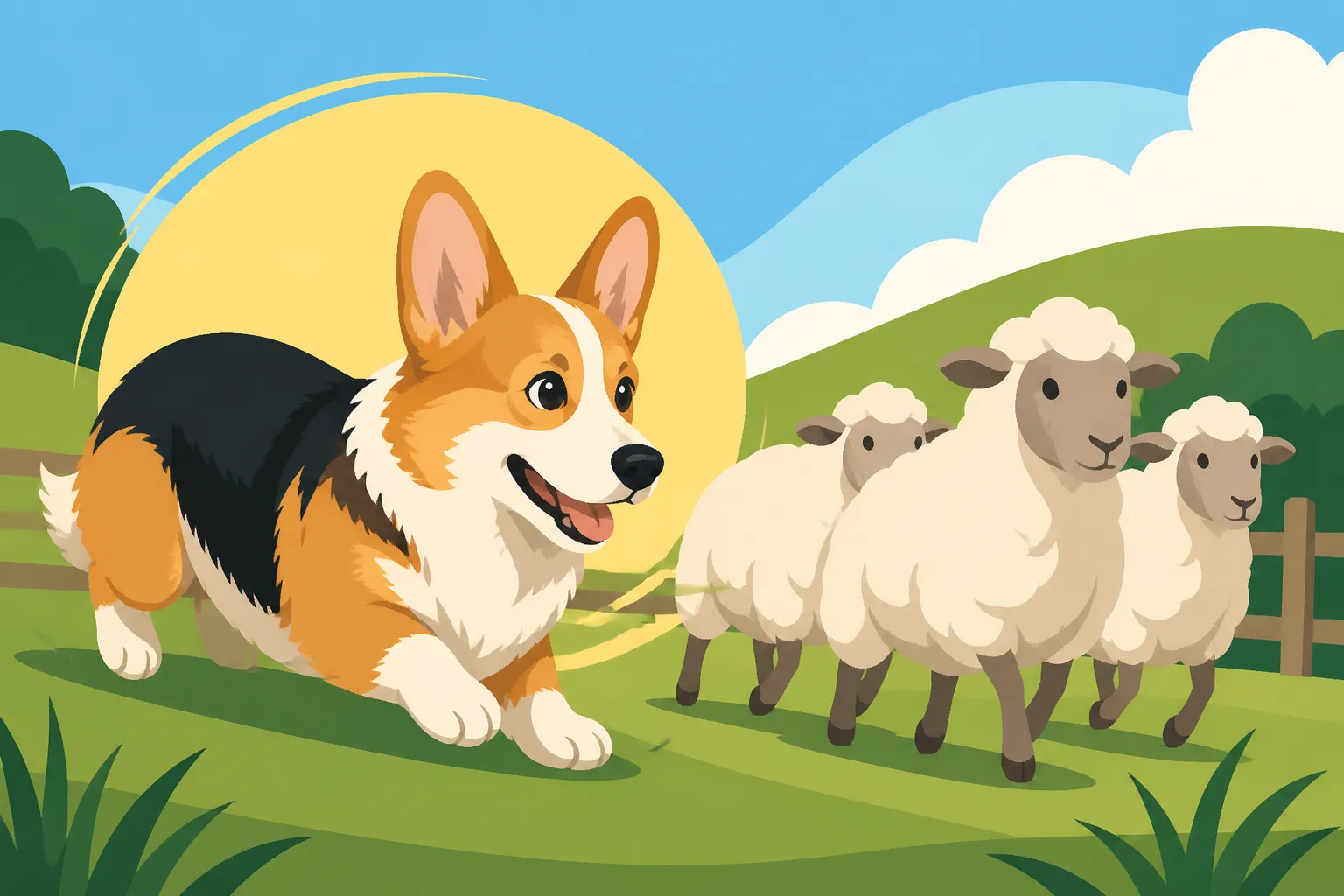
Starting Herding With a Corgi
That bustling energy, the way your Corgi tries to round up the kids, or even just stalks a dust bunny with intense focus – it's all part of their deep-seated herding instinct. Many Corgi owners feel a mix of amusement and frustration watching this drive, and wonder if there's a way to channel it positively. This guide is all about exploring how you can tap into your Corgi's natural talents and safely start them on a herding journey, whether that involves actual sheep or just fun, instinct-driven games.
Understanding Your Corgi's Herding Instinct
It's easy to look at those short legs and long body and forget that beneath the adorable fluff lies a serious working dog. Corgis, both Pembrokes and Cardigans, were bred for generations to be efficient, intelligent herders, specifically for cattle. This isn't just a cute quirk; it's ingrained in their very being.
The Roots of the Corgi's Drive
Imagine a vast Welsh pasture, dotted with cattle much larger than your little Corgi. These dogs weren't herding from a distance like some collies might; they were heeling dogs. Their low stature allowed them to duck and weave under the kicking hooves of cattle, nipping at their heels to move them along. This created a strong, independent, and sometimes bossy nature. They had to be clever and quick, making decisions on their own to get the job done. That powerful urge to gather, move, and control is what you see in your Corgi today. It’s a legacy passed down through centuries. You might be interested in learning The Cattle-Driving Nip a Corgi Still Has or Why the Corgi Was Bred So Low. This historical context helps us appreciate the depth of their natural abilities.
How the Instinct Manifests in Daily Life
For a Corgi, "herding" doesn't always look like moving a flock of sheep. In your home, this instinct can translate into a variety of behaviors. You might notice them trying to gather family members, especially children, by nudging or circling. They might "patrol" the house, keeping an eye on everyone and everything. Some Corgis will intensely focus on moving objects, be it a rolling ball, a vacuum cleaner, or even the family cat. That characteristic bark, often sharp and insistent, can be another manifestation – it's a tool they used to communicate with livestock. Ignoring these natural tendencies won't make them disappear; often, it leads to frustration for both dog and owner. Instead of seeing it as a problem, recognizing it as an inherent trait allows you to seek appropriate outlets. Providing a "job" for your Corgi can make a huge difference, as discussed in The Job a Corgi Needs Instead of Herding You.
Preparing Your Corgi for Herding Activities
Before you even think about putting your Corgi near a sheep, there are some fundamental steps to ensure they're ready, both mentally and physically. A strong foundation makes all the difference, not just for herding, but for a well-behaved companion overall.
Building a Strong Foundation in Obedience
Herding, whether with livestock or in a controlled environment, requires excellent communication and control. Your Corgi needs to respond reliably to basic commands like "sit," "stay," "come," and "down" under distraction. A solid recall is absolutely paramount, especially if you ever plan to be near live animals where safety is critical. Even simple commands like "wait" or "leave it" become incredibly important. Positive reinforcement training is key for Corgis, as they are intelligent but can be quite independent. They often work best when they feel they are choosing to cooperate, rather than being forced. Programs that focus on foundational skills, like those offered by BAXTER & Bella, can be incredibly helpful in building this strong base before you introduce specialized activities. A Corgi that understands and respects your cues will be a much safer and more effective herding partner. Without a reliable recall, for example, your Corgi could easily get into trouble, as explored in Corgi Recall and the Herding Instinct.
Assessing Your Corgi's Physical Readiness
Corgis are robust, but their unique physique – those short legs and long back – makes them prone to certain issues if not cared for properly. Before starting any strenuous activity, especially one involving quick turns and bursts of speed, a full vet check-up is essential. You want to ensure there are no underlying spinal issues or hip problems. Corgi Hips and Front-End Structure is an important read here. Overweight Corgis are particularly at risk for back injuries, so maintaining an ideal body condition is critical. Your vet can advise you on their fitness level and any precautions you might need to take. For some Corgis, specific exercises to build core strength and flexibility might be recommended before engaging in herding. Remember, the goal is to enhance their natural abilities safely, not to push them beyond their physical limits.
Different Avenues for Starting Herding
"Herding" can mean many things, and not every Corgi owner lives on a farm with a flock of sheep. Fortunately, there are various ways to introduce your Corgi to herding, ranging from formal training to fun, engaging games you can play at home.
Herding Instinct Tests and Initial Exposure
For many Corgi owners, the first step is an instinct test. These are usually conducted by experienced herding trainers with docile sheep or ducks in a controlled pen. The purpose isn't to train your dog, but to see if they possess the natural drive and inclination to herd. A good instructor will guide your Corgi gently, watching for signs of interest, eye-stalk, and natural movement patterns. Some Corgis will "turn on" immediately, showing a strong desire to gather and move the animals. Others might be hesitant at first but warm up. Still others might show little to no interest, and that's perfectly fine! It simply means herding with live stock might not be their calling. An instinct test is a low-pressure way to observe your Corgi's innate abilities. You can often find local organizations or trainers who offer these tests with a quick online search or by asking your breed club. What an Instinct Test Involves for a Corgi can provide more detail on what to expect.
Formal Herding Lessons with Livestock
If your Corgi shows a strong instinct, the next step is typically formal herding lessons. These are usually structured classes where you work with a trainer and live animals (often sheep or ducks, which are less intimidating than cattle for a small dog). Lessons focus on teaching you, the handler, how to read your dog's movements and how to communicate effectively using verbal cues, body language, and sometimes a herding stick. It's a dance between you and your dog, with the trainer as your choreographer. You'll learn about flanks (moving the stock left or right), fetches (bringing the stock to you), and driving (moving the stock away). This kind of training builds incredible teamwork and focus. It's a fantastic mental and physical workout for your Corgi, engaging their deepest instincts in a productive way. It's also an investment in time and resources, but the bond you build with your dog is invaluable. Look for trainers who specialize in smaller herding breeds and prioritize dog safety and positive reinforcement. Many resources for herding training, including books and DVDs, can be found on platforms like Amazon.
Alternative Herding Games and Sports
Not every Corgi needs to be a champion sheepdog. There are plenty of ways to satisfy their herding instinct without live animals.
- Treibball: This is a fantastic sport where dogs learn to herd large exercise balls into a goal. It's low-impact, great for Corgis with their long backs, and entirely driven by positive reinforcement. It mimics the gathering aspect of herding and requires strategic thinking from the dog.
- Herding Balls/Toys: Simple, durable balls designed for herding can be a great outlet in your own yard. They're larger than a typical fetch toy, encouraging your Corgi to push and control them.
- Scent Work/Nose Work: While not strictly "herding," these activities tap into a Corgi's natural scenting abilities and provide an intense mental workout that can be just as satisfying as physical herding. It allows them to use their brains and follow their nose to "find" things, engaging their problem-solving skills.
- Urban Herding: Some creative trainers have developed "urban herding" exercises using cones or other objects in a park or indoor space to simulate obstacles and targets for a dog to "herd."
These alternatives are accessible and can provide a fulfilling outlet for your Corgi's instincts without the commitment of live stock. They truly give The Job a Corgi Needs Instead of Herding You.
Here's a quick comparison of some herding avenues:
| Activity Type | Requires Live Stock? | Impact Level | Skill Focus | Ideal for Owners Who… |
|---|---|---|---|---|
| Herding Instinct Test | Yes | Low | Assessing natural drive | Want to see if their Corgi has the "spark" |
| Formal Herding Lessons | Yes | Medium-High | Teamwork, control, specific commands | Are serious about stock work, enjoy structured learning |
| Treibball | No | Low | Strategy, ball control, pushing | Want a low-impact, fun competitive outlet |
| Herding Balls/Toys | No | Low | Instinctual pushing, chasing | Have a backyard, want simple, engaging play |
| Scent Work | No | Low | Problem-solving, nose work | Want a mentally stimulating, low-physical sport |
Navigating Common Challenges and Celebrating Successes
Starting herding with a Corgi, like any specialized training, comes with its own set of unique challenges and incredible rewards. Understanding these upfront can help you have a more positive experience.
Managing Drive and Focus
Corgis are smart, and their herding drive can be incredibly intense. This intensity can sometimes translate into stubbornness or an inability to "switch off" if not properly managed. When they're focused on moving something, whether it's sheep or a ball, they can become oblivious to everything else, including your commands. This is why that strong obedience foundation is so crucial. You might find that your Corgi works better in short, focused bursts rather than long, drawn-out sessions, which aligns with Short Bursts of Training a Corgi Will Take. Learning to channel their intensity and then allowing them to relax afterwards is a skill you'll both develop. Patience is your best friend here. If your Corgi tends to ignore you when distracted, remember the foundations taught in programs like BAXTER & Bella can help improve their focus and responsiveness.
Ensuring Safety and Preventing Injury
The Corgi's distinctive long body and short legs, while perfect for ducking under cattle, also make them susceptible to back injuries, such as intervertebral disc disease (IVDD). This is a very real concern for Corgi owners, and something to always keep in mind, as detailed in Disc Disease in a Long-Backed Corgi. In herding activities, quick stops, sharp turns, and jumps (even small ones) can put strain on their spine. This is why proper warm-ups and cool-downs are vital. Always listen to your dog; if they seem tired or reluctant, it's time for a break. Ensure the footing is good – not too slippery or uneven. For Treibball, make sure the balls are the right size to prevent awkward movements. Always prioritize your Corgi's physical well-being over performance. If you're involved in formal herding, your trainer should be highly experienced in working with Corgis and other chondrodystrophic breeds, understanding their limitations and how to protect them. You might consider looking for specialized harnesses on Amazon that distribute pressure evenly and avoid putting strain on their back, especially if they're pulling or making quick movements.
The Joy of Working with Your Corgi
Despite the potential challenges, working with your Corgi to develop their herding skills is an incredibly rewarding experience. There's nothing quite like seeing a Corgi, a dog whose ancestors literally built their lives around this work, truly "turn on" to herding. Their eyes sparkle with intelligence, their movements become precise and purposeful, and you witness a direct connection to their heritage. This shared activity builds an amazing bond between you and your dog, fostering trust and mutual understanding. It provides unparalleled mental stimulation, keeping their sharp minds engaged and happy. Whether you end up in formal competitions or just enjoy playing herding games in your backyard, giving your Corgi an outlet for their innate drive will lead to a more fulfilled, well-behaved, and happier companion. It truly proves that Whether a Corgi Enjoys Formal Obedience or other working pursuits, they thrive when given a purpose.
Disclaimer
This article is for general informational purposes only and does not constitute professional advice. Laws, prices and regulations vary by location and change over time. Consult a qualified professional for guidance on your specific situation.