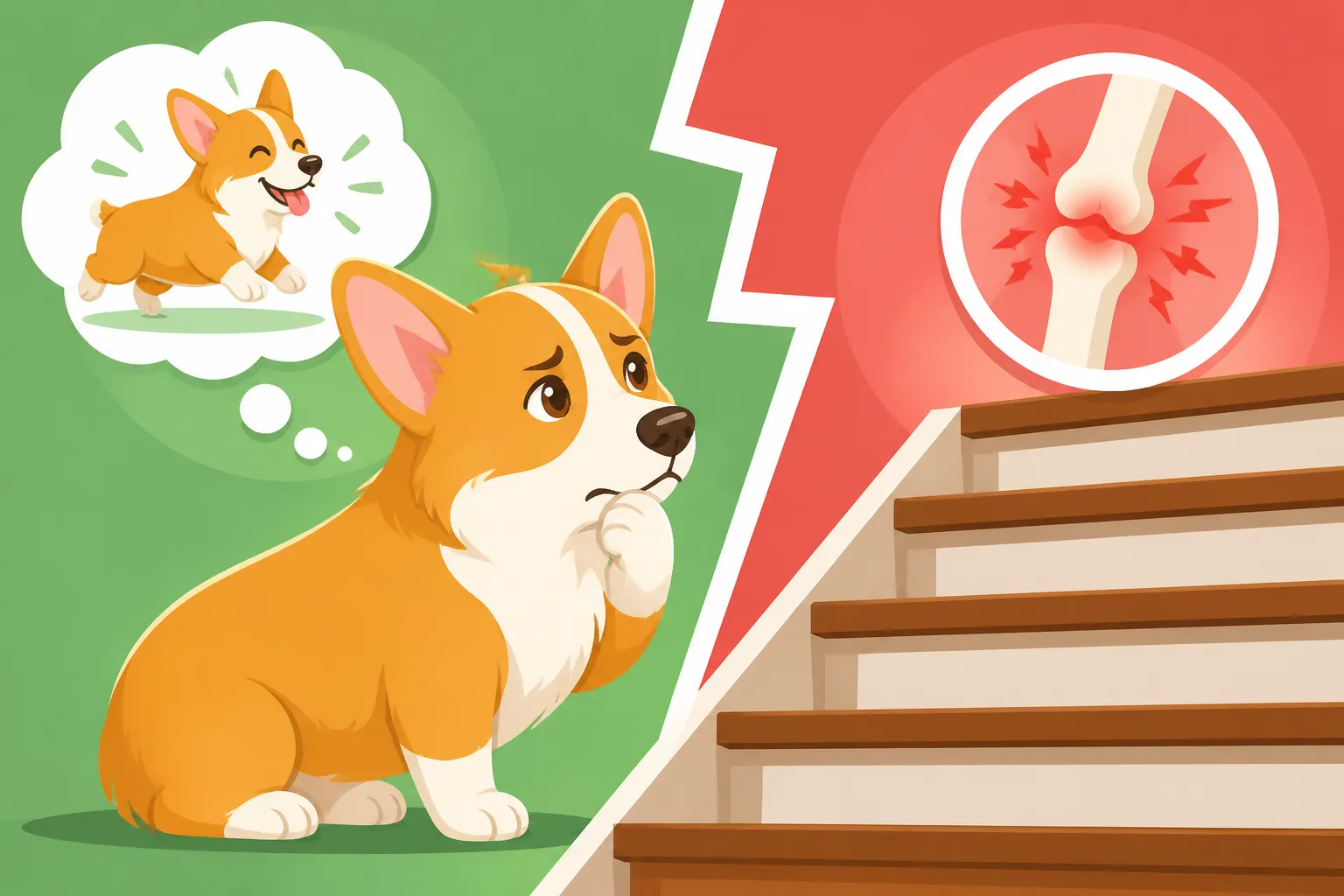
Whether a Corgi Should Do Stairs at All
It's a common sight, isn't it? Our little Corgi pups, those adorable, low-rider bundles of fluff, often try to bound up and down stairs with the enthusiasm of a much taller, more agile dog. But as Corgi owners, we often watch with a knot in our stomachs, wondering if those ambitious leaps and thumps are doing more harm than good to their famously long backs. This guide is all about tackling that very real worry, exploring whether stairs are safe for your Corgi, what risks they pose, and how you can manage them to keep your beloved companion healthy and happy for years to come.
Understanding Your Corgi's Unique Spine
Before we dive into the nitty-gritty of stairs, it's really important to understand why Corgis are so unique, particularly concerning their skeletal structure. These wonderful dogs were bred for a very specific job, and that job shaped their bodies in ways that make them particularly susceptible to certain issues. Ignoring this fundamental aspect of their physiology is like trying to fit a square peg in a round hole when it comes to their long-term health.
The Anatomy of a Long-Backed Breed
Corgis, both Pembrokes and Cardigans, are what we call "chondrodystrophic" breeds. Now, that's a fancy word, but it essentially means they have disproportionately short legs and a long back. Think about a Dachshund or a Basset Hound; they share this characteristic. This isn't just a quirky appearance; it's a genetic trait that affects the development of their cartilage, including the intervertebral discs in their spine. These discs act like little shock absorbers between the vertebrae, protecting the spinal cord.
In a typical dog, these discs are soft and gel-like. In chondrodystrophic breeds like our Corgis, these discs tend to harden and become more fibrous prematurely. This process, often starting when they're quite young, makes them far less effective at absorbing impact. Imagine the difference between jumping on a bouncy castle versus jumping on a concrete floor – the impact on the concrete is much harsher. This inherent structural difference is why we as Corgi owners need to be extra vigilant about protecting their backs. You can learn more about What Chondrodystrophy Means for a Corgi.
Why Corgis Are Prone to Back Issues
Because their discs are predisposed to degeneration, Corgis are unfortunately at a much higher risk for Intervertebral Disc Disease (IVDD). This condition occurs when one or more of these compromised discs rupture or bulge, pressing on the spinal cord. This compression can cause excruciating pain, nerve damage, and in severe cases, partial or complete paralysis. The long length of their spine relative to their short legs means that any significant impact or twisting motion places undue stress on this already vulnerable area.
Consider the physics of it: a short-legged dog trying to navigate stairs has to exert considerable effort, and each step down involves a mini-jump, jarring the spine. Even a single misstep or a clumsy leap can be enough to trigger a disc event. It's not just about major accidents; it's the cumulative effect of small, repetitive stresses over time that can lead to significant problems. This is a battle we fight not just in their senior years, but often starting much earlier in their lives, making proactive care absolutely essential.
The Hidden Dangers of Stairs for Corgis
While stairs might seem like an innocuous part of daily life for most dogs, for a Corgi, they can be a significant hazard. The very act of ascending and especially descending stairs can put tremendous strain on their delicate spines and joints, potentially leading to both immediate injury and long-term degenerative conditions.
Impact on Discs and Joints
Each time your Corgi dashes down a flight of stairs, gravity works against their unique body structure. The rapid descent, often involving a series of small jumps or uncontrolled lunges, creates considerable concussive force on their intervertebral discs. Think of it like a human repeatedly jumping off a low wall onto a hard surface; eventually, your knees and spine would feel it. For a Corgi, whose discs are already aging faster than a non-chondrodystrophic breed, this impact accelerates that degeneration. The discs become more brittle and prone to bulging or rupturing.
Beyond the spine, the joints in their legs—hips, knees, and even elbows—also take a beating. Their short legs aren't designed for the leverage and extension required to smoothly navigate stairs. They often compensate with awkward movements, which can stress ligaments and cartilage, potentially contributing to conditions like early arthritis or even acute injuries like a torn cruciate ligament, particularly if they carry extra weight. Why Corgi Weight Is a Spinal Problem further explains how obesity exacerbates these joint issues.
Acute Injuries vs. Gradual Wear and Tear
It's easy to focus on the dramatic, sudden injuries—the dreaded moment a Corgi yelps and collapses after a misstep on the stairs, indicative of The Jump That Ruptures a Corgi Disc. These acute disc ruptures are devastating and require immediate veterinary attention, often leading to emergency surgery or intensive conservative management. The sheer force of a bad landing can be enough to cause a catastrophic disc event, leaving owners reeling.
However, just as insidious, and perhaps more common, is the gradual wear and tear that stairs inflict over years. Each seemingly harmless trip up and down contributes to the slow breakdown of those already vulnerable discs. Your Corgi might not show immediate signs of pain, but internally, the discs are losing their integrity, becoming thinner, drier, and less able to protect the spinal cord. By the time obvious symptoms like reluctance to jump, a change in gait, or signs of pain appear, the damage is already significant. This cumulative trauma is a silent enemy, slowly eroding their spinal health, which is why prevention is so crucial from puppyhood onwards.
Practical Strategies for Stair Management
Given the risks, it's clear that managing your Corgi's interaction with stairs is a vital part of responsible ownership. The good news is that there are many proactive steps you can take, from training and environmental modifications to using smart tools, to protect their precious backs.
Training Your Corgi for Safe Stair Navigation
Ideally, we want to minimize or eliminate stair use. But if stairs are unavoidable in your home or in places you frequent, careful training can help mitigate some risk. This isn't about teaching them to run up and down, but rather to navigate them slowly and deliberately, almost like a carefully choreographed ascent or descent.
Start with just one or two steps, always on leash. Use positive reinforcement with high-value treats to encourage a slow, controlled pace. Lure them up one step, treat, then lure them up the next. For going down, stand in front of them, using the leash and a treat to guide them one step at a time. The goal is to avoid any jumping or lunging. If your Corgi starts to rush, stop the exercise immediately and try again when they are calm. Patience is key here. Think of it as teaching them a very specific, slow movement, rather than letting them do what comes naturally. A good online obedience course, such as those offered by BAXTER & Bella, can provide structured guidance on teaching controlled movements and impulse control, which is essential for managing stair interactions. Remember, the safest Corgi on stairs is one that doesn't use them, but if they must, a controlled approach is the next best thing.
Using Ramps and Gates as Alternatives
This is where prevention really shines! Ramps and gates are absolute game-changers for Corgi owners. Ramps eliminate the high-impact stress of jumping, allowing your Corgi to walk up and down inclines instead. They're particularly useful for accessing furniture like sofas and beds, or even getting into and out of cars. Look for ramps with a gentle slope and a non-slip surface. There are many options available on platforms like Amazon, from lightweight portable ramps to more permanent wooden ones that blend with furniture. Introduce the ramp with treats and praise, making it a positive experience, similar to stair training.
| Alternative | Pros | Cons | Ideal Use Case |
|---|---|---|---|
| Carrying | Complete protection from impact; ensures safety, especially for young or elderly Corgis. | Requires owner strength; impractical for long flights or frequent trips; Corgi may resist; risk of dropping. | Short flights of stairs, getting in/out of cars, preventing unsupervised access. |
| Ramps | Eliminates jumping impact; provides a smooth, gentle incline; can be used for furniture, cars, or even low stairs. | Can be bulky; may require training for the Corgi to use consistently; can be an eyesore in certain home aesthetics. | Access to sofas/beds, car entry/exit, outdoor steps, or as a long-term solution for indoor stairs. Consider Ramps and Steps That Save a Corgi's Back. |
| Baby Gates | Prevents unsupervised access to stairs; relatively inexpensive and easy to install. | Doesn't solve the problem of needing to use stairs; requires owner to open/close constantly. | Blocking access to specific staircases, creating safe zones within the home, especially useful for puppies or Corgis on Crate Rest for a Corgi With a Bad Back. |
Baby gates are your best friend for blocking off access to stairs entirely. Install them securely at the top and bottom of staircases. This prevents your Corgi from making ill-advised solo journeys up or down, protecting them from both acute injuries and gradual wear. It also gives you peace of mind when you're not able to supervise them directly. Consistency is vital; once you implement ramps and gates, make them the new normal.
Modifying Your Home Environment
Beyond ramps and gates, a few other adjustments around your home can make a big difference. If you have slippery floors like hardwood, tile, or laminate, consider adding runners or area rugs, especially in high-traffic areas and near stairs. Corgis, with their short legs and low center of gravity, can easily slip and splay out on slick surfaces, leading to strains or even disc injuries. Textured surfaces provide better grip and stability, making movement safer for them.
Also, evaluate your Corgi's favorite resting spots. If they love to nap on the sofa or bed, ensure there's a ramp or steps for them to use. Discourage jumping on and off furniture from a young age. This habit, while seemingly harmless, puts repeated stress on their spine. Teaching your Corgi to wait for a ramp or to be lifted is a small investment in time that pays huge dividends in spinal health later on. Whether a Corgi Should Ever Jump Off a Sofa is a critical read for understanding this risk.
When to Strictly Avoid Stairs (and What to Do Instead)
There are certain times in a Corgi's life, or specific circumstances, when avoiding stairs isn't just a good idea—it's absolutely non-negotiable for their health and well-being. Knowing when to put your foot down (literally!) and implement strict no-stair rules is paramount.
Post-Injury or Senior Corgis
If your Corgi has ever experienced a disc injury, whether mild or severe, stairs should become a thing of the past. Even after a full recovery, the affected disc(s) remain vulnerable, and the risk of re-injury is significant. A veterinarian or a specialized veterinary neurologist will almost certainly advise against stair use during recovery and often indefinitely afterward. During recovery from an injury, especially after conservative treatment or surgery, strict Six Weeks of Crate Rest With a Corgi is often prescribed, and stairs are absolutely forbidden.
For our senior Corgis, a no-stairs policy becomes increasingly important. As dogs age, their intervertebral discs continue to degenerate, joints become arthritic, and muscle mass diminishes, making them less stable and more prone to falls. An older Corgi might also have reduced vision or proprioception (awareness of their body in space), increasing the risk of a misstep. Screening an Older Corgi's Spine is a good way to stay ahead of age-related issues. Even if they've never had a diagnosed disc problem, protecting their aging spine and joints from unnecessary strain is a loving act of prevention. If you notice A Corgi That Will Not Climb the Stairs, it's a clear sign of pain or difficulty, and professional veterinary advice is needed immediately.
Lifting Techniques and Mobility Aids
When stairs are unavoidable, or for Corgis who absolutely cannot use them, learning proper lifting techniques is essential. Never lift your Corgi by grabbing them under the armpits, as this puts immense strain on their spine. Instead, use both hands, one supporting their chest and front legs, and the other supporting their hindquarters and abdomen. Lift them smoothly, keeping their spine as straight and level as possible, minimizing any twisting or arching. It might feel a bit awkward at first, but with practice, it becomes second nature.
For Corgis with significant mobility challenges, such as those affected by Degenerative Myelopathy and the Corgi or recovering from severe IVDD, specialized mobility aids can be a lifesaver. Slings and harnesses designed for rear-end support can help you guide them up and down a few steps, taking the weight off their hind legs. For Corgis who have lost the use of their back legs entirely, custom carts or wheelchairs can provide incredible freedom and allow them to navigate obstacles they otherwise couldn't. These devices, along with therapies like Acupuncture for a Corgi With Back Pain or Hydrotherapy for a Corgi Recovering From Surgery, can dramatically improve their quality of life. Exploring options for Mobility Aids for a Corgi That Cannot Walk can provide more detailed information.
Disclaimer
This article is for general informational purposes only and does not constitute professional advice. Laws, prices and regulations vary by location and change over time. Consult a qualified professional for guidance on your specific situation.