Overnight Neurology Care for a Corgi
The moment your beloved Corgi experiences a sudden neurological crisis – perhaps their back legs suddenly give out, they're in excruciating pain, or they start having seizures – it's absolutely terrifying. The immediate thought is often, "What just happened?" followed by a desperate scramble to find the fastest, best help available. This guide is here to walk you through what to expect when your Corgi needs overnight neurology care, from that initial panicked trip to the emergency room to the recovery journey ahead.
Understanding Corgi Neurological Emergencies That Require Overnight Care
When a Corgi faces a neurological emergency, it often strikes without warning, turning a happy, active dog into one in distress in a matter of moments. For a breed known for its spirited personality and robust herding instincts, seeing them suddenly vulnerable is heartbreaking and deeply unsettling. Understanding the common culprits behind these sudden downturns can help you recognize the signs and act swiftly.
The Sudden Onset of Back Problems
For us Corgi parents, the long back is a constant source of both admiration and anxiety. Our Corgis are predisposed to certain spinal conditions, the most notorious being Intervertebral Disc Disease (IVDD). This condition occurs when the shock-absorbing discs between the vertebrae bulge or rupture, pressing on the spinal cord. The onset can be terrifyingly sudden. One minute your Corgi might be chasing a ball, the next they might yelp in pain, stumble, or even lose the ability to use their back legs entirely.
You might witness a sudden inability to stand, dragging of the back paws, or a complete collapse. Sometimes, the only sign is a Corgi who cries when lifted or refuses to move, exhibiting extreme pain. This isn't just a minor ache; it's a severe compression of vital nerves, and it warrants immediate emergency attention. Missing these urgent signs can lead to permanent damage, which is why swift action is paramount. It’s a moment that feels like your world stops. If you've ever seen your Corgi make The Jump That Ruptures a Corgi Disc, you know how quickly an everyday activity can turn into a crisis.
Beyond the Back: Other Neurological Crises
While IVDD often takes center stage in Corgi neurological discussions, it's crucial to remember that other neurological emergencies can also arise and demand immediate, often overnight, care. These conditions might not be as common as a disc rupture, but they are no less critical when they occur. Recognizing their distinct presentations can also save precious time.
One such crisis is a seizure. While some Corgis live with managed epilepsy, a sudden, severe, or cluster of seizures in a previously unaffected dog, or one whose medication usually controls them, is an emergency. A seizure can be frightening to witness, involving uncontrolled muscle spasms, loss of consciousness, salivation, or even uncontrolled urination and defecation. Other potential, though less common, neurological emergencies can include strokes, severe head trauma (perhaps from an accident), or sudden-onset vestibular disease, which mimics a stroke with severe balance issues, head tilt, and rapid eye movements. Any of these events indicate a serious problem within the brain or nervous system, requiring specialized care to diagnose and stabilize. If your Corgi experiences A Corgi That Has Its First Seizure, seeking prompt veterinary attention is vital for diagnosis and management.
What Happens When Your Corgi Arrives at Emergency Neurology
The emergency veterinary hospital, particularly one with a dedicated neurology service, is a whirlwind of activity, but also a place of specialized expertise. When you arrive with a Corgi experiencing a neurological emergency, things move quickly, driven by the urgency of the situation and the need for rapid diagnosis and stabilization.
Initial Assessment and Stabilization
The moment you rush your Corgi through the emergency doors, a team will be ready to perform an initial assessment, often called triage. They'll quickly check your Corgi's vital signs – heart rate, respiratory rate, temperature – to ensure they are stable enough for further examination. Pain management is often a top priority, especially for Corgis with suspected back injuries, as severe pain can exacerbate stress and complicate diagnostics. They might administer fast-acting pain relief to make your Corgi more comfortable and allow for a more accurate neurological exam.
A preliminary neurological exam will be performed by the emergency veterinarian. This isn't just a quick look; it involves a series of tests to evaluate reflexes, muscle tone, coordination, gait (if possible), and responses to stimuli. They'll check paw placement (proprioception), withdrawal reflexes in the legs, and deep pain sensation. This initial exam helps localize the problem – is it in the brain, the spinal cord, or the peripheral nerves? This crucial information guides the next steps in diagnosis. Recognizing Emergency Signs of a Corgi Disc Injury can help you provide vital information to the emergency team.
Diagnostic Imaging and Specialist Consultation
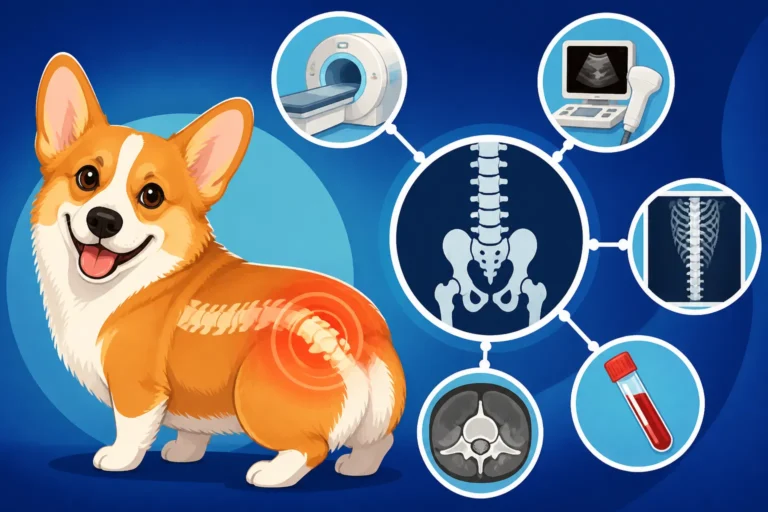
Once your Corgi is stabilized and the initial neurological assessment points to a specific area of concern, advanced diagnostic imaging becomes essential. For spinal issues like IVDD, or for brain issues, plain X-rays often don't provide enough detail. This is where an MRI (Magnetic Resonance Imaging) or CT (Computed Tomography) scan comes into play. These sophisticated imaging techniques can reveal the precise location and severity of spinal cord compression, brain lesions, or other internal damage that is invisible on standard radiographs.
These scans are usually performed under general anesthesia, which requires careful pre-anesthetic blood work and monitoring, adding another layer of care. After the imaging, a board-certified veterinary neurologist will meticulously review the results. This specialist has dedicated years to understanding the complex workings of the nervous system and can interpret the images to provide an accurate diagnosis. They will discuss the findings with you, outlining the prognosis and treatment options, which may include surgery or intensive conservative management. While these advanced diagnostics are critical for the best outcome, they come with a significant cost. Many Corgi owners find that pet insurance, such as a plan from Healthy Paws, can be invaluable in mitigating the financial shock of these sudden, high-cost procedures. Understanding What an MRI Shows in a Corgi Back is key to appreciating the depth of information these diagnostics provide.
The Reality of Overnight Care in a Neurology Ward
Once a diagnosis is made and a treatment plan is decided, whether it's immediate surgery or intensive medical management, your Corgi will transition to overnight care in the neurology ward. This isn't just a regular kennel stay; it's a critical period of constant monitoring, specialized support, and vigilant care by a dedicated team.
Monitoring and Intensive Support
In a neurology ward, your Corgi will be under continuous observation. This means regular checks of their vital signs, frequent assessments of their pain levels, and repeated neurological exams to track any changes – for better or worse. Every subtle shift in their condition, from a slight improvement in a toe flick reflex to an increase in discomfort, is noted. Intravenous (IV) fluids are almost always administered to maintain hydration and deliver medications efficiently.
Medications are a cornerstone of care. This might include a cocktail of powerful pain relievers to keep your Corgi comfortable, anti-inflammatory drugs to reduce swelling around the spinal cord or brain, and sometimes muscle relaxants to ease spasms. If your Corgi has lost bladder control due to spinal compression, they may have a urinary catheter placed and emptied regularly to prevent complications like bladder infections. The team also ensures a calm, quiet environment to minimize stress and promote healing, which is vital for neurological recovery. They understand the sensitivity of these cases and aim to provide as much comfort as possible while ensuring rigorous medical oversight.
Communication and Decision-Making with the Neurology Team
Throughout your Corgi's overnight stay, clear and consistent communication with the neurology team is paramount. You can expect regular phone updates from the veterinary staff, who will relay information on your Corgi's condition, how they are responding to treatment, and any new developments. While visiting hours might be limited to ensure the quiet environment necessary for recovery, these updates help you stay informed and involved in your Corgi's care.
During this intense period, you might face difficult decisions, particularly if surgery is recommended. The neurologist will discuss the surgical procedure in detail, explaining the risks, potential benefits, and the expected recovery timeline. Alternatively, if conservative management is chosen, they will outline the specifics of that approach, including medication protocols and strict activity restrictions. It's a heavy emotional burden, weighing the best course of action for your furry family member, often under immense stress and financial pressure. Knowing Whether a Corgi Needs Surgery or Rest is a huge decision, and the neurology team is there to guide you, offering their expertise and compassion as you navigate these choices. After discharge, for ongoing medication needs, online pharmacies like Chewy can be a convenient resource for getting prescriptions delivered right to your door.
Financial Implications and Planning for Post-Discharge Care
A neurological emergency is not only emotionally draining but can also be a significant financial challenge. Understanding the potential costs and planning for the long-term recovery are crucial steps for any Corgi owner.
Breaking Down the Costs of Emergency Neurology
The cost of emergency neurology care for a Corgi can vary dramatically based on the specific condition, the diagnostic tests required, the length of hospitalization, and whether surgery is performed. It’s not uncommon for these bills to quickly escalate into significant figures. From the initial emergency exam to advanced diagnostics like an MRI, medications, and round-the-clock nursing care, each component adds up. If surgery is necessary, that is often the most substantial expense, followed by specialized post-operative care and rehabilitation.
Here’s a general idea of the components that contribute to the overall bill, though exact figures are never predictable and will always need to be confirmed directly with the veterinary facility:
| Cost Component | Description | Cost Shape (e.g., Low, Moderate, High) |
|---|---|---|
| Emergency Exam/Consultation | Initial assessment by emergency vet/neurologist | Moderate |
| Bloodwork | Pre-anesthetic screening, general health panel | Moderate |
| Radiographs (X-rays) | Basic imaging, often a first step but limited for soft tissue | Moderate |
| MRI/CT Scan | Advanced imaging for detailed spinal or brain assessment | High (often the highest single cost) |
| Anesthesia & Monitoring | For imaging, potential surgery, or prolonged procedures | High |
| Hospitalization (per night) | IV fluids, medications, nursing care, pain management | Moderate to High (multiplied by days) |
| Medications | Pain relief, anti-inflammatories, muscle relaxants, others | Moderate |
| Surgery (if applicable) | Specialized spinal or brain surgery, surgeon's fees | Very High (often the most expensive) |
| Post-operative Care | Continued hospitalization, wound care, physical therapy referrals | Moderate to High |
Remember, these are just the beginning. Recovery can be a long road, with additional costs for rehabilitation and long-term medication. These figures underscore why many Corgi owners look into pet insurance or dedicated savings for emergencies. Facing Emergency Neurology Fees for a Corgi can feel overwhelming, but many clinics offer payment plans or work with third-party financing options to help manage the burden. Ensuring your Corgi receives a nutritionally sound diet, perhaps from services like Ollie, can support overall well-being, potentially reducing the risk of some health issues over the long term, though not direct prevention for acute neurological events.
Preparing for Recovery at Home
Bringing your Corgi home after overnight neurological care is a huge milestone, but it also marks the beginning of a demanding recovery period. The journey ahead often requires significant adjustments to your home environment and a deep commitment to their rehabilitation. You'll likely need to "Corgi-proof" your home to prevent re-injury, which means strategically placing Ramps and Steps That Save a Corgi's Back to prevent jumping onto or off furniture, and potentially blocking off stairs.
Recovery often involves strict activity restrictions, including several weeks of Crate Rest for a Corgi With a Bad Back. This can be incredibly challenging for a high-energy breed, requiring creativity to keep them mentally stimulated without physical exertion. The cost of What Weeks of Confined Rest Cost a Corgi Owner isn't just financial; it's a huge investment of your time and emotional energy. Furthermore, rehabilitation is crucial. Your vet or neurologist will likely recommend physiotherapy or hydrotherapy to help strengthen muscles, improve coordination, and regain mobility. Regular follow-up appointments are essential to monitor progress and adjust the recovery plan. This period demands immense patience, dedication, and a strong support system from you as their devoted Corgi parent. Watching your Corgi regain strength and mobility, perhaps with the help of Physiotherapy for a Corgi Losing Its Legs, is incredibly rewarding.
Disclaimer
This article is for general informational purposes only and does not constitute professional advice. Laws, prices and regulations vary by location and change over time. Consult a qualified professional for guidance on your specific situation.