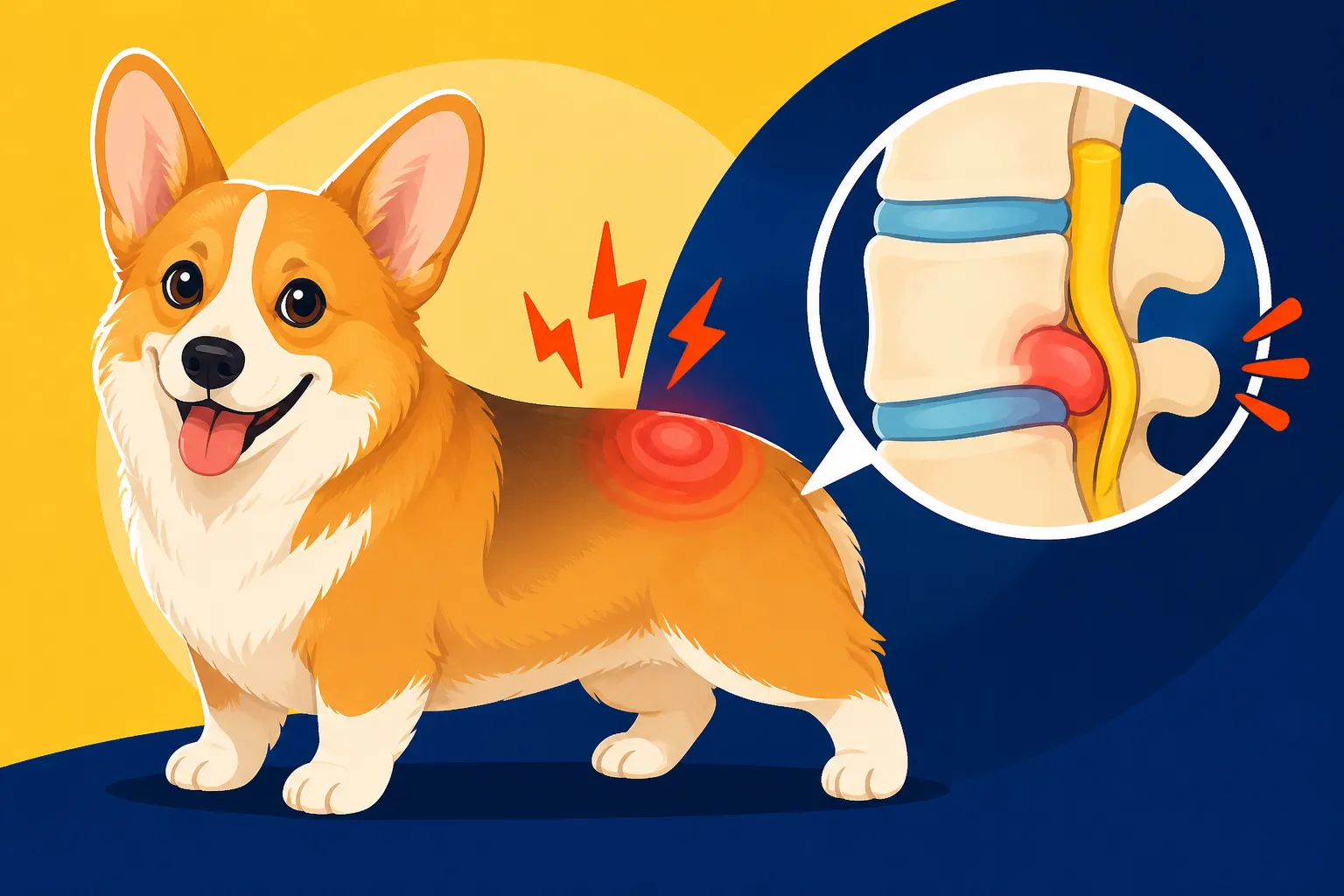
A Slipped Disc as a Pre-Existing Corgi Condition
There's nothing quite like the sudden, terrifying moment your beloved Corgi yelps, collapses, or suddenly struggles with their back legs. It's a gut-wrenching experience that sends most Corgi parents into a panic, and often, right into the emergency vet. Beyond the immediate fear for your furry friend's well-being, a chilling thought can creep in: will pet insurance even cover this, or will they call it a pre-existing condition? This guide will walk you through the tricky landscape of slipped discs in Corgis and why that "pre-existing" label is such a significant concern for us Corgi owners.
Understanding What "Pre-Existing Condition" Means for Your Corgi
The term "pre-existing condition" is perhaps the most frustrating phrase in the pet insurance world, especially for Corgi owners. In simple terms, a pre-existing condition is any illness, injury, or symptom that your Corgi had before your insurance policy's effective date, or before the end of its specific waiting period. It doesn't matter if it was formally diagnosed by a vet or not; if there's a record of it, or even just signs of it, it can be flagged.
Imagine this scenario: you notice your Corgi, let's call him Buster, has been a bit stiff getting up in the mornings lately. You don't think much of it – he's getting older, after all, and Corgis do have their quirks. Then, a few weeks later, he slips getting off the couch and completely loses function in his back legs. You rush him to the emergency vet, and they diagnose a severe slipped disc. If you've just signed up for pet insurance, or if your policy has a waiting period that hasn't passed, those previous "stiff mornings" might be enough for an insurer to claim the slipped disc was already in progress before your coverage began, rendering it pre-existing and therefore, not covered. This is the nightmare scenario that Corgi parents dread, as the bills for disc issues can be astronomical.
The Insurer's Perspective on History and Symptoms
When you submit a claim for a condition like a slipped disc, pet insurance companies meticulously review your Corgi's veterinary history. They're looking for any evidence of symptoms, diagnoses, or treatments related to that condition that occurred before your policy's start date and any applicable waiting periods. This isn't just about official diagnoses; it extends to notes from annual check-ups, observations about gait changes, or even a casual mention of a "back tweak" to your vet.
For instance, if your vet notes during an exam six months ago that your Corgi sometimes "favors a back leg" or "shows mild discomfort on spinal palpation," even if no specific diagnosis was made, an insurer might link this to a subsequent disc rupture. They could argue that the underlying spinal problem was already present, just not severe enough to be labeled a slipped disc yet. It's a frustrating gray area for owners, because often these early, subtle signs are easily dismissed as normal Corgi behavior or aging. This is why understanding The Age Corgi Disc Problems Usually Appear can be so crucial for getting ahead of potential issues.
Waiting Periods: The Silent Killer of Coverage
Every pet insurance policy comes with waiting periods – specific durations you must wait after signing up before certain conditions are covered. These periods vary by insurer and by the type of condition. For accidents, it might be just a few days; for illnesses, it's often 14-30 days. Crucially, orthopedic conditions, which include slipped discs and IVDD (Intervertebral Disc Disease), sometimes have even longer waiting periods, often 6 months or even a year.
This creates a significant trap for Corgi owners. If your Corgi develops a disc issue during this waiting period, even if you just got insurance, it will almost certainly be considered a pre-existing condition and excluded. Many Corgis, especially those genetically predisposed to Disc Disease in a Long-Backed Corgi, might develop subtle signs long before a full-blown emergency. If these signs appear and are noted in vet records before the waiting period is over, or before you even get insurance, you could be out of luck for future treatment of that specific issue.
The Cruel Reality of Corgi Disc Disease and Insurance Timelines
Corgis are notorious for their long backs and short legs, a combination that makes them highly susceptible to intervertebral disc disease (IVDD), often manifesting as a slipped disc. This isn't just an "old dog" problem; Corgis can experience disc issues at surprisingly young ages. The insidious nature of IVDD means that the degeneration of the discs can be a slow, ongoing process, often without obvious symptoms until a sudden, catastrophic event. This silent progression is what makes the "pre-existing condition" clause so impactful for our low-riders.
Subtle Signs That Precede a Crisis
The vast majority of Corgi disc ruptures don't just happen out of the blue, even if it feels that way in the moment. There are often subtle, often missed, signs that precede a full-blown crisis. These can include:
- Changes in jumping habits: Suddenly reluctant to jump on or off furniture, or hesitating before going up or down stairs.
- Minor gait abnormalities: A slight wobble, stiffness, or an almost imperceptible drag of a back paw (sometimes called "knuckling"). You might notice your Corgi scuffs its nails more on one side.
- Vague pain responses: A yelp when picked up a certain way, sensitivity to touch along the back, or an unusual stillness.
- Behavioral changes: Less playful, withdrawn, or irritable. They might seek isolation or avoid interaction.
- Altered posture: A hunched back or reluctance to stretch.
As a Corgi owner, you might interpret these as simply "being a Corgi," or a sign of normal aging, rather than a red flag for an impending spinal issue. But to an insurance company, if these observations are recorded by a vet before your policy is fully active, they can form the basis of a pre-existing condition exclusion.
Here's a look at how seemingly minor observations can impact insurance claims:
| Early Warning Sign (Often Missed by Owners) | How an Insurer Might View It (from Vet Records) | Potential Impact on Future Back Coverage |
|---|---|---|
| Occasional reluctance to jump on sofa | "Owner reports mild stiffness in hindquarters" | Could flag early spinal degeneration |
| Slight scuffing of a back paw | "Evidence of nail wear on one hind paw" | May indicate subtle neurological deficit |
| Momentary yelp when lifted a certain way | "Pain response upon palpation of lumbar spine" | Suggests existing spinal discomfort |
| Intermittent lameness, self-resolving | "Intermittent lameness noted on follow-up" | Establishes a history of joint/back issues |
| Less playful or withdrawn | "Behavioral change, less active" | Can be linked to chronic pain |
This highlights why even the most innocuous vet visit notes can become critical down the line. It's not just about the formal diagnosis; it's about the documented journey to that diagnosis. This is especially relevant for understanding Emergency Signs of a Corgi Disc Injury and how quickly you need to act, as those early records are vital.
When the Diagnosis Hits: The IVDD Reality
When a Corgi experiences a severe slipped disc, it often requires immediate, intensive care. This can range from strict Crate Rest for a Corgi With a Bad Back and anti-inflammatory medications to emergency surgery. Imaging like an MRI is often needed to accurately diagnose the extent and location of the disc rupture, and these procedures are incredibly expensive.
If your pet insurance policy isn't active, or if the disc issue is deemed pre-existing, you could be facing the entirety of these costs out of pocket. We're talking about thousands of dollars for diagnostics, surgery, and post-operative care, including rehabilitation. Knowing What an MRI Shows in a Corgi Back can help you understand the diagnostic process, but the financial strain can be immense if coverage is denied. This is why having pet insurance before any signs appear is so critical for Corgi owners.
Proactive Steps: Securing Coverage and Financial Preparedness
The best way to protect yourself from the "pre-existing condition" heartbreak is to be proactive. This means getting pet insurance early, understanding its limitations, and also having a financial backup plan.
Insuring Your Corgi as Early as Possible
The single most important piece of advice for Corgi owners regarding slipped discs is to enroll your Corgi in pet insurance as soon as possible, ideally when they are a puppy. Most reputable insurers, like Healthy Paws, will allow you to enroll puppies as young as 8 weeks old. The younger your Corgi is when you get coverage, the less likely they are to have any pre-existing conditions on their record. If you wait until your Corgi is a few years old and has already had a few vet visits with notes about stiffness or minor lameness, you're running a significant risk.
When selecting a policy, pay close attention to the waiting periods for orthopedic conditions. Some insurers might have a shorter general illness waiting period but a separate, longer one for issues like IVDD or hip dysplasia. Read the fine print! Don't let yourself get caught unaware. Consider discussing potential policy options with a trusted friend who also has Corgis, as they might have navigated these waters themselves. You'll want to review Insuring a Corgi Before Its First Back Episode to ensure you're making the right choices.
Understanding Policy Exclusions and Coverage Limitations
Even with pet insurance, it's crucial to understand what is and isn't covered. Beyond pre-existing conditions, some policies might have specific exclusions for certain breed-specific conditions or hereditary disorders. While IVDD isn't typically excluded outright for Corgis by most standard policies (unless it's deemed pre-existing), it's always worth confirming with your chosen provider.
Also, be aware of annual limits, deductibles, and reimbursement percentages. A policy with a high annual limit will provide more peace of mind for an expensive event like spinal surgery. For example, if your Corgi needs emergency spinal surgery and rehabilitation, the bills could easily reach five figures. Knowing The Corgi Bills That Come With a Long Back can help you set realistic expectations for coverage needs. Some companies, for instance, might offer unlimited annual benefits, which can be a huge relief in the event of a catastrophic back injury.
Financial Preparedness Beyond Insurance
While pet insurance is an excellent tool, it's not the only one. Even with the best policy, you'll still have deductibles and co-pays. Moreover, if your Corgi's disc issue is deemed pre-existing, you'll be footing the entire bill. This is why a dedicated emergency fund is paramount for Corgi owners.
Consider setting up a separate savings account specifically for your Corgi's potential vet emergencies. Contribute a set amount to it each month, just as you would any other savings goal. Think of it as self-insurance. For some, having a robust savings account might even lead to the decision to forego pet insurance altogether, a choice that has its own risks but can work for those with significant liquid savings. You might weigh the pros and cons of Whether a Savings Account Beats Corgi Insurance.
You can also look into flexible payment options from your vet, such as installment plans or healthcare credit cards, which can help manage immediate costs. Services like Chewy and Ollie also offer subscriptions for food and supplies, which while not directly related to emergency funds, can help manage regular expenses, freeing up more cash to put into that crucial emergency fund.
Managing a Corgi with a History of Back Issues
Once a Corgi has experienced a slipped disc, whether it was covered by insurance or not, they are unfortunately at higher risk for future episodes. This means ongoing management is key. This includes:
- Weight Management: Keeping your Corgi at a healthy weight is paramount to reducing strain on their spine. An overweight Corgi puts immense pressure on their discs, exacerbating existing issues and increasing the risk of new ones. Knowing How Much Weight an Overweight Corgi Carries can motivate you to keep them trim.
- Activity Modification: Limiting jumping, using ramps for furniture and cars, and avoiding activities that twist or jar the spine are crucial.
- Physical Therapy: For Corgis recovering from a disc event, hydrotherapy and other physical therapy modalities can be incredibly beneficial for rebuilding strength and stability. While some insurance plans may cover rehabilitation, always verify.
- Proactive Vet Care: Regular vet check-ups are important for monitoring spinal health and catching any subtle changes early. Your vet can advise on supplements or other preventative measures.
Even if insurance didn't cover the first incident, managing these aspects diligently can help prevent future occurrences and keep your Corgi comfortable and happy. Should your Corgi face ongoing challenges, articles like Whether a Corgi Needs Surgery or Rest or Recovery Rates After Corgi Disc Surgery can provide further guidance on treatment and prognosis. It’s about building a comprehensive care strategy for their long-term well-being.
Disclaimer
This article is for general informational purposes only and does not constitute professional advice. Laws, prices and regulations vary by location and change over time. Consult a qualified professional for guidance on your specific situation.