Mobility Aids for a Corgi That Cannot Walk
It’s truly heartbreaking to watch your beloved Corgi, who once zipped around with endless energy, start to struggle with their back legs. The sight of them stumbling, dragging a paw, or just refusing to get up can fill you with a unique mix of sadness and helplessness. You want to give them back their zest for life, or at least make their days comfortable and full of dignity. This comprehensive guide is here to walk you through the various mobility aids available for Corgis who can no longer walk independently, offering practical advice and realistic insights into supporting your furry friend.
When Your Corgi's Legs Start to Fail: Understanding the Causes
Seeing your Corgi lose their ability to walk is never easy. It often comes on gradually, perhaps with a slight wobble or a moment of weakness, and then progresses to more noticeable issues. Understanding why this happens is the first step in finding the right solutions. Corgis, with their distinct long backs and short legs, are particularly prone to certain conditions that impact mobility, making this a common concern for their dedicated owners.
Common Corgi Mobility Challenges
The primary culprits behind a Corgi's loss of mobility are often conditions affecting the spinal cord and nervous system. The two big ones we frequently encounter are Intervertebral Disc Disease (IVDD) and Degenerative Myelopathy (DM).
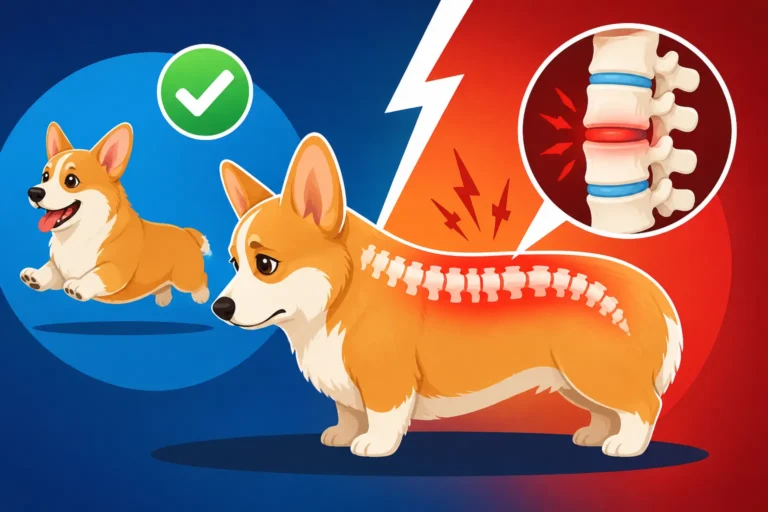
IVDD is a condition where the discs between the vertebrae in the spine either bulge or rupture, putting pressure on the spinal cord. Imagine a jelly donut: if the jelly pushes out, it can press on nearby nerves, causing immense pain, weakness, and even paralysis. For a Corgi, a sudden jump or even a misstep can trigger a disc event. The severity can range from mild pain and a slight limp to complete inability to move the hind legs. This often presents as acute pain, where your Corgi might cry out when touched, refuse to move, or adopt a hunched posture. We have a dedicated resource on Disc Disease in a Long-Backed Corgi that goes into much more detail about this specific challenge.
Degenerative Myelopathy (DM), on the other hand, is a progressive neurological disease that affects the spinal cord, leading to hind leg weakness and paralysis. It's often compared to ALS in humans. Unlike IVDD, DM is typically not painful. It starts insidiously, often with subtle signs like a slight scuffing of the back paws or a wobbly gait. Owners might notice their Corgi's back nails are worn down unevenly or that they cross their back legs when standing. As the disease progresses, the weakness worsens, leading to difficulty standing, walking, and eventually, full paralysis of the hind limbs. To learn more about this condition, check out Degenerative Myelopathy and the Corgi. Many Corgis carry the gene for DM, but only a fraction develop the disease.
Recognizing the Signs It's Time for Support
It’s crucial to pay close attention to the subtle cues your Corgi gives you. They can’t tell us in words that they're struggling, so it's up to us to be observant. Early intervention, even just recognizing the need for support, can make a huge difference in their quality of life.
Look for changes in their normal movement patterns. Are they hesitating before jumping onto the sofa (something we always advise against for Corgis, but old habits die hard!) or struggling to climb stairs they once navigated with ease? Maybe they're taking shorter, choppier steps, or their rear end seems to sway more than usual. Some Corgis might start to drag one or both back feet, causing their nails to wear down unevenly, which is often one of The First Signs of DM in a Corgi. You might also notice they're losing muscle mass in their hind legs, which can make them look thinner in the back, even if their body weight remains the same. If you're observing these changes, it's definitely time to have a frank conversation with your vet about assessing your Corgi's mobility and discussing potential causes and solutions. Regular wellness checks, especially as your Corgi ages, are key, as discussed in Screening an Older Corgi's Spine.
Exploring the World of Corgi Mobility Aids
Once you've identified that your Corgi needs help, the good news is that there's a wide array of mobility aids designed to support them. These tools aren't just about getting them from point A to B; they’re about restoring independence, maintaining muscle mass (where possible), and improving mental well-being by allowing them to participate in family activities again.
Supportive Harnesses and Slings
For Corgis with mild to moderate hind-end weakness, or those recovering from surgery or a disc injury (like the kind that might require Crate Rest for a Corgi With a Bad Back), a supportive harness or sling can be a game-changer. These are simple yet incredibly effective tools that allow you to provide manual support.
Rear Support Slings: These are essentially fabric slings with handles that go under your Corgi's belly, just in front of their back legs. They allow you to lift and support their hindquarters, helping them walk, navigate stairs, or go outside to potty. They’re fantastic for short periods or for dogs who still have some strength but need a little boost. Brands like GingerLead or Help 'Em Up Harness offer popular options. They’re lightweight, easy to put on, and can be adjusted for height, making them comfortable for both you and your Corgi. The biggest benefit is giving your Corgi the feeling of walking again, even if you’re doing most of the work, which is wonderful for their spirits.
Full Body Harnesses: For Corgis with more generalized weakness or those who need support for both front and back, a full-body harness is a better choice. These harnesses typically have handles over both the front and back sections, allowing you to stabilize their entire body. They distribute weight more evenly and can be less strenuous on your back than just using a rear sling. They are also excellent for providing a stable anchor point if you later transition to a wheelchair.
Corgi Wheelchairs and Carts
When a Corgi's hind legs are significantly weakened or paralyzed, a custom-fitted wheelchair (often called a cart) can completely transform their life. It might seem daunting at first, but seeing a Corgi zoom around in their cart is truly one of the most heartwarming sights.
Rear Support Carts: These are the most common type for Corgis, designed for dogs with strong front legs but impaired hind limbs. Your Corgi’s hindquarters are suspended in the frame, allowing their back legs to either hang free or touch the ground to provide some sensory feedback. The wheels give them back their mobility and independence. This is especially vital for conditions like DM, where the progression means a Corgi will eventually lose the use of their back legs, as detailed in The Months Between a Corgi's First Stumble and a Cart.
Full Support/Quad Carts: For Corgis with weakness in all four legs, or those whose front legs are also starting to decline, a full support cart offers support to both the front and back. These are less common for Corgis initially, but some may need them in very advanced stages of certain conditions.
When choosing a wheelchair, fit is paramount. A poorly fitting cart can cause rubs, discomfort, and even further injury. Brands like Walkin' Pets (makers of Walkin' Wheels) and Eddie's Wheels are well-known for their quality and customizable Corgi wheelchairs. They offer different frame styles, wheel sizes, and adjustments to ensure a perfect fit for your low-riding friend.
Ramps, Steps, and Orthopedic Beds
Mobility aids aren't just about getting outside. They're about making your home a safe and accessible haven for your Corgi. Simple modifications can prevent further injury and make daily life much easier.
Ramps and Steps: Corgis' long backs are incredibly vulnerable, especially to the impact of jumping on and off furniture or navigating stairs. Even a small jump can lead to a significant injury, as explored in The Jump That Ruptures a Corgi Disc. Ramps and pet steps are essential preventative measures, but they become even more critical when mobility is already compromised. Place ramps leading to sofas, beds, and even to get in and out of the car. Look for ramps with good traction and a gentle slope. For getting in and out of the house, a short, sturdy ramp can prevent trips and falls. Find more tips on these in Ramps and Steps That Save a Corgi's Back.
Orthopedic Beds: A Corgi with mobility issues spends more time resting, and proper support is vital for their comfort and spinal health. Orthopedic beds are designed to distribute weight evenly, relieve pressure points, and support joints. Look for high-quality memory foam beds that don't sag and offer good cushioning. A firm, supportive bed can make a huge difference in managing discomfort and improving sleep quality, especially for an older Corgi dealing with the aches and pains discussed in Pain Relief for an Old Corgi's Back.
Choosing and Customizing the Perfect Aid for Your Corgi
Selecting the right mobility aid isn't a one-size-fits-all situation. It requires careful consideration of your Corgi's specific needs, the nature of their condition, and your lifestyle. What works for one Corgi might not be ideal for another.
Factors to Consider for a Proper Fit
The effectiveness and comfort of any mobility aid hinge entirely on its fit. This is especially true for Corgis, whose unique body shape demands attention to detail.
Accurate Measurements: For harnesses and slings, you'll need chest girth, back length, and sometimes front leg circumference. For wheelchairs, precise measurements are critical: height from the floor to the top of the back, length from chest to tail, and width across the chest and hips. Many reputable manufacturers like Walkin' Pets provide detailed measurement guides and videos to help you get it right. Don't rush this step, as an ill-fitting device can cause rubbing, skin sores, or put pressure on vulnerable areas.
Type of Condition: Is your Corgi dealing with acute pain from a disc flare-up or progressive weakness from DM? For IVDD, a sling might be enough for a short recovery period, coupled with careful management like Six Weeks of Crate Rest With a Corgi. For DM, a wheelchair will likely become a necessity as the disease progresses and The Corgi Years When the Back End Gives Out truly manifest. Consulting with your veterinarian or a veterinary neurologist is paramount to understand the specific progression and needs associated with your Corgi's condition. They can help you determine the best type of aid.
Your Corgi's Temperament: Some Corgis take to new aids with enthusiasm, while others might be more hesitant or even resistant. A fearful or anxious Corgi might need a softer, more gradual introduction to a new device. Consider their personality when making your choice. A bold, curious Corgi might adapt quickly to a cart, whereas a more timid one might prefer the gentle assistance of a sling initially.
Home Environment and Lifestyle: Do you have stairs? Hardwood floors? How much outdoor space do you have? These factors will influence your choice. For instance, a ramp is crucial if you have steps, and non-slip rugs can help a struggling Corgi on slick floors. If you enjoy long walks in the park, a robust wheelchair is a must. If your Corgi primarily needs support for short trips outside to relieve themselves, a simple sling might suffice.
Gradual Introduction and Training
Once you have your chosen mobility aid, don't expect your Corgi to magically embrace it instantly. Patience and positive reinforcement are key.
Start Slow: Begin with short sessions. For a sling, just a few minutes of support during a potty break. For a wheelchair, let them sniff and explore it first. Put it on them for brief periods, perhaps just inside the house, allowing them to get used to the feel without the pressure of movement. Always make these initial experiences positive with treats and praise.
Positive Reinforcement: Associate the mobility aid with good things. Give high-value treats and enthusiastic praise when they tolerate wearing it or take a few steps. Never force them or show frustration, as this can create negative associations. You want them to view their aid as something that helps them, not something to fear.
Practice Makes Perfect: Gradually increase the duration and distance of use. If it's a wheelchair, start on a flat, familiar surface like your backyard. Help them steer and get the hang of turning. It might feel awkward at first, but Corgis are intelligent and adaptable, and many quickly learn to navigate their new wheels. Remember that even with a cart, Physiotherapy for a Corgi Losing Its Legs can still be beneficial to maintain muscle tone in their front legs and core.
Adapting Your Home and Routine for a Mobile-Aided Corgi
Bringing a mobility aid into your Corgi's life is just one piece of the puzzle. The true success lies in how you integrate it into their daily routine and adapt your home environment to ensure their safety, comfort, and continued happiness.
Daily Care and Comfort Considerations
Living with a Corgi who uses mobility aids means a few adjustments to your daily care regimen, but these small changes can make a world of difference.
Skin and Coat Care: Pay extra attention to areas where the harness or cart might rub. Check for redness, sores, or matting daily. Ensure the aid is clean and dry. A soft, breathable lining can prevent irritation. For Corgis, with their dense double coats, ensuring good ventilation and preventing moisture buildup is important, especially around the belly and hindquarters. Regular grooming, even for those with limited mobility, is essential to keep their coat healthy and prevent skin issues.
Potty Breaks and Hygiene: Corgis in wheelchairs often still need assistance with potty breaks. Many carts are designed so dogs can relieve themselves while in the cart, but some may still need to be taken out of it or supported with a sling. For Corgis with advanced mobility issues, incontinence can become a concern, which is addressed in more detail in Incontinence in a Corgi With DM. Having absorbent pads, dog diapers, and easy-to-clean bedding on hand can help manage this. Regular cleaning and drying of their hindquarters are vital to prevent skin infections.
Mental Stimulation: Just because their body is limited doesn't mean their mind is! Provide plenty of mental enrichment. Interactive toys, puzzle feeders, scent games (hiding treats for them to sniff out), and gentle, positive interaction can keep their minds sharp and spirits high. Remember that a Corgi is a working breed, and their need for mental engagement doesn't disappear with physical limitations. Even short car rides to a favorite park or a quiet visit with friends can be wonderfully stimulating.
Financial Planning for Long-Term Mobility Care
Let's be realistic: providing long-term care for a Corgi with significant mobility issues can be expensive. From vet visits and specialized treatments like Acupuncture for a Corgi With Back Pain to the cost of the mobility aids themselves, it adds up. Planning ahead, if possible, can alleviate some of this burden.
Understanding Costs: A quality wheelchair can range from a few hundred to over a thousand dollars, depending on customization. Slings and harnesses are more affordable but still represent an investment. Ongoing expenses include replacement parts for carts (tires, straps), incontinence supplies, special bedding, and potentially medications for pain or inflammation. Consult with your vet to get an estimate of typical long-term care costs associated with your Corgi's specific condition.
Pet Insurance: This is where pet insurance can truly shine, especially if enrolled before a condition becomes "pre-existing." Companies like Healthy Paws offer comprehensive accident and illness plans that can help cover a significant portion of veterinary bills, including diagnostics, specialist consultations, physical therapy, and even the cost of prescribed mobility equipment or medications. Having a good insurance plan from Healthy Paws can provide immense peace of mind, allowing you to make medical decisions based on what's best for your Corgi, rather than solely on your wallet. While pet insurance typically doesn't cover the initial purchase of a mobility device like a wheelchair, it can cover the vet consultations, diagnostics, and treatments that lead to the recommendation and ongoing management of your Corgi’s condition.
Savings and Budgeting: If pet insurance isn't an option or only covers part of the costs, setting up a dedicated savings fund for your Corgi's care is a wise move. Consider budgeting for monthly expenses related to their condition. Many owners find creative ways to manage costs, from DIY solutions for ramps to seeking out local support groups for gently used equipment. Every dollar saved or planned for makes a difference in ensuring your Corgi gets the best possible care.
Ultimately, providing mobility aids for your Corgi isn't just about managing a physical limitation; it's about honoring their spirit and commitment to your family. With the right tools, a supportive environment, and your unwavering love, a Corgi who cannot walk can still live a full, happy, and dignified life. It takes effort, patience, and sometimes a bit of ingenuity, but the joy you'll see in their eyes as they "walk" independently again is truly priceless.
Disclaimer
The information provided in this article is for general informational purposes only and is not a substitute for professional veterinary advice. Always consult with a qualified veterinarian or veterinary specialist for any health concerns or before making any decisions about your Corgi's health or treatment plan.