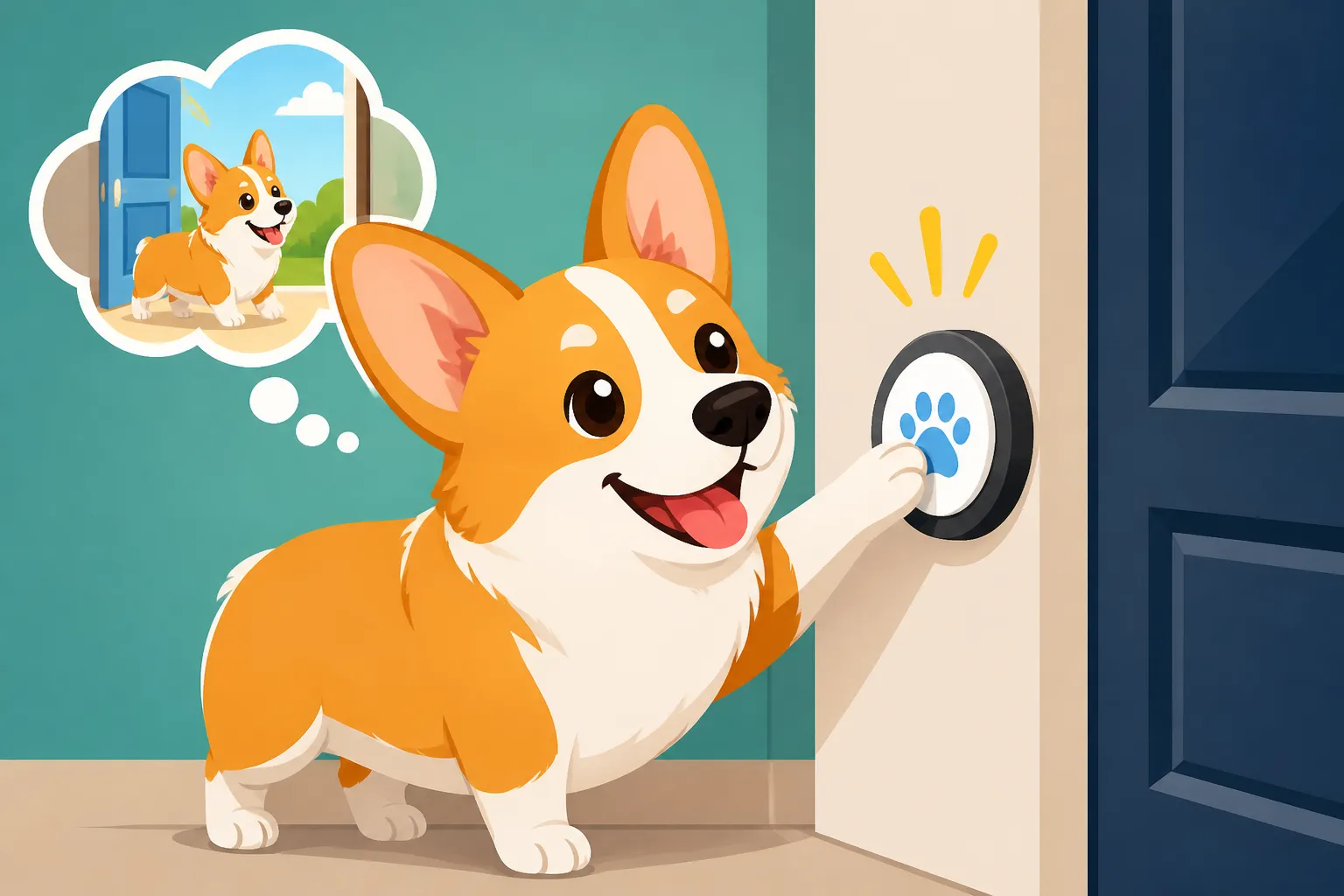
Whether a Corgi Learns to Use a Doorbell Button
One of the most common frustrations Corgi owners face is the relentless, enthusiastic barking their short-legged friends employ to communicate everything from "I need to go potty!" to "A leaf just blew past the window!" It's a natural Corgi trait, but it can be a lot. If you've ever wondered if there's a quieter, more direct way for your Corgi to tell you they need out, you might have considered a doorbell button. This guide will walk you through whether your clever Corgi can indeed learn to use a doorbell button, and how to go about teaching them this surprisingly effective skill.
The Allure of the Corgi Doorbell Button: Why Owners Are Interested
Let's be honest, Corgis are vocal. They're bred to be, in a way. Their ancestors were cattle drivers, and a good bark was part of the job. But in a modern home, that enthusiasm can sometimes feel less like "communication" and more like "cacophony." Many Corgi owners dream of a day when their dog's potty signals are clear and, most importantly, quiet.
Taming the Bark: A Quest for Quieter Communication
Corgis are notorious for their alert barking. A delivery person, a squirrel, a passing car, or even just a strong breeze can trigger a symphony of barks. While it’s charming in small doses and certainly effective at letting you know something is happening, it can quickly become overwhelming. For apartment dwellers, or those with sensitive neighbors, managing a Corgi’s vocal tendencies is a high priority. We all want our furry companions to express themselves, but wouldn't it be wonderful if that expression didn't always involve a full-throated announcement?
The beauty of a doorbell button is that it offers a distinct, controlled sound. Instead of a flurry of barks that leave you guessing, a single "ding-dong" or chime specifically tells you one thing: "I need to go outside." This precision can be a game-changer, reducing the overall noise level in your home and creating a more peaceful environment for everyone. Think of it as teaching your Corgi to use an intercom rather than shouting from the rooftops every time they have something to say. It’s a way to channel their communicative energy into a more acceptable outlet. If you're struggling with excessive vocalizations, you might find some useful insights in our article on Corgi Barking and How Much Is Normal.
Clarity of Communication: What a Button Offers
One of the biggest frustrations with a Corgi's traditional communication is the ambiguity. When your Corgi barks at the door, is it because they genuinely need to relieve themselves? Or have they spotted another dog walking by, or perhaps they're just bored and seeking attention? The nuances of Corgi barking can be hard to decipher, leading to a lot of guesswork and sometimes unnecessary trips outside, only for your Corgi to sniff around and come back in without doing their business. This can be particularly frustrating when you're on a tight schedule or when the weather is less than ideal.
A dedicated doorbell button removes this ambiguity entirely. When your Corgi presses the button, the meaning is clear: they need to go out for a specific purpose, usually potty. This empowers your Corgi with a direct, understandable means of expressing a core need, and it empowers you, the owner, with undeniable clarity. Imagine knowing for sure that when you hear that chime, it's a legitimate request. It streamlines your routine, minimizes frustration, and ultimately builds a stronger, clearer communication bond between you and your Corgi. It's about giving them a "word" for what they want, rather than a generalized "noise."
Understanding Your Corgi's Learning Style and Aptitude
Corgis are incredibly smart dogs, but they also come with a unique blend of independent thinking and a drive to do things their way. Understanding these traits is key to successfully teaching them something new, especially a nuanced task like using a doorbell.
Corgi Intelligence and Problem-Solving Skills
Don't let their short legs and fluffy butts fool you; Corgis are brilliant. They were bred to be independent thinkers, making decisions on how to herd cattle without constant human direction. This means they possess excellent problem-solving skills and a remarkable capacity for learning complex behaviors. They thrive on having a "job" to do, and learning to communicate effectively can absolutely be a fulfilling task for them. This inherent intelligence means they can quickly grasp the cause-and-effect relationship between pressing a button and the door opening.
However, their intelligence also comes with a caveat: if they don't see the value in what you're asking, or if the process isn't clear, they might just decide it's not worth their time. They're not necessarily "stubborn" as much as they are efficient. They're asking, "What's in it for me?" when you introduce a new concept. Successful training with a Corgi often involves tapping into this working dog mentality and making the reward incredibly appealing. They need to understand that their action directly leads to their desired outcome. You might relate to this if you've ever tried to Training a Corgi That Makes Its Own Decisions.
The Independent Streak: Harnessing Motivation
Corgis, while eager to please when the mood strikes, also have a well-deserved reputation for being a bit independent, or dare we say, opinionated. They can be incredibly smart and learn quickly, but they often need to feel like they're making the choice themselves, rather than just blindly following orders. This isn't defiance; it's a reflection of their history as intelligent working dogs who had to make quick decisions in the field. To teach a Corgi a doorbell button, you'll want to leverage this independence by making the training feel like a discovery for them, rather than a command.
Positive reinforcement is absolutely paramount here. High-value treats, enthusiastic praise, and immediate access to their desired outdoor adventure will be your best motivators. If your Corgi associates the button press with something wonderful and immediate, they'll be much more inclined to repeat the action. The goal is to make the button press their idea – the thing they do to get what they want. Avoid any harsh corrections or making the training session feel like a chore, as a Corgi will quickly disengage. Instead, focus on making it fun, rewarding, and consistently linking the action to the desired outcome. For more on motivating your Corgi, consider reading Whether a Corgi Works for Anything but Food and Why a Corgi Does It Once and Then Refuses.
Selecting the Perfect "Potty" Doorbell for Your Corgi
Before you dive into training, choosing the right doorbell button is crucial. What works for a Great Dane might not be ideal for a low-slung Corgi, and safety and durability are always top concerns.
Types of Pet Doorbells: Wired, Wireless, and Floor Buttons
When it comes to pet-specific doorbell buttons, you generally have a few main types to consider, and many options are readily available on platforms like Amazon.
- Hanging Bells: These are typically a string of bells that hang from a doorknob. Your Corgi nudges them or paws at them to make a sound. They are very simple, require no batteries, and are usually quite affordable. The downside is the sound can sometimes be a bit jingly and less distinct than an electronic chime, and they might be accidentally triggered by a tail wag or playful bump.
- Wireless Buttons: These are the most common type and offer great versatility. They consist of a small button pad that your Corgi presses with their nose or paw, and a receiver unit that plugs into an outlet inside your home, chiming when activated. They are easy to install, can be placed at the perfect Corgi height, and often come with various chime sounds and volume settings. Many are designed to be quite durable.
- Floor/Paw Pads: These are pressure-sensitive mats placed on the floor near the door. Your Corgi simply steps on the mat to activate the chime. These are excellent for Corgis who prefer using their paws or who might have trouble reaching a wall-mounted button. However, they can be more prone to accidental activation if placed in a high-traffic area, and some Corgis might try to chew on them, so durability is a factor.
Think about your Corgi's personality. Are they a nose-nudger or a paw-swatter? Are they prone to chewing? Will a hanging bell annoy you with false alarms, or do you prefer the clear chime of a wireless button? Your choice here will set the stage for successful training.
Key Features to Look For: Durability, Sound, and Placement
Once you've narrowed down the type, consider these important features to ensure the doorbell button is a good fit for your Corgi and your home:
- Durability: Corgis, especially puppies or those with an exuberant nature, can be pretty rough on things. Look for a button that is robust and can withstand a few enthusiastic paws or nose bumps. If it's a floor pad, ensure it's made from a material that's hard to chew through. You don't want to replace it every few weeks.
- Sound: The chime needs to be loud enough for you to hear from another room, but not so startling that it scares your Corgi. Many wireless options offer adjustable volumes and different chime melodies, allowing you to choose something pleasant and distinct. A unique sound helps your Corgi clearly associate it with their action and a trip outside.
- Placement: This is crucial for your Corgi's success. The button needs to be easily accessible at their natural height. For a Corgi, this usually means mounting a wireless button low on the wall, perhaps 6-10 inches off the floor, right next to the door. If it's too high, they'll struggle to reach it. If it's too low, they might accidentally kick it. A floor pad obviously sits directly on the floor. Think about the specific door they use most for potty breaks, and place it there. Investing in the right tools, including a good doorbell, is part of managing a Corgi household; you can learn more about general useful items in Equipment a Corgi Household Buys.
| Doorbell Type | Pros | Cons | Ideal For |
|---|---|---|---|
| Hanging Bells | Simple, affordable, no batteries, tactile. | Can be jingled unnecessarily, sound can be annoying. | Quick, low-tech solution; smaller Corgis; good for initial exposure. |
| Wireless Button | Easy installation, portable, various chimes, durable. | Requires batteries, might be too high for puppies initially. | Most common choice; versatile placement; clear chime. |
| Floor/Paw Pad | Low height, easy for Corgis to step on, hands-free. | Can be accidentally triggered, less durable if chewed. | Corgis with mobility issues; strong paw-users; very low height. |
A Step-by-Step Training Guide for Your Corgi's Doorbell
Teaching your Corgi to use a doorbell button is a process that requires patience, consistency, and plenty of positive reinforcement. Break it down into small, achievable steps.
Foundation: Conditioning the "Touch" Command
Before your Corgi can connect the button to going outside, they need to understand how to interact with the button itself. This is where the "touch" command comes in handy. Start by holding the doorbell button (or a target stick, then transfer) near your Corgi's nose. The moment their nose touches it, even accidentally, immediately say "yes!" or click a clicker, and give them a high-value treat. Repeat this many, many times in short, upbeat sessions. Corgis respond well to Short Bursts of Training a Corgi Will Take.
Once they are reliably touching with their nose, try moving the button a little further away, or slightly lower. Gradually, you can encourage them to use a paw by holding the button lower to the ground, so a paw touch is more natural. When they consistently touch the button on cue (your "touch" command), you're ready to move to the next step. If you're new to this kind of structured training, resources from platforms like BAXTER & Bella can offer excellent online courses and guidance on foundation behaviors, which can make a huge difference in your success. They often provide step-by-step videos that are invaluable.
Connecting the Button to the "Outside" Event
This is where the magic happens! Now that your Corgi knows how to "touch" the button, you need to teach them that this specific touch means "I need to go outside for potty."
Here’s how:
- Anticipate Potty Time: Take your Corgi to the door you want them to use when you know they're likely to need a potty break (e.g., first thing in the morning, after a nap, after eating).
- Prompt the Press: Gently guide your Corgi's nose or paw to the button. As they touch it and it chimes, immediately say "Good button! Let's go potty!" in an excited tone, and open the door.
- Immediate Reward: Take them directly outside to their designated potty spot. The act of going outside immediately after the button press is the biggest reward. If they go potty, give them a super high-value treat and enthusiastic praise.
- Consistency is Key: Every single time your Corgi needs to go out for potty, follow this exact sequence. Don't let them bark at the door instead. If they start barking, calmly redirect them to the button. If they don't press it, you can guide them. The goal is to make the button the only way the door opens for potty breaks. This consistency is paramount, much like establishing rules during Toilet Training a Corgi Puppy Indoors and Out.
Generalization and Fading Prompts
Once your Corgi is reliably pressing the button with your guidance, it's time to start fading your prompts and helping them generalize the behavior.
- Reduce Physical Prompts: Instead of guiding their paw or nose, simply point at the button. Then, gradually reduce your pointing to just a glance, or simply standing near the door.
- Encourage Independent Pressing: Wait a moment after you walk to the door before prompting. See if they offer the behavior themselves. The moment they press it independently, celebrate hugely and open that door!
- Practice in Different Scenarios: While Corgis are smart, they can sometimes be situational learners. Practice at different times of day, and if you have multiple doors they use, consider having a button at each (though starting with one is best).
- Ignore Unrelated Presses (Carefully): If your Corgi starts pressing the button simply for attention or to get outside for play, you need to teach them discrimination. Only open the door for true potty needs. If they press it and then show no interest in going potty, or just want to play, bring them back in after a very short, unexciting trip outside. They'll quickly learn that a button press only guarantees a potty trip, not a play session. If they press it and truly need to go, always reward. This careful balance is crucial to prevent the "ringing for fun" dilemma.
Troubleshooting Common Hurdles and Ensuring Success
Even with the best intentions and the smartest Corgi, you might hit a few bumps in the road. It's completely normal, and understanding common issues can help you navigate them.
The "Silent Treatment": When Your Corgi Ignores the Button
You’ve set up the button, you’ve done some training, and your Corgi just… isn’t using it. Or worse, they revert to their old habit of barking or whining. This can be incredibly frustrating.
First, re-evaluate your rewards. Is the treat you're using high-value enough? For some Corgis, a piece of plain kibble isn't nearly as motivating as a tiny bit of cheese or cooked chicken. Make that reward exciting! Second, simplify the steps. Are you asking too much too soon? Go back to basics: can they reliably touch the button with your direct prompt? If not, spend more time on that foundational "touch" command. You want them to feel successful. Third, check the button itself. Is it too high? Is the chime too quiet for them to hear, or perhaps too loud and startling? Sometimes a simple adjustment makes all the difference.
Another factor could be their overall motivation to communicate. Some Corgis are simply content to bark. If your Corgi has a strong barking habit, you might need to combine doorbell training with general bark-control techniques. Remember, your Corgi might just be Why Corgis Bark More Than Most and this habit needs to be gently redirected rather than punished. Patience and consistent, positive reinforcement are your greatest allies here.
Over-Enthusiasm: The "Ringing for Fun" Dilemma
Conversely, some Corgis quickly figure out the button and then abuse the power! They'll press it for every little thing: to get attention, to see who's at the door, to chase a squirrel, or just because they're bored. This can be just as annoying as constant barking, if not more so. If your Corgi has mastered the button but is now using it indiscriminately, it's time for some refinement.
The key here is to only reward legitimate potty trips. If your Corgi presses the button, you open the door, and they show no signs of needing to go, or they immediately try to play, bring them back inside after a very short, boring trip. Don't offer praise or treats if they don't potty. They need to learn that the button is for potty only, not for general outdoor access or attention. You might also try to ignore some of the "false alarms" – if they press it and you know they just went out, or they seem to be doing it just for fun, calmly ignore the chime. Eventually, they will learn that the button only yields results when it’s genuinely tied to a physical need. This kind of selective reinforcement helps curb attention-seeking behavior, and it’s a crucial aspect of managing A Corgi That Barks at the Window for non-potty reasons.
Beyond the Button: Alternative Communication Tools
While a doorbell button can be a fantastic tool, it's not the only way to enhance communication with your Corgi. Understanding other methods can provide valuable alternatives or supplementary strategies.
Barking Control and Redirection Techniques
For many Corgis, barking is their go-to method of communication, and while the doorbell button helps with potty signals, it won't necessarily stop all other forms of barking. Learning some general barking control and redirection techniques can be incredibly useful. Teaching a "speak" command, for instance, allows you to put barking on cue, and then conversely, a "quiet" command becomes much easier to teach. This gives you control over when your Corgi barks, rather than trying to suppress it entirely.
You can redirect your Corgi's attention when they start an unwanted barking spree by engaging them in a different activity, like a short training session with treats, or a puzzle toy. Consistency in managing their environment can also help – for example, limiting their view of external triggers if A Corgi That Barks at the Window is a major issue. The goal isn't to silence your Corgi completely, but to help them understand appropriate times and methods for vocalizing. For more comprehensive strategies, consider reviewing Teaching a Corgi to Stop on Cue.
Bell Systems and Potty Training Flags
If an electronic doorbell button feels like too much, or if your Corgi struggles with it, simpler bell systems can be a great alternative. These are typically strands of bells that hang from a doorknob, and your Corgi learns to nudge them with their nose or paw to make them jingle. The training process is very similar to the doorbell button: associate the jingle with immediate outdoor access for potty. They are usually more affordable and require no batteries, making them a low-tech, easy-to-implement solution.
Another visual cue many owners use is a "potty training flag" or signal. This could be a specific object, like a brightly colored bandana, that you hang on the doorknob. You teach your Corgi to touch or interact with the flag, similar to the button, and that action signals their need to go out. The benefit of these alternatives is their simplicity, but they do require the same dedication to consistent, positive reinforcement for your Corgi to make the connection. Whether you choose a high-tech button or a simple set of bells, the core principle remains the same: create a clear, consistent signal that reliably leads to their desired outcome.
Disclaimer
This article is for general informational purposes only and does not constitute professional advice. Laws, prices and regulations vary by location and change over time. Consult a qualified professional for guidance on your specific situation.