Keeping a Confined Corgi Occupied
It's incredibly frustrating when your active, intelligent Corgi suddenly finds themselves on enforced rest. Whether it's post-surgery, a disc injury that requires strict Crate Rest for a Corgi With a Bad Back, or some other medical confinement, watching your typically busy little herder feel bored, restless, and even distressed is heartbreaking. This guide is here to help you navigate those challenging weeks or months by exploring creative and safe ways to keep your confined Corgi mentally stimulated and as content as possible, without risking their physical recovery.
Understanding the Corgi's Need for Activity During Confinement
Corgis, by their very nature, are not designed for idleness. They were bred to be tenacious, intelligent herders, constantly on the move, problem-solving, and interacting with their environment. When you take that inherent drive and suddenly confine them, you're going against every fiber of their being. It’s no wonder they often struggle, becoming restless, vocal, and sometimes even destructive.
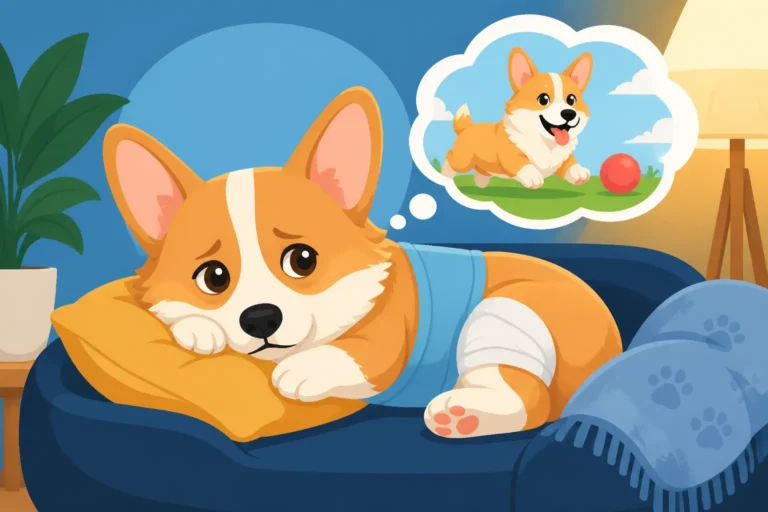
Imagine a Corgi, usually trotting alongside you, darting to "herd" a stray leaf, or meticulously supervising the mail delivery, suddenly restricted to a small pen or crate. Their mind is still racing, observing everything, and trying to process it all, but their body can't keep up. This disconnect can lead to significant stress, anxiety, and a feeling of helplessness for them, and for you, it can feel like a constant battle against boredom and frustration. It’s crucial to understand that their vocal protests or attempts to break free aren't defiance; they're a legitimate cry for mental engagement.
Confinement is often a necessary part of recovery, particularly for conditions like intervertebral disc disease (IVDD) or other spinal issues common in the breed. The goal is to limit physical movement to allow healing, but this doesn't mean their brain needs to be put on hold. In fact, keeping their minds active can often help redirect their energy away from behaviors that might hinder recovery, such as incessant barking or frantic pacing. By acknowledging their natural instincts, we can find suitable outlets that promote healing while preserving their sharp Corgi wit.
Why Confinement is Especially Hard for a Corgi
Corgis possess a unique combination of high intelligence, strong herding instincts, and a surprising amount of energy packed into their low-rider frames. This means they are constantly observing, processing, and wanting to interact with their world. When their physical activity is suddenly halted, their mental engine is still running at full speed. This mismatch can create a deep sense of frustration. They might start A Corgi That Objects Loudly to Confinement, barking at every sound, or trying to chew their way out of their crate because their brains are seeking an outlet for that pent-up mental energy.
Their herding lineage means they're used to being "in charge" and moving things, including people. Being told they can't move, can't follow you from room to room, or can't investigate that interesting scent can be incredibly confusing and distressing for them. They're not being stubborn; they're genuinely struggling to understand why their natural impulses are being denied. This is why simply putting them in a crate and walking away often doesn't work – it usually exacerbates the problem, leading to more vocalizations and attempts to escape.
Furthermore, Corgis are highly social dogs. They thrive on interaction with their human family. Being isolated, even if you’re just in the next room, can feel like a punishment. They want to be part of the action, even if they can only observe. Understanding this social aspect is key to structuring their confinement so they feel included and not forgotten. It’s about more than just physical rest; it’s about emotional and mental well-being during a challenging time.
The Risks of Boredom and Lack of Stimulation
Allowing a confined Corgi to become truly bored can have several negative consequences, both for their recovery and their long-term behavior. Firstly, extreme boredom can manifest as destructive behaviors. A Corgi might start chewing on bedding, the crate itself, or even their own paws if they don't have appropriate outlets. This can lead to new injuries or hinder the healing process if they manage to get out or injure themselves trying.
Secondly, a lack of mental stimulation can escalate anxiety and stress. You might notice increased panting, excessive licking, trembling, or even aggression as their frustration boils over. This stress isn't just unpleasant; chronic stress can actually impede physical healing, as the body remains in a constant state of alert rather than rest and repair. A stressed Corgi is not a healing Corgi. Sometimes, owners even consider Whether Sedatives Help a Corgi on Rest to manage extreme anxiety, but often, appropriate mental stimulation can alleviate much of the underlying distress.
Finally, prolonged boredom can lead to behavioral regressions. A perfectly house-trained Corgi might start having accidents in their crate, or a dog that used to be quiet might develop an incessant barking habit. It's their way of coping (or failing to cope) with an unnatural situation. By proactively addressing their need for mental activity, we can prevent these issues, keeping them happier and more compliant with their essential rest period.
Mental Stimulation: Engaging Their Brains, Not Their Bodies
The key to a successful confinement period is to exhaust your Corgi's mind without engaging their body. This means getting creative with activities that challenge their intellect, engage their senses, and allow them to "work" for something, just as their ancestors worked cattle. Think of it as brain games that keep them sharp, satisfied, and, most importantly, still.
Mental stimulation can be incredibly potent. Just like solving a complex puzzle can be tiring for us, figuring out how to get a treat from a dispenser or following a scent trail can be genuinely exhausting for a Corgi. These activities tap into their innate drives and provide a sense of accomplishment, which is crucial for their morale when they can't run, jump, or herd. The more varied the mental challenges, the less likely they are to get bored with any one type of activity.
Remember, even small bursts of mental engagement throughout the day can make a huge difference. You don't need elaborate setups or expensive equipment. Often, the best tools are already in your home, or can be acquired easily. The goal is consistent, appropriate engagement that respects their physical limitations while honoring their mental prowess.
Puzzle Toys and Treat Dispensers
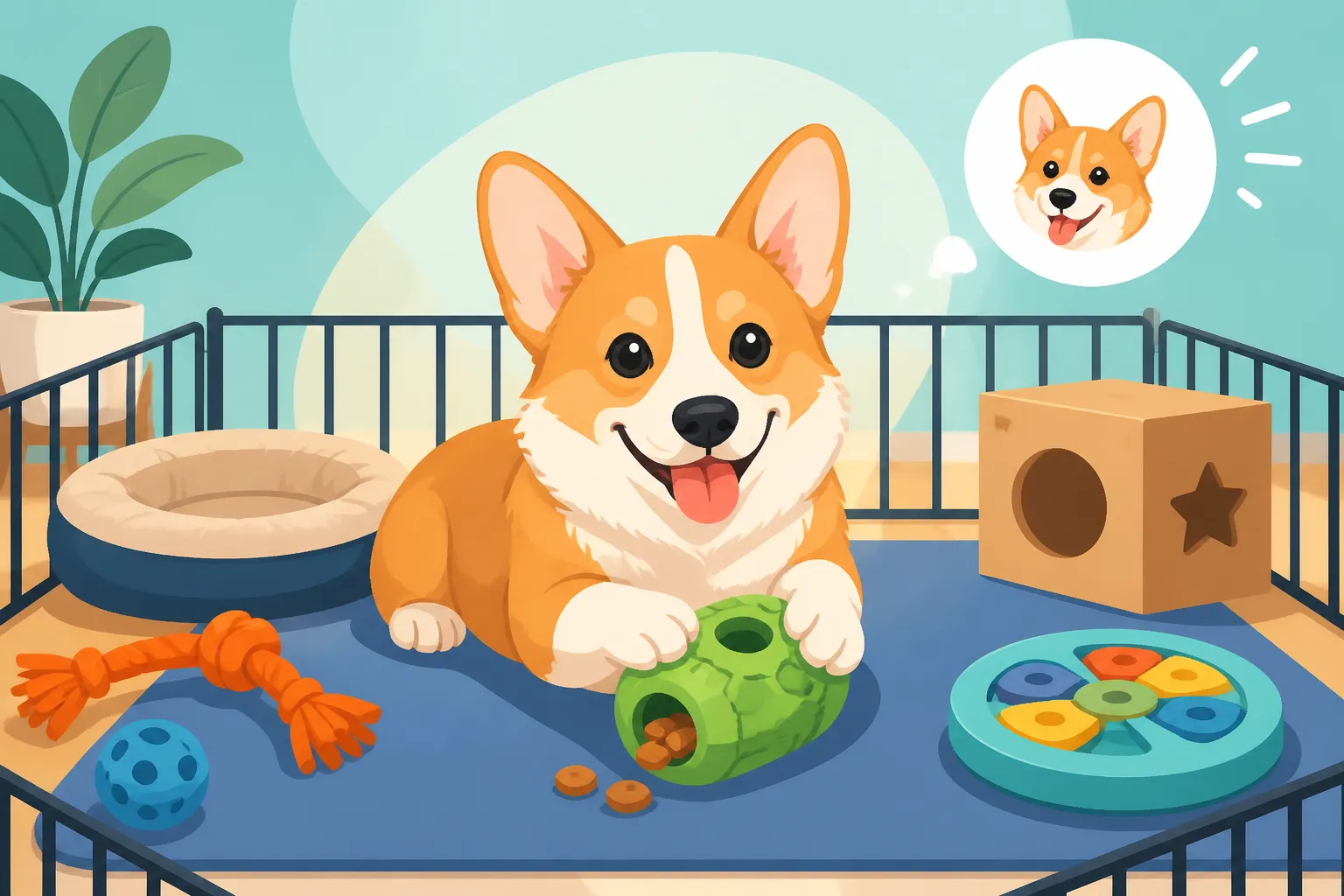
Puzzle toys and treat dispensers are absolute lifesavers for confined Corgis. These ingenious devices require your dog to use their nose, paws (gently, if needed), or mouth to solve a puzzle and get a reward. They transform mealtime or treat time into a mentally stimulating activity that can keep them engrossed for significant periods. You can find a huge variety of these online, for example on Amazon, ranging from simple treat-dispensing balls to multi-stage puzzles with sliding parts and hidden compartments.
Start with something relatively easy to prevent frustration. A simple KONG filled with peanut butter, yogurt, or wet dog food and then frozen can provide a long-lasting, low-effort challenge. As your Corgi gets the hang of it, you can introduce more complex puzzles that require pushing, nudging, or lifting components. Always supervise them, especially when they're first learning, to ensure they don't get overly frustrated or attempt to chew on the toy itself in an unsafe manner. These toys aren't just for food; some are designed for independent play, offering different textures and sounds to keep them interested.
Rotating these toys regularly also helps maintain interest. Don't put out all the puzzles at once. Introduce one or two, then put them away and bring out different ones the next day. This keeps things novel and exciting. For Corgis on a restricted diet, use their regular kibble portions in the puzzles to ensure you're not overfeeding them. It also makes their mealtime much more engaging, providing Feeding a Corgi Through Six Weeks of Enforced Rest with a purpose.
Scent Work and Nose Games
Corgis have excellent noses, and engaging this sense is a fantastic way to provide mental stimulation without any physical exertion. Scent work, even in its simplest form, taps into their natural instincts and is incredibly enriching. It’s also something you can easily adapt to their confined space, whether it's a crate or a small recovery pen.
Start by hiding a few high-value, pea-sized treats around their confined area. Use a quiet command like "find it!" to encourage them. Initially, make the treats easy to spot, perhaps just under a blanket or next to their bed. As they get better, you can make the hides a little more challenging, tucking them into the folds of a towel, under a non-slip mat, or even inside an empty paper towel roll (supervised, of course). The joy they get from sniffing out a hidden treat is immense and satisfying.
Snuffle mats are another wonderful tool for nose work. These fabric mats have many nooks and crannies where you can hide kibble or small treats. Your Corgi has to use their nose to root around and find the food, providing a challenging and rewarding activity that doesn't involve much movement. Just like with puzzle toys, use their meal portions to avoid extra calories, especially for Corgis who might be prone to gaining weight, as What Extra Weight Does to a Corgi Spine can be a serious concern. This kind of focused mental activity can be surprisingly tiring for them, helping them settle more calmly afterward.
Training Sessions and New Tricks
Just because your Corgi can't run or jump doesn't mean training has to stop. In fact, short, low-impact training sessions can be one of the most effective ways to keep their minds engaged and prevent boredom. This is where you can truly leverage their intelligence and eagerness to learn.
Focus on commands that require minimal physical movement, such as "stay," "look," "touch" (touching your hand with their nose), "chin" (resting their chin on your hand or leg), or even "wave" with a single paw if their condition allows for gentle front-limb movement. You can also work on basic obedience like "sit" or "down" within their confined space, reinforcing positive behavior and strengthening your bond. Use small, soft training treats or even portions of their regular kibble as rewards. Many online resources, including those from dog training platforms like BAXTER & Bella, offer ideas for low-impact mental exercises perfect for confined dogs.
Learning new tricks or refining existing ones provides a fantastic mental workout. It requires focus, problem-solving, and coordination, all without stressing their recovering body. Keep sessions short—5 to 10 minutes, a few times a day—to avoid overstimulation or frustration. End each session on a positive note, with success and praise, to build their confidence. These sessions not only occupy their time but also remind them that they are still capable, intelligent members of the family, which is incredibly important for their mental well-being during confinement.
Safe Activities for Limited Movement
While extensive physical activity is off-limits, there are still ways to provide gentle engagement that respects your Corgi’s need for rest and recovery. These activities focus on touch, sensory input, and quiet observation, helping to pass the time without putting any strain on their healing body. Remember, every little bit of safe interaction contributes to their overall happiness.
The key is always supervision and a deep understanding of your Corgi's specific limitations. What might be okay for a dog with a recovering leg might not be suitable for a Corgi on strict spinal rest. Always err on the side of caution and consult with your vet or a veterinary physiotherapist about what activities are permissible given their condition. This careful consideration ensures that while you're trying to occupy them, you're not inadvertently setting back their recovery.
These "quiet" activities are also wonderful opportunities for bonding. When your Corgi is feeling vulnerable and possibly uncomfortable, your calm presence and gentle attention can be profoundly comforting. It reinforces their sense of security and demonstrates that even though their routine has changed, your love and care remain constant.
Gentle Grooming and Touch
Even when confined, a Corgi still needs grooming, and it can be a surprisingly effective way to provide calm, positive interaction. Gentle brushing isn't just about keeping their beautiful double coat free of tangles and reducing How Much Hair a Twenty-Eight Pound Corgi Drops; it's also a soothing form of touch and a great way to check their skin and body for any new issues. Use a soft slicker brush or a rubber curry comb, working slowly and gently.
Beyond brushing, consider incorporating gentle massage, if approved by your vet. A light, comforting rub around their head, neck (if their back allows for it without strain), or shoulders can release tension and strengthen your bond. Many Corgis adore having their ears cleaned (gently, of course) or their paws inspected and gently massaged. This not only keeps them healthy but provides a mindful, reassuring activity. Remember, their low stature means they're prone to collecting debris, so even a gentle wipe down with a damp cloth can feel refreshing.
This close, calm interaction can be incredibly therapeutic for both of you. It signals to your Corgi that they are safe, loved, and cared for, even when they can't engage in their usual boisterous activities. It’s a quiet moment of connection that fulfills their social needs and helps them relax, which is paramount for healing.
Supervised Chewing for Mental Release
Chewing is a natural, instinctual behavior for dogs that provides both mental and physical satisfaction. For a confined Corgi, a safe and appropriate chew can be an excellent outlet for stress, boredom, and pent-up energy, without requiring much movement. The key here is supervised and safe.
Opt for chews that are long-lasting, appropriate for your Corgi’s chewing style, and won't splinter or break off into large, swallowable pieces. Dental chews designed for prolonged gnawing, bully sticks, or certain types of durable rubber chews can be good options. Always ensure the chew is new enough not to pose a choking hazard. Avoid anything too hard that could damage teeth or anything that encourages vigorous head-shaking or body twisting, which could compromise their recovery.
Chewing helps release endorphins, which can have a calming effect on your Corgi. It provides a focused activity that can help them self-soothe when they're feeling restless. Consider offering a chew when you need to step away for a short period, or when they seem particularly antsy. Just like with puzzle toys, remember to factor these chews into their daily caloric intake, especially if they are on a weight management plan, which is often crucial for long-backed breeds to prevent Why Corgi Weight Is a Spinal Problem.
Observation and "Window Watching"
While your Corgi can't physically explore, they can still engage with the world through their senses. Positioning their confinement area so they have a safe view of a window, or even just access to the sounds and smells of your household, can provide surprising mental stimulation. This "window watching" offers a dynamic, ever-changing tableau that can keep their minds quietly occupied.
Ensure the view is safe and doesn't encourage excessive excitement or frustration. A calm view of a bird feeder, a quiet street, or even just the daily happenings within your home can be more enriching than staring at a blank wall. Make sure they are comfortable and secure in their spot, perhaps on an Orthopedic Beds for a Corgi placed strategically near a window, without any temptation to jump or strain. This passive observation allows them to feel connected to the outside world and the family's activities without needing to participate physically.
You can further enhance this by providing gentle background noise, like classical music, an audiobook, or a dog-specific relaxation playlist. The subtle sensory input can create a more enriching environment than complete silence, helping to mask potentially irritating noises and promote a sense of calm. The goal is to stimulate their senses in a way that doesn't trigger physical reactions or anxiety, allowing them to remain mentally engaged while physically resting.
Maintaining Routine and Comfort
Successful confinement isn't just about what activities you provide; it's also about creating a supportive, predictable, and comfortable environment. A consistent routine and a carefully set up space can significantly reduce stress and anxiety, making the confinement period much more manageable for your Corgi.
Think of their confined area as their personal sanctuary during this time. It needs to be a place where they feel safe, secure, and relaxed, not a place of punishment. By focusing on comfort and predictability, you're not only helping their physical recovery but also safeguarding their emotional well-being. This requires a bit of foresight and dedication, but the payoff in a calmer, happier Corgi is immeasurable.
Your presence and attention are perhaps the most crucial elements in this section. Even if your Corgi can't be on your lap, simply being nearby, speaking to them, or offering a gentle hand can make all the difference. They understand your emotions, and your calm, reassuring demeanor will go a long way in helping them cope with their temporary limitations.
Crate Setup and Enrichment
The physical setup of your Corgi's confinement area is paramount. Whether it's a crate, an exercise pen, or a small, gated room, it needs to be comfortable, safe, and easily accessible for you to interact with them. Start with a truly comfortable bed. An orthopedic bed can provide much-needed support for their joints and spine during a period of immobility. Ensure it's thick enough to cushion their body and keep them off a cold floor.
Add familiar items like their favorite blanket or a toy (if allowed and safe) to create a sense of security and normalcy. These items carry your scent and their own, which can be incredibly comforting. Keep fresh water easily accessible, perhaps in a spill-proof bowl that doesn't require them to strain to drink. For very strict crate rest, consider a bowl that attaches to the side of the crate to prevent accidental spills and minimize movement.
For those whose Corgis are on truly strict protocols, you might be wondering Keeping a Crated Corgi Sane. The key is strategic enrichment within the confines. This means having a rotating selection of appropriate puzzle toys or chews available during specific times, rather than constantly. Consider covering part of the crate with a blanket to create a den-like feel, offering a sense of security and privacy, but ensure good airflow. The goal is to make the space feel like a safe haven, not a prison.
Consistent Schedule and Predictability
Dogs thrive on routine, and a consistent schedule becomes even more vital during confinement. Predictability helps reduce anxiety, as your Corgi learns what to expect and when. This includes consistent feeding times, potty breaks, short periods of mental activity, and quiet rest times.
Establish a clear schedule for potty breaks, taking your Corgi out gently (often on a sling or harness to support their back, such as Whether a Corgi Should Wear a Harness Not a Collar) at regular intervals, even if they don't explicitly ask. This prevents accidents and allows them a moment to stretch their legs (if permitted) and breathe fresh air. Similarly, mealtimes should be consistent. Consider using a slow feeder or puzzle bowl to extend their meal and provide mental stimulation. The Calorie Target for a Twenty-Eight Pound Corgi can be surprisingly low during inactivity, so precise feeding is critical.
| Activity | Purpose | Frequency (During Confinement) | Notes |
|---|---|---|---|
| Puzzle Toys/Chews | Mental engagement, boredom relief | 2-3 times/day (15-30 min each) | Use kibble, supervise to prevent frustration/destruction. |
| Scent Games | Instinctual fulfillment, brain workout | 1-2 times/day (5-10 min each) | Hide treats in a snuffle mat or around the crate. |
| Gentle Grooming | Comfort, bonding, health check | Daily (5-10 min) | Slow, soothing strokes. Check for skin issues. |
| Training Sessions | Mental challenge, reinforce good behavior | 2-3 times/day (5-10 min each) | Focus on 'stay', 'look', 'chin' – no physical strain. |
| Potty Breaks | Hygiene, short outdoor refresh | Every 4-6 hours (or as needed) | Use a sling/support; minimize walking; keep short. |
| Quiet Observation | Sensory enrichment, connection to world | Throughout the day | Position crate near a safe window or family activity. |
| Human Presence | Emotional support, reassurance | As much as possible | Sit nearby, read, gentle talking. |
Having a consistent schedule means your Corgi will learn to anticipate these activities, which can reduce overall anxiety. It also helps you manage their care more effectively and ensures their needs are met regularly, preventing any unnecessary distress or setbacks in their recovery.
Human Interaction and Presence
Perhaps the most crucial aspect of keeping a confined Corgi occupied and content is your consistent human interaction and presence. Even if they can't play fetch or go for a long walk, simply being near them provides immense comfort and reassurance. Corgis are deeply social creatures, and feeling isolated can be as distressing as physical pain.
Make time throughout the day to simply sit by their crate or pen. Read a book aloud, work on your laptop, or just quietly observe them. Gentle petting, if allowed and comfortable for them, can be incredibly soothing. Talk to them in a calm, reassuring voice. Let them know you're there, you understand, and you're supporting them through this difficult time. This constant, gentle presence affirms their place in the family and prevents feelings of loneliness or abandonment.
For those dealing with serious injuries, such as a slipped disc, the financial implications can be substantial. Knowing The Corgi Bills That Come With a Long Back can be overwhelming. However, your time and attention are invaluable and free. These moments of quiet connection, where you are simply present, can be far more powerful than any toy or treat in bolstering your Corgi's spirits and helping them cope with their limited mobility. Remember, a Corgi’s job used to be herding, and now The Job a Corgi Needs Instead of Herding You is often to just be your companion and friend, especially when confined.
Disclaimer
This article is for general informational purposes only and does not constitute professional advice. Laws, prices and regulations vary by location and change over time. Consult a qualified professional for guidance on your specific situation.