Whether a Corgi Squeezes Under Gates
It’s a common scenario for Corgi owners: you've carefully put up a gate, thinking your little low-rider is safely contained, only to turn around and find them on the other side, looking at you with that innocent, slightly mischievous Corgi grin. This breed's unique build and clever mind make them master escape artists when it comes to squeezing through seemingly impossible gaps. This guide will dive deep into why Corgis are so adept at gate evasion and, more importantly, how you can fortify your home to keep your furry family member safely where they belong.
The Corgi's Low Profile: A Gate-Defying Advantage
Corgis are built close to the ground, a trait that was invaluable in their original role herding cattle by nipping at their heels. But this same adorable characteristic also gives them an unexpected advantage when it comes to sneaking under barriers. It’s not just their size; it’s how they use it.
Understanding the Corgi's Build
Let's talk about that iconic Corgi silhouette for a moment. They've got a long body, those famously short legs, and a low center of gravity. This isn't just a cute aesthetic; it's a functional design. Their compact, muscular frame allows them to be incredibly agile despite their low height. When they encounter a gap, they don't just try to walk through it; they adjust. They can contort their bodies, flatten their chests, and slide through spaces that would seem far too small for a dog of their weight.
Think about it from their perspective: their eyes are naturally closer to the ground, so they're constantly scanning for low-level access points. A gap under a gate that might go unnoticed by a taller dog is practically an open invitation to a Corgi. Their strong shoulders and flexible spines are perfectly adapted for wriggling, pushing, and ultimately, squeezing under those perceived barriers.
The "Corgi Crawl" Phenomenon
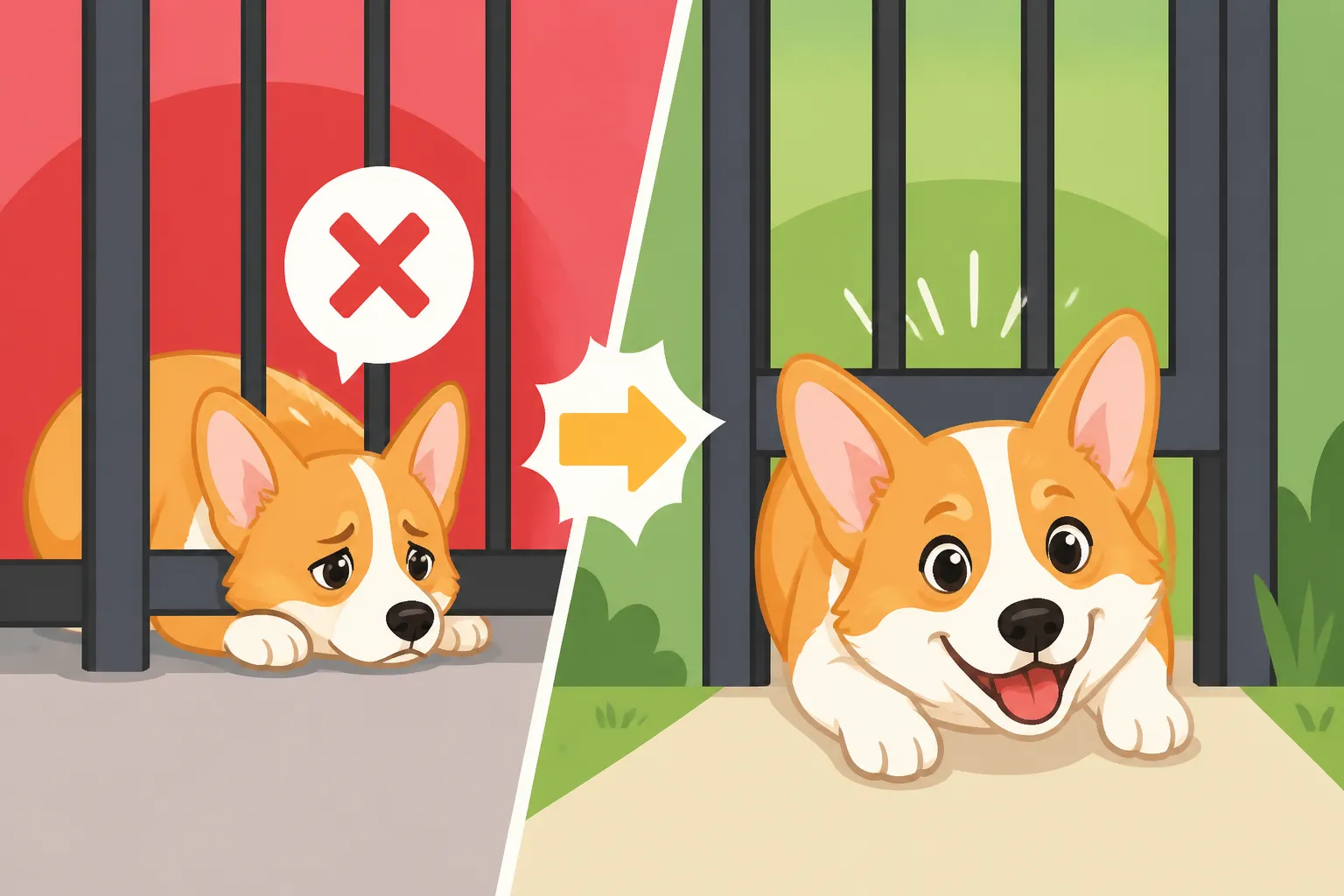
If you own a Corgi, you've probably witnessed it: the "Corgi crawl." It's not just a cute trick; it's a finely honed skill. They drop their bellies to the floor, extend their front paws, and pull themselves forward, leveraging every inch of their low-slung build. This phenomenon makes even the most standard baby gate or garden barrier a potential challenge.
Imagine a typical pressure-mounted gate in your doorway. There's often a small gap at the bottom, maybe two or three inches. For most breeds, that's nothing. For a Corgi, it's a tunnel. They'll assess the gap, often with a quick sniff, and then, with surprising speed and determination, execute the crawl. Before you know it, they've popped out on the other side, looking entirely pleased with themselves. Garden fences with even a slight elevation off the ground, or gates with wide horizontal slats, can become Corgi escape routes. It’s why even a well-intentioned "pet-proof" gate might not be Corgi-proof without some modifications.
Why Corgis Are So Determined to Explore
It’s not always about mischief; often, it’s about their inherent nature. Corgis are intelligent, curious, and historically, they were bred to be independent problem-solvers. That drive doesn't disappear just because they're now a beloved house pet.
The Herding Instinct and Escape Attempts
Corgis, whether Pembroke or Cardigan, come from a long line of working dogs. Their ancestors were responsible for moving cattle, which required a sharp mind, quick reflexes, and a degree of independent decision-making. They weren't just following orders; they were analyzing situations and figuring out the best way to get the job done. This inherent intelligence and drive to "do" something often translates into a need for mental stimulation.
If a Corgi isn't sufficiently engaged, either through training, play, or "work" (like puzzle toys or scent games), they'll find their own entertainment. And sometimes, that entertainment involves figuring out how to get to the more interesting side of a gate. A bored Corgi is a resourceful Corgi. They might meticulously examine the gate for weaknesses, push against it, or even try to chew at a weak point until they discover a way through. This is why it’s so important to provide The Job a Corgi Needs Instead of Herding You – mental stimulation that channels their natural instincts into acceptable behaviors.
The Thrill of the Chase: External Motivators
Beyond boredom, Corgis are highly motivated by what's happening on the other side of that barrier. Their keen senses pick up on a myriad of fascinating stimuli: the tantalizing scent of a squirrel that just scurried across the lawn, the sound of a neighbor walking their dog, or even just the novel visual of the mail carrier approaching. To a Corgi, these are not just distractions; they are urgent calls to action.
That intense herding drive, coupled with a strong prey drive, means that anything moving, or anything with an interesting smell, can trigger an escape attempt. You might see your Corgi suddenly fixate on something outside, and the next thing you know, they're testing the gate for weaknesses with a renewed sense of purpose. It can be incredibly frustrating for owners when their Corgi, who usually understands boundaries, suddenly seems to forget all their training in pursuit of a passing leaf or a distant sound. This powerful urge to chase is also why A Corgi That Chases Bikes and Cars can be a concern on walks.
Practical Solutions for Corgi-Proofing Your Gates
The good news is that with a bit of ingenuity and some targeted modifications, you can make your home much more secure for your clever Corgi. It often takes a multi-pronged approach, combining physical barriers with consistent training.
Assessing Your Current Gates for Weaknesses
Before you start adding reinforcements, take a critical look at your existing gates and barriers. Get down on your hands and knees at Corgi level – yes, it might feel a little silly, but it’s the best way to spot potential escape routes.
Here’s what to check:
- Gap Underneath: Measure the distance from the bottom of the gate to the floor. Any gap over 2-3 inches is a potential Corgi highway.
- Vertical Gaps: Look between slats or bars. Can your Corgi squeeze their head through? If their head fits, their body usually will too, thanks to that flexible Corgi spine.
- Side Gaps: If it’s a pressure-mounted gate, check how tightly it fits against the doorframe or wall. Wiggle it a bit. Even a small side opening can be exploited.
- Latches and Locks: Are they secure? Can your Corgi nudge them open with their nose or paw if they try hard enough? Some smart Corgis can figure out basic lever handles!
Remember, a Corgi's determination can be surprisingly strong. They are masters of identifying and exploiting the weakest link. It’s better to assume they'll find any flaw and proactively address it. Thinking about Ramps and Gates to Fit Before a Corgi Arrives is a great proactive step even before your Corgi comes home.
Reinforcing and Modifying Existing Gates
Once you’ve identified the weak spots, it’s time to get creative. There are plenty of ways to bolster your current barriers without necessarily buying all new equipment.
- Blocking the Bottom Gap: This is usually the easiest fix. You can attach a piece of wood, plexiglass, or even a sturdy cardboard panel to the bottom of the gate, extending it down to the floor. For metal gates, heavy-duty zip ties can secure the panel. For wooden gates, small screws can work. Another option is to thread a rolled-up towel or a pool noodle through the bottom bars or place it snugly underneath, though a determined Corgi might eventually dislodge it. Many owners find simple mesh, like hardware cloth, to be an effective, easy-to-install solution for both bottom and vertical gaps. You can find rolls of this at any hardware store or easily order mesh panels from Amazon.
- Closing Vertical Gaps: If your gate has wider vertical slats, you can weave sturdy netting or wire mesh through them, or simply attach a solid piece of material over the problem area. Again, zip ties or wire can be your best friends here. For outdoor gates, consider attaching a section of chicken wire or garden fencing to the inside of your existing gate.
- Securing the Sides: For pressure-mounted gates, ensure they are as tightly fitted as possible. If there's still a slight gap or wobble, you can try securing the gate frame to the wall with strong adhesive strips or even a few well-placed screws if you don't mind a more permanent solution.
Choosing Corgi-Specific Gates and Barriers
Sometimes, modifying an old gate just isn’t enough, or you’re in the market for new solutions. When purchasing new gates, keep your Corgi's unique capabilities in mind.
Look for gates that:
- Extend to the Floor: Ideally, the gate should have no gap at the bottom or minimal clearance. Some pet gates are specifically designed with a low-profile base.
- Have Narrow Bar Spacing: This prevents them from squeezing their heads, and thus their bodies, through. Pay attention to both horizontal and vertical spacing.
- Are Hardware-Mounted: While pressure-mounted gates are convenient, hardware-mounted gates offer superior security and stability. They bolt directly into your wall or doorframe, making them much harder for a determined Corgi to dislodge or push through.
Here's a quick comparison of common gate types and how they stack up against a Corgi's escape artistry:
| Gate Type | Common Corgi Challenges | Solutions |
|---|---|---|
| Pressure-Mounted Baby Gates | Gaps underneath, easy to dislodge, side gaps | Add a wood plank or mesh barrier to the bottom; secure sides with strong adhesive or zip ties to a sturdy frame; opt for hardware-mounted alternatives. |
| Standard Wood/Metal Garden Gates | Wide gaps at bottom, loose hinges, easily pushed open | Bolt mesh or wood to the bottom; reinforce hinges; install a heavy-duty, Corgi-proof latch. |
| Wrought Iron Fences/Gates | Large gaps between bars, easy to slip through | Install hardware cloth or specific "Corgi-proof" mesh panels along the lower section; ensure the gate extends low to the ground. |
| Invisible/Electronic Fences | No physical barrier, reliant on training, Corgis ignore it for high drive | Use as a secondary deterrent only, never primary containment; requires extremely consistent training; not suitable for preventing escapes under gates. |
Training Your Corgi to Respect Boundaries
Physical barriers are crucial, but they’re only half the battle. A truly Corgi-proof home also relies on consistent training. Even the most robust gate can be overcome by a persistent Corgi if they haven't learned to respect boundaries.
- "Stay" and "Wait" Commands: Teach your Corgi to wait patiently at a gate or doorway until given a release cue. Practice this frequently, starting with short durations and gradually increasing the time. Reward heavily for success. This helps them understand that the gate is a boundary, not a challenge to be conquered.
- Positive Reinforcement for Gate Manners: When your Corgi approaches a gate and doesn't try to squeeze under it, praise and reward them. Make good gate behavior more rewarding than trying to escape. If you're struggling with getting your Corgi to listen around these tempting boundaries, consider exploring online dog training programs. Many platforms, like BAXTER & Bella, offer structured curricula that can help you teach your Corgi impulse control and boundary respect, turning problem behaviors into good habits.
- Consistency is Key: Everyone in the household needs to be on the same page. If one person allows the Corgi to push through or sneak under, it undermines all the training. Be firm, fair, and consistent. This kind of boundary training is also important when dealing with behaviors like A Corgi That Herds Guests Toward the Door, where they decide who goes where. Teaching them to wait and respect space applies across many situations.
Beyond the Gate: Holistic Corgi Security
Securing your home goes beyond just the gates themselves. It's about creating an environment where your Corgi feels safe, contained, and mentally satisfied, reducing their urge to explore forbidden territories.
Securing Your Yard and Outdoor Spaces
The outdoor environment presents its own set of challenges for Corgis. If your Corgi has outdoor access, even a fenced yard needs to be thoroughly Corgi-proofed.
- Fence Line Checks: Walk your entire fence line, again, at Corgi level. Look for any areas where the fence meets the ground with a gap. Corgis are adept at digging under fences, especially if there's an interesting smell on the other side. You might need to bury chicken wire along the bottom of the fence or add a "L-footer" made of wire mesh to prevent digging. Whether a Corgi Can Get Under a Fence is a common concern that needs proactive solutions.
- Landscaping Considerations: Be mindful of bushes or shrubs near your fence line that could provide a visual screen, allowing your Corgi to work on an escape route unobserved. Also, ensure there are no objects stacked near the fence that a clever Corgi could use as a stepping stone.
- Gate Latches and Locks: For outdoor gates, simple latches might not be enough. Consider adding a secure padlock or a double-locking mechanism. Some Corgis have been known to bump open simple spring-loaded latches. Safety first!
Mental and Physical Exercise to Reduce Escape Drive
A tired Corgi is often a well-behaved Corgi. Meeting their needs for physical activity and mental engagement can significantly reduce their desire to escape and explore unauthorized areas.
- Regular Physical Exercise: Corgis might have short legs, but they were bred for endurance. They need more than just a quick trot around the block. Aim for at least two good walks a day, and incorporate playtime with toys. The Forty-Five Minutes a Corgi Needs Daily is a good guideline, but some active individuals might need more. Fetch, controlled runs in a safe, fenced area, or even a brisk walk can make a huge difference.
- Mental Stimulation: This breed thrives on having a "job." Puzzle toys that dispense treats, scent work games (like hiding treats around the house for them to find), or even short, engaging training sessions can burn mental energy just as effectively as physical exercise. A mentally stimulated Corgi is less likely to look for trouble. Online training courses can be a wonderful resource for this. For example, the types of activities and challenges you find through platforms like BAXTER & Bella can provide structure for enriching your Corgi's daily life, redirecting their problem-solving skills into positive outlets.
- Structured Play: Engage them in games that require thought, like "find the toy" or hide-and-seek. This taps into their herding intelligence and can be done indoors, which is great for days with bad weather or for older Corgis who can't move quite as fast.
Microchipping and ID Tags: The Last Line of Defense
Even with the best gates, the most secure yard, and the most rigorous training, accidents can happen. A gate might accidentally be left ajar, a latch could fail, or a particularly determined Corgi might find an unforeseen weakness. That’s why robust identification is absolutely essential.
- Microchipping: This is a permanent form of identification. If your Corgi ever gets lost and ends up at a shelter or vet's office, a quick scan will reveal your contact information. Always ensure your microchip registration is up-to-date with your current phone number and address.
- ID Tags: A collar with a clearly legible ID tag that includes your phone number is your Corgi's first line of defense. If they get out, a neighbor or passerby can quickly contact you without needing to take them to a facility for scanning. Make sure the tag is securely attached and the information is current. Remembering to update these details is as important as paying Microchip and License Fees for a Corgi in the first place.
- Secure Collars/Harnesses: Ensure your Corgi's collar or harness fits properly and is secure. A loose collar can slip off, rendering the ID tag useless. If your Corgi is a known escape artist, consider a martingale collar or a well-fitting harness that they cannot back out of.
By understanding your Corgi's unique physical abilities and intellectual drive, and by implementing both physical barriers and consistent training, you can create a safer, more secure environment for your beloved, gate-defying companion.
Disclaimer
This article is for general informational purposes only and does not constitute professional advice. Laws, prices and regulations vary by location and change over time. Consult a qualified professional for guidance on your specific situation.