A Corgi That Grabs Trouser Legs
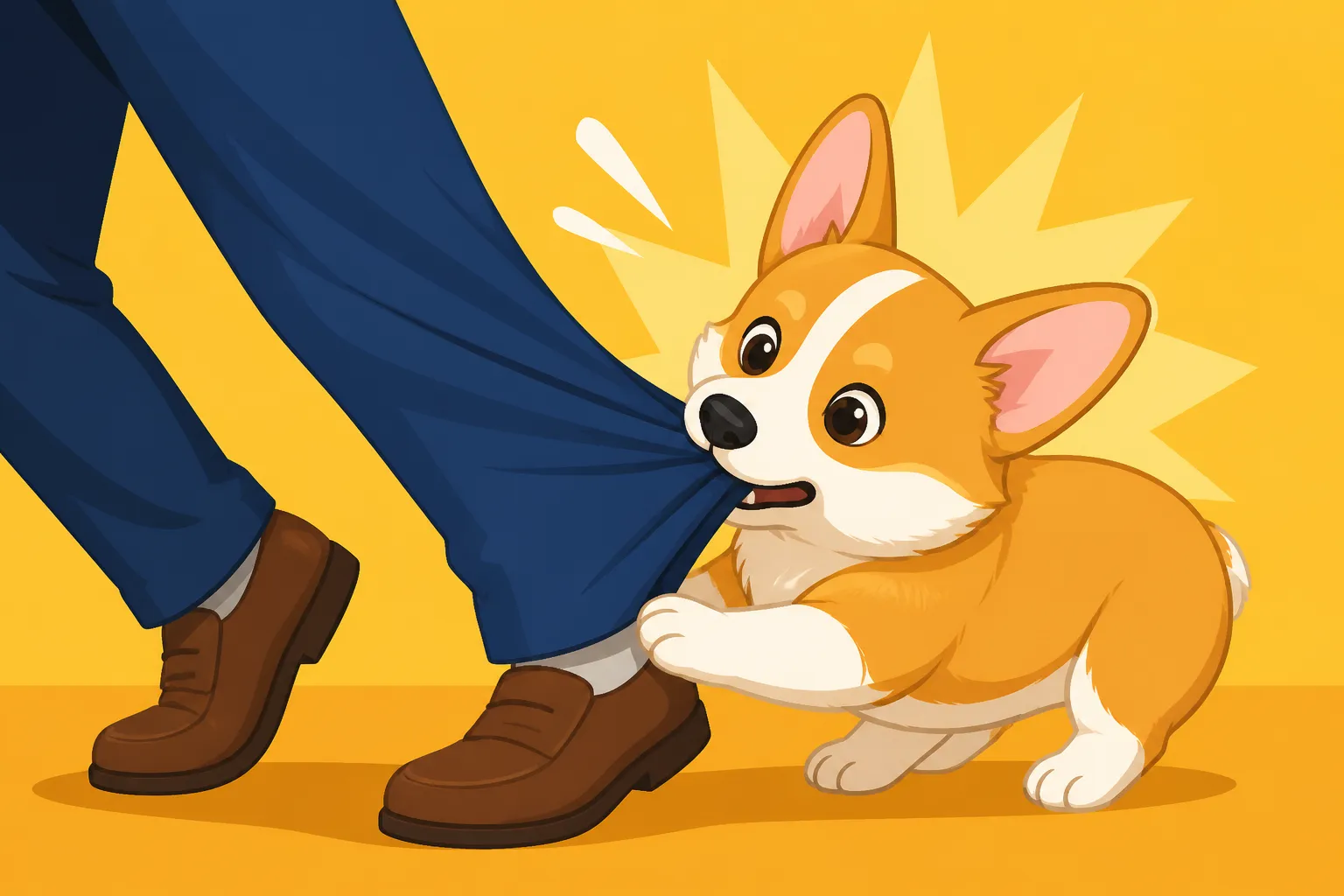
It's incredibly frustrating, and often a little embarrassing, when your adorable Corgi suddenly decides your trouser legs (or even your ankles!) are fair game for a good old nip or grab. You might be just walking across the room, minding your own business, and chomp – there they are, holding on or playfully tugging. This isn't just annoying; it can be painful and leaves you wondering why your usually sweet companion is acting like a tiny, furry land shark. This guide is here to shed light on this very Corgi-specific behavior, help you understand its roots, and give you actionable steps to curb it effectively.
Understanding the Corgi Heel Nip: It's in Their DNA
Let's start with a foundational truth about our beloved Corgis: they were bred for a job, and that job involved teeth and quick movements. When you see your Corgi grabbing at your trousers, it's not a sign of malice or aggression; it's often a deeply ingrained instinct kicking in. It's truly not personal, even if it feels that way when your favorite jeans get a new ventilation system.
The Herding Instinct: Why They Go for Heels
The Corgi, whether a Pembroke or a Cardigan, descends from dogs specifically developed to herd cattle in the fields of Wales. Now, imagine a dog that's only about a foot tall trying to move a several-hundred-pound cow. They couldn't use brute force or intimidation like larger herding breeds. Instead, they employed a clever, strategic approach: they'd nip at the heels of the cattle. A quick dart in, a little nip, and a speedy retreat before the cow could react or kick. This sharp, precise nipping was crucial for their work, moving the herd without getting trampled.
This ancient job description is still hardwired into their genetic makeup. Fast forward to your living room, and your Corgi sees your moving legs, a child running, or even another pet scurrying, and their brain registers "moving object that needs to be directed." They're not trying to hurt you; they're simply trying to "herd" you, using the only method they know from their ancestors. It's a primal urge, an echo of the windswept Welsh fields, playing out on your carpet. Understanding this background can help you frame the behavior not as a flaw, but as a misplaced talent.
When Does it Start and Why Does it Persist?
For many Corgi owners, the trouser-leg grabbing starts when their Corgi is a puppy. Those sharp little puppy teeth can feel like needles, and it's often accompanied by playful lunging. Young puppies explore the world with their mouths, and they learn bite inhibition from their littermates and mother. However, when they come home, they often test boundaries and might find that nipping at human feet or pant legs gets a reaction, even if that reaction is a yelp or a sudden stop. Any reaction, positive or negative, can inadvertently reinforce the behavior, telling the puppy, "Aha! I got your attention!"
If this behavior isn't consistently redirected or managed during puppyhood, it can easily persist into adulthood. An adult Corgi who still grabs trouser legs has likely learned that it's an effective way to communicate, get attention, or satisfy that deeply ingrained herding drive. They might do it when they're excited, frustrated, want you to move in a certain direction, or simply when they have an excess of pent-up energy. It’s a habit that’s been allowed to develop, and like any habit, it takes consistent effort to break.
Practical Strategies to Redirect the Nipping
Dealing with a Corgi who grabs trouser legs requires patience, consistency, and a clear understanding that you're working against a natural instinct, not a malicious intent. The goal isn't to punish the instinct, but to redirect it into acceptable channels.
Immediate Interruption and Redirection
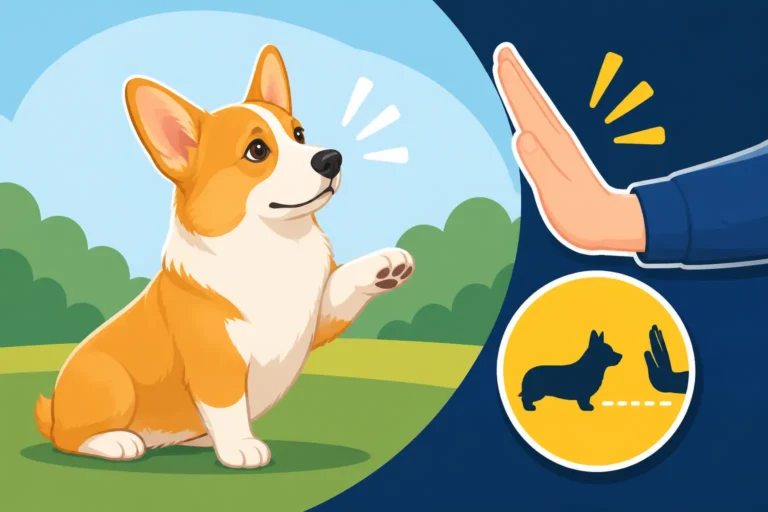
When your Corgi grabs your trouser leg, your immediate reaction is crucial. The most effective strategy is to interrupt the behavior without making a big fuss that could be misinterpreted as play or attention. A sharp, high-pitched "ouch!" or "yip!" can mimic the sound a littermate would make, signaling that the bite was too hard. Then, immediately disengage. This might mean freezing in place, turning your back, or even stepping over a baby gate to remove yourself from the situation. This is often referred to as a "reverse timeout"—you, the source of interaction, leave the scene, rather than punishing the dog directly.
Once you've disengaged for a moment, redirect your Corgi's attention to an appropriate chew toy. Keep a variety of sturdy, engaging toys readily accessible in every room. The moment they show interest in the toy, praise them calmly and positively. This teaches them, "Nipping pants gets nothing, but chewing this toy gets praise and attention." Consistency is key here. Every single time those teeth go for your clothes, follow the same routine: "ouch!", disengage, redirect to toy. This helps your Corgi understand the new rules.
Sometimes, especially with persistent offenders, you might need to use a short leash or tether in the house. This allows you to quickly and safely remove your Corgi from your legs without physically handling them, which can sometimes escalate the nipping. You can step on the leash or loop it around a piece of furniture to prevent them from reaching you, then offer the alternative toy. For personalized guidance on implementing such training methods, you might find resources from trainers like BAXTER & Bella incredibly useful, as they often provide step-by-step instructions for common puppy and dog behaviors.
Providing Appropriate Outlets for Herding Energy
Remember, your Corgi has a job in their bones. If they don't have an appropriate outlet for that herding energy and intelligence, they will find one, and your legs might be it! Providing structured activities that tap into their natural drives is essential for managing this behavior.
Flirt poles are fantastic tools. They consist of a long stick, a rope, and a toy at the end. You can mimic the quick movements of prey, allowing your Corgi to chase, stalk, and "catch" the toy. This burns both physical and mental energy in a controlled environment, satisfying that chase instinct without involving your ankles. Structured fetch games where your Corgi has to "out" the toy before you throw it again also work well. Consider even a large, sturdy herding ball for them to push around the yard; this gives them a tangible "flock" to manage.
Beyond physical exercise, Corgis thrive on mental stimulation. Puzzle toys, especially those where they have to work to get their kibble or treats, can keep their minds engaged and tire them out. You can find a wide range of these on platforms like Amazon. Scent work is another excellent option. Hiding treats around the house and encouraging your Corgi to sniff them out uses their natural abilities and is incredibly enriching. Think about it: if their mind is busy solving a puzzle or tracking a scent, it's less likely to be focused on your pant leg. Regular, engaging play sessions are not just for fun; they're a vital part of managing their behavior and The Job a Corgi Needs Instead of Herding You.
Setting Up Your Environment for Success
Training your Corgi is only half the battle; the other half is setting up your home environment to support the desired behavior and minimize opportunities for the unwanted one. Prevention is often easier than constant correction.
Managing Triggers and Preventing Opportunities
Take a moment to observe when your Corgi typically grabs your trouser legs. Is it when you first get home? When you walk towards the kitchen? When you try to leave the room? Identifying these triggers is the first step in managing them. If your Corgi gets overly excited when you come home, try to ignore them for a minute or two until they calm down, then greet them with a calm voice and perhaps a quiet chew toy. This teaches them that calm behavior gets attention, not frantic nipping.
Strategically using baby gates can be a lifesaver. If your Corgi consistently nips when you're moving between rooms, a gate can create a safe barrier, preventing them from accessing your legs during those high-risk moments. This isn't about punishment; it's about setting boundaries that help your Corgi succeed. Similarly, consider your clothing choices. Flowing trousers or long skirts might be too tempting for a Corgi's herding instinct. Opting for fitted pants for a while can remove a major target.
Creating a dedicated "settle space" or "safe zone" for your Corgi can also be beneficial. This could be a comfortable crate with a chew toy, a dog bed in a quiet corner, or a pen with stimulating toys. Teach your Corgi to go to this spot and relax. When you need to move freely or anticipate a trigger, you can direct them to their safe zone, giving them something appropriate to do while you get where you need to go without becoming a walking target. This proactive management prevents the nipping before it even starts.
Consistency and Family Involvement
This is perhaps the most critical element: everyone in the household must be on the same page. If one person allows playful nipping, even occasionally, while another tries to redirect it, your Corgi will become confused and the behavior will be much harder to extinguish. Corgis are intelligent and will quickly learn who they can get away with what. Hold a family meeting and decide on a consistent approach for every instance of trouser-leg grabbing. Discuss the "ouch!", disengage, and redirect steps so that every human reacts in exactly the same way every time.
Managing Corgis around children who tend to run can be particularly challenging because running is a massive trigger for their herding instinct. Children's quick movements and high-pitched voices can inadvertently encourage the nipping. It's vital to Teaching Children Not to Run From a Corgi and to supervise interactions closely. Teach children to freeze like a tree if the Corgi starts to nip, and then redirect the Corgi to a toy. Never leave a Corgi unsupervised with young children if this nipping behavior is present, as even playful nips can break skin. For more detailed guidance on redirecting this specific behavior, you might find valuable insights in articles like Redirecting a Corgi Off Ankles or A Corgi That Nips Running Children.
| Do's | Don'ts |
|---|---|
| Do use a sharp "ouch!" or "yip!" | Don't scream or yell angrily |
| Do immediately disengage and turn away | Don't chase or scold them intensely |
| Do redirect to an appropriate chew toy | Don't use your hands as toys |
| Do provide ample physical and mental exercise | Don't leave them bored with no outlets |
| Do be consistent, every single time | Don't allow it sometimes but not others |
| Do involve every family member in training | Don't let some people allow it |
| Do use baby gates or tethers | Don't give them free rein if problem persists |
When to Seek Professional Help
While most Corgi owners can manage trouser-leg grabbing with consistent effort, there are times when the behavior feels overwhelming, persistent, or even escalates. Knowing when to call in a professional can save you a lot of frustration and help your Corgi learn faster.
Recognizing When It's More Than Just Herding
Most cases of trouser-leg grabbing are indeed rooted in the Corgi's herding instinct and can be managed with the strategies discussed. However, sometimes the behavior might be indicative of a deeper issue, or it might become so intense that it's concerning. If the nipping starts to become harder, causing frequent bruising or breaking the skin regularly, it could be a sign of frustration or even a lack of bite inhibition that hasn't been properly taught. While true aggression is rare for this specific behavior, if your Corgi is growling, snarling, or showing other signs of fear or anger when you try to move away or redirect them, it's definitely time for professional intervention.
Also, consider if the nipping is one of several problematic behaviors. Is your Corgi also excessively barking, showing signs of separation anxiety, or guarding resources? A collection of challenging behaviors might indicate an overall need for a more structured training plan or a behavioral assessment to understand the underlying causes. Sometimes, a Corgi might be acting out of boredom, stress, or even an unmet need for mental stimulation, and a professional can help unravel these complexities. For more information on understanding your Corgi's nipping habits, you might find Why a Corgi Nips Rather Than Bites helpful. You can also explore Whether a Corgi Grows Out of Nipping to manage your expectations.
Finding the Right Trainer or Behaviorist
If you decide to seek professional help, it's crucial to find a qualified and experienced trainer or certified professional dog behaviorist. Look for someone who uses positive reinforcement methods and has experience with herding breeds. An understanding of the unique Corgi temperament and their ingrained behaviors, like the heel nip, is invaluable. Avoid trainers who advocate for harsh corrections, punishment-based methods, or dominance theory, as these can damage your relationship with your Corgi and often exacerbate behavioral issues rather than solving them.
When researching trainers, don't hesitate to ask about their certifications, their experience with Corgis or other herding breeds, and their training philosophy. Ask for references or videos of their work. A good trainer will be happy to answer your questions and provide clear explanations of their methods. They should also focus on teaching you how to work with your dog, empowering you with the skills and knowledge to continue the training long after their sessions are over. They might even suggest specific exercises like Teaching a Corgi to Herd a Ball Instead to provide an appropriate outlet.
A professional can observe your Corgi in your home environment, identify specific triggers unique to your situation, and tailor a training plan that addresses your Corgi's individual needs. They can also provide hands-on guidance, correct your technique, and offer support throughout the process. This personalized approach can be incredibly effective for stubborn cases or when you feel you've exhausted your own efforts. Don't forget to look into Trainer Rates for a Corgi That Nips so you can budget appropriately.
Disclaimer
This article is for general informational purposes only and does not constitute professional advice. Laws, prices and regulations vary by location and change over time. Consult a qualified professional for guidance on your specific situation.