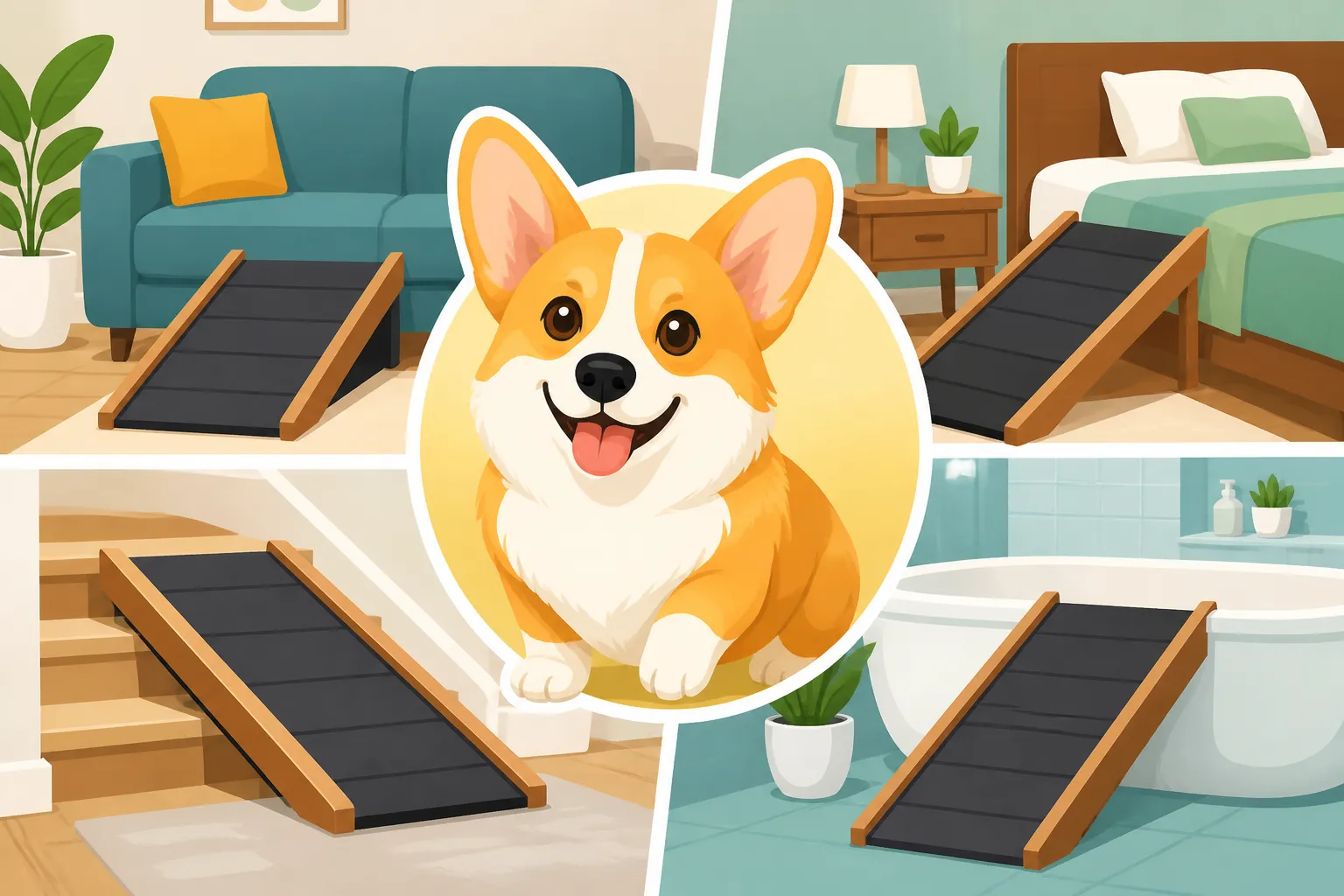
Whether a Corgi Needs Ramps in Every Room
It's a common worry for Corgi owners, this nagging thought about their beloved low-riders launching off furniture or navigating stairs and the potential harm to their famously long backs. Protecting your Corgi's delicate spine is paramount, and often, the question of whether to equip your home with ramps in every room looms large. This guide will help you understand your Corgi's unique physical needs and explore practical ways to make your home a safer haven, not just for today but for years to come.
Understanding Your Corgi's Unique Spinal Vulnerabilities
Corgis, both Pembrokes and Cardigans, are chondrodystrophic breeds. What does that mean for their backs? It means their cartilage growth is abnormal, leading to those adorable short legs and, unfortunately, a predisposition to certain spinal issues. Their long bodies combined with short legs put immense stress on their intervertebral discs.
The Anatomy of a Corgi's Back
Imagine a Slinky toy. That's a bit like a Corgi's spine, especially when they twist, jump, or land hard. Each little segment of their spine has a disc acting as a shock absorber. In chondrodystrophic breeds like Corgis, these discs can degenerate prematurely, hardening and becoming less flexible. This condition, known as Intervertebral Disc Disease (IVDD), makes them highly susceptible to disc ruptures or herniations. A simple jump off a sofa, a sudden twist, or even an awkward landing can cause one of these compromised discs to bulge or rupture, pressing on the spinal cord. This can lead to excruciating pain, nerve damage, and in severe cases, paralysis. Owners often ask, Whether a Corgi Back Is as Fragile as a Dachshund's, and while they share similarities, Corgis have their own distinct risk profile due to their body shape and activity levels.
The Risks of Jumping and Impact
It's natural for dogs to want to join their humans on the sofa or bed. But for a Corgi, that daily leap can be a ticking time bomb. Each time they jump up, their spine compresses. Each time they land, there's an impact that jars their already vulnerable discs. Over years, this cumulative stress is a major contributor to IVDD. We're not just talking about big, dramatic falls; even small, repeated jumps can do damage. Think about your Corgi, eyes gleaming, getting a running start to launch themselves onto your lap from the floor. It's endearing, but it's also a high-risk maneuver for their back. This is why discussions around Whether a Corgi Should Ever Jump Off a Sofa are so crucial. The continuous stress contributes to Disc Disease in a Long-Backed Corgi, which is a difficult and often expensive condition to manage.
The Role of Body Weight
While we adore our Corgis' stocky build, extra weight is a massive burden on their long spines. Every additional pound exacerbates the pressure on those intervertebral discs, making them even more prone to injury. It’s like carrying a heavy backpack all day, every day – eventually, your back will complain. For a Corgi, being overweight means their discs are working overtime, trying to cushion a load they weren't designed for. This significantly increases their risk of IVDD and can also worsen existing conditions. Maintaining an ideal body condition is one of the most proactive steps you can take to protect your Corgi's spine. It's not about making them skinny; it's about keeping them lean and athletic. You can learn more about this by understanding Why Corgi Weight Is a Spinal Problem. Many owners find that careful portion control and high-quality food, like those offered by Ollie, help keep their Corgi at a healthy weight.
The Case for Ramps: Where They Make the Biggest Difference
Given the spinal vulnerabilities, ramps aren't just a convenience; they're often a necessity for proactive spinal care. They provide a safe, gentle incline that allows your Corgi to access elevated surfaces without the dangerous impact of jumping.
Sofa and Bed Access
Let's face it, most Corgis are cuddle bugs who love to be right next to their people. Denying them access to the sofa or bed completely can feel harsh, but allowing them to jump on and off is risky. This is where a ramp truly shines. A well-placed ramp next to your favorite armchair, sofa, or bed eliminates the need for them to jump. They can trot up and down, putting minimal stress on their back. It takes a little training, but most Corgis, especially with positive reinforcement, quickly learn that the ramp is their ticket to snuggles. Imagine your Corgi gracefully ascending a ramp to curl up beside you, instead of a dramatic leap and thud. This small change can prevent The Jump That Ruptures a Corgi Disc and save you a world of heartache and vet bills later on.
Car and SUV Entry
Getting in and out of a car or SUV presents another high-impact scenario for a Corgi. Even if you lift them, an awkward movement can still twist their back. A portable car ramp is a fantastic investment. These ramps fold up for easy storage and can be deployed quickly when it's time for a car ride. Teaching your Corgi to use a car ramp protects their spine during every adventure, from vet visits to park outings. It also saves your back from repeatedly lifting a wiggly, 25-30 pound dog. Think about a weekend trip: your Corgi eagerly walks up the ramp into the back of the car, tail wagging, instead of you struggling to hoist them in, praying you don't tweak their spine or your own. For those who frequently travel or simply want to protect their Corgi every day, a car ramp is invaluable. Consider checking out products available from retailers like Chewy for a wide selection of durable, Corgi-friendly car ramps.
Navigating Stairs
This is a trickier one, as not all homes are suited for ramps over permanent staircases. While some Corgis seem to handle stairs fine for a while, the repetitive impact and twisting motion, especially going down, can be very damaging to their spine over time. If you have a few steps, a fixed ramp might be feasible. For full flights of stairs, it's often safer to carry your Corgi, if possible, or use baby gates to block access. However, if carrying isn't an option and gates aren't practical, teaching them to use a ramp for even a few steps can reduce strain. Remember, the goal is to minimize any abrupt impact or twisting. We often cover Whether Stairs Are Safe for a Corgi and the general consensus is caution, especially as they age.
Here's a quick guide to ramp considerations:
| Location | Recommended Solution | Key Benefit | Considerations |
|---|---|---|---|
| Sofa/Bed | Pet Ramps (fixed or foldable) | Eliminates jumping impact, easy access | Ensure stability, appropriate height/angle |
| Car/SUV | Portable Car Ramps | Prevents lifting strain, safe vehicle entry | Foldability, grip surface, weight capacity |
| Low Steps (1-3) | Small Pet Ramps | Reduces repetitive strain | Secure placement, material for outdoor use |
| Full Staircases | Gate Access, Carrying | Avoids high-impact descents | Ramps often impractical; prioritize safety measures |
| Hardwood/Tile Floors | Runners/Rugs | Prevents slipping, provides traction | Covers key pathways, non-slip backing essential |
When Ramps Aren't Enough: Comprehensive Home Adjustments
While ramps are fantastic, they are just one piece of the puzzle. A truly Corgi-safe home considers various aspects, from flooring to daily handling, to safeguard that precious back.
Creating No-Jump Zones
Sometimes, the best solution isn't to provide ramp access, but to restrict access entirely. For instance, if you have a particularly high bed that even a ramp makes difficult to access, or if your Corgi simply refuses to use a ramp, it might be necessary to establish a "no-jump zone." This means using baby gates to block off rooms with risky furniture or teaching your Corgi that certain areas are off-limits for jumping. It requires consistency, but it's often easier than battling a stubborn Corgi and a cumbersome ramp. Investing in a really comfortable, orthopedic dog bed on the floor can make these no-jump zones perfectly acceptable for your Corgi. Think of it as creating safe, Corgi-level comfort areas where they can relax without any spinal risk.
Flooring and Traction
One often overlooked aspect of Corgi spinal health is flooring. Slick surfaces like hardwood, tile, and laminate can be incredibly dangerous. Corgis, with their short legs and long bodies, struggle for traction. A sudden slip, splay, or fall can easily lead to a disc injury or worsen existing conditions. Imagine your Corgi skidding across the kitchen floor in pursuit of a dropped crumb – that sudden jolt can be catastrophic.
The solution is simple but effective: runners and rugs. Lay down non-slip rugs and runners in high-traffic areas, especially where your Corgi runs or plays. This provides the necessary traction for them to move confidently and safely. Make sure these rugs have non-slip backings to prevent them from sliding around, which could create a different kind of hazard. Consider the routes your Corgi takes most often: from the sofa to the kitchen, down a hallway, or around the dining table. Cover these paths. This small investment in proper flooring can make a huge difference in preventing unexpected injuries.
Safe Lifting Techniques
There will inevitably be times when you need to lift your Corgi, whether it's into the bath, for a vet exam, or over a tricky obstacle. Doing it correctly is crucial to avoid twisting or jarring their spine. Always support their entire body, like a tray. Place one hand under their chest, supporting their front end, and the other hand under their hindquarters, supporting their long back and pelvis. Lift smoothly and evenly, keeping their body horizontal. Avoid lifting them by grabbing only their front legs or under their armpits, as this leaves their spine unsupported and vulnerable to injury. Training your Corgi to wait patiently to be lifted, rather than wiggling, will also help. This careful handling is part of the routine recommended for Picking a Corgi Up Without Hurting It.
Training Your Corgi to Use Ramps and Other Aids
Even the best ramp is useless if your Corgi won't use it. Patience and positive reinforcement are key to teaching them to navigate their new safe pathways.
Positive Reinforcement and Lure Training
Corgis are smart and food-motivated, which makes them excellent candidates for lure training. Start by placing the ramp in a low-stakes area, perhaps on the floor initially, or leading up to a very low surface. Use high-value treats (think tiny pieces of cooked chicken or cheese) to lure your Corgi up and down the ramp. Hold the treat in front of their nose and slowly move it up the ramp, encouraging them to follow. As they take each step, offer praise and the treat. Repeat this many, many times in short, fun sessions.
The key is to make it a positive experience, not a chore. Keep sessions brief (5-10 minutes) to prevent boredom or frustration. You're building a positive association: "ramp equals treats and praise!" Gradually increase the height of the surface the ramp leads to. Consistency is vital; everyone in the household needs to be on board with encouraging ramp use and discouraging jumping. For Corgis on the older side or those recovering from an injury, training them on the ramp is a crucial step in Physiotherapy for a Corgi Losing Its Legs.
Consistency and Routine
Once your Corgi starts understanding the ramp, consistency is paramount. Make it part of their daily routine. Every time they want to get on the sofa, gently guide them to the ramp. If they attempt to jump, gently block them and redirect them to the ramp. It might take a few days or weeks of diligent effort, but they will eventually catch on. If you have multiple furniture pieces they like to access, consider getting a ramp for each. You can find a range of options on sites like Chewy that cater to different heights and styles.
Think of it this way: for every jump you prevent, you're potentially adding years of healthy mobility to their life. The routine should be non-negotiable. If they want up, they use the ramp. If they want down, they use the ramp. Over time, it will become second nature, and you'll breathe a sigh of relief knowing you're protecting their precious back. This is especially important for breeds prone to Telling Disc Pain From DM in a Corgi, where preventative measures are key.
Making Ramps Appealing
Some Corgis are naturally wary of new things. To make ramps more inviting, ensure they are stable and don't wobble. A wobbly ramp can be scary and deter them from using it. Look for ramps with good traction surfaces to prevent slips. You can also place their favorite blanket or a toy at the top of the ramp to encourage them to explore. Some ramps even come with carpeted surfaces, which can feel more secure under their paws. Remember to size the ramp appropriately for your Corgi's height and weight; a ramp that is too steep will be difficult to use and still put strain on their back. Products like orthopedic beds, available from Chewy, can also be placed at the top of a ramp-accessible sofa, making it even more appealing for them to ascend safely.
Ensuring your Corgi's long life is a happy and healthy one, free from preventable back pain, often comes down to these thoughtful adaptations in your home. While it might seem like a lot of effort upfront, the peace of mind knowing you're protecting them is truly priceless. And if, despite all precautions, your Corgi does experience a back issue, having good pet insurance like Healthy Paws in place beforehand can be a lifesaver for potential vet bills.
Disclaimer
This article is for general informational purposes only and does not constitute professional advice. Laws, prices and regulations vary by location and change over time. Consult a qualified professional for guidance on your specific situation.