Retinal Dysplasia in a Corgi
Finding out your beloved Corgi might be struggling with their vision can be incredibly distressing. You notice them bumping into things, hesitating on stairs, or just seeming a bit off, and a wave of worry washes over you. This guide aims to thoroughly explain retinal dysplasia in Corgis, helping you understand the condition, recognize the signs, and learn how to best support your furry family member.
Understanding Retinal Dysplasia in Corgis
Retinal dysplasia is a developmental abnormality of the retina, the light-sensitive tissue at the back of the eye. It's not a condition we often hear about as much as, say, hip issues or back problems in Corgis, but it's a serious concern that can impact their quality of life. For Corgi owners, especially those passionate about their breed's health, understanding this specific eye condition is crucial.
What is Retinal Dysplasia?
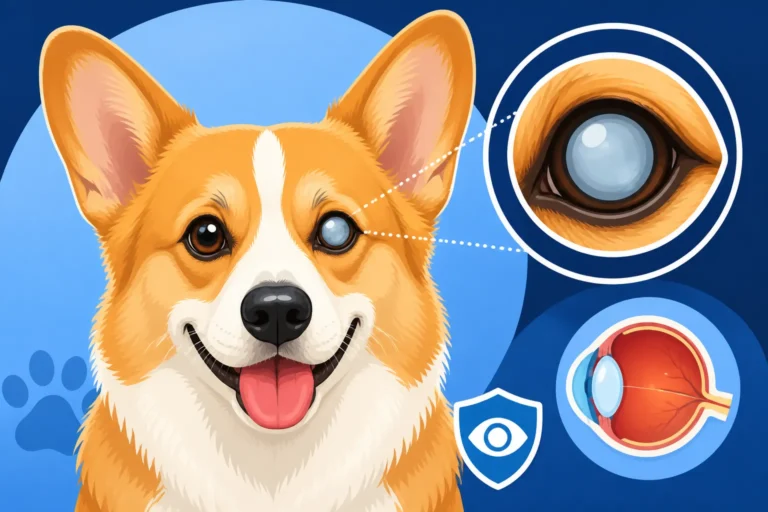
Imagine the retina as the film in a camera; it captures light and sends those images to the brain. In simple terms, retinal dysplasia means that this "film" didn't develop properly. Instead of smooth, well-organized layers of cells, parts of the retina might be folded, bunched up, or even completely detached. This abnormal development happens while the puppy is still growing, often before they are even born, meaning it's a congenital condition. Depending on the severity and type of dysplasia, it can cause anything from mild, non-progressive vision impairment to complete blindness. It's a spectrum, and each case can present differently, which can make early detection tricky without expert veterinary care.
The Genetic Link in Corgis
Like many conditions in purebred dogs, retinal dysplasia can have a genetic component, and Corgis are unfortunately among the breeds that can be affected. While not as universally discussed as Degenerative Myelopathy and the Corgi, certain forms of retinal dysplasia are known to be inherited. Specifically, in Cardigan Welsh Corgis, a form called X-linked progressive retinal atrophy (XL-PRA) can present with retinal dysplasia-like changes, and there are other genetic markers that breeders screen for. Pembroke Welsh Corgis can also be affected by various forms of retinal folds or detachments, though the specific genetic mechanisms can sometimes differ. This inherited aspect is why responsible breeding practices are so important, as it helps to reduce the incidence of these conditions in future generations. A breeder should always be transparent about their dogs' health screenings, including OFA or CERF eye certifications.
Different Forms of Retinal Dysplasia
Retinal dysplasia isn't a single condition but rather a group of abnormalities that manifest in different ways. Understanding these distinctions can help you better grasp what your veterinarian is explaining if your Corgi receives a diagnosis.
- Retinal Folds: This is often the mildest form. Here, the retina doesn't lay completely flat against the back of the eye. Instead, there are small folds or wrinkles in its structure. In many cases, these folds are small, don't progress, and may not significantly impact a Corgi's vision. Sometimes, they are even found incidentally during routine eye exams and don't require any intervention. However, if the folds are extensive or located in critical areas, they can certainly cause vision problems.
- Geographic Retinal Dysplasia: This is a more severe form where larger, often irregular areas of the retina are poorly developed. It's characterized by lesions that look like maps on the retina, hence "geographic." These areas typically lead to more noticeable vision deficits. Unlike simple folds, geographic retinal dysplasia often results in significant blind spots or impaired vision, and it can sometimes progress, though not always.
- Total Retinal Detachment: This is the most severe manifestation of retinal dysplasia. In these cases, the retina completely separates from the underlying tissue that supplies it with blood and nutrients. A total retinal detachment almost always leads to complete and irreversible blindness in the affected eye. This is a medical emergency if it occurs acutely, but in the context of dysplasia, it refers to a congenital detachment due to severe developmental malformation. While less common, it’s devastating when it happens, as there's usually no surgical fix for a congenitally malformed and detached retina.
Recognizing the Signs and Getting a Diagnosis
It can be heartbreaking to suspect your Corgi is having trouble seeing. Their whole world is often built around their senses, and losing one can be disorienting for them and worrying for you. Catching the signs early, even subtle ones, can make a big difference in how quickly you can support them.
Subtle Clues and Obvious Symptoms
Our Corgis are experts at adapting, so sometimes, the initial signs of vision impairment can be quite subtle. You might notice them hesitating before jumping off a sofa they once tackled with gusto, or perhaps they're a little more clumsy around new objects in the house. A Corgi that previously navigated your home perfectly might start bumping into furniture, especially in low light conditions or unfamiliar environments. They might be slower to react to toys thrown across the room or struggle to catch treats in mid-air. Sometimes, owners report their Corgi being more vocal or anxious when approached from a side they can't see well.
If the condition is more advanced, or if it involves a total retinal detachment, the signs become more obvious. Your Corgi might appear disoriented, consistently bumping into walls, or moving very cautiously. You might observe changes in their eye appearance, although this is less common with retinal dysplasia itself unless there's an accompanying issue. Owners might mistake the early signs for general clumsiness or even age-related issues, which is why it's vital to pay close attention. If you've ever wondered about Night Blindness in a Corgi, it's important to know that certain eye conditions can indeed manifest more prominently in dim lighting.
The Importance of Ophthalmic Exams
If you notice any of these signs, don't wait. A visit to your regular veterinarian is the first crucial step. They can perform a preliminary eye exam and, if they suspect a more complex issue, will likely refer you to a board-certified veterinary ophthalmologist. These specialists have advanced training and equipment to examine your Corgi's eyes in detail.
For Corgi puppies, especially from breeding lines where eye issues have been noted, an ophthalmic exam as part of their initial The Vet Visits a Corgi Puppy Needs First can be proactive. Early screening, ideally before 8 weeks of age, can detect congenital abnormalities like retinal dysplasia before they become a significant problem or are passed on. Many responsible breeders will ensure that their puppies are screened, a practice often called a "CERF" exam (now generally referred to as an OFA Eye Certification Exam), which assesses various inherited eye diseases. This practice aligns with the guidelines for Whether Corgi Eyes Are Checked Before Breeding.
Diagnostic Procedures
When you visit a veterinary ophthalmologist, they'll perform a thorough examination, far beyond what your general vet can do.
- Dilated Ophthalmoscopic Exam: This is the cornerstone of diagnosing retinal dysplasia. The ophthalmologist will administer eye drops to dilate your Corgi's pupils. This allows them to get a much better view of the retina at the back of the eye using specialized lenses and lights. They will look for folds, detachments, or other abnormalities in the retinal structure. This exam is non-invasive and generally well-tolerated by Corgis.
- Electroretinography (ERG): In some cases, especially if other retinal diseases like Progressive Retinal Atrophy (PRA) are suspected, an ERG might be recommended. This test measures the electrical activity of the retinal cells in response to light. It can help differentiate between various types of retinal dysfunction and assess the overall health of the retina, even if visible structural changes are minimal. While a Corgi might get Cataracts and Lens Problems in a Corgi, which is a different issue, an ERG focuses specifically on the retina's function.
- Ocular Ultrasound: If the ophthalmologist cannot get a clear view of the retina due to other issues (like severe cataracts or bleeding within the eye), an ultrasound of the eye might be performed. This imaging technique can help identify retinal detachments or other structural abnormalities behind the lens.
After these diagnostics, the ophthalmologist will be able to confirm a diagnosis, determine the severity, and discuss the prognosis with you. They will also be able to explain if it's a stable condition or one that might progress further, as some forms of How Fast a Corgi Loses Sight to PRA can be quite rapid.
Managing Retinal Dysplasia and Supporting Your Corgi
Receiving a diagnosis of retinal dysplasia can be a shock, and it's natural to feel overwhelmed. The good news is that many Corgis with retinal dysplasia, especially the milder forms, can live full, happy lives with proper care and adaptation. Our job as Corgi parents is to provide a safe and enriching environment, regardless of their visual acuity.
Treatment Options and Prognosis
When it comes to treating retinal dysplasia, it's important to have realistic expectations. For congenital retinal dysplasia, especially the forms involving folds or geographic lesions, there are typically no surgical or medical treatments that can "cure" the condition or restore the retina to normal function. The damage is developmental and largely irreversible.
- Mild Forms (Retinal Folds): If your Corgi has minor retinal folds that don't significantly impair vision, the prognosis is generally excellent. These often don't progress, and your Corgi may never even know they have a slight visual anomaly. Regular monitoring by an ophthalmologist may be recommended to ensure no changes occur.
- Moderate to Severe Forms (Geographic Dysplasia, Partial Detachments): For Corgis with more extensive geographic dysplasia or partial detachments, vision will be impaired to varying degrees. The prognosis for vision improvement is poor, but the condition itself is not painful. The focus shifts to managing the vision loss and helping your Corgi adapt.
- Total Retinal Detachment: In cases of total congenital retinal detachment, the prognosis for vision in the affected eye is unfortunately grave. Again, treatment to restore sight is generally not possible.
The most important takeaway is that retinal dysplasia is typically not painful. Your Corgi won't be suffering from eye pain, though they might experience frustration or anxiety related to their vision loss. Your vet or ophthalmologist will help you understand the specific prognosis for your Corgi and guide you on the best way forward.
Adapting Your Home for a Vision-Impaired Corgi
Life with a visually impaired Corgi means making a few adjustments to their environment, but it's entirely manageable. These changes are all about making their world predictable, safe, and easy to navigate.
- Maintain Consistency: This is perhaps the most crucial tip. Avoid rearranging furniture or leaving new obstacles in pathways your Corgi uses regularly. Their mental map of your home becomes incredibly important. If you must move something, guide them around the new layout several times.
- Create Safe Zones: Use baby gates to block off stairs or areas with potential hazards. For Corgis, a house with hard, slippery floors can be tough on their joints anyway, increasing the risk of Early Arthritis in a Corgi, so adding non-slip rugs can improve both safety and confidence.
- Scent Markers: You can use essential oils (diluted and dog-safe, like lavender or vanilla) on specific objects or doorways to help your Corgi identify them. Apply a tiny bit to a doorframe or the leg of a favorite chair. Always introduce new scents slowly and ensure your Corgi isn't sensitive to them.
- Verbal Cues: Start using consistent verbal cues for everything: "step up," "step down," "wait," "danger," "find your bed," etc. Your voice becomes their guiding light.
- Secure the Yard: If you have a yard, ensure it’s fully fenced and free of sharp objects or tripping hazards. Supervise your Corgi closely outdoors.
- "Guiding a Corgi That Has Lost Its Sight": Consider purchasing specialized harnesses designed for guiding dogs with impaired vision. These often have a rigid handle that you can use to communicate direction, similar to a guide dog harness, even if your Corgi isn't a working guide dog. A regular harness is generally preferred over a collar for Corgis to protect their neck and back anyway.
- Sensory Toys: Invest in toys that engage their other senses—squeaky toys, crinkle toys, puzzle toys that dispense treats, or those filled with enticing scents.
Here's a quick table outlining common adjustments for a Corgi with vision impairment:
| Category | Actionable Steps | Benefit |
|---|---|---|
| Home Layout | Keep furniture in place; use consistent pathways. | Reduces confusion and prevents collisions. |
| Safety | Block stairs with gates; cover slippery floors with rugs. | Prevents falls and injury, boosts confidence in movement. |
| Navigation | Use verbal cues ("step," "wait," "left"); add scent markers. | Aids orientation and communication. |
| Outdoor | Securely fence yard; remove hazards; supervise closely. | Ensures safety and prevents them from getting lost or injured. |
| Enrichment | Provide squeaky, puzzle, or scented toys. | Engages other senses, provides mental stimulation. |
| Handling | Approach gently, speaking first; use a guiding harness. | Prevents startling, facilitates safe movement. |
Financial Considerations and Pet Insurance
Vet bills for ophthalmic specialists and diagnostic tests can add up, and that's a real worry for many Corgi owners. The initial diagnostic workup, including an ophthalmologist consultation and specialized tests, could range from a few hundred to over a thousand dollars depending on your location and the specific procedures needed. While there often isn't a "cure" for retinal dysplasia, follow-up appointments and ongoing care to manage any secondary issues or adapt their environment can also incur costs.
This is where pet insurance can be a literal lifesaver for your wallet. Plans from providers like Healthy Paws can cover a significant portion of diagnostic tests, specialist consultations, and even mobility aids if needed, provided your Corgi was enrolled before any signs of the condition appeared. Having a policy like Healthy Paws in place can alleviate the stress of making financial decisions during an already emotional time. It's truly something to consider for all Corgi owners, not just for eye issues but for the higher likelihood of orthopedic and other breed-specific conditions. Think about Insuring a Corgi Before Its First Back Episode – the same principle applies to eyes. Getting insurance when they are young and healthy means you're prepared for whatever life might throw at them later.
Breeding Considerations and Prevention
For those involved in Corgi breeding, or for prospective puppy owners, understanding the hereditary nature of retinal dysplasia is paramount. Responsible breeding practices are the most effective way to reduce the incidence of such genetic conditions in the breed.
Screening and Responsible Breeding
The single most important tool in preventing inherited eye conditions like certain forms of retinal dysplasia is genetic testing and ophthalmic screening. Reputable breeders should have their breeding dogs undergo regular eye examinations by a board-certified veterinary ophthalmologist. These exams, often performed annually, look for any signs of inherited eye diseases and are submitted to organizations like the Orthopedic Foundation for Animals (OFA) for certification (formerly CERF). These certifications provide a public record of a dog's eye health.
Beyond clinical exams, specific DNA tests are available for certain genetic mutations linked to retinal diseases, particularly in Cardigan Welsh Corgis. Knowing the genetic status of parent dogs (whether they are clear, carriers, or affected) allows breeders to make informed decisions to avoid producing affected puppies. This is part of the comprehensive approach to The DNA Tests a Corgi Breeder Should Run for Corgis, which also includes tests for conditions like DM and Von Willebrand Disease. By only breeding dogs that are clear or by carefully pairing carriers with clear dogs, the risk of passing on these debilitating conditions is significantly reduced.
Working with Your Breeder
As a prospective Corgi owner, don't be afraid to ask your breeder detailed questions about the health screenings of the parent dogs. A responsible breeder will be transparent and eager to share the results of OFA eye certifications, genetic test results, and any other relevant health clearances. They should be able to explain the specific eye conditions prevalent in their lines and what steps they take to mitigate those risks.
Ask to see documentation, not just hear verbal assurances. A good breeder will also provide a health guarantee that outlines their responsibilities if a genetic condition like severe retinal dysplasia is diagnosed after you take your puppy home. This level of transparency and commitment to health is a hallmark of an ethical breeder and your best safeguard against unforeseen health challenges down the line. It ensures you're bringing home a puppy that has the best possible start to a long, healthy life.
Disclaimer
The information provided in this article is for general informational purposes only and is not a substitute for professional veterinary advice, diagnosis, or treatment. Always seek the advice of your veterinarian or other qualified animal health provider with any questions you may have regarding a medical condition or the health and welfare of your Corgi. Never disregard professional veterinary advice or delay in seeking it because of something you have read here.