Waiting Lists at Reputable Corgi Breeders
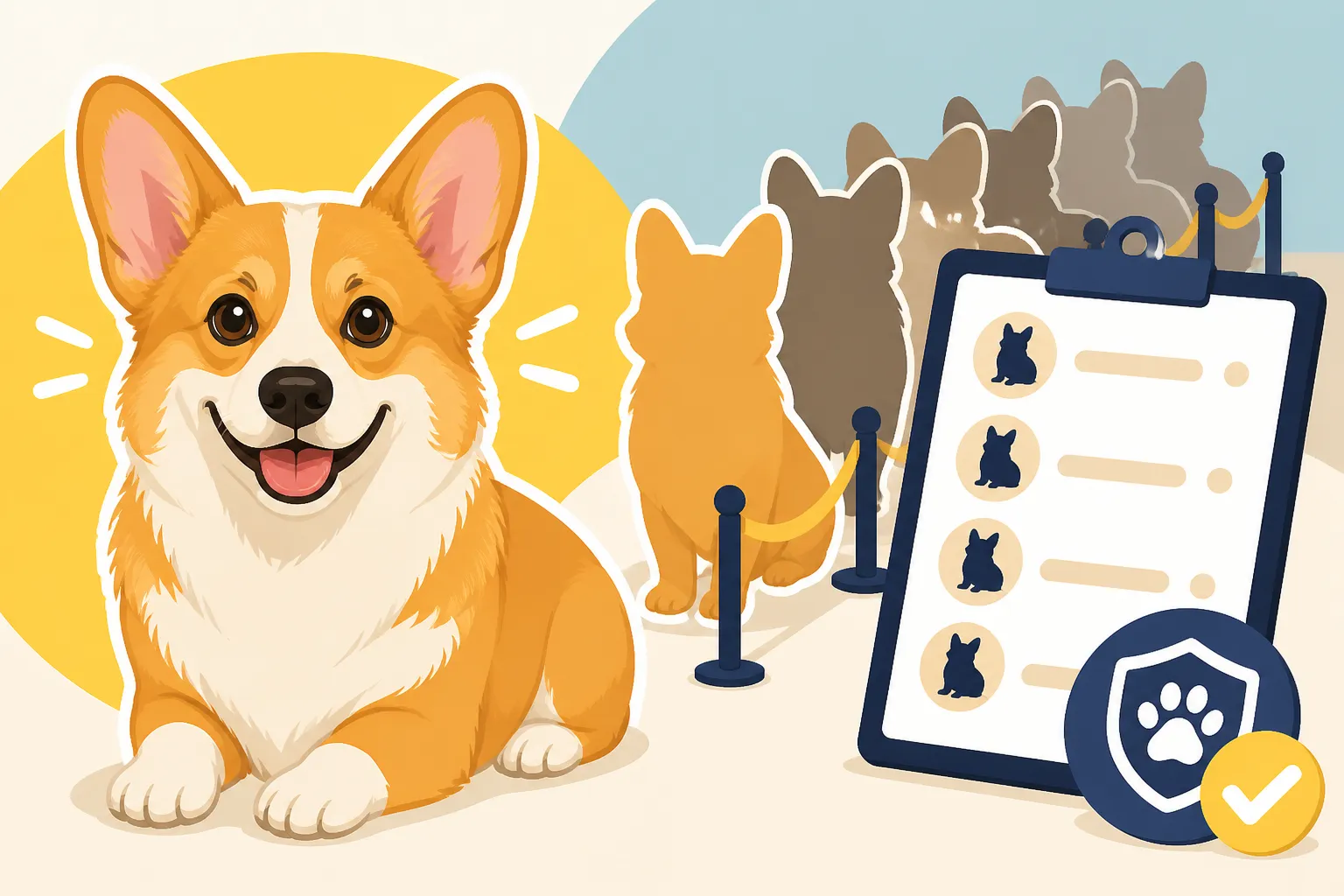
Waiting for a Corgi puppy can feel strangely uncertain: a breeder may say the litter is planned, but not when you’ll meet a puppy or whether you’ll be offered one. A thoughtful waitlist is usually part of responsible breeding, not a promise of instant availability. This guide explains how the process works, what to ask, and how to spot warning signs.
Why reputable Corgi breeders have waiting lists
A planned litter is not a guaranteed puppy
Responsible breeders generally plan litters around the health, temperament, and needs of their dogs rather than producing puppies whenever buyers ask. That means a breeder may have only occasional litters, or may decide not to proceed with a planned pairing if a dog’s health or circumstances change.
Even when puppies are born, the number of families who can take one may be smaller than the number of people on the list. A litter may be small, a breeder may keep a puppy, or a puppy’s developing temperament may make a particular home a better fit than another. A place on a list is best understood as an opportunity to be considered, not a reservation for a specific puppy.
This uncertainty is frustrating if you have already planned your holiday time, arranged childcare, or told the children a puppy is coming. Try not to build a firm arrival date into your household plans until the breeder has confirmed that a puppy is available to you and the puppy is ready to leave. If you are comparing expected wait times, Waiting Two Years for a Corgi Puppy can help set realistic expectations.
Careful breeding takes time
A reputable breeder should be able to talk about the reasoning behind a planned pairing, the health history of the parent dogs, and the environment in which puppies are raised. That preparation takes time before a litter is even conceived. Breeding decisions may also change if health screening raises a concern or a dog is not a suitable match.
For Corgis, it is sensible to ask what health checks are relevant to the breed and how results affect the breeder’s decisions. A DNA result alone is not a complete picture of health, and a breeder should be able to explain the difference between genetic screening and broader health evaluation. You can read more in What a Corgi Breeder Should Be Testing For and Whether a Corgi Breeder Should Show DM Results.
A long wait by itself does not prove that a breeder is responsible, just as an available puppy does not automatically mean the breeder is careless. Look at the whole process: whether questions are welcomed, whether the breeder is transparent, and whether they are interested in your home and expectations as well as your readiness to pay.
How Corgi breeder waitlists usually work
The first conversation is a two-way fit check
A breeder may ask about your household, schedule, experience with dogs, plans for training, and what draws you to a Corgi. These questions are not necessarily a test you can pass by giving polished answers. They help the breeder understand whether a Corgi is likely to fit your day-to-day life and what kind of puppy might suit you.
Be candid about details that affect care. If you work outside the home, share how the puppy would be supervised and gradually taught to be alone. If you have young children, explain how you plan to manage interactions. If you live in an apartment or have many stairs, ask how you can set up routines that protect a puppy’s safety and support good habits.
You should also have room to ask questions. Ask how the breeder raises puppies, what support they offer after a puppy goes home, and how they decide which family gets which puppy. A responsible breeder may not let buyers choose based only on coat color or a single visit; temperament and the puppy’s needs matter too. If you want a clearer picture of the documents and information to expect, see The Papers a Corgi Puppy Should Come With.
Ask what “on the list” actually means
Breeders do not all use the word “waitlist” in the same way. Some keep a general inquiry list and contact people when a litter is planned. Others may ask families to complete an application or have a conversation before adding them to a list. In either case, ask what happens next rather than assuming the process is standardized.
Useful questions include:
- Is this an inquiry list, or have you approved me for a future litter?
- Do you have a planned pairing, and what could change that plan?
- How and when do you contact families about a litter?
- Is a deposit required, and under what circumstances is it refundable?
- How do you match puppies with homes?
- What happens if no puppy in a litter is a good fit for my household?
- Do you expect me to check in, or will you contact me when there is news?
The answers should be clear enough that you understand what you are agreeing to. If the breeder uses a contract or deposit, take time to read the terms. Ask for clarification before sending money, especially if the agreement is vague about refunds, timing, or what happens if a litter does not produce a puppy for you.
Keep your own notes and follow up politely
When you speak with several breeders, keep a simple record of names, locations, planned litters, questions asked, and any follow-up dates. It is easy to mix up details after several conversations, especially when you are excited and every breeder seems to have a different process.
Agree on a reasonable way to stay in touch. A brief, courteous check-in after the timeframe the breeder gave you is generally more useful than repeated messages asking for updates. If your plans change—perhaps you are moving, your work schedule shifts, or you decide you are no longer ready—tell the breeder. That keeps their list accurate and avoids holding a place you cannot use.
Do not interpret a quiet period as proof that something is wrong, but do not feel obligated to wait indefinitely without information either. If the breeder cannot explain whether you are on an inquiry list or what the next step is, you can keep looking. The right process should give you enough clarity to make an informed decision, even if it cannot promise a particular puppy or date.
How to evaluate a breeder while you wait
Look for openness about dogs, puppies, and health
A good breeder should be willing to discuss the parent dogs and the health considerations behind a litter. Ask whether you can learn about the dam and, where practical, meet her. The breeder may have a reasonable explanation if the sire lives elsewhere, but they should still be able to provide meaningful information about him and the pairing. Whether a Corgi Litter's Mother Should Be Present offers more detail on what you might expect.
Ask how puppies are raised and how the breeder introduces them to ordinary household experiences. You do not need a long list of impressive-sounding claims. Practical details are more helpful: where the puppies spend time, how they become accustomed to handling and everyday sounds, and how the breeder monitors their health and development.
Pay attention to how the breeder talks about lifelong responsibility. Many responsible breeders want to remain a resource after a puppy leaves and may require that a dog be returned to them or placed with their approval if the owner cannot keep it. Those expectations should be discussed openly, not introduced as a surprise after you have paid a deposit.
Be cautious about pressure and unusually easy availability
A seller who insists you must pay immediately, refuses reasonable questions, or will not provide clear information deserves extra scrutiny. Be especially careful if the seller claims to have health documents but will not explain what they show or let you confirm that the paperwork belongs to the puppy’s parents. Corgi Ads With Fake DM Certificates explains why claims about genetic testing should be checked carefully.
A puppy listing can also be misleading if the seller uses attractive photos but will not arrange a live conversation or provide a credible way to learn about the puppy’s origin. Do not send a deposit just because a seller says another buyer is about to take the puppy. If you cannot visit, make time for a live video conversation and ask direct questions about the puppy, the mother, the home environment, and the contract. For more on that decision, read Whether a Corgi Should Be Bought Sight Unseen.
Availability alone is not a red flag. Sometimes a family’s circumstances change, or a puppy becomes available after another buyer withdraws. What matters is whether the breeder can explain the situation clearly and still provides the same transparency, screening, and written terms they would offer to any other buyer.
Compare the whole process, not just the wait
Use this table as a starting point when comparing breeders. One answer will not tell the whole story; look for a consistent pattern of openness and responsible decision-making.
| What to ask about | Reassuring signs | Reasons to pause |
|---|---|---|
| Health and parent dogs | The breeder explains relevant testing and can discuss the parents’ health | Vague assurances such as “they’re healthy” with no useful detail |
| Waitlist process | You understand whether you are applying, being considered, or waiting for a specific litter | The breeder calls it a reservation but will not explain what that means |
| Puppy matching | Temperament and household fit are part of the decision | You are promised the puppy you want based only on appearance |
| Deposit and contract | Terms are written down and questions are answered before payment | You are pressured to pay immediately or accept unclear terms |
| Ongoing support | The breeder explains what support is available after the puppy goes home | The breeder avoids discussing problems or future responsibility |
| Communication | Updates and expectations are clear, even when plans change | You cannot get straightforward answers about the litter or process |
A long wait can be disappointing, but it is only one part of the decision. A breeder who communicates honestly about uncertainty may be a better prospect than one who offers a fast, guaranteed answer without explaining how they raise and place puppies.
How to prepare while you are waiting
Get your home and routine ready without rushing the decision
Use the waiting period to make practical plans, not to buy every puppy item you see. Decide where the puppy will sleep, how you will manage access to stairs and furniture, and who will handle feeding, toilet breaks, training, and supervision. Corgis are lively, observant dogs, and a predictable routine can make the first weeks much easier for both puppy and household.
Think through your workday and backup care before a puppy arrives. A young dog needs regular supervision and opportunities to toilet, and it may need a gradual transition to time alone. If you have children, agree on simple rules such as letting the puppy rest undisturbed and having an adult supervise interactions.
For supplies, start with the basics and wait for the breeder’s guidance on food and familiar items. Chewy is one place some owners use to compare essentials such as a crate, washable bedding, and gates, but check dimensions and product details against your home before ordering. Chewy can also be useful for restocking routine supplies once you know what the puppy is already eating; avoid making a sudden food change just because another option looks appealing.
Make a realistic plan for the puppy’s first days
Ask the breeder what the puppy is currently eating, what schedule it follows, and whether there is a familiar blanket or toy that can travel home. Keeping early routines as consistent as possible can help reduce the number of changes the puppy has to process at once. If you plan to change food later, discuss a gradual transition with your veterinarian or the breeder rather than switching abruptly.
Before pickup, make a veterinary appointment and decide how you will transport the puppy safely. Keep the first few days relatively calm. It is tempting to invite everyone over to meet the new Corgi, but too many new people and experiences can be tiring for a young puppy. Chewy may help you find practical items such as an appropriately sized carrier or cleaning supplies, but use your veterinarian’s advice for health needs rather than treating shopping recommendations as medical guidance.
Be prepared for the possibility that a breeder’s plan changes. A pairing may be postponed, a litter may be smaller than expected, or the breeder may conclude that a puppy is not the right match for your home. That can be hard to hear after months of waiting. It is still better to receive an honest answer than to bring home a puppy in circumstances that are not right for the dog or your family.
A thoughtful waitlist should leave you informed, not pressured. Ask clear questions, keep your plans flexible, and judge the breeder by the care and transparency behind the process—not simply by how quickly a puppy can come home. If you decide to continue waiting, do it because you trust the breeder’s approach and believe a Corgi is a good fit for your life, not because you feel trapped by time already spent.
Disclaimer
This article is for general informational purposes only and does not constitute professional advice. Laws, prices and regulations vary by location and change over time. Consult a qualified professional for guidance on your specific situation.