What a Corgi Pedigree Should Show
A Corgi pedigree can look impressive while leaving basic questions unanswered: which dogs are actually behind the puppy, whether the names can be verified, and whether the family has relevant health records. This guide explains what a pedigree should show, what it cannot prove, and how to check the paperwork before you commit to a puppy or bring one home.
What a Corgi pedigree is meant to show
The dogs in the puppy’s family tree
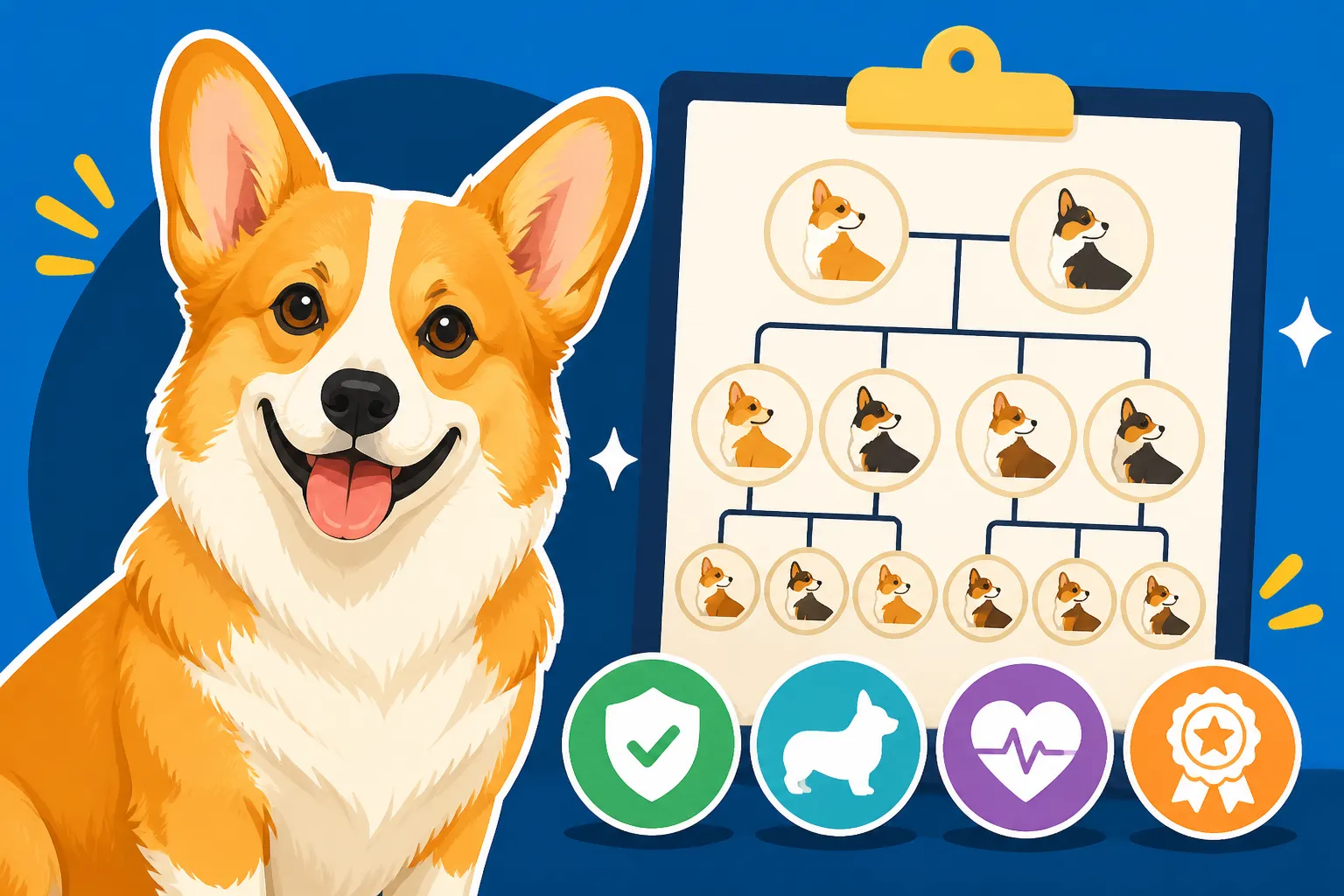
A pedigree is a record of a dog’s ancestry. It usually lists the puppy’s registered name and identifies its parents, grandparents, and more distant ancestors. A document showing several generations can help you see which dogs appear repeatedly and whether the family tree is complete.
For a Corgi puppy, the most important entries near the top are the sire and dam. Their registered names should be written clearly and match the names on relevant registration documents and health records. The pedigree may also show the names of grandparents and earlier ancestors, making it easier to spot a dog that appears on both sides of the family.
A pedigree is not just a list of appealing kennel names. Look for details that distinguish one dog from another, such as registration numbers or other identifying information from the registry. If the breeder gives you a pedigree with names but no way to confirm the dogs’ identities, ask how those details can be checked.
Registration information and how to read it
The registry named on a pedigree matters because it tells you which organization maintains the record. In the United States, a breeder may provide American Kennel Club registration information, for example. Other registries serve different countries or types of dogs, and the paperwork may look different.
Check that the puppy’s breed and the parents’ details are consistent throughout the documents. Pembroke Welsh Corgis and Cardigan Welsh Corgis are separate breeds, so their records should not be blurred together. If the paperwork uses an unfamiliar registry, ask the breeder what the registration means, what records the organization keeps, and how you can independently confirm the information.
A pedigree may include registered names, registration numbers, dates, and titles or awards. Those details can help identify dogs and offer context about their history, but they are not a guarantee that the puppy will have a certain temperament, appearance, or health outcome. A show title, for instance, records an achievement in a particular setting; it does not replace health testing or tell you everything about the dog’s everyday behavior.
What to check before trusting the paperwork
Compare the pedigree with the puppy’s other documents
A pedigree should fit into a larger set of records, not stand alone as proof that a puppy is well bred. Ask to see how the puppy’s identity connects to the dam and sire. Depending on the breeder and registry, the supporting paperwork may include registration applications, litter records, parent identification, or other documents.
Check names and spellings carefully. A small difference could be a clerical error, a call name rather than a registered name, or a sign that you need more explanation. Ask the breeder to clarify any mismatch before paying a deposit or signing an agreement. It is reasonable to want a clear answer; responsible breeders should be able to explain their records without making you feel awkward for asking.
Also ask which documents will be provided at pickup and which may follow later. A puppy’s registration paperwork may not be finalized at the same time as the sale, but the breeder should explain what is pending, who is responsible for completing it, and what you should expect. For a broader checklist, see The Papers a Corgi Puppy Should Come With and Whether a Corgi Comes With a Contract.
Treat health results as separate evidence
A pedigree can help you understand ancestry, but it does not by itself show that a dog has passed a health screen. Health information may be recorded in a separate database, test report, or veterinary document. Ask for the actual results and confirm that they identify the dog by registered name or another reliable identifier.
For Corgis, ask the breeder which health checks are relevant to the breed and family, and whether results are available for both parents. The appropriate checks can vary by breed, individual history, and breeding goals, so a vague statement such as “the parents are healthy” is not the same as verifiable results. Start with What a Corgi Breeder Should Be Testing For and Whether Corgi Health Testing Has Improved.
It can help to keep a simple comparison as you review a litter:
| Record or detail | What it can tell you | What it does not prove |
|---|---|---|
| Pedigree | The listed ancestry and registered identities | That the puppy is free of inherited disease |
| Registration information | That a dog or litter is recorded with a registry | That the breeding was responsible or the dog is healthy |
| Health test results | Findings for a particular test on an identified dog | That every possible health issue has been ruled out |
| Veterinary records | Care, examinations, or treatment documented for the puppy | The full history of every ancestor |
| Sale contract | The terms agreed between breeder and buyer | That every claim about ancestry or health is accurate |
A good breeder should be willing to discuss the limits of each document. If the breeder presents registration as a substitute for health testing, or cannot explain how test results connect to the parents, pause and ask for clarification.
How to evaluate a Corgi’s ancestry
Look for patterns, not famous names
A pedigree can help you notice patterns across generations. You may see the same ancestor several times, or find that certain branches of the family are more extensively documented than others. These observations can be useful conversation starters with the breeder, but they are not enough to predict a puppy’s future on their own.
Ask what the breeder values in the dogs behind the litter. They might discuss stable temperaments, sound structure, working ability, health history, or traits that fit the home they are trying to produce puppies for. A thoughtful answer should go beyond name-dropping. For example, a breeder might explain why a particular dog was chosen as a mate and what strengths or concerns they considered in that pairing.
If you are comparing puppies, try not to treat a long list of titles as a simple ranking system. A dog can have impressive achievements and still be an unsuitable match for a particular breeding. Likewise, a less showy pedigree is not automatically a bad one. The useful question is whether the breeder can explain the choices behind the litter and provide evidence for claims that matter to you.
Ask about close relatives and the breeder’s own experience
The pedigree gives you names; the breeder can help provide context. Ask what they know about the parents and close relatives: their temperaments, general health, longevity, and any recurring issues in the family. There may be limits to what the breeder knows about distant ancestors, but they should be open about those limits rather than presenting every unknown as a certainty.
It is also fair to ask whether the breeder keeps in touch with puppy buyers and learns how dogs from earlier litters develop. A breeder who follows up may have a clearer picture of adult temperament and health than someone relying only on paperwork. Ask how they use that information when planning future litters.
If you are still deciding whether the breeder’s practices are a good fit, Waiting Lists at Reputable Corgi Breeders and Whether a Corgi Should Be Bought Sight Unseen can help you think through the process. The pedigree is one piece of the decision; the breeder’s transparency, the puppies’ living conditions, and the care given to the mother matter too.
Questions to ask and common misunderstandings
Questions that make the conversation more useful
You do not need to be a pedigree expert to ask practical questions. Bring the paperwork home only after you understand what it says, what is still pending, and how the breeder’s claims can be checked. If you feel rushed or discouraged from asking, take that seriously.
Useful questions include:
- Which registry issued or will issue the puppy’s registration?
- Can I see the sire’s and dam’s registered names and identifying details?
- How many generations are shown, and are any ancestors unknown?
- Can you provide the health test results for both parents?
- Where can I verify those results or registration details?
- Are there known health or temperament patterns in close relatives?
- Which documents will I receive at pickup, and which will arrive later?
- What does the contract say if the registration details need correcting?
A breeder may not have an instant answer to every question, especially about distant relatives. What matters is whether they respond honestly, offer to follow up, and make their records available for review. If you are buying from another region or country, ask how the breeder will provide original or official copies and whether the registry’s verification process is accessible to you.
Once you bring your puppy home, keep pedigree and health records together but separate from everyday purchase receipts and care notes. For example, you might keep veterinary paperwork in one folder and receipts for food or supplies ordered through Chewy in another. Those receipts can help you track routine expenses, but they are not evidence of ancestry or health testing.
What a pedigree cannot promise
A registered pedigree does not guarantee that a puppy is healthy, well socialized, or right for your household. Registration records ancestry; they do not certify every breeding choice or predict the individual dog’s future. Even careful health testing cannot rule out every condition, and a puppy’s development is influenced by genetics, early care, training, and environment.
Be cautious if someone uses a pedigree to shut down reasonable questions. “The dog is registered” does not answer whether the parents were appropriately screened. “The grandparents were champions” does not tell you how the puppy behaves around people or what support the breeder offers after the sale. Each claim needs the kind of evidence that matches it.
Nor does a pedigree automatically make a puppy more valuable or establish that a higher asking price is justified. If cost is part of your decision, read Whether Registration Papers Raise a Corgi Price and consider the full picture: the breeder’s practices, health documentation, contract, and ongoing support. If you are organizing supplies before pickup, Chewy or a local pet shop may help with routine items, but neither can verify a Corgi’s pedigree. Keep your attention on the breeder and the original records for that.
Disclaimer
This article is for general informational purposes only and does not constitute professional advice. Laws, prices and regulations vary by location and change over time. Consult a qualified professional for guidance on your specific situation.