Why the Corgi Shows Under Herding and Not Toys
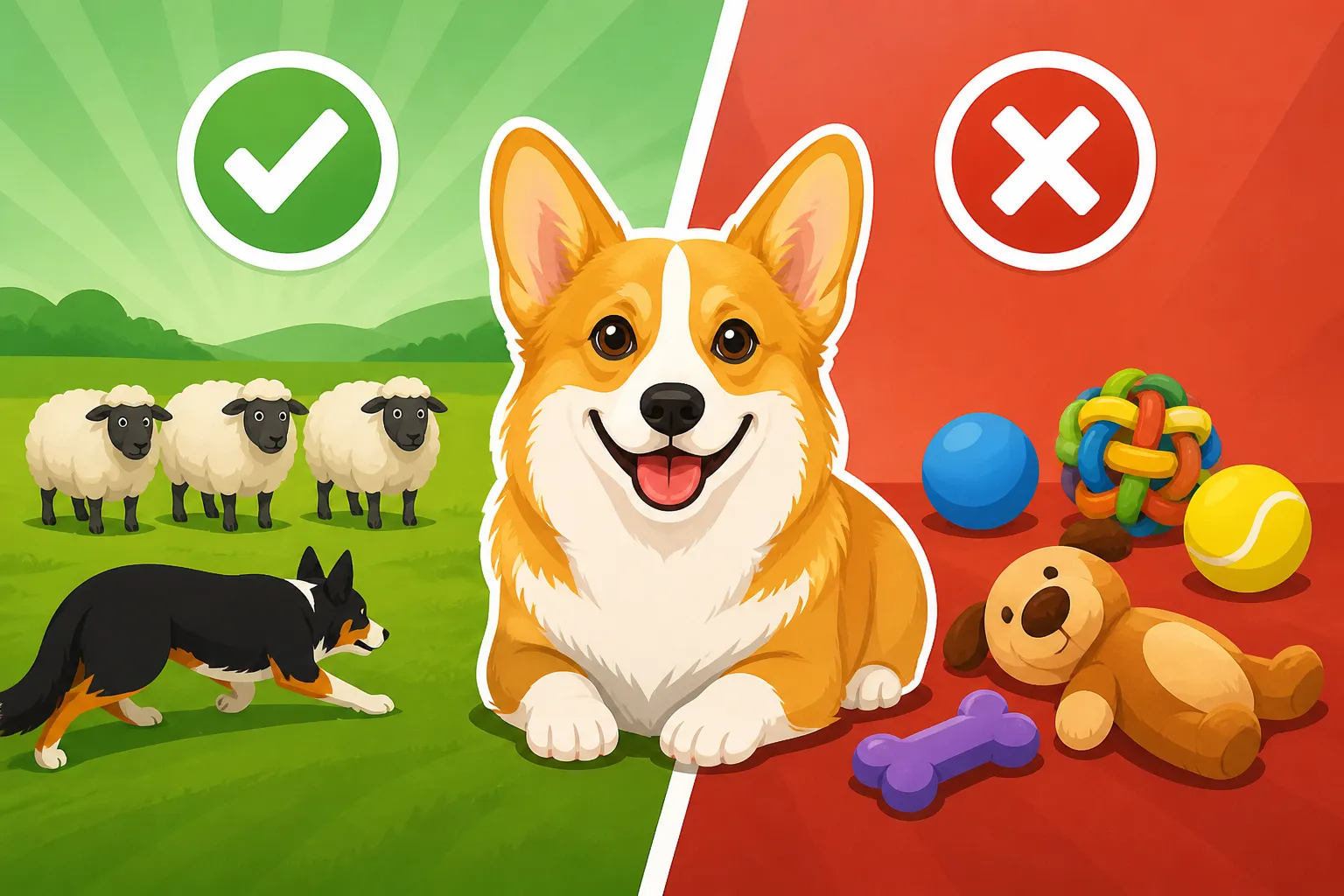
A Corgi’s short legs and compact build can make the breed look like it belongs in the Toy Group, but kennel groups are based on a dog’s original purpose and working history—not simply its size. Pembrokes and Cardigans were bred as cattle-driving farm dogs, so they are classified with herding breeds. Here’s what that classification means and how it still shows up in everyday Corgi behavior.
Why Corgis Are Classified as Herding Dogs
Breed groups reflect a dog’s historical job
Kennel clubs organize breeds into groups to describe their traditional roles and shared working backgrounds. The Herding Group includes dogs developed to move, gather, or control livestock. The Toy Group, by contrast, generally includes small companion breeds whose primary role was companionship, even if their ancestors had other jobs.
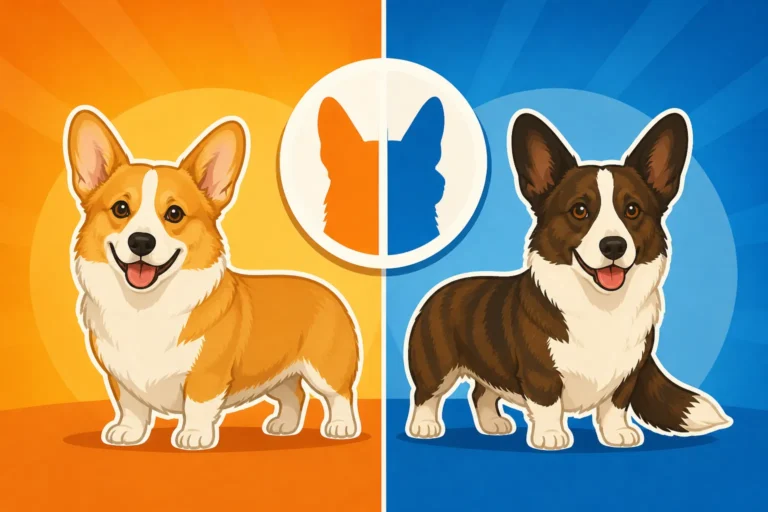
A Corgi’s height can be misleading. A dog does not become a Toy breed just because it is small enough to fit comfortably on a lap or carry up a flight of stairs. Corgis were bred to work on farms, and their classification reflects that purpose. The Pembroke Welsh Corgi and Cardigan Welsh Corgi are both herding breeds, although they are distinct breeds with their own histories and characteristics. Pembroke and Cardigan Are Two Different Breeds
That distinction helps explain why a Corgi can be affectionate and funny at home yet still seem unusually alert, busy, or determined. It was not bred simply to sit beside its owner. The traits that once helped it manage livestock—quick reactions, confidence, stamina, and independent decision-making—can remain part of the modern pet dog’s temperament.
The Corgi’s low build suited cattle work
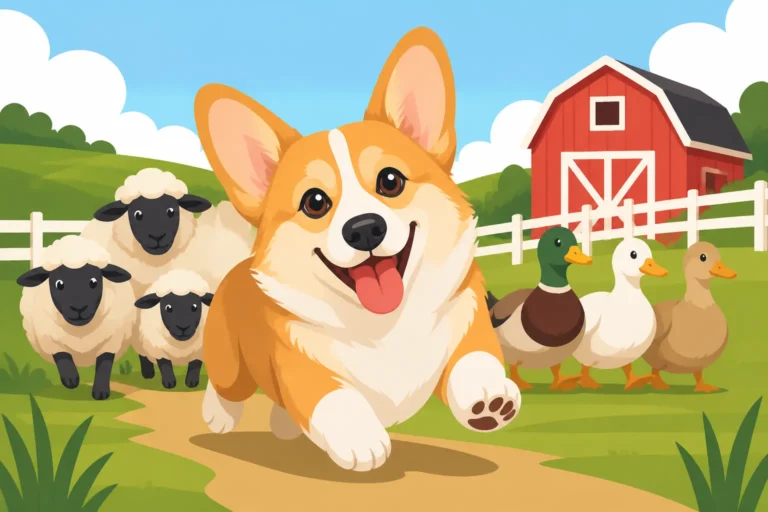
A Corgi’s low stature was useful around cattle. A short-legged dog could dart close to an animal’s heels and move out of the way quickly when the cattle kicked. The dog’s job was not to overpower a large animal. It relied on speed, awareness, and careful timing instead. Why the Corgi Was Bred So Low
That working style could include heel-nipping: a quick nip intended to get a reluctant animal moving. In a home, the same instinct may appear when a Corgi chases a running child, circles a visitor, or tries to steer another pet away from a doorway. Those behaviors are not proof that every Corgi is actively “trying to herd” in a thoughtful, planned way. They are examples of inherited tendencies showing up in modern surroundings.
Corgis were also expected to be capable workers, not just dogs that waited for constant direction. A farm dog might have to respond quickly to changing circumstances and make small decisions independently. That can translate into a clever pet who learns routines fast but may pause to decide whether a cue is worth following. For practical ways to redirect that energy, see The Job a Corgi Needs Instead of Herding You.
Why Small Size Does Not Put a Corgi in the Toy Group
Breed purpose matters more than height
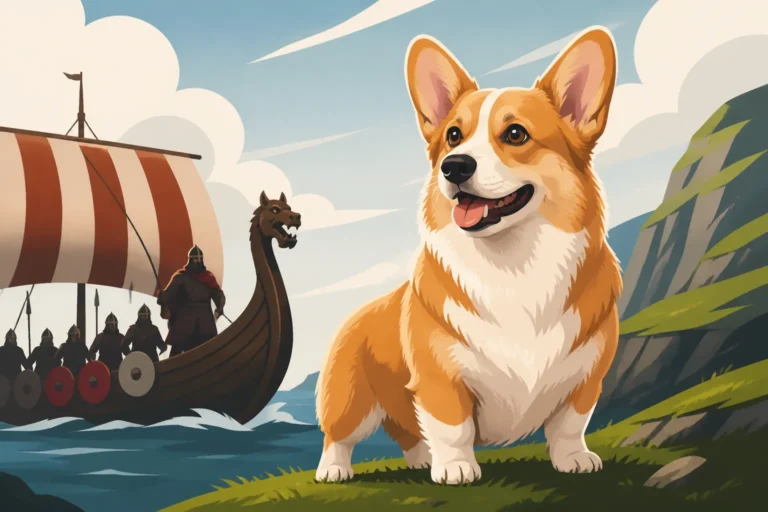
The Toy Group is not simply a category for all small dogs. A dog’s size may be part of its appeal, but the group is tied to its recognized breed history and role. Corgis were not developed as miniature companions. Their short legs and sturdy bodies were part of a working design. Driving Cattle With a Corgi Six Inches Tall
It is easy to see why the confusion comes up. Corgis are compact, expressive, and often happy to curl up close to their people. In an apartment or a small home, they may take up less physical space than a larger herding breed. But the dog’s working background does not disappear just because it lives on a city block instead of a Welsh farm.
For owners, the distinction is more useful as a guide to behavior than as a label to memorize. Thinking of a Corgi as a herding dog can make its barking, motion sensitivity, and tendency to shadow people easier to understand. It also reminds owners to provide structured activity and training rather than expecting companionship alone to satisfy a bright, active dog.
The word “herding” does not mean every Corgi herds livestock
A Corgi does not need to work cattle, attend trials, or live on a farm to fit its breed group. Many are family pets, and some may show little interest in livestock. Individual temperament, early experiences, training, age, and environment all affect how strongly a dog displays particular instincts.
Even a Corgi that never sees a cow may react to movement in familiar ways. It might rush toward a bicycle, bark when a dog passes the window, or try to gather people in one room. Other Corgis may show their working tendencies through persistence, alertness, or a strong interest in games that involve chasing and retrieving. What a Welsh Corgi Did on a Farm All Day
Here is a quick comparison of what breed-group labels generally tell you:
| Question | Herding Group | Toy Group |
|---|---|---|
| Historical role | Moving, gathering, or controlling livestock | Primarily companionship |
| Commonly selected traits | Alertness, responsiveness, stamina, and initiative | Small companion size and close human connection |
| What the label means for a pet | Working instincts may influence behavior and activity needs | The breed’s traditional role centered more on companionship |
| Does size decide the group? | No | No |
| Where Corgis fit | Pembroke and Cardigan Welsh Corgis are herding breeds | Corgis are not classified as Toy breeds |
The table describes broad historical distinctions, not a guarantee about an individual dog. A calm Corgi is still a herding breed, and an energetic Toy breed does not become a herding breed just because it loves to chase.
How Herding Heritage Shows Up in a Pet Corgi
Movement and noise can trigger instinctive behavior
Herding dogs are often attentive to movement. For a Corgi, a jogger passing the window or a child sprinting across a living room may be more exciting than a person sitting quietly. The dog may bark, chase, circle, or nip at heels. That can be stressful for the household, especially when the Corgi is small enough to be treated as harmless but persistent enough to make a child avoid running through the room.
Start by preventing the behavior from becoming a routine. Use gates or a leash to manage access during high-energy moments, and reward the dog for looking at movement calmly or coming back to you. If a child is involved, supervise closely and teach the child not to run from or tease the dog. Training should provide the Corgi with a clear alternative, such as settling on a mat or returning to its handler.
These instincts can also appear during walks. A Corgi may become intensely interested in passing dogs, bicycles, or squirrels. Keep enough distance that your dog can notice the trigger without immediately lunging or barking, then reward attention toward you. Short, consistent practice is often more productive than waiting until the dog is already overexcited.
Mental work matters alongside physical exercise
A brisk walk can help a Corgi burn energy, but walking alone may not meet the needs of a dog bred to notice, think, and respond. Scent games, short training sessions, food puzzles, and well-managed fetch can give the dog a chance to use its brain without encouraging uncontrolled chasing or jumping. The right mix depends on the individual dog, its health, and your veterinarian’s advice. Whether Walks Alone Satisfy a Corgi
Food puzzles and treat-dispensing toys can make an ordinary meal more engaging. When comparing options at a pet retailer such as Chewy, look for an activity that suits your dog’s size, chewing habits, and problem-solving level. A puzzle that is too difficult can frustrate a beginner, while an easy one may be finished in seconds by a determined Corgi. Start simple, supervise, and adjust as your dog learns.
You do not need an expensive collection of equipment to offer meaningful enrichment. Hide a few pieces of the dog’s regular kibble around a room, teach a new cue in short sessions, or ask the dog to search for a toy. If you do use toys purchased through Chewy or another retailer, check that the size and materials suit your dog, and remove any item that becomes damaged or starts breaking apart. The aim is safe, satisfying activity—not a shopping list.
What the Herding Classification Means for Owners
Train for the dog in front of you
A breed group is a useful starting point, not a complete personality profile. One Corgi may bark at every passing dog; another may be relatively quiet. Some are quick to chase movement, while others are more interested in food, scent, or staying close to their family. Observe what your own dog finds exciting, then build training around those triggers.
Reward-based training is especially helpful for teaching alternatives to chasing, nipping, and alarm barking. For example, if your Corgi tends to rush the front window, you can block the view temporarily and practice calling the dog away from the window. Reward calm behavior before the barking starts, rather than repeatedly shouting after the dog is already worked up.
Training also benefits from realistic expectations. A Corgi’s intelligence does not mean it will automatically obey every cue the first time. A dog bred to work with some independence may learn a command and still need consistent practice in different places. Keep sessions short and clear, reward the behavior you want, and avoid turning every cue into a contest of wills. The Household a Corgi Actually Wants
Give herding instincts a safe outlet
A safe outlet does not have to involve actual livestock. Try scent searches, food puzzles, basic obedience, hide-and-seek, or structured games that ask the dog to wait, find, and return. If your Corgi enjoys chasing a toy, teach a reliable release cue and keep play controlled. For dogs with back or joint concerns, ask a veterinarian which activities are appropriate; avoid assuming that every high-impact game is suitable.
If you are considering organized herding activities, find an experienced instructor who can assess whether your dog is a good fit and introduce the work safely. Not every Corgi will show interest, and a pet Corgi does not need formal herding lessons to be happy. The goal is to understand your dog’s motivations and channel them into activities that fit its body and temperament.
It also helps to remember why the breed group matters in daily life. A Corgi may look like a compact companion, but it often brings the curiosity and work ethic of a much larger dog. Thinking of it as a herding breed can help owners provide appropriate training, enrichment, and management—without expecting the dog to behave like a Toy breed simply because it is small. For a broader picture of the breed’s needs, see Corgis Against the Other Herding Breeds and Whether a Corgi Fits a First Dog.
Disclaimer
This article is for general informational purposes only and does not constitute professional advice. Laws, prices and regulations vary by location and change over time. Consult a qualified professional for guidance on your specific situation.