Whether a Corgi Litter’s Mother Should Be Present
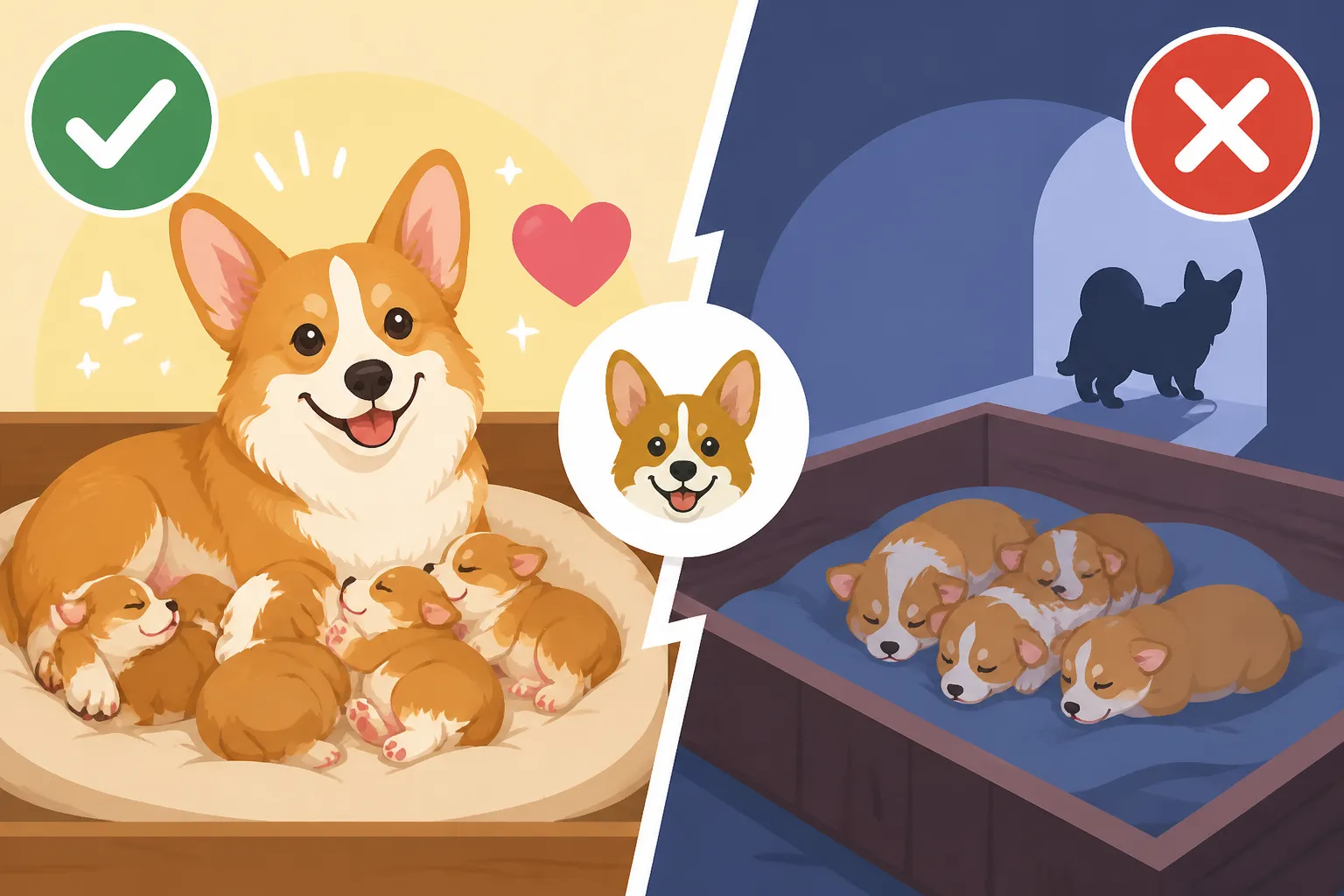
It's a moment filled with so much excitement: you've found a Corgi litter, and you're eager to meet the adorable little fluffballs. But then, when you arrive, the breeder makes an excuse about why the mother dog isn't available for you to see. This immediate red flag can deflate your excitement and leave you wondering what to do. This guide will walk you through why seeing the mother Corgi is absolutely crucial, what to look out for, and how to navigate those uncomfortable situations where she’s suspiciously absent.
Why Seeing the Mother Corgi Matters Immensely
Bringing a Corgi puppy into your home is a huge commitment, and you want to ensure you're getting a healthy, well-adjusted companion. The mother dog, or dam, plays an undeniable role in shaping her puppies, not just biologically, but behaviorally too. She's the first teacher, the primary caregiver, and a living example of what your future Corgi might be like.
Assessing Temperament and Socialization
Imagine arriving to see a litter of Corgi puppies, and the breeder explains the mother is "too shy" or "a bit protective" and keeps her out of sight. This should immediately raise your antenna. The mother's temperament is a huge predictor of her puppies' adult personalities. If she's fearful, aggressive, or overly anxious, there's a higher chance her puppies will inherit or learn similar traits through observation and early interactions. Puppies learn so much in their first few weeks by watching their mother's reactions to new people, sounds, and situations.
A well-socialized mother, who is calm, friendly, and comfortable with strangers (within reason, as she's protecting her young), sets a wonderful example. You want to see a mother Corgi who is relaxed, allows you to observe her with her puppies, and ideally shows a pleasant, inquisitive nature. This interaction gives you invaluable insight into the genetic and environmental influences on your potential puppy’s future behavior. If the mother is constantly barking, retreating, or acting defensively, it could signal underlying issues that might surface in her offspring down the line. It's not about expecting a show dog performance; it's about observing a naturally calm and maternal presence.
Confirming Health and Environment
Beyond temperament, seeing the mother Corgi allows you to get a firsthand look at her overall health and the conditions in which the puppies are being raised. A healthy mother is usually a clear indicator of a responsible breeder who prioritizes proper nutrition, veterinary care, and a clean living environment. Look for a mother who is bright-eyed, has a shiny coat (though she might be a bit thin from nursing, which is normal), and moves freely without discomfort. You're trying to ascertain if she has any obvious signs of illness, poor hygiene, or neglect.
A responsible breeder will proudly show off their breeding dogs and their living arrangements. The area where the mother and puppies reside should be clean, warm, and free from strong odors. This isn't just about appearances; it's about minimizing the risk of parasites, infections, and other health issues that can plague young puppies. If the mother appears unwell, dirty, or housed in unsanitary conditions, it's a huge red flag that the puppies might also be suffering or predisposed to health problems. It's a quick visual audit of the entire breeding program's commitment to animal welfare.
Verifying Age and Weaning Progress
One of the most practical reasons to see the mother with her litter is to verify the puppies' age and their developmental stage. Ethical breeders typically don't allow puppies to go to new homes before 8 weeks of age, as this critical period is vital for their development, socialization, and proper weaning. If a breeder claims puppies are 8 weeks old but the mother is still intensely nursing them, it could indicate they are actually younger than stated. This can be a serious issue, as prematurely separated puppies often struggle with behavioral problems like anxiety, fear, and even aggression. They might also be more prone to health issues due to an underdeveloped immune system.
Observing the mother’s involvement in the weaning process also tells you a lot. Are the puppies mostly eating solid food, or are they still heavily reliant on nursing? A good breeder will gradually transition puppies to solid food, and the mother will naturally begin to reduce her nursing time as the puppies mature. Seeing this progression helps confirm that your future Corgi has had the best possible start in terms of nutrition and a gradual, stress-free transition away from maternal milk. Proper weaning impacts their digestive health and their ability to settle into a new home without the constant comfort of their mother. This early separation can be particularly distressing, potentially leading to issues like A Corgi Puppy That Cries at Three in the Morning.
Common (and Concerning) Excuses for a Missing Mother
It’s an unfortunate reality that not all Corgi breeders operate with the highest ethical standards. When a breeder makes excuses for why you can’t see the mother of the litter, it's almost always a sign to walk away. These excuses are often thinly veiled attempts to hide problematic conditions or practices.
"She's Shy" or "She's Out With the Kids"
This is perhaps one of the most common excuses you'll hear, and it's almost always a red flag. While it's true that some new mothers can be a bit more protective, a responsible breeder knows how to manage this. They might introduce the mother calmly, perhaps from a slight distance, or explain her personality in a way that still allows you a glimpse. They won't make her completely disappear. A truly shy or unsocialized mother is a concern, as her fear or anxiety can be passed on to her puppies, either genetically or through learned behavior. You're looking for a Corgi known for their bold, confident, and somewhat sassy nature; a timid mother might produce puppies who are much more prone to fear-based behaviors.
If the breeder claims she’s "out with the kids" or "on a walk," it suggests she’s not actively with her puppies, which is crucial for their early development and socialization. It also raises questions about why she can't be brought back or observed in a natural setting. A good breeder understands your need to see the mother and will make every reasonable accommodation, ensuring both her comfort and your peace of mind. They would never risk the proper socialization of their puppies by removing the mother for an extended period, especially during the critical weeks.
"She's Not Here" or "She's at the Other House"
This is a massive, flashing neon sign that you should turn around and leave. If the breeder tells you the mother isn't on the premises, or lives "at another location," it often means one of several things, none of them good:
- Puppy Mill Connection: The puppies may have been brought in from a commercial breeding operation, where mothers are often kept in poor conditions and used solely for breeding, with no focus on their individual well-being or the health of their puppies.
- "Broker" Situation: The person you're speaking with might not be the actual breeder, but rather someone selling puppies they acquired from various sources. This makes it impossible to verify the conditions the puppies were born and raised in, or the health and temperament of their parents.
- Unhealthy or Unsuitable Mother: The mother might be unwell, aggressive, or simply not fit for breeding, and the breeder wants to hide this. If a breeder is unwilling to show you the mother, it's highly probable there's something they don't want you to see.
In any of these scenarios, you lose the ability to properly assess the puppy's origins, increasing the risk of getting a puppy with genetic health issues or severe behavioral problems. Remember, a reputable breeder focuses on the health and welfare of all their dogs, especially the breeding females and their offspring.
The "Too Young" or "Too Old" for Visitors Claim
Occasionally, a breeder might claim the mother is too young to be exposed to strangers, or too old and needs her rest. While a responsible breeder will protect a new mother and her fragile litter, this doesn't equate to hiding her entirely. For very young puppies (under 3-4 weeks), visitors might be limited, but a reputable breeder will offer photos, videos, or a distant viewing of the mother with her litter. As puppies get a bit older, the mother will typically be more relaxed with visitors.
Similarly, if the mother is supposedly "too old," it could be a subtle admission that she's been overbred or is simply not in good health. Responsible breeders retire their breeding dogs at an appropriate age, ensuring their quality of life. An older dog used for breeding should still be healthy and thriving. Any excuse that completely prevents you from seeing the mother, regardless of her age, is suspicious. You need to be able to evaluate the dog that passed on half the genetics to your potential puppy and played a vital role in its early development. This insight is also key to understanding potential health concerns like The DNA Tests a Corgi Breeder Should Run which are essential for breeding stock.
What to Look for When You See the Mother Corgi
When you visit a reputable Corgi breeder, and they bring out the mother dog with her puppies, pay close attention to several key indicators. This isn't just a casual glance; it's a critical part of your due diligence.
Her Physical Condition
Take a good, honest look at the mother Corgi. She might be a bit leaner than usual, which is perfectly normal after giving birth and nursing a litter of hungry puppies. However, she should not appear emaciated, neglected, or unwell. Her coat should be reasonably clean and free of excessive matting or parasites. Her eyes should be clear and bright, not sunken, red, or discharging. Her nose should be damp and free of excessive discharge. Observe her movement: does she walk easily, or does she seem stiff or uncomfortable? This is especially important for Corgis, who can be prone to back issues; you don't want a mother who shows signs of pain or weakness, as this could be indicative of underlying health problems that could be passed down, such as Disc Disease in a Long-Backed Corgi.
Check for signs of good hygiene and grooming. While a nursing mother might not be perfectly coiffed, she shouldn't be filthy. A responsible breeder keeps their dogs clean and healthy. Pay attention to her energy levels as well. She should be alert and engaged, not lethargic or overly subdued. Her overall physical appearance should reflect a dog that has been well-cared for, receiving proper nutrition and veterinary attention. This care directly impacts the health and vitality of her puppies.
Her Interaction with Puppies and You
Observe how the mother Corgi interacts with her puppies. Does she allow them to nurse comfortably? Does she gently nudge them, groom them, or play with them? These are all signs of a good, attentive mother. You want to see healthy, natural maternal behavior. Conversely, if she seems uninterested in her puppies, avoids them, or snaps at them excessively, it could suggest stress, a poor maternal instinct, or underlying health issues making her irritable.
Her reaction to you, a stranger, is also telling. A well-socialized mother might be curious and approach you cautiously for a sniff, or she might be calmly tolerant, keeping a watchful eye on her puppies without showing aggression or extreme fear. A truly aggressive or overly fearful mother is a concern, as puppies learn from her example. A good breeder will typically have the mother comfortable with human interaction, as this is how her puppies will learn that humans are safe and friendly. You should feel comfortable being in the same space as the mother, even if she maintains a respectful distance. This observation helps you gauge the foundational socialization the puppies are receiving.
The Overall Environment
Finally, take in the entire environment where the mother and puppies are kept. Is it clean, warm, and safe? Is there enough space for the puppies to explore and play? Are there appropriate beds, water bowls, and toys? For Corgis, given their low-to-the-ground nature, cleanliness is especially important to prevent skin issues and ensure good hygiene. The bedding should be fresh, and the area should be free of strong, unpleasant odors. You might see a dedicated whelping box, and as the puppies grow, perhaps a larger playpen.
A responsible breeder provides a stimulating, yet secure environment that promotes healthy development. This might include various textures for them to walk on, safe toys to chew, and gentle exposure to household sounds. Seeing a clean, organized, and enriching environment reinforces the idea that the breeder is dedicated to raising healthy, well-adjusted puppies. If the area is dirty, overcrowded, or appears neglectful, it’s a clear indication that the breeder is not prioritizing the welfare of their dogs, which can have long-lasting negative consequences for the puppies. Think about Crates and Pens for a Corgi Puppy and how they should be set up for optimal comfort and development.
| Aspect of Mother Corgi Observation | Positive Indicator (Responsible Breeder) | Red Flag (Concerning Practice) |
|---|---|---|
| Physical Presence | Mother is present, calm, and accessible (or visible from a distance). | Mother is absent with vague excuses like "she's shy" or "not here." |
| Temperament | Calm, friendly, observant, confident, tolerant of visitors. | Fearful, aggressive, overly anxious, constantly barking or hiding. |
| Health | Appears healthy, good coat, clear eyes, good mobility (post-whelping). | Emaciated, dirty, lethargic, signs of illness, visible discomfort. |
| Interaction with Puppies | Gentle, attentive, allows nursing, grooms, plays appropriately. | Indifferent, avoids puppies, snaps excessively, uninterested. |
| Environment | Clean, warm, safe, spacious, stimulating, fresh air, appropriate bedding. | Unsanitary, cramped, strong odors, lack of water/food, unsafe items. |
| Weaning Progress | Puppies are transitioning to solid food; mother gradually reducing nursing. | Mother still heavily nursing older puppies or puppies appear too young. |
The Risks of Not Seeing the Mother
Deciding to bring home a Corgi puppy without having seen its mother, or without being fully satisfied with the reasons for her absence, can lead to a host of problems down the line. It's not just about missing out on a cute photo opportunity; it's about making an informed decision for the future of your family and your new companion.
Potential Health and Behavioral Problems
When you skip the step of observing the mother, you're essentially buying a puppy sight unseen in terms of its genetic and early environmental influences. This dramatically increases the risk of bringing home a Corgi with inherited health conditions. Many breed-specific ailments, like Degenerative Myelopathy and the Corgi, certain eye diseases, or even structural issues related to Corgi Hips and Front-End Structure, can be passed down from parents. Without seeing the mother, you can't assess her health, her conformation, or confirm that she's been health-tested. A breeder who hides the mother might be trying to conceal these very issues.
Beyond physical health, behavioral problems are a huge concern. A mother who is fearful, aggressive, or has severe anxiety can pass these traits on to her offspring. Puppies learn critical social cues and coping mechanisms from their mother in their first weeks. If she is unstable or kept in stressful conditions, her puppies might develop similar anxieties, resource guarding, or difficulty socializing. These issues can manifest as excessive barking, nipping (which Corgis are already prone to, as discussed in The Cattle-Driving Nip a Corgi Still Has), or fear of strangers, leading to a challenging experience for you and potentially expensive behavioral training down the road.
Supporting Irresponsible Breeding Practices
Every time a puppy is purchased from a breeder who operates without transparency – specifically, by hiding the mother – it inadvertently supports and perpetuates irresponsible breeding practices. These breeders often cut corners on veterinary care, nutrition, and proper socialization, all to maximize profit. This could mean breeding dogs too frequently, not providing adequate medical attention, or housing them in substandard conditions. Puppy mills and backyard breeders thrive on the lack of informed buyers.
By insisting on seeing the mother and evaluating her health and environment, you're not just protecting yourself and your future puppy; you're also sending a clear message to the breeding community that responsible, ethical practices are valued. You're contributing to the demand for transparency and welfare, which, over time, can help reduce the market for poorly bred animals. Remember, a truly dedicated breeder will welcome your questions and your desire to see the entire setup, knowing it reflects your commitment to responsible pet ownership. It’s also important to verify The Papers a Corgi Puppy Should Come With as part of this process.
Long-term Costs and Heartache
The initial savings you might perceive from buying a "cheaper" puppy from a less-than-reputable source quickly disappear when faced with the potential long-term costs. A Corgi puppy from unknown parentage or poor conditions can quickly rack up significant veterinary bills. Imagine discovering your Corgi puppy has a severe congenital heart defect or requires expensive surgery for a genetic joint issue that could have been screened for in the parents. These unexpected costs can be financially devastating and emotionally draining. This is precisely why it's so critical to understand The Untested Corgi That Costs You at Eight.
Furthermore, dealing with severe behavioral problems due to poor early socialization or inherited temperament issues can be incredibly disheartening. Training can be expensive and time-consuming, and some issues may never be fully resolved, impacting the quality of life for both you and your Corgi. The heartache of watching your beloved pet suffer from preventable conditions or struggle with debilitating anxiety is a heavy burden. Investing the time to find a reputable breeder who allows you to meet the mother Corgi is an investment in a happier, healthier future for everyone involved. Brands like Chewy often carry a wide range of specialized diets and supplements that might be needed for pets with health issues, adding to your regular expenses, emphasizing the importance of a healthy start.
Disclaimer
This article is for general informational purposes only and does not constitute professional advice. Laws, prices and regulations vary by location and change over time. Consult a qualified professional for guidance on your specific situation.