Whether a Fluffy Coat Disqualifies a Corgi
You've fallen head over heels for the adorable, intelligent Corgi, and as you explore the breed, you keep encountering this term: "fluffy Corgi." You might see pictures of them looking extra plush, perhaps even more charming than the standard coat, but then you hear whispers that these fluffy beauties are somehow "disqualified" in the show ring. This can be confusing and disheartening, making you wonder if there's something "wrong" with a fluffy Corgi. This guide is here to unravel the mystery of the fluffy Corgi coat, clarify what the breed standard truly means, and assure you that these dogs are just as wonderful as their standard-coated counterparts.
Understanding the "Fluffy" Corgi Coat
First off, let's address what a "fluffy" Corgi actually is. It's not a different breed, or even a different type of Corgi in the way that a "mini Corgi" might imply a smaller version. A fluffy Corgi is simply a Pembroke Welsh Corgi (or a Cardigan, though it's much rarer in them) that expresses a specific genetic trait resulting in a longer, softer, and often more voluminous coat than what is considered standard for the breed. These dogs are Corgis through and through, with the same charming personality, sturdy build, and big spirit.
The Genetics Behind the Fluffy Coat
The longer, softer coat on a fluffy Corgi is due to a recessive gene, often referred to as the "fluffy gene" or the Fibroblast Growth Factor 5 (FGF5) gene mutation. This means that a Corgi needs to inherit two copies of this particular gene (one from each parent) to display the fluffy coat. If a Corgi inherits only one copy of the gene, it will carry the trait but have a standard coat. These carriers are often called "fluffy carriers." If a Corgi inherits two copies of the standard coat gene, it will have a standard coat and not carry the fluffy trait.
This genetic lottery is why sometimes a litter from two standard-coated parents might still produce a fluffy puppy. Both parents simply had to be carriers of the recessive fluffy gene, passing one copy each to that particular pup. It’s a bit like human eye color – two brown-eyed parents can sometimes have a blue-eyed child if they both carry the recessive blue-eye gene. Understanding this genetic aspect helps demystify why these coats appear, and Why the Fluffy Corgi Gene Persists in the breed even with careful breeding practices. It's not a mutation that indicates poor health, merely a difference in coat texture and length.
Visual Differences of a Fluffy Corgi
When you look at a standard Pembroke Welsh Corgi, you'll notice their coat is dense, double-layered, and medium in length. The guard hairs are harsh to the touch, providing protection from the elements, while the soft undercoat offers insulation. The hair around the neck, chest, and sometimes on the back of the legs can be a bit longer, creating a slight "mane" or "feathering."
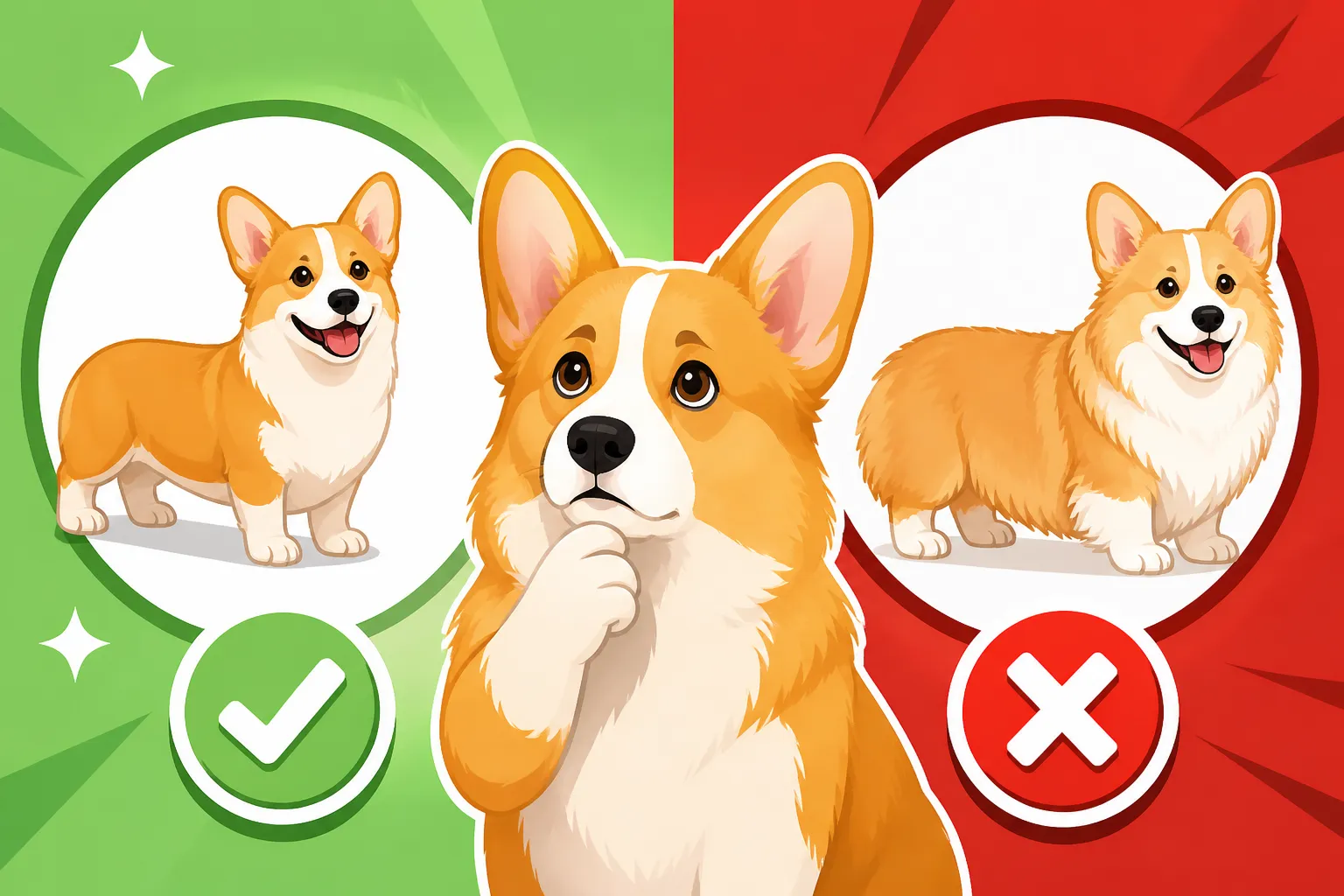
A fluffy Corgi, on the other hand, will have noticeably longer hair all over its body, not just in specific areas. The most striking differences usually appear around the ears, chest, legs, and tail. The ears might have long tufts of hair, giving them a softer, less crisp outline. The feathering on the legs and chest will be much more pronounced, often resembling a "skirt" or "trousers" around the legs. The tail, which can sometimes be quite fluffy on a standard Corgi, will be even more plume-like and full on a fluffy Corgi. The overall texture tends to be softer, silkier, and less coarse than the standard coat. This makes them look incredibly endearing, like a little cloud on four legs! You can certainly see The Long Coat on a Fluffy Corgi and how it flows, making them stand out.
The AKC and Other Kennel Club Standards
Now, let's talk about the "disqualification" aspect. It's a common misconception that a fluffy Corgi is somehow disqualified entirely from being a purebred Corgi. This isn't quite accurate. The terminology can be a bit tricky, but it's important to understand the nuance when it comes to breed standards.
What the Pembroke Welsh Corgi Standard States
The American Kennel Club (AKC) and other kennel clubs around the world publish detailed breed standards for every recognized breed. These standards describe the ideal characteristics of a dog for that breed, covering everything from temperament and movement to coat color, ear set, and, of course, coat type. The purpose of these standards is to provide guidelines for breeders aiming to produce dogs that best represent the breed's historical function and appearance, and for judges in the conformation ring.
When it comes to the Pembroke Welsh Corgi, the AKC standard specifically describes the coat as being of "medium length, dense, with a good undercoat, never soft, woolly or wirehaired." It further specifies that "too long (fluffy) coat" is a "disqualifying fault." This is where the confusion often arises. A "disqualifying fault" is an important term in the show world, but it doesn't mean the dog isn't a purebred Corgi or that it's unhealthy. It simply means that, because its coat deviates from the ideal defined in the standard, that particular dog cannot compete in conformation shows where adherence to the standard is paramount. You can review The AKC Pembroke Welsh Corgi Standard for a complete picture of the breed's ideal traits.
Why the Fluffy Coat is a Fault, Not a Disqualification
This might seem like splitting hairs, but the distinction between a "disqualification" and a "disqualifying fault" is significant. A true disqualification might be for something like an incorrect bite that could impede function, or aggression, or other traits that fundamentally go against the breed's essence or health. A fluffy coat, however, is considered a "disqualifying fault" because it doesn't align with the historical working function of the Corgi.
Corgis were bred as hardy herding dogs in the often wet and muddy fields of Wales. A medium-length, harsh outer coat with a dense undercoat was ideal for shedding water and dirt, and protecting them from thorns and brambles. A longer, softer, woollier coat, while beautiful, would have been impractical in that environment. It would mat easily, absorb more moisture, and pick up more debris, hindering the dog's ability to work efficiently. So, while the fluffy coat doesn't impact the dog's health or its ability to be a loving companion, it simply doesn't fit the historical working dog profile that the breed standard aims to preserve. This is also why The Fluffy Corgi and the Standard are often discussed in breeding circles.
The Reality for Fluffy Corgi Owners and Breeders
For those of us who adore Corgis as family members rather than show dogs, the "disqualifying fault" status of a fluffy coat means absolutely nothing. These dogs are just as delightful, intelligent, and loyal as their standard-coated relatives. In fact, many people specifically seek out fluffy Corgis for their unique and undeniably cute appearance.
Fluffy Corgis as Cherished Companions
The vast majority of Corgis, fluffy or not, are cherished family pets, not show champions. A fluffy Corgi will have the same vibrant personality, the same playful antics, and the same stubborn charm that makes Corgis so beloved. They'll still try to herd your children, bark at the mail carrier with gusto, and snuggle up for a nap on the sofa. Their coat type doesn't alter their core Corgi-ness one bit. If you’re looking for a devoted companion, a fluffy Corgi will fill your home with joy and laughter just like any other Corgi.
Sometimes, people incorrectly assume that a fluffy Corgi is a "mutt" or somehow less purebred because of its coat. This is absolutely not true. They are purebred Pembroke Welsh Corgis, documented by their pedigree, with a genetic variation in their coat. Many responsible breeders will sometimes have fluffy puppies in their litters, even if they are breeding for standard coats, simply because both parents might be fluffy carriers. These breeders will typically place fluffy Corgis in pet homes, often with limited registration to ensure they are not bred for conformation. In some cases, Whether Breeders Place Fluffy Corgis as Pets is a question that arises, and the answer is a resounding yes, usually with a happy waitlist!
Ethical Breeding Practices and the Fluffy Gene
Responsible Corgi breeders understand the genetics of the fluffy coat. While they may aim to produce Corgis that adhere to the breed standard, including coat type, the presence of the fluffy gene in a breeding line is not inherently a problem. Many breeders choose to DNA test their breeding stock for the fluffy gene (FGF5) to make informed breeding decisions.
For example, a breeder might have a fantastic Corgi with a standard coat that carries one copy of the fluffy gene. They might still choose to breed this dog if it excels in other areas (temperament, health clearances, structure) that are crucial for the breed's overall well-being. To avoid producing fluffy puppies in that scenario, they would simply pair that carrier dog with a dog that has been tested and is "clear" (meaning it has two copies of the standard coat gene and does not carry the fluffy trait). This way, all puppies would have at least one copy of the standard coat gene and therefore a standard coat, though some would be carriers. This thoughtful approach ensures the continued health and genetic diversity of the breed while respecting the standard.
Caring for a Fluffy Corgi's Unique Coat
While a fluffy coat doesn't change a Corgi's personality, it does introduce some differences in grooming needs. The longer, softer hair requires a bit more attention to keep it looking its best and to prevent mats.
Grooming Challenges and Solutions
The biggest difference when it comes to owning a fluffy Corgi is the grooming commitment. Their longer, softer hair is more prone to tangles and matting, especially behind the ears, under the "armpits," and around the extensive "trousers" on their hind legs. Corgis are already known for being prolific shedders, and a fluffy Corgi can sometimes seem to shed even more or produce more noticeable clumps of hair. Whether a Fluffy Corgi Mats is a real concern, especially if their grooming is neglected.
Here are some tips for keeping a fluffy Corgi's coat in tip-top shape:
- Daily Brushing: This is your best friend. A good quality slicker brush and an undercoat rake are essential tools. Regular, gentle brushing helps remove loose hair, prevent mats, and distribute natural oils, keeping the coat healthy and shiny. You can find excellent grooming tools at places like Chewy, which offers a wide selection of brushes suitable for a double-coated breed like the Corgi.
- Targeted Dematting: If you do find small mats, address them immediately. Don't pull or yank. Use a detangling spray and gently work them out with your fingers or a comb with wide teeth. For stubborn mats, a mat splitter or a professional groomer might be necessary.
- Bathing: While Corgis don't need frequent baths, when you do bathe a fluffy Corgi, ensure you thoroughly rinse out all shampoo and conditioner. Any residue can irritate the skin and lead to matting. Getting the dense, long undercoat completely dry is also critical to prevent skin issues.
- Professional Grooming: Many owners of fluffy Corgis opt for professional grooming every few months, especially during heavy shedding seasons. A groomer can give a thorough bath, blow out the undercoat, and trim any unruly feathering to keep them neat, without shaving the protective double coat. Discuss How a Fluffy Corgi Differs to Groom with a professional.
| Coat Type | Description | Grooming Needs | Show Ring Status |
|---|---|---|---|
| Standard Coat | Medium length, dense double coat, harsh outer guard hairs. | Regular weekly brushing; more frequent during seasonal sheds. Focus on undercoat removal with a rake. | Preferred; aligns with breed standard. |
| Fluffy Coat | Longer, softer, often woollier hair all over, pronounced feathering. | Daily brushing recommended to prevent mats, especially in longer areas (ears, chest, legs, tail). Use detangling spray and undercoat rake. Potential need for professional dematting. | Disqualifying fault; cannot win in conformation. |
General Health Considerations
It's important to reiterate that a fluffy coat is purely an aesthetic difference and does not inherently lead to health problems for the Corgi. Fluffy Corgis are generally just as healthy as their standard-coated counterparts, assuming they come from responsible breeders who prioritize overall health, temperament, and genetic screening for common Corgi ailments like Degenerative Myelopathy and the Corgi or Corgi Eye Disease and PRA.
The only potential "health" consideration, if you can even call it that, is related to skin care. Because the longer, denser coat can trap more moisture and debris, it's extra important to keep a fluffy Corgi clean and dry, especially after outdoor adventures. Regular grooming helps ensure proper air circulation to the skin, preventing hot spots or other dermatological issues that can sometimes arise from a damp, matted coat. Always check their skin carefully during brushing, and if you notice any redness, irritation, or unusual smells, it's a good idea to consult your vet.
In conclusion, while a fluffy coat might mean a Corgi won't be a show ring champion, it absolutely doesn't diminish their status as a beloved purebred, healthy, and wonderfully quirky companion. Embrace the fluff, and enjoy every moment with your plush Corgi friend!
Disclaimer
This article is for general informational purposes only and does not constitute professional advice. Laws, prices and regulations vary by location and change over time. Consult a qualified professional for guidance on your specific situation.