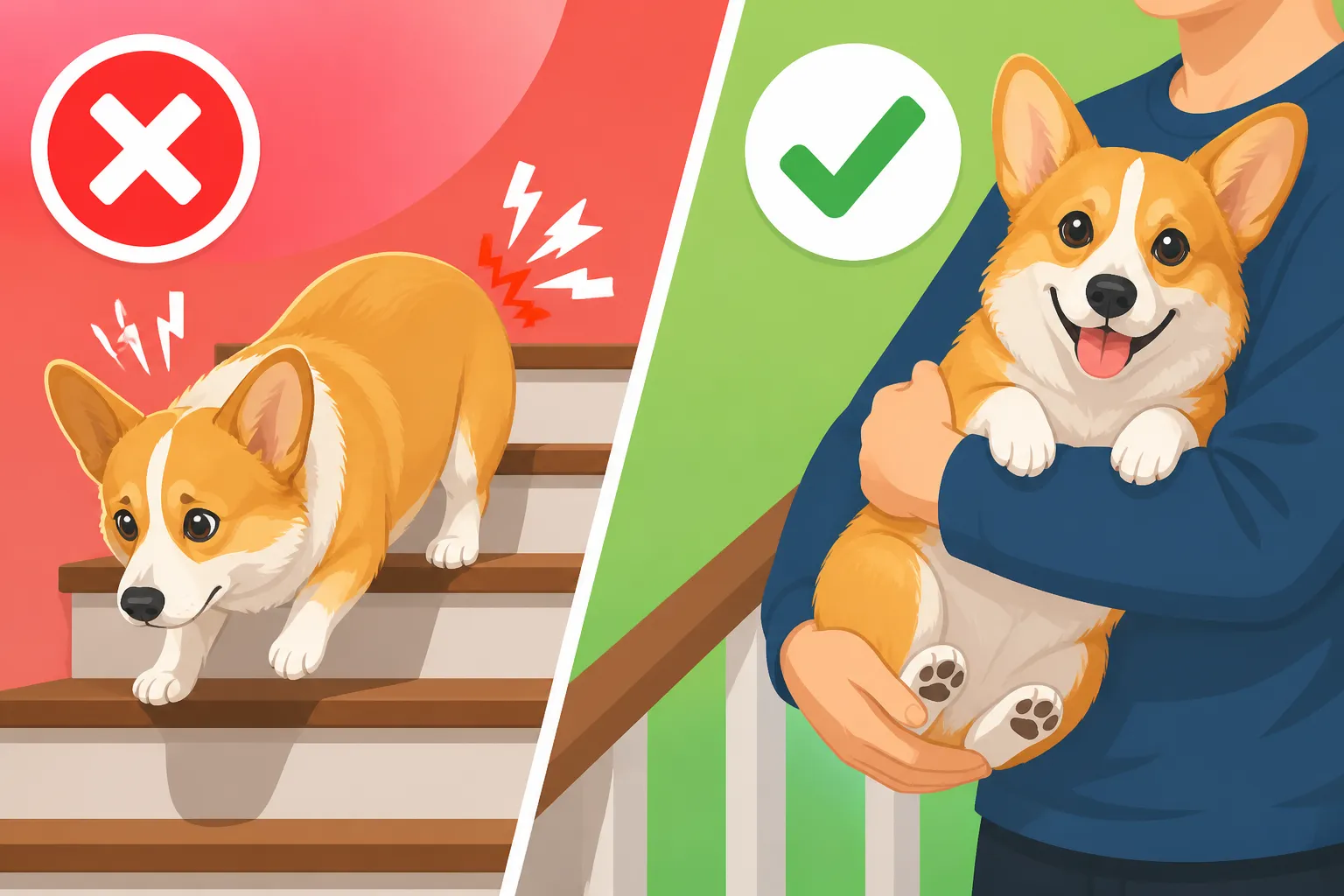
Whether a Corgi Should Be Carried Down Steps
Oh, the stairs! If you're a Corgi owner, you've probably stood at the bottom (or top) of a staircase, staring at your beloved fluffy potato, and wondered, "Is this truly safe for their little back?" It's a question that weighs heavily on our minds, filled with the worry of potential injury to that iconic long spine. Navigating stairs can pose a significant risk to your Corgi's delicate back, and understanding why, along with implementing safer alternatives, is crucial for their long-term health and well-being. This guide aims to thoroughly explore the challenges stairs present for Corgis and provide actionable advice on how to protect them.
The Unique Vulnerability of a Corgi's Spine
Let's be real, Corgis are adorable, but their unique physique, while charming, comes with its own set of vulnerabilities, especially concerning their spine. It's not just a matter of being "lowriders"; there's a serious anatomical reason why we need to be extra vigilant about their back health.
Understanding the Corgi's Long-Backed Anatomy
Corgis, both Pembrokes and Cardigans, are what we call chondrodystrophic breeds. What does that mouthful mean? Essentially, it means they have disproportionately short legs and long bodies due to a genetic trait that affects cartilage development. While it gives them their distinct, waddling gait and allows them to duck under the heels of cattle without getting kicked (which was their original job, bless their hearts!), it also puts immense stress on their spinal column. Their intervertebral discs – those little shock absorbers between the vertebrae – are often not as resilient as those in breeds with more proportionate bodies. These discs are prone to degeneration, drying out, and hardening over time, making them susceptible to bulging or rupturing, a condition known as Intervertebral Disc Disease (IVDD). It's heartbreaking to think about, but this genetic predisposition means that even routine movements can pose a risk. It's a fundamental part of Why a Corgi's Back Is Built the Way It Is, and knowing this helps us understand the importance of preventative measures.
Imagine a stack of fragile dinner plates with jelly between them. Now, imagine stretching that stack out really long. Every twist, every jump, every jolt puts incredible pressure on that "jelly," making it more likely to squish out of place. That's a simplified, albeit vivid, picture of what's happening inside your Corgi's spine. This isn't just a concern for older dogs; issues can start developing much earlier than many owners realize.
The Cumulative Stress of Everyday Activities
It’s easy to think of a sudden, dramatic injury as the primary threat, but for Corgis, it’s often the accumulation of small stresses over years that leads to a crisis. Think about all the little jumps and jolts they experience daily: leaping off the sofa to greet you, scrambling into the car, or yes, navigating stairs multiple times a day. Each one of these actions, while seemingly innocuous, contributes to wear and tear on those already vulnerable discs.
A Corgi's powerful hindquarters are designed for bursts of speed and quick turns, but their low center of gravity means their spine takes the brunt of impacts when landing from a height or twisting. Over time, these micro-traumas can accelerate disc degeneration. You might not see immediate signs of pain, but internally, the damage can be slowly building. This cumulative stress is why we often see disc problems start manifesting when a Corgi reaches middle age, around The Age Corgi Disc Problems Usually Appear, but the groundwork for these issues can be laid in their younger, more boisterous years. That casual leap off the bed as a puppy can have repercussions years down the line. It's a marathon, not a sprint, when it comes to spinal health in our Corgi companions.
The Risks of Stairs for a Corgi
Now, let's talk specifically about stairs. They seem like such an everyday part of our homes, but for a Corgi, they represent a significant challenge and potential danger zone for their spine.
The Mechanics of Stair Climbing and Descending
When a Corgi goes up stairs, they exert a lot of force with their hind legs to push themselves upward, often stretching their back and extending their neck. While this motion can be taxing, the real danger often lies in going down stairs. Think about it: gravity is working against them. As they descend, their short legs mean they have to stretch and contort their long backs to reach the next step. There's an inevitable jarring impact as their front paws land, followed by their hindquarters having to absorb the shock and quickly reposition.
This repeated jarring, especially when going down, places immense compressional and torsional forces on their intervertebral discs. It's like repeatedly dropping a heavy weight onto those fragile jelly-filled plates. The discs are compressed, twisted, and stretched in ways that their chondrodystrophic structure isn't designed to handle safely. A single misstep, a moment of clumsiness, or just the cumulative effect of hundreds of descents can be enough to cause a disc to bulge or rupture. This kind of impact is far more aggressive on the spine than walking on flat ground, or even gentle inclines.
Why Carrying is Often the Safer Bet
Given the inherent risks, carrying your Corgi up and down stairs is, without a doubt, the safest option for protecting their spine. When you carry them, you completely eliminate the impact, twists, and strains associated with stair navigation. This is especially true for puppies whose spines are still developing, senior Corgis whose discs are likely already showing signs of age-related wear, or any Corgi with a known history of back issues.
Think of it as simply removing the hazard altogether. For a Corgi puppy, carrying them establishes a lifelong habit of spinal protection before bad habits (like launching themselves down steps) can form. For an older dog, it's about minimizing further damage and ensuring their comfort. Of course, carrying a Corgi isn't always easy, especially if you have a larger Cardigan or one who is a bit squirmy! It's important to learn Picking a Corgi Up Without Hurting It to ensure you support their full body, especially their back, to prevent any accidental twisting while in your arms. Consistency is key here; if you sometimes let them do stairs and sometimes carry them, they won't understand the rules, and a moment of forgotten vigilance could lead to trouble.
Practical Strategies for Managing Stairs in a Corgi Household
Okay, so we've established that stairs are a no-go for Corgis if we can help it. But let's be realistic: many of us live in homes with stairs. So, what's a devoted Corgi parent to do? The good news is, there are plenty of practical ways to make your home safer.
Training Your Corgi for Ramps and Steps
This is where proactive prevention truly shines! Ramps and pet steps are fantastic alternatives to stairs, drastically reducing the impact and strain on your Corgi's spine. They allow your Corgi to ascend and descend furniture, or even short flights of stairs, with a gentle incline that is much kinder to their long back.
Choosing the Right Equipment: When selecting ramps or steps, prioritize stability and a non-slip surface. Look for ramps with a gentle slope rather than a steep one, and steps that are wide and shallow. You can find a huge variety of options on sites like Amazon or specialized pet retailers on Chewy. Consider the height of your furniture or the stairs you're trying to cover. A ramp that's too short for the height will be too steep, defeating the purpose. For stairs, you might need modular ramp systems that extend across several steps.
Training Tips for Success: Corgis, with their independent and sometimes stubborn nature, might not immediately embrace a ramp. Patience and positive reinforcement are your best friends here.
- Introduce it gradually: Place the ramp on flat ground first, letting your Corgi sniff and explore it without pressure.
- Lure with treats: Use high-value treats to encourage them to walk across the flat ramp.
- Add a slight incline: Once comfortable, place one end on a very low surface, like a thick book or a single step. Lure them up and down.
- Increase height slowly: Over days or weeks, gradually increase the height until the ramp is in its intended position (e.g., against the sofa or bed). Always reward them generously for using it.
- Consistency is vital: Make ramp use mandatory for certain areas. If they learn that the sofa is only accessible via the ramp, they'll eventually get the hang of it. This process is very similar to Ramp Training a Corgi to the Sofa. Remember, the goal is to make the ramp their natural path, not an optional one.
When to Absolutely Carry and When to Consider Alternatives
While ramps are excellent for furniture, full flights of stairs can be more challenging to completely ramp off. This is where a combination of strategies, including dedicated carrying, becomes essential.
Absolute Carrying Scenarios:
- Puppies: Their spines are still developing, and any jarring impact can have long-lasting consequences. Carry them up and down all stairs.
- Elderly Corgis: Their discs are likely degenerated, making them highly susceptible to injury. Their vision might also be declining, increasing the risk of missteps.
- Corgis with existing back issues: If your Corgi has ever had a disc flare-up, a diagnosis of IVDD, or any neurological signs, carrying is non-negotiable for their safety and recovery.
- Emergency Situations: If you suspect an injury, immediately carry your Corgi, supporting their entire body, and head to the vet.
Consider Alternatives and Environmental Modifications:
- Baby Gates: For multi-story homes, strategically placed baby gates can prevent unsupervised access to stairs. This is especially helpful if you're not always able to carry them immediately, or if they tend to dart around. Gates at the top and bottom of staircases are a must-have.
- Dedicated "No Stairs" Floors: If possible, limit your Corgi's access to only one floor, especially if you have multiple flights of stairs. This might mean having their primary living space, food, and bed all on a single level.
- Outdoor Stairs/Decks: Don't forget outdoor stairs! If you have a deck or patio with steps, consider a permanent outdoor ramp solution or commit to carrying them.
- Consistency: The biggest challenge is consistency. Every time your Corgi successfully navigates stairs on their own, it reinforces that behavior. It can be easy to get complacent, especially when you're in a hurry. But remember, one wrong move can change everything. It's a critical factor in determining Whether Stairs Are Safe for a Corgi at all.
Long-Term Spinal Health Beyond Stairs
Protecting your Corgi's back is a holistic endeavor. While managing stairs is a huge piece of the puzzle, it's part of a broader commitment to their overall well-being.
Maintaining a Healthy Weight
This is perhaps one of the most crucial factors in Corgi spinal health, yet it's often overlooked. Every extra pound your Corgi carries puts additional strain on their spine and joints. Imagine strapping a backpack full of bricks onto your own back and carrying it around all day; that's what being overweight feels like for your Corgi.
Diet and Portion Control: Corgis are notorious for loving food, and they're very good at convincing us they're perpetually starving. But resisting those adorable, pleading eyes is an act of love. You need to be diligent about portion control.
- Weigh their food: Don't rely on scoops, as they can be inconsistent. Use a kitchen scale to measure their kibble accurately.
- Choose appropriate food: Consult your vet for guidance on the best food for your Corgi's age, activity level, and weight goals. Brands like Ollie offer fresh, pre-portioned meals that can help with weight management, but any high-quality food, fed in the right amount, will do.
- Limit treats: Treats should be minimal and accounted for in their daily calorie intake. Opt for low-calorie options like plain cooked green beans, carrots, or small pieces of apple.
- Regular weigh-ins: Keep track of your Corgi's weight with regular vet visits or even at home on a pet scale. Early detection of weight gain makes it much easier to address.
The impact of weight on their spine cannot be overstated. It's a fundamental reason Why Corgi Weight Is a Spinal Problem is such a pervasive issue in the breed.
Supportive Environments and Proactive Care
Beyond stairs and weight, creating a supportive living environment and engaging in proactive veterinary care can significantly bolster your Corgi's spinal health.
- Orthopedic Beds: Invest in a good quality orthopedic bed. These beds provide excellent support for their joints and spine, distributing their weight evenly and preventing pressure points. A firm, supportive surface is much better than a soft, squishy one that offers no structural support.
- Non-Slip Flooring: Smooth floors like hardwood, tile, and laminate can be treacherous for Corgis. Their short legs and long bodies make them prone to slipping, which can lead to splits, twists, and falls that injure the spine. Place runners, area rugs, or anti-slip mats in high-traffic areas. This is a common modification, and many Corgi owners find Flooring Changes a Corgi Owner Makes to be essential for safety.
- Appropriate Exercise: While rough play, high-impact jumps, and excessive running on hard surfaces can be detrimental, regular, moderate exercise is vital for maintaining muscle tone, flexibility, and a healthy weight. Think leashed walks on soft surfaces, gentle games of fetch, or even hydrotherapy, which is fantastic for joint and muscle health without spinal impact.
- Regular Vet Check-ups: Don't skip those annual (or biannual for older Corgis) vet visits. Your vet can monitor your Corgi's weight, assess their gait, check for signs of discomfort or neurological changes, and discuss any preventative measures or supplements that might be beneficial. Early detection of any spinal issues is key to effective management and better outcomes.
- Harness Use: When walking your Corgi, always use a harness instead of a collar. A collar can put pressure on their neck and spine if they pull or if you need to quickly restrain them. A well-fitting harness distributes pressure across their chest and shoulders, which is much safer.
By combining careful stair management, strict weight control, an ergonomic home environment, and consistent veterinary care, you are giving your Corgi the best possible chance at a long, healthy, and happy life, free from preventable spinal issues.
Here's a quick comparison of methods for Corgi stair navigation:
| Method | Pros | Cons | Best For |
|---|---|---|---|
| Using Stairs Directly | Convenience for owner (no effort) | High risk of IVDD and spinal injury due to impact & strain | Never recommended for Corgis |
| Pet Ramps/Steps | Reduces spinal impact, promotes independence | Can take up space, requires training, not ideal for full staircases | Furniture access, short flights of stairs, cautious Corgis |
| Carrying | Eliminates all spinal impact and strain | Requires owner effort, Corgi must be comfortable with being handled | Puppies, senior Corgis, Corgis with back issues, full flights of stairs |
Disclaimer
This article is for general informational purposes only and does not constitute professional advice. Laws, prices and regulations vary by location and change over time. Consult a qualified professional for guidance on your specific situation.