Why Both Corgi Conditions Start in the Back Legs
It's incredibly frustrating for Corgi parents to see their beloved dogs start showing signs of weakness or an awkward gait in their back legs, especially when it's so hard to tell if it's something sudden and painful, or a subtle, creeping neurological issue. This guide aims to clear up some of that confusion, explaining why both Intervertebral Disc Disease (IVDD) and Degenerative Myelopathy (DM) almost invariably manifest with initial symptoms centered on your Corgi's hindquarters, and what you can do about it.
Understanding the Corgi's Unique Anatomy and Vulnerability
When you look at a Corgi, one of the first things that strikes you is their distinctive body shape: long body, short legs. This isn't just a charming aesthetic; it's a fundamental part of their genetic makeup that unfortunately predisposes them to certain health challenges, particularly concerning their spine and the nerves that control their movement. Their very structure, developed over centuries for herding cattle, now makes them inherently vulnerable to conditions that first show up in their rear end.
The Long Back and Short Legs: Chondrodystrophy Explained
Corgis, like Dachshunds and Basset Hounds, are what we call chondrodystrophic breeds. This fancy term simply means they have a genetic trait that causes abnormal cartilage and bone development, leading to their characteristic short, stout legs and a disproportionately long back. While it gives them their adorable low-rider profile, it also means their spinal discs—the cushions between the vertebrae—are inherently different and more fragile than those in dogs with more proportional bodies. These discs are prone to premature degeneration, meaning they can start to harden and bulge or even rupture much earlier in life. Understanding What Chondrodystrophy Means for a Corgi is key to grasping their spinal vulnerabilities.
This unique skeletal structure puts continuous, unusual stress on the entire spinal column. Imagine a suspension bridge that’s designed to be much longer than its supporting towers can comfortably manage; that’s a bit like a Corgi’s spine. Every jump, every twist, every awkward landing creates forces that are distributed differently compared to a dog with a more "standard" build. This constant, subtle strain accumulates over time, making certain areas of the spine ripe for problems.
Spinal Column Structure and Stress Points
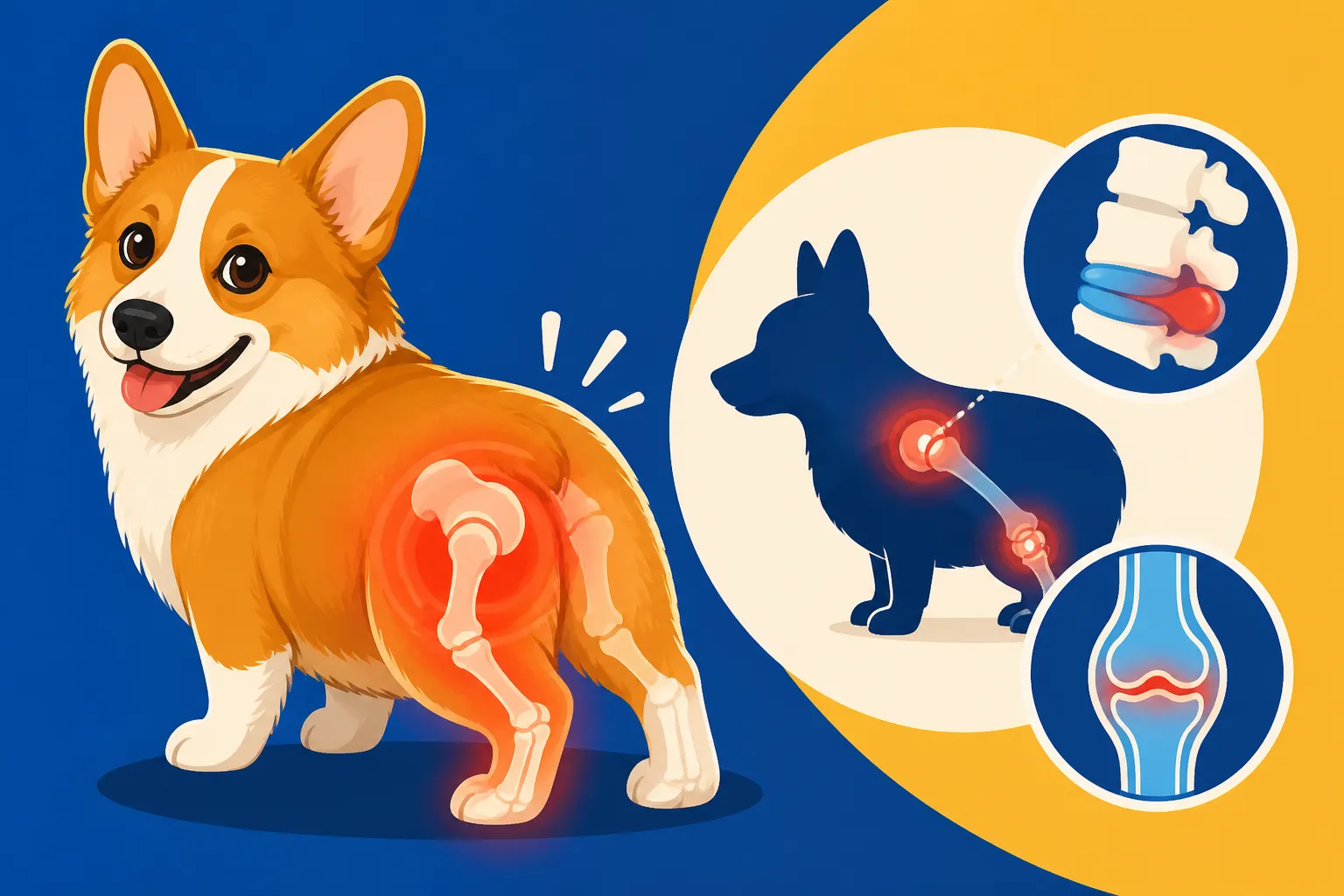
The Corgi's spinal column, despite its relative shortness in terms of height, bears the weight of a fairly substantial body over a long, less flexible span. The most vulnerable areas tend to be the thoracolumbar region – the junction where the chest vertebrae meet the lower back vertebrae. This area sees a lot of movement and torque as the Corgi navigates the world on its short legs. It's also where many of the nerves that control the hind legs branch off the spinal cord.
When the discs in this region start to fail, or when the spinal cord itself is affected by a neurological disease, the symptoms are almost always localized to the parts of the body these nerves supply first. Since the hind legs and tail are at the 'end of the line' for many of these critical nerve pathways, they are the first to show signs of trouble. This explains why an owner might notice their Corgi starting to A Corgi That Scuffs Its Back Nails or struggling with stairs long before any front-leg issues arise.
Degenerative Myelopathy (DM) and Its Onset in the Hind Legs
Degenerative Myelopathy (DM) is a truly heartbreaking condition because it's a progressive neurological disease that gradually robs a dog of its ability to walk. It’s an insidious condition, often starting subtly, which can make it incredibly hard for owners to pinpoint early on. Unlike an acute injury, DM doesn't usually cause pain, which can be both a blessing and a curse for owners trying to understand what's happening to their dog.
Nerve Degeneration and Signal Pathway
DM is essentially a disease of the spinal cord's white matter. The white matter contains nerve fibers that transmit signals from the brain to the limbs, and vice-versa. In Corgis with DM, these nerve fibers begin to break down, disrupting the communication lines. Think of it like frayed electrical wires; the signals just can't get through clearly or efficiently anymore. The degeneration typically starts in the nerves that control proprioception – the body's sense of its position in space – and motor function in the hind limbs. This is why the disease’s first manifestations are almost universally observed in the Corgi's rear.
Because the nerve signals to the back legs are interrupted or weakened, the Corgi's brain struggles to tell its hind legs what to do. The legs might not move as purposefully, or the dog might not be aware of where its feet are placed. This isn't due to a lack of effort or understanding from your Corgi; it's a physical disconnect between brain and limb. Regular vet check-ups are vital for screening for these subtle changes, and a comprehensive pet insurance plan, such as one from Healthy Paws, can help manage the costs associated with diagnosing and potentially managing a long-term condition like DM.
Early Clinical Signs and Progression
The initial signs of DM are often incredibly subtle and might easily be mistaken for normal aging or minor stiffness. Owners might notice their Corgi's back legs seem a bit weaker, or they might occasionally stumble or drag their feet. Over time, these symptoms progress, leading to a more pronounced wobbly gait, difficulty standing, and eventually, paralysis of the hind limbs. Many owners first notice The First Signs of DM in a Corgi as a slight instability or a tendency for their dog's back feet to cross over each other when walking.
As the disease progresses, your Corgi might struggle to get up from a lying position, especially on slippery surfaces. They might find it hard to climb stairs or even stand steadily to eat or drink. This gradual loss of control and coordination can be agonizing to witness, but it's important to remember that DM itself is not painful. The disease usually begins to show symptoms in middle to older age, typically around The Age Corgi Myelopathy Usually Starts which is often between 8 and 14 years old.
Intervertebral Disc Disease (IVDD) and Its Impact on the Rear
Unlike DM, which is a neurological disease, Intervertebral Disc Disease (IVDD) is a structural problem of the spine. While it can also lead to hind leg weakness or paralysis, its mechanism is entirely different. IVDD is often associated with acute pain and can come on quite suddenly, creating a terrifying emergency for Corgi owners.
The Nature of Disc Herniation in Corgis
Because Corgis are chondrodystrophic, their spinal discs are genetically predisposed to degenerate prematurely. Instead of having spongy, jelly-like centers that act as shock absorbers, their discs often develop a harder, more cartilage-like consistency. This makes them much more susceptible to bulging or rupturing, even from everyday activities. When a disc herniates (either bulges out or completely ruptures), it pushes up into the spinal canal, where the delicate spinal cord resides.
This herniation can happen gradually, causing chronic pain and intermittent weakness, or it can happen suddenly, often after a seemingly innocuous jump or twist. The force of a ruptured disc is immense, and it acts directly on the spinal cord. The spinal cord is like a superhighway of nerves, and a disc herniation is like a sudden roadblock, blocking or severely impeding the signals traveling to and from the brain. The impact of such an event can range from mild discomfort to complete paralysis. This is a common reason for The Jump That Ruptures a Corgi Disc and can lead to immediate distress.
Compression and Neurological Deficits
When a disc herniates, it causes direct compression of the spinal cord. The severity of the symptoms depends on how much the disc is compressing the cord and where in the spine it happens. In Corgis, a significant number of disc issues occur in the mid-to-lower back (the thoracolumbar spine), which is the very segment of the spinal cord responsible for controlling the hind legs, bladder, and bowel function. This is why, similar to DM, the symptoms primarily manifest in the rear limbs.
The compression leads to neurological deficits. This could be anything from mild weakness, an uncoordinated gait, an inability to jump, to complete paralysis of the back legs, loss of pain sensation, and even loss of bladder and bowel control. The dog may be in excruciating pain, cry out when touched, or be reluctant to move. It’s a stark contrast to DM, which is typically painless. Owners might observe their Corgi drags one back foot or refuse to use the stairs, indicating severe discomfort and neurological compromise.
Differentiating DM and IVDD Initial Symptoms
Distinguishing between Degenerative Myelopathy and Intervertebral Disc Disease, especially in their early stages, can be incredibly challenging, even for experienced veterinarians. Both conditions primarily affect the hind limbs and can cause similar-looking issues with gait and coordination. However, there are key differences in how they progress and the presence (or absence) of pain that are critical for diagnosis.
Overlapping Early Signs
At first glance, the early signs of DM and IVDD can seem alarmingly similar to an untrained eye. Both can cause hind leg weakness, a wobbly gait, scuffing of the nails on the back paws, and difficulty with stairs or jumping. Your Corgi might seem less energetic, reluctant to play, or slower to get up. They might even display what looks like general stiffness or weakness associated with aging. This overlap is precisely why a thorough veterinary examination, often including neurological assessment, is so crucial. It’s not uncommon for an owner to think their dog is just getting old, only to find out it's one of these two serious conditions.
Consider a scenario: your Corgi, a typically active and happy companion, starts to hesitate before jumping onto the sofa, or you notice a slight wobble in their stride after a long walk. It’s natural to wonder if it's just a bit of arthritis or something more. Because the symptoms are often limited to the back legs at first, it can be really tough to tell if you're dealing with a progressive, painless neurological decline or an acute, painful spinal disc issue. This is why understanding Telling a Corgi's Slipped Disc From Myelopathy requires careful observation and professional diagnostic tools.
Key Distinctions in Progression and Pain
The most significant differentiator between DM and IVDD lies in the presence of pain and the typical speed of progression.
Degenerative Myelopathy (DM):
- Painless: DM is characteristically a non-painful condition. The nerves themselves are degenerating, but this doesn't typically cause pain. Any pain observed is usually secondary, arising from compensatory movements or muscle strain as the dog tries to cope with its weakness.
- Gradual Progression: DM progresses slowly and steadily over months, sometimes even years. The weakness usually starts subtly and worsens over time.
- Symmetry: Often, DM affects both hind legs relatively symmetrically, although one side might appear slightly weaker than the other initially.
- Proprioception Loss: A key early sign is often a loss of proprioception (awareness of limb position), leading to scuffing of nails or knuckling over of the paws.
Intervertebral Disc Disease (IVDD):
- Painful: IVDD is often excruciatingly painful. Dogs may cry out, yelp when touched, tremble, or become very withdrawn. The pain can be severe enough to cause them to guard their back or refuse to move.
- Acute Onset: While some IVDD can be chronic, many cases involve a sudden, acute onset of severe pain and neurological deficits, often after a specific movement like jumping or running.
- Asymmetry: Symptoms can sometimes be asymmetrical, affecting one leg more severely than the other, especially if the disc herniation is lateral.
- Severity: Symptoms can range from mild back pain to complete paralysis, depending on the severity of spinal cord compression.
If your Corgi is suddenly yelping, refusing to move, or showing signs of extreme discomfort when you touch their back, it's highly suggestive of an acute disc injury. On the other hand, if you're seeing a slow, steady decline in hind leg function without any obvious signs of pain, DM might be higher on the list. In either case, prompt veterinary attention is crucial. Your vet will likely perform a thorough neurological exam to determine if your Corgi has deep pain sensation and reflex responses, which helps What a Neurologist Checks in a Corgi to narrow down the possibilities. Advanced imaging like an MRI or CT scan is often necessary to confirm IVDD, while DM is a diagnosis of exclusion that is supported by a DNA test and confirmed definitively post-mortem.
Here's a quick comparison of the most common early indicators:
| Feature | Degenerative Myelopathy (DM) | Intervertebral Disc Disease (IVDD) |
|---|---|---|
| Pain Level | Generally painless; pain is secondary | Often acutely painful, can be severe |
| Onset | Gradual, insidious, slowly progressive | Can be sudden/acute, or chronic with flare-ups |
| Symmetry | Usually symmetrical hind leg weakness | Can be symmetrical or asymmetrical |
| Primary Issue | Nerve degeneration in spinal cord | Physical compression of spinal cord by disc |
| Age of Onset | Typically 8+ years (though can vary) | Can occur at any age, often 3-7 years |
| Key Indicators | Knuckling, scuffing nails, wobbly gait without pain | Arched back, reluctance to move, yelping, limping, sudden weakness |
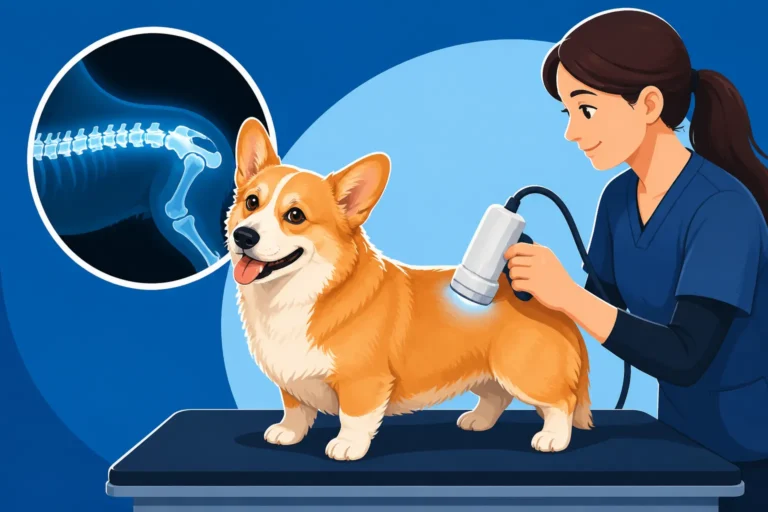
Ultimately, a definitive diagnosis requires a trip to the vet. They might suggest blood tests, X-rays (which show spinal anatomy but not disc herniations well), or more advanced diagnostics like an MRI for IVDD, or a DNA test for the SOD1 gene mutation in the case of DM. Many Corgi owners, mindful of the breed's predispositions, consider pet insurance to help cover these often significant diagnostic and treatment costs. Companies like Healthy Paws are well-regarded for their comprehensive coverage, which can provide immense peace of mind. Investing in Screening an Older Corgi's Spine can help catch issues early.
So, while the initial manifestation might be similar, the underlying causes, progression, and treatment approaches for DM and IVDD are vastly different. Both conditions highlight the unique vulnerabilities of the Corgi breed and underscore the importance of attentive care, early veterinary intervention, and careful management throughout their lives. Even with a diagnosis, there are many ways to support your Corgi, from conservative management for IVDD to Physiotherapy for a Corgi Losing Its Legs due to DM.
Disclaimer
The information provided in this article is for general educational purposes only and is not intended to be a substitute for professional veterinary advice, diagnosis, or treatment. Always seek the advice of your veterinarian or other qualified pet health provider with any questions you may have regarding a medical condition.